Setups - Entries - Exits

Day Trading Strategies

A complete day trading strategy library covering momentum, breakout, pullback, reversal, scalping, VWAP, chart patterns, market regimes, entries, exits, and risk rules.

243 Strategies
Full playbook
17 Categories
Browse by setup
Risk First
Entries and exits
0 Hype
No income promises

Find the Right Setup

Compare momentum, breakout, pullback, reversal, scalping, and range strategies by market condition.

Define Entries & Exits

Review trigger logic, stop placement, invalidation points, profit targets, and trade management rules.

Avoid Weak Trades
Learn where setups fail, when conditions are wrong, and when skipping the trade is the better decision.

Strategy Library

The Complete Day Trading Strategy Library

Browse standalone day trading strategies by setup type, market condition, asset class, indicator, catalyst, time of day, risk framework, or backtesting method.

73 guides live243 total strategiesUpdated regularly
Modules 1 – 13 · Trend · Range · Breakout · Reversal · Momentum · Patterns · Indicators · Time-of-Day · Events
Core Trading Strategies

1
Module 1· Frameworks Before Setups

Strategy Foundations

What day trading strategies actually are, the difference between setups, strategies, and systems, how to choose a style that fits your personality, and why most traders blow up from switching too early.

8 of 8 published ~2h read
2
Module 2· Riding the Wave

Trending-Market Strategies

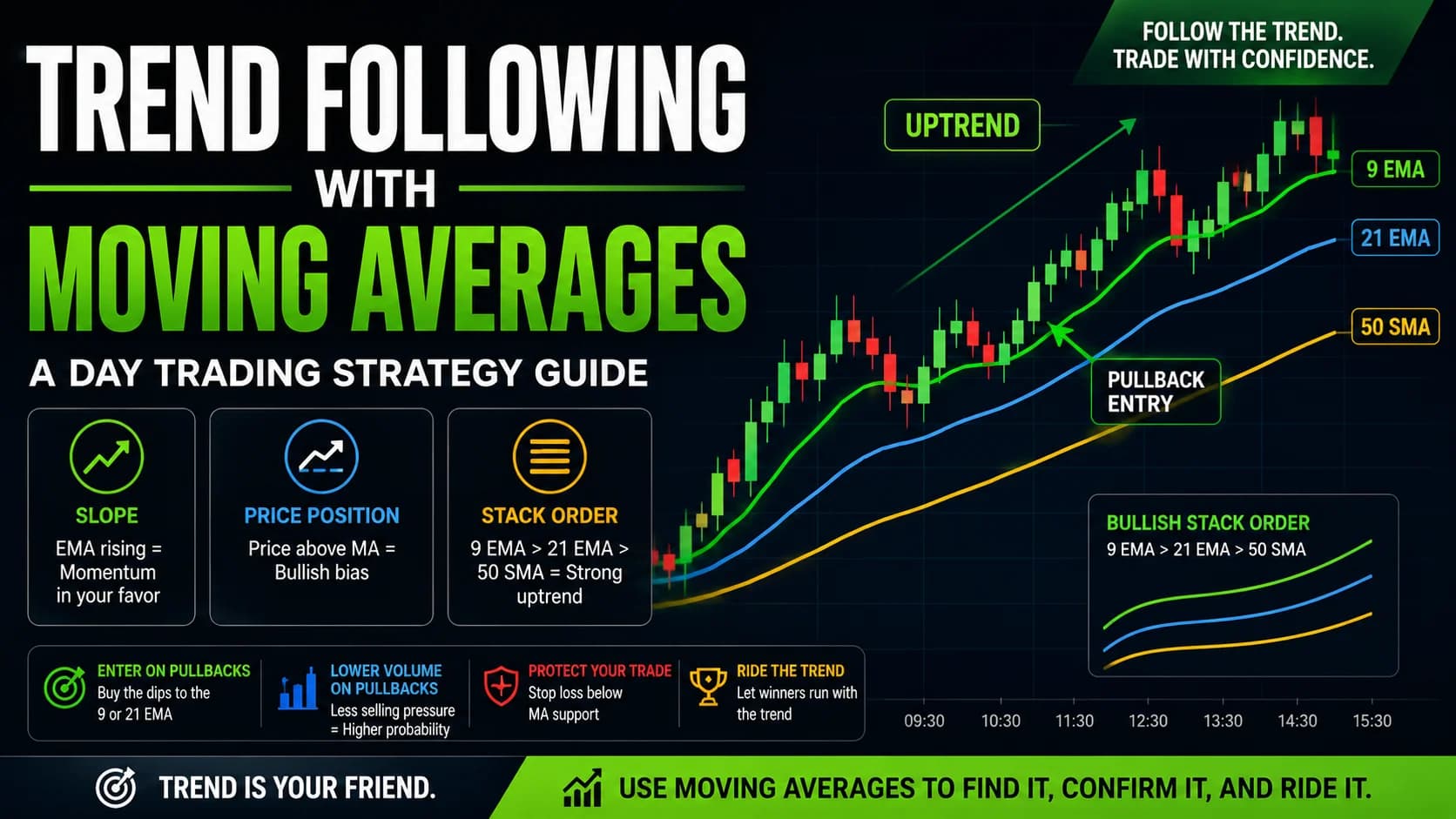
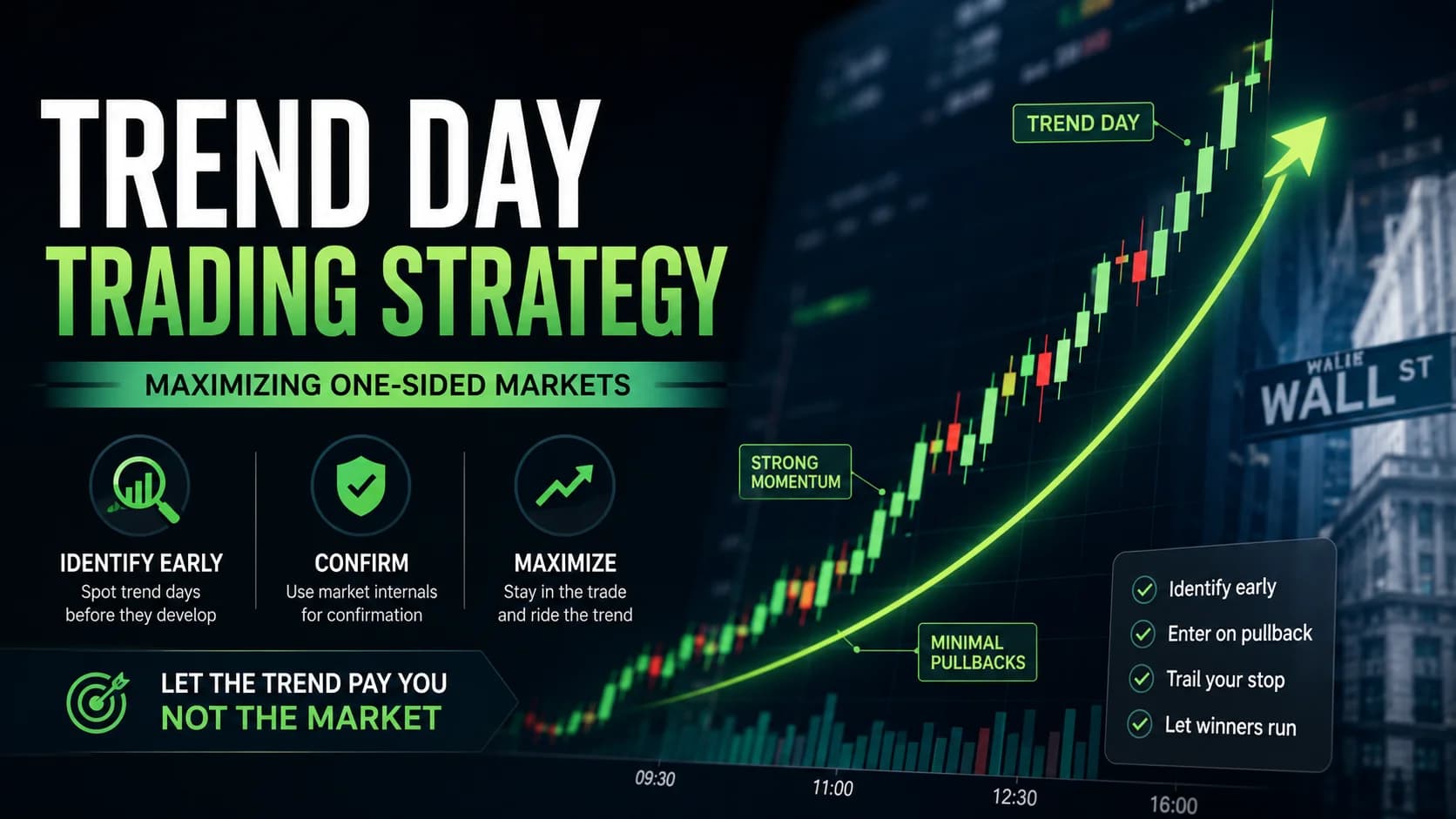
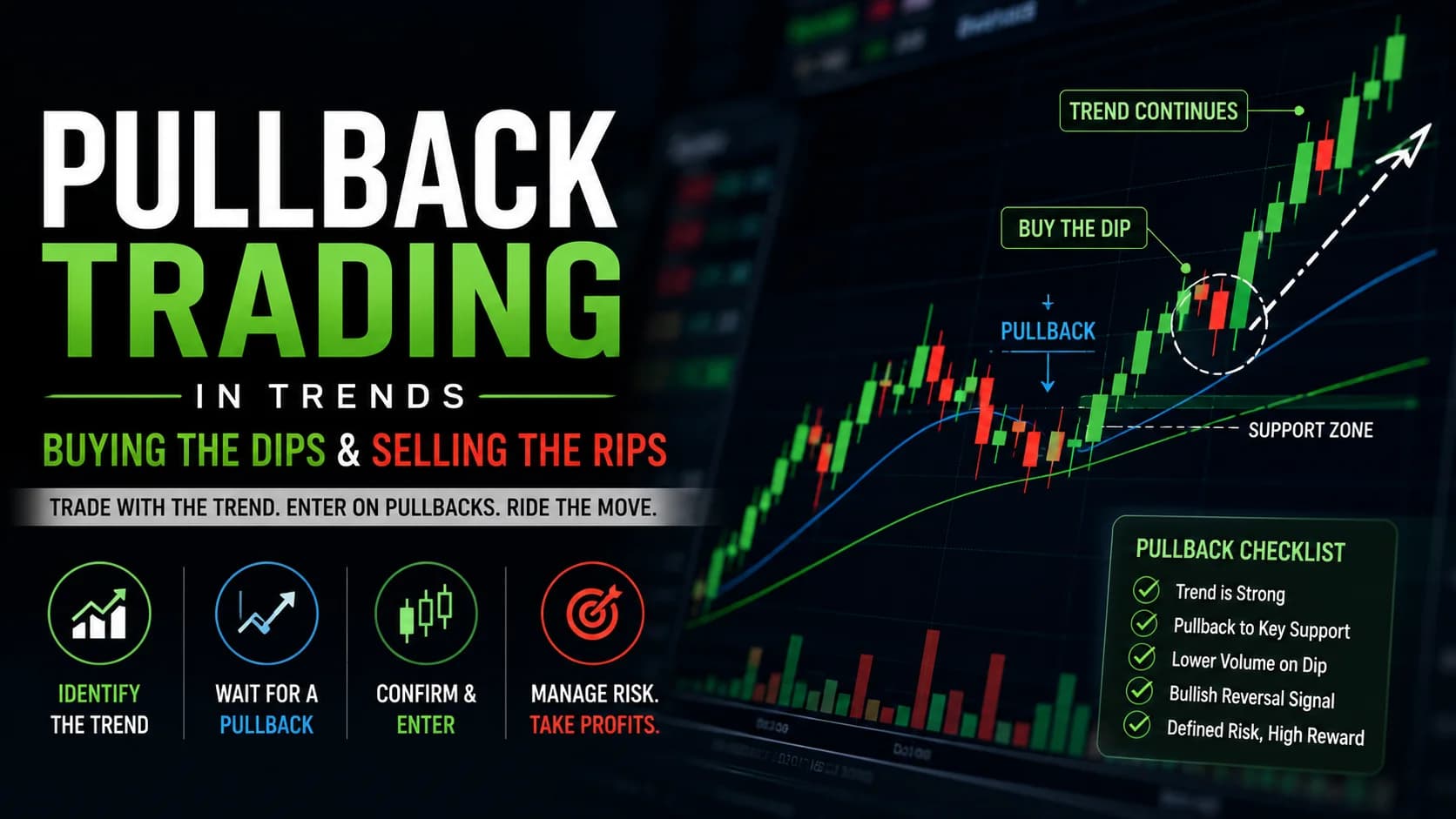
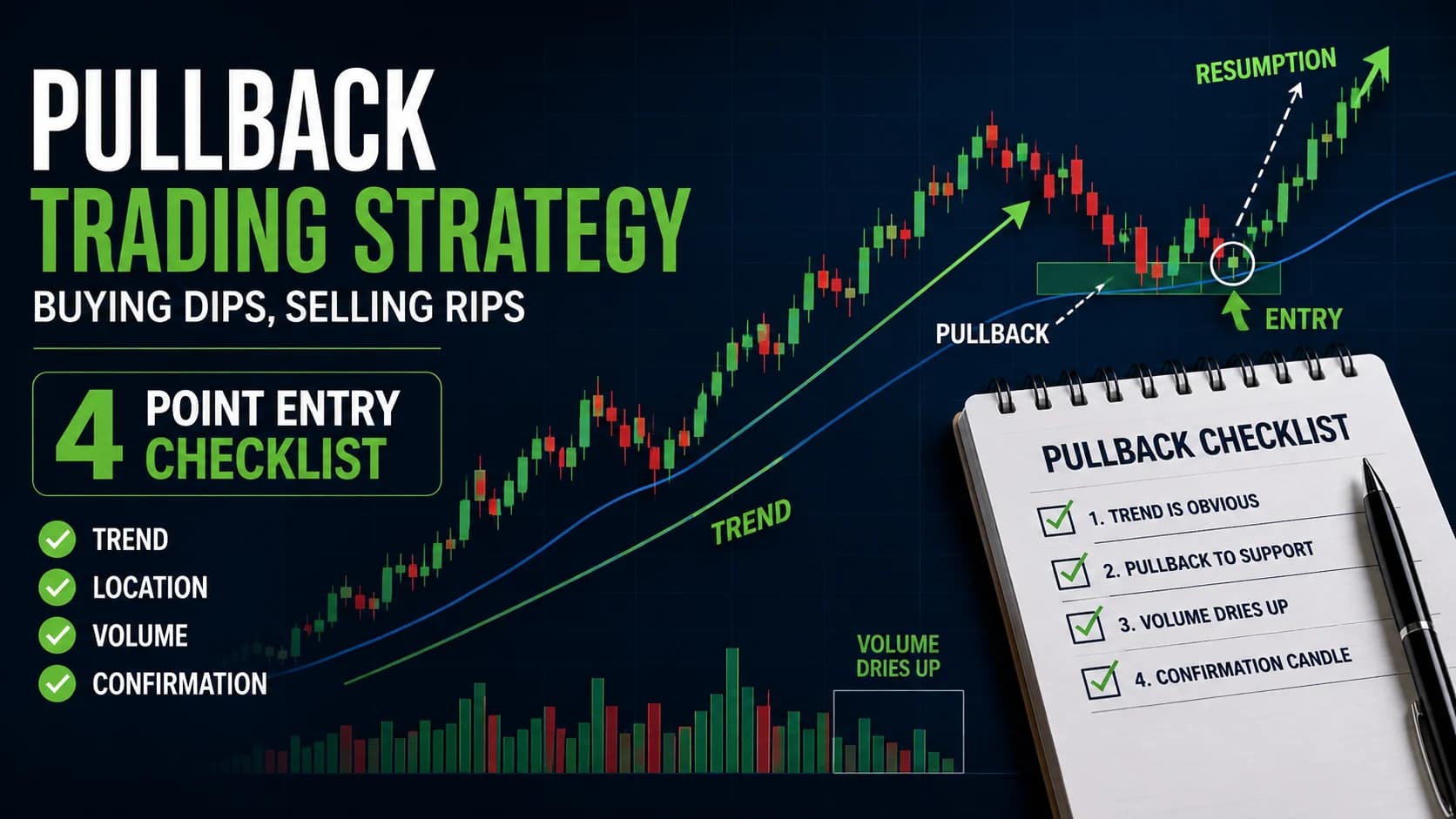
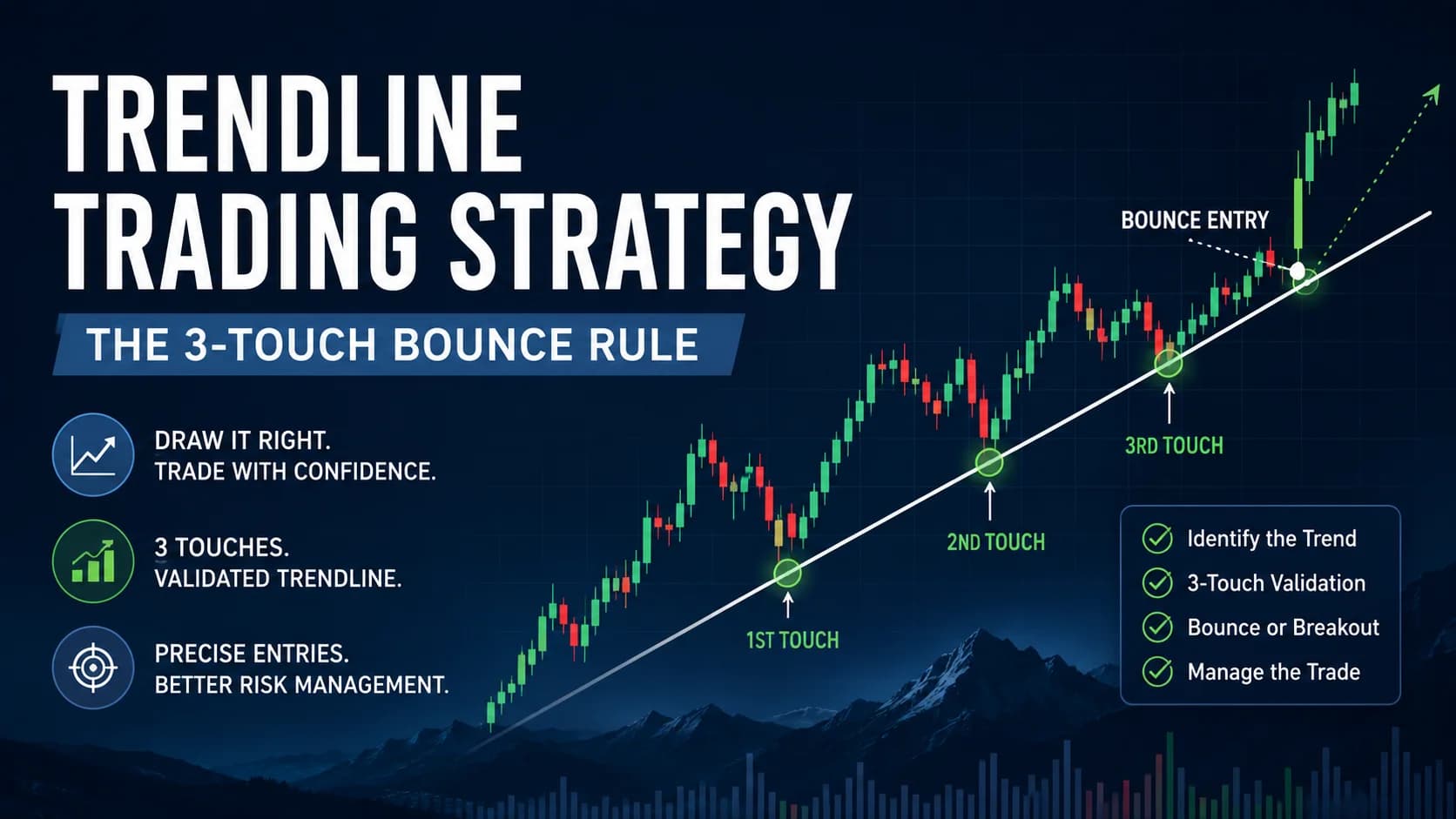
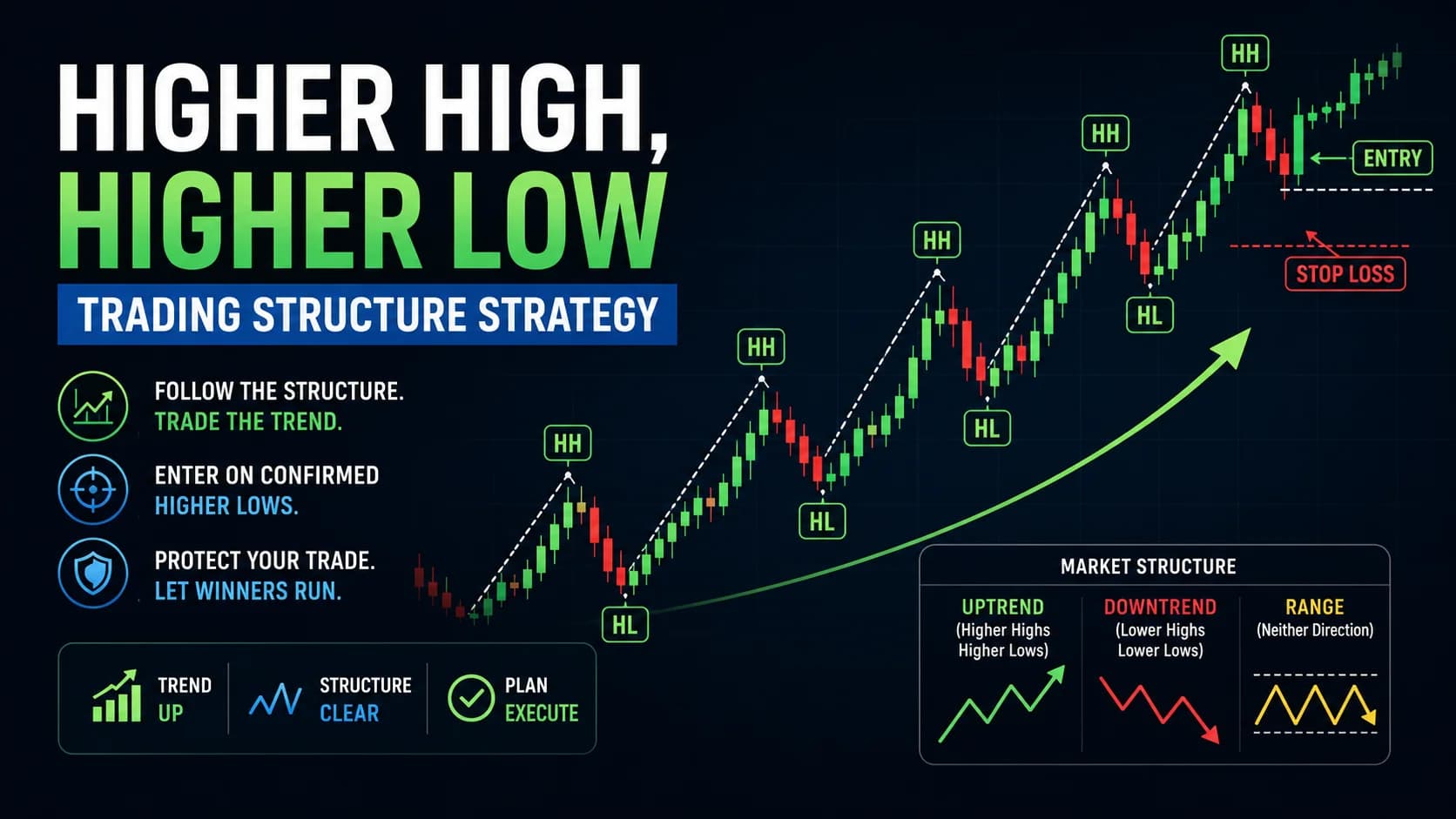
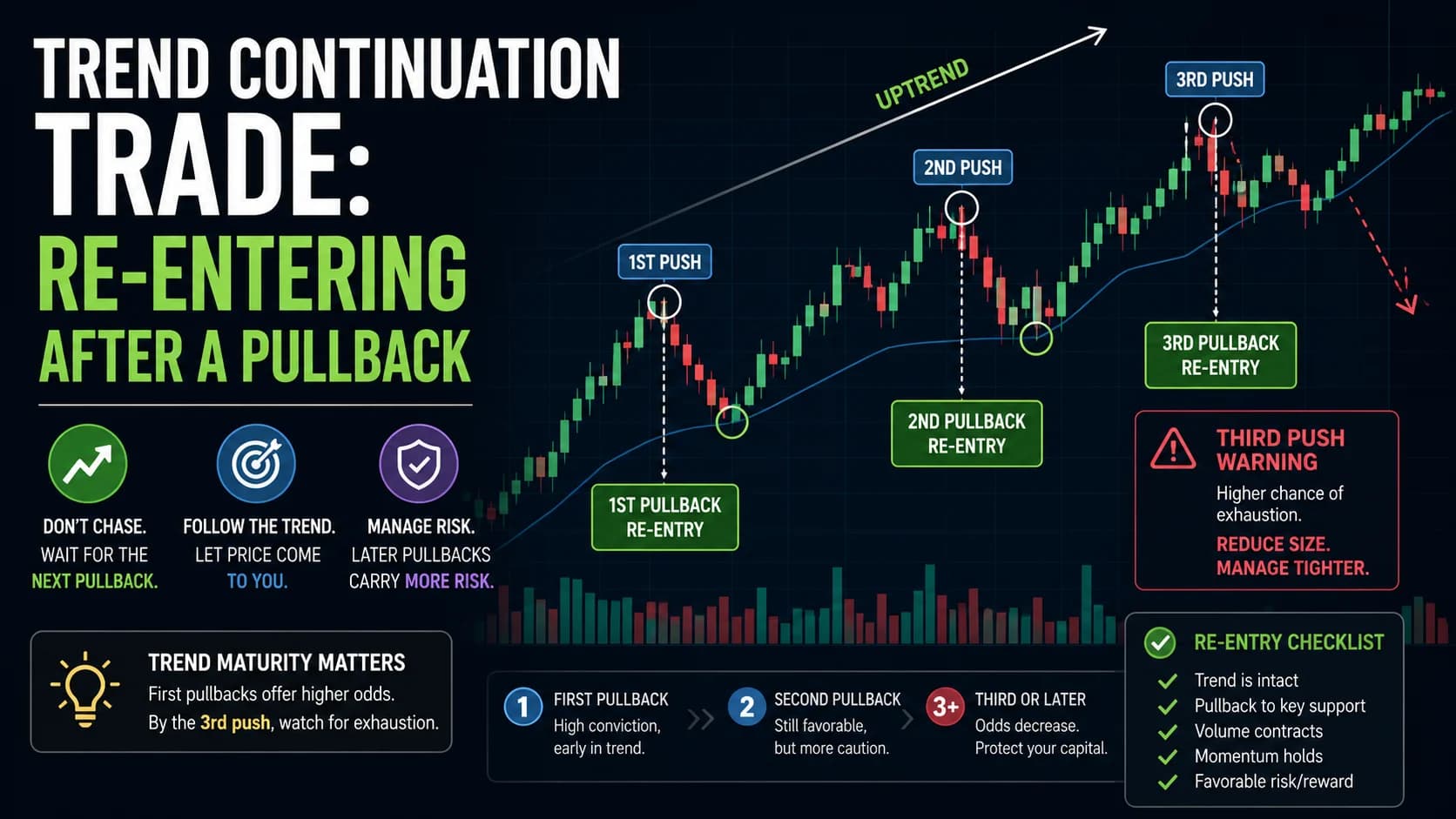
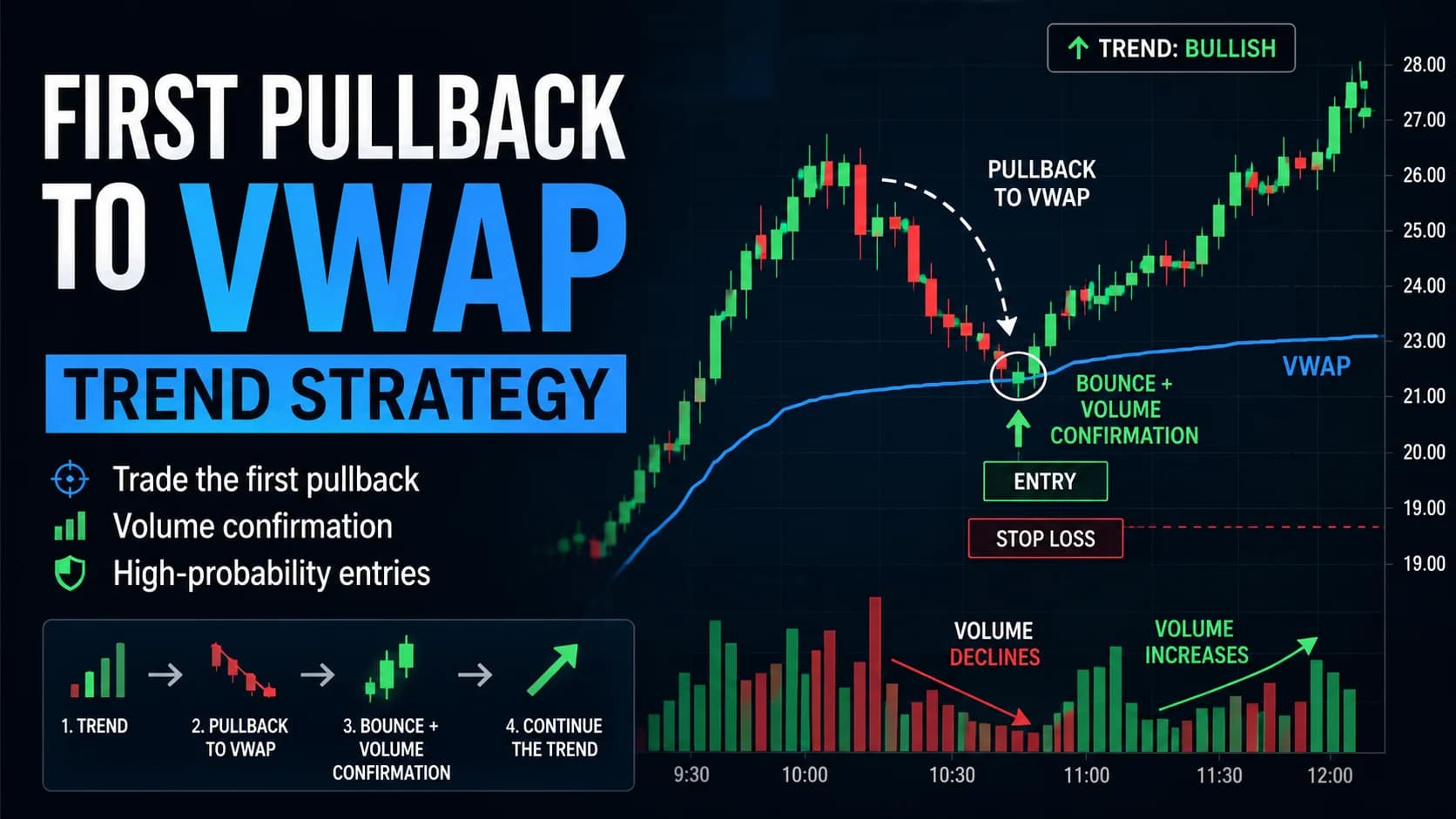
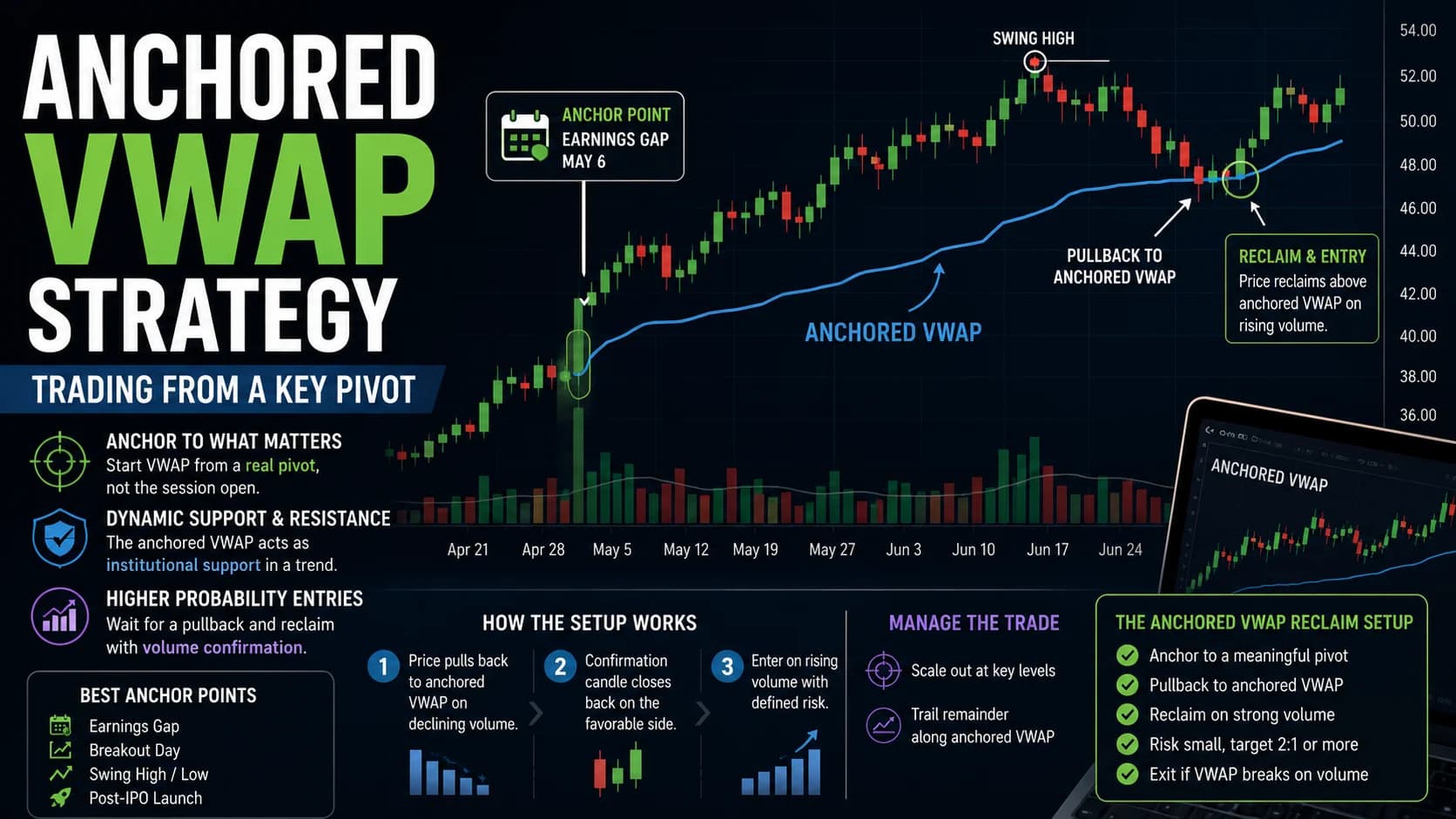
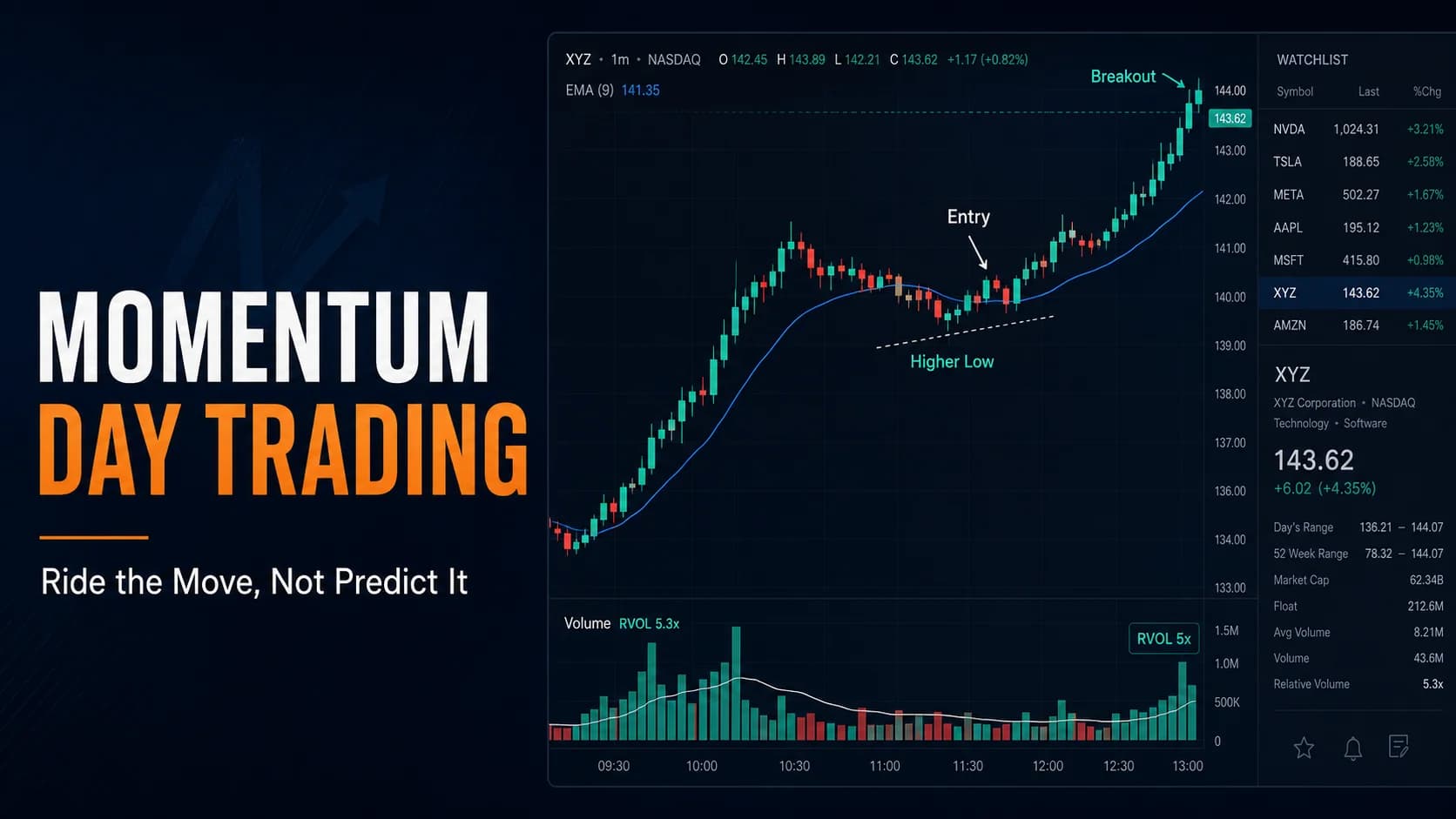
Trend following, pullback entries, trendline channels, VWAP trend plays, and anchored VWAP — every approach for capitalizing when a stock is moving in one sustained direction.

6 of 11 published ~1h read
3
Module 3· Trading the Sideways Market

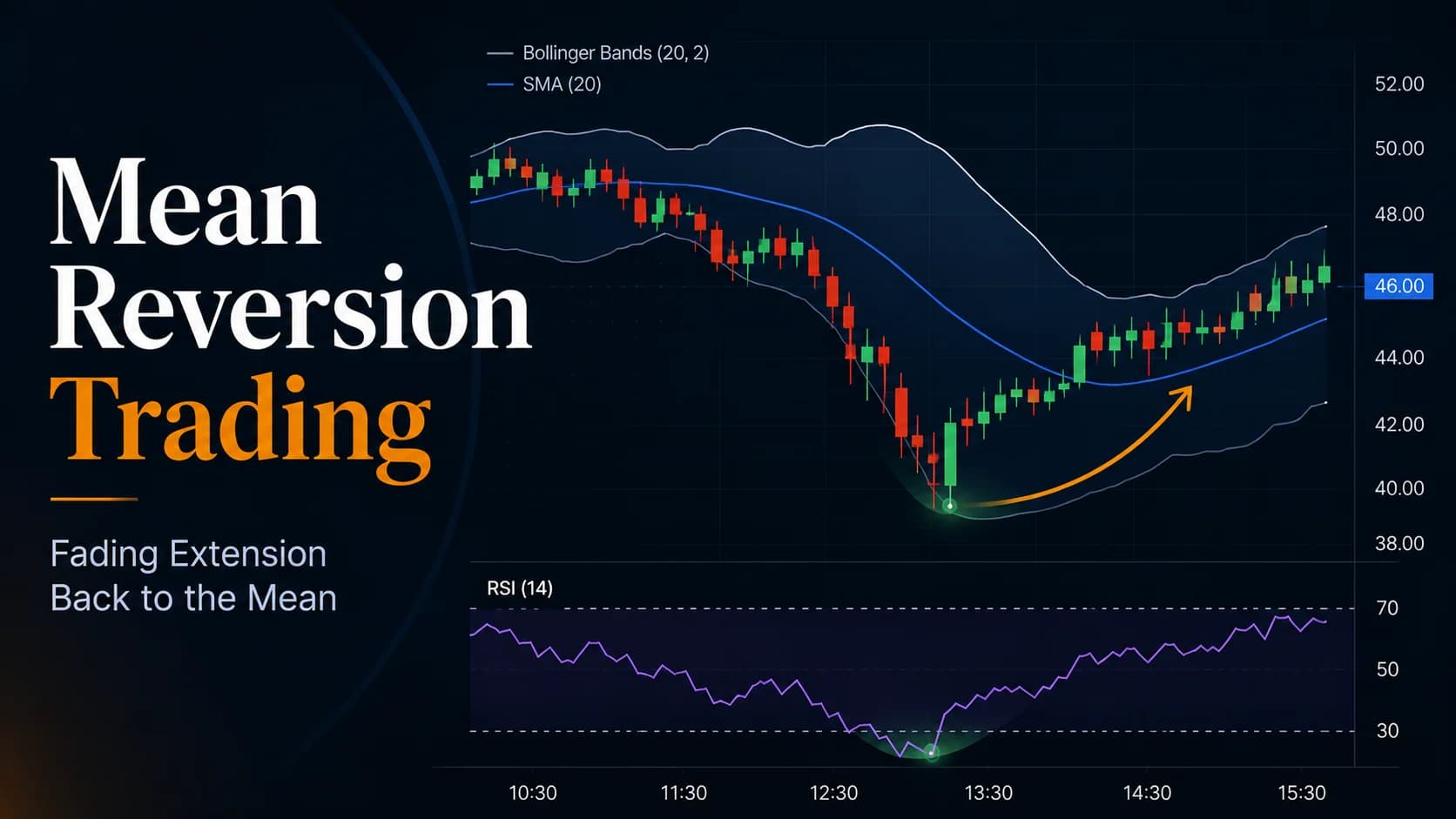
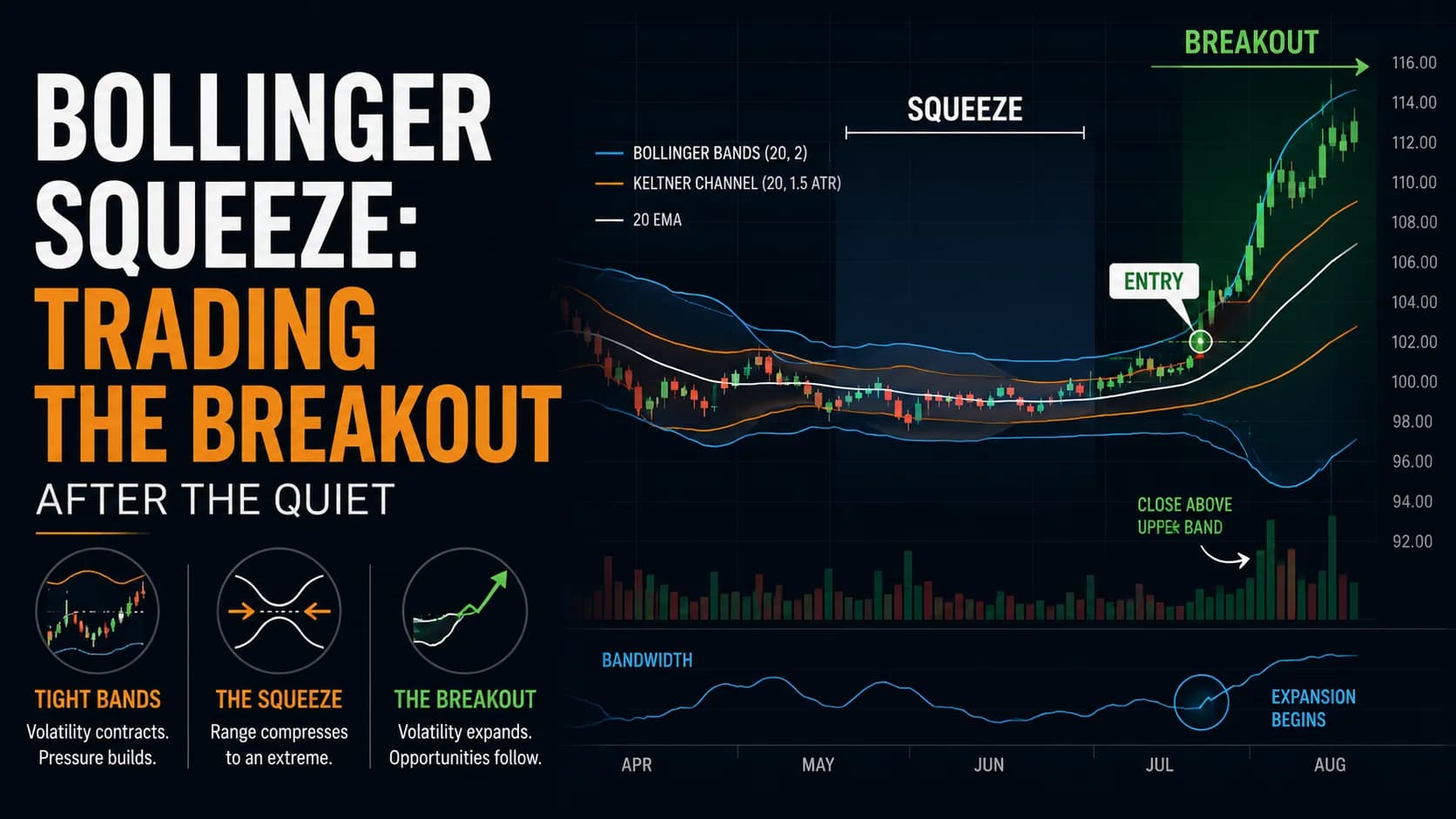
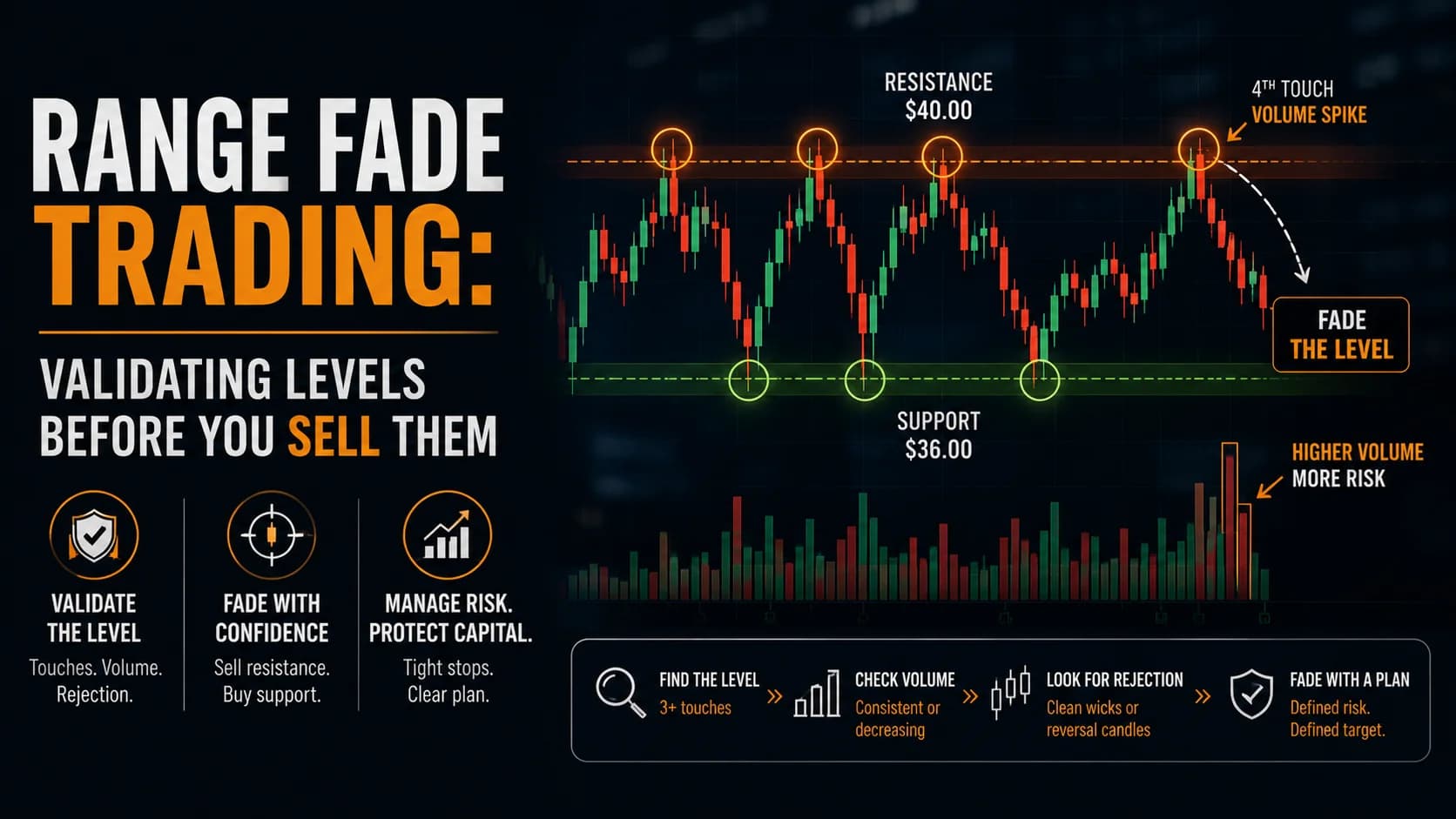
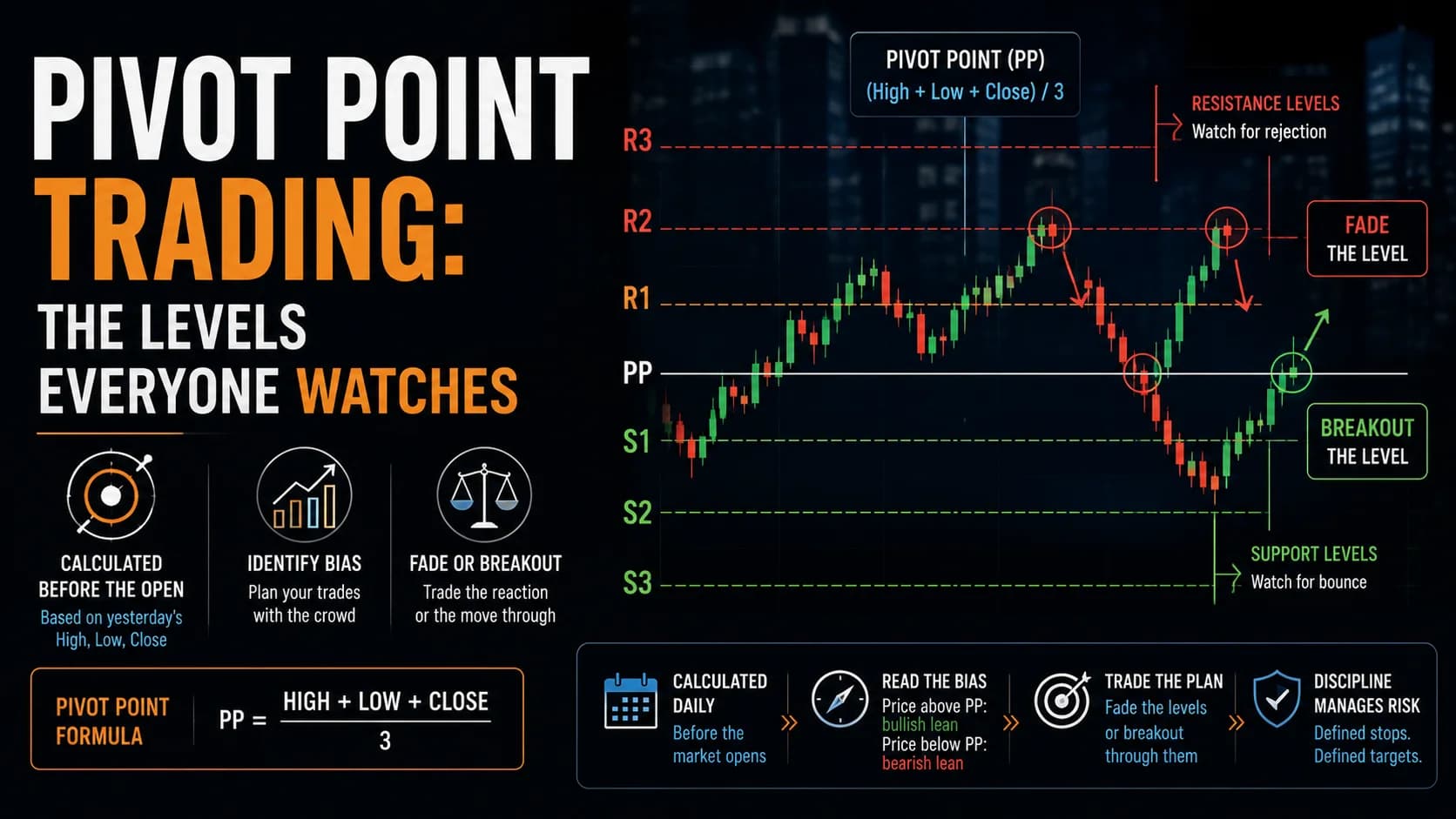
Range-Bound & Mean Reversion

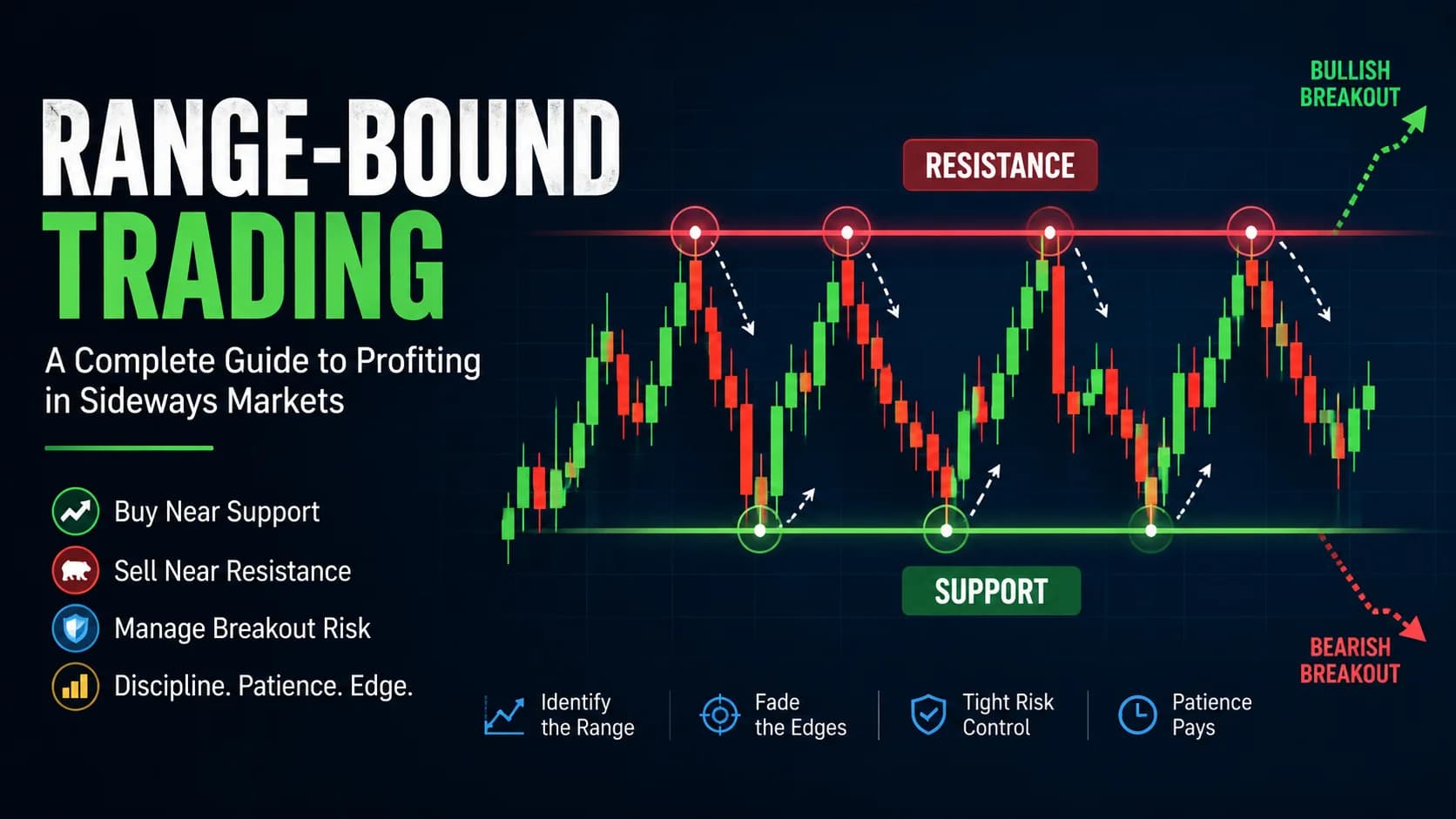
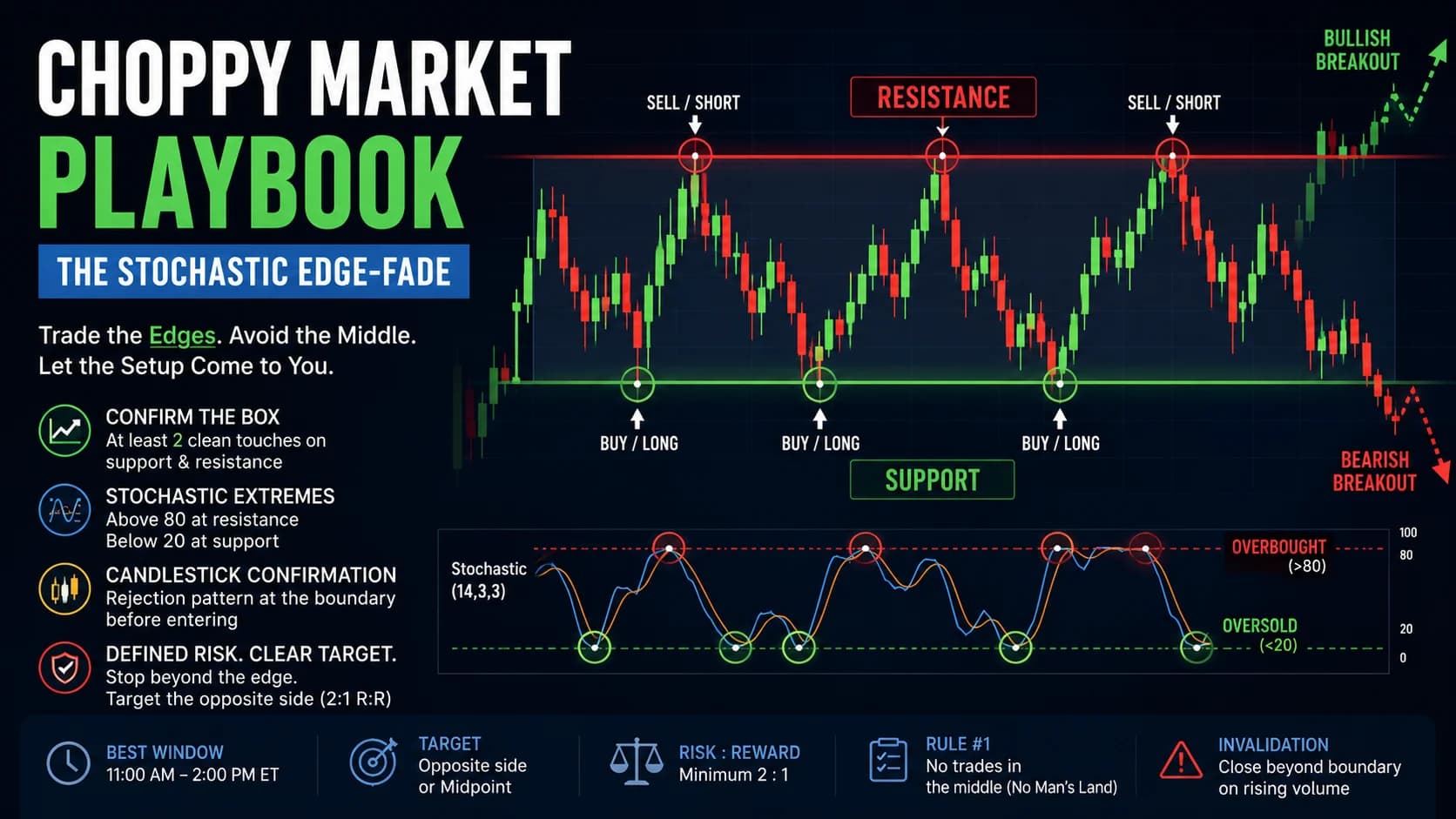
Bollinger Band squeezes, pivot point levels, the range fade, and choppy-market survival — strategies for extracting edge when a stock refuses to trend but still oscillates within defined levels.

4 of 9 published ~1h read
4
Module 4· When Price Escapes

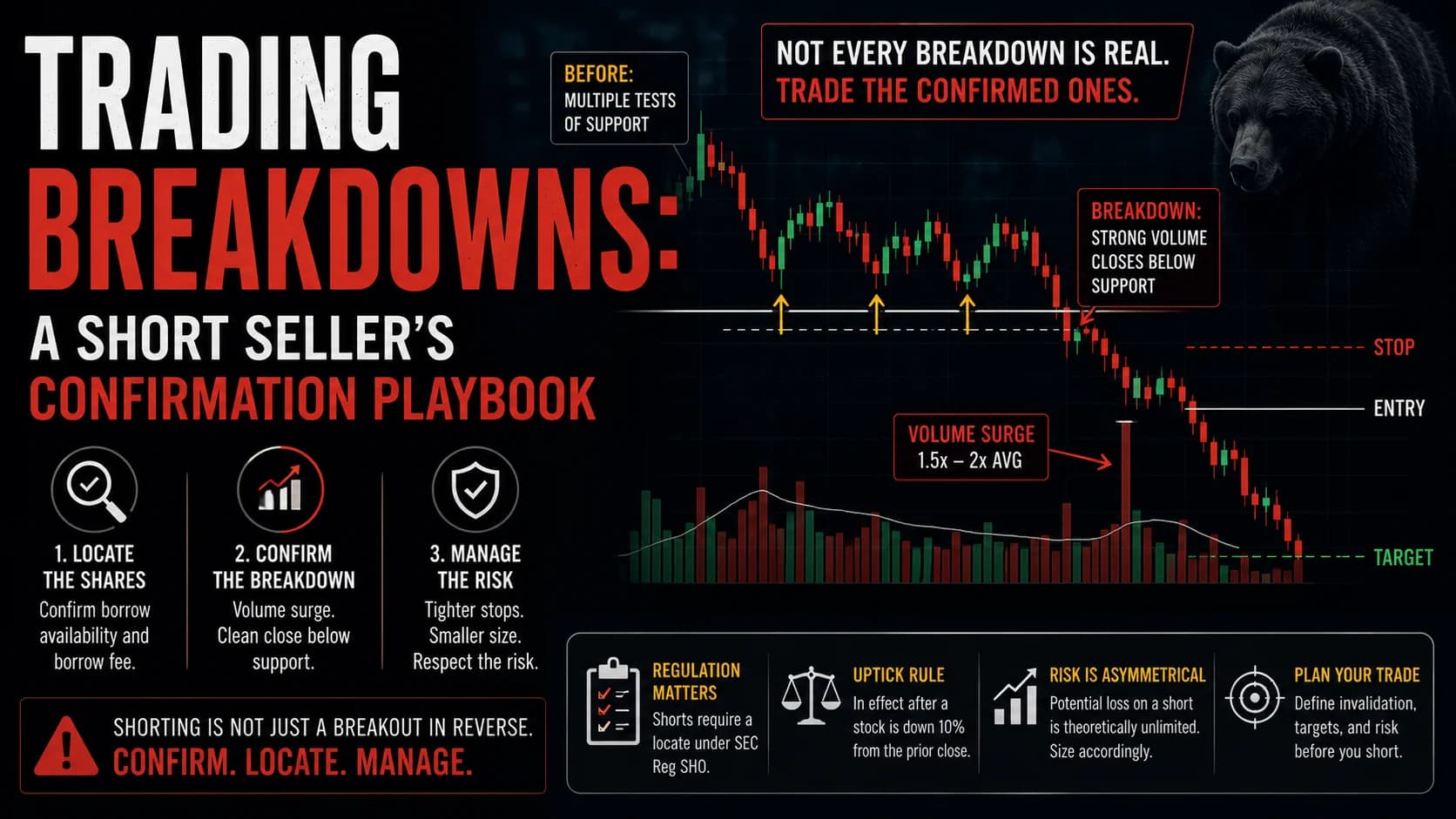
Breakout & Breakdown

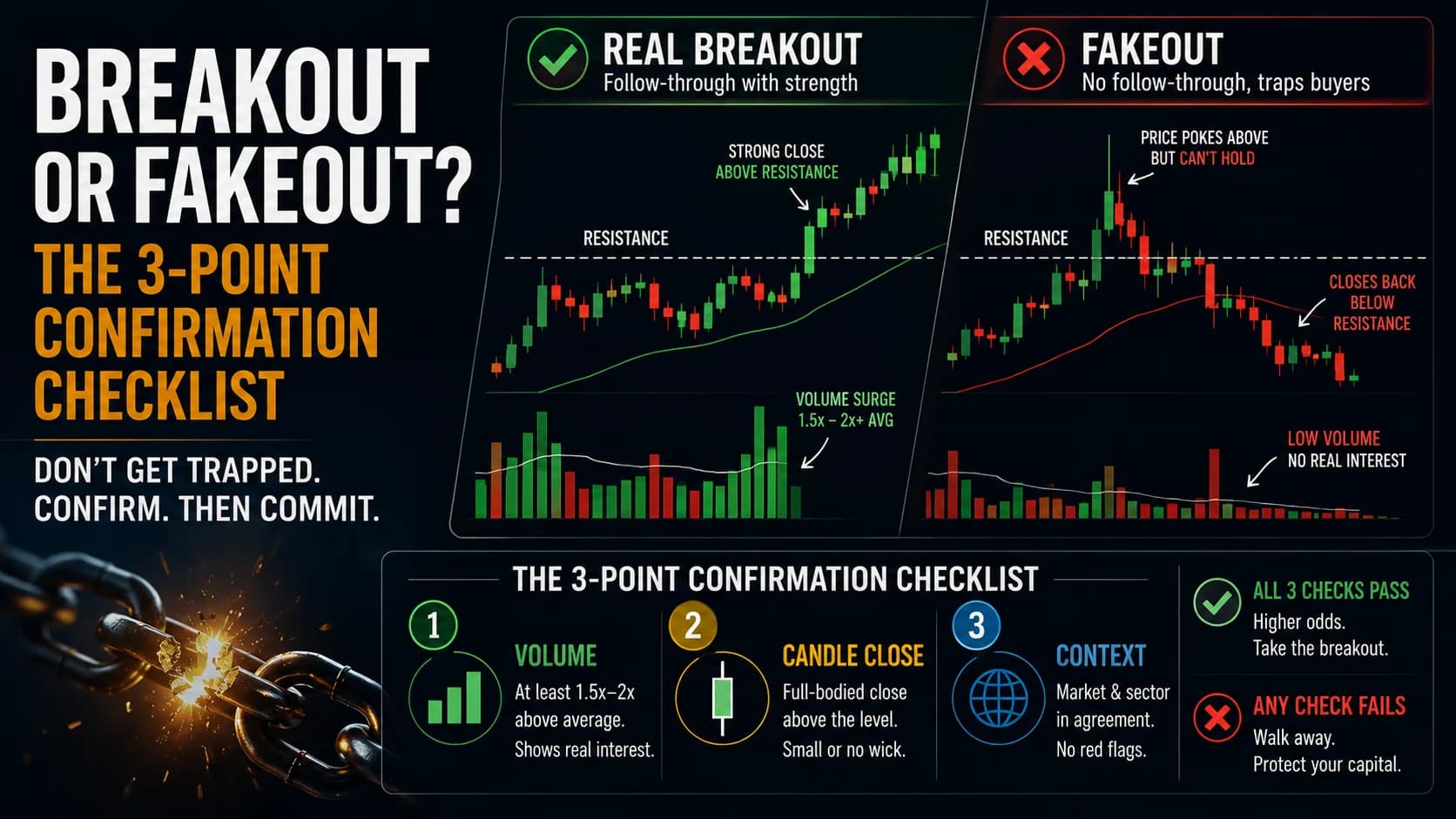
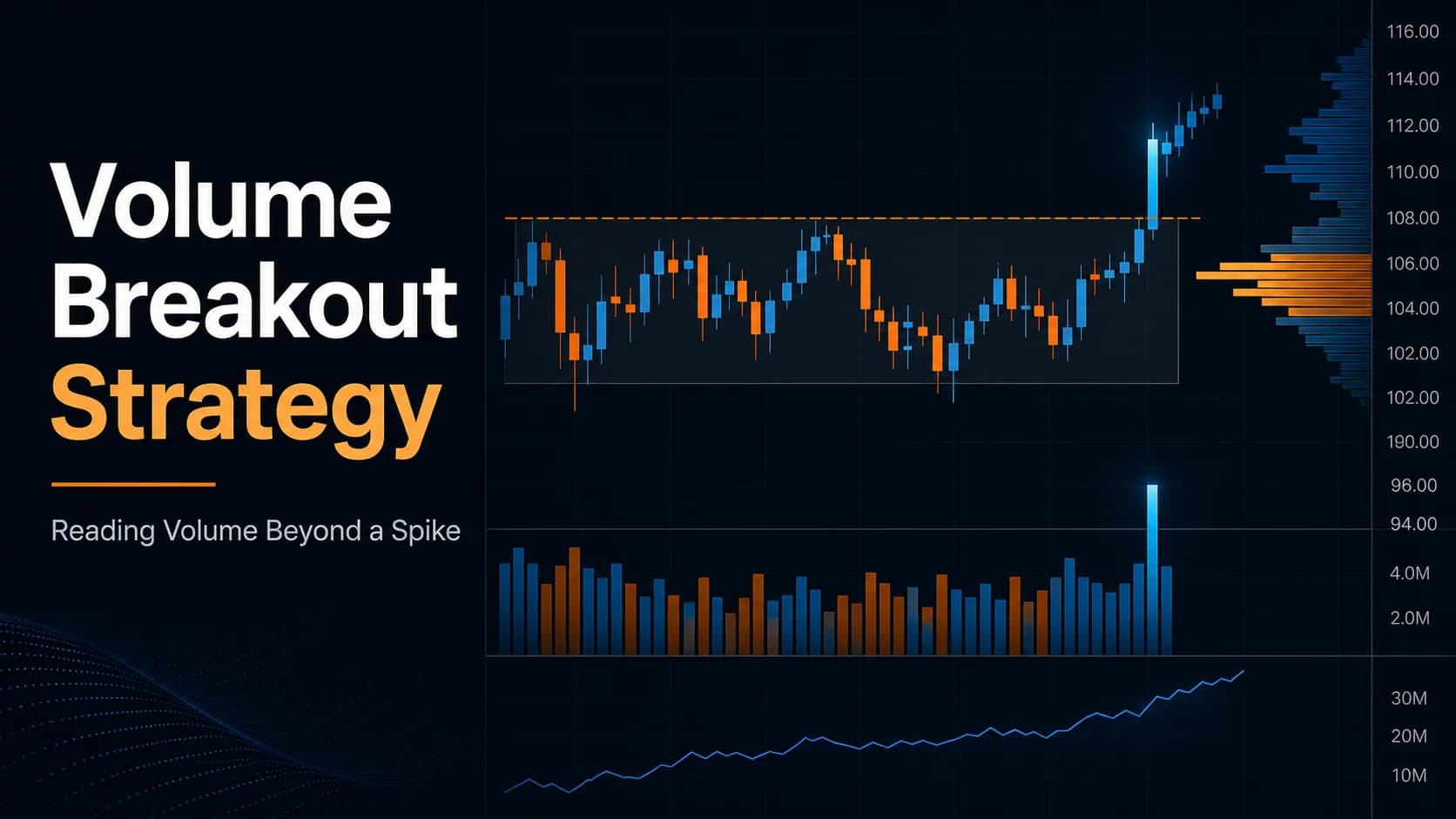
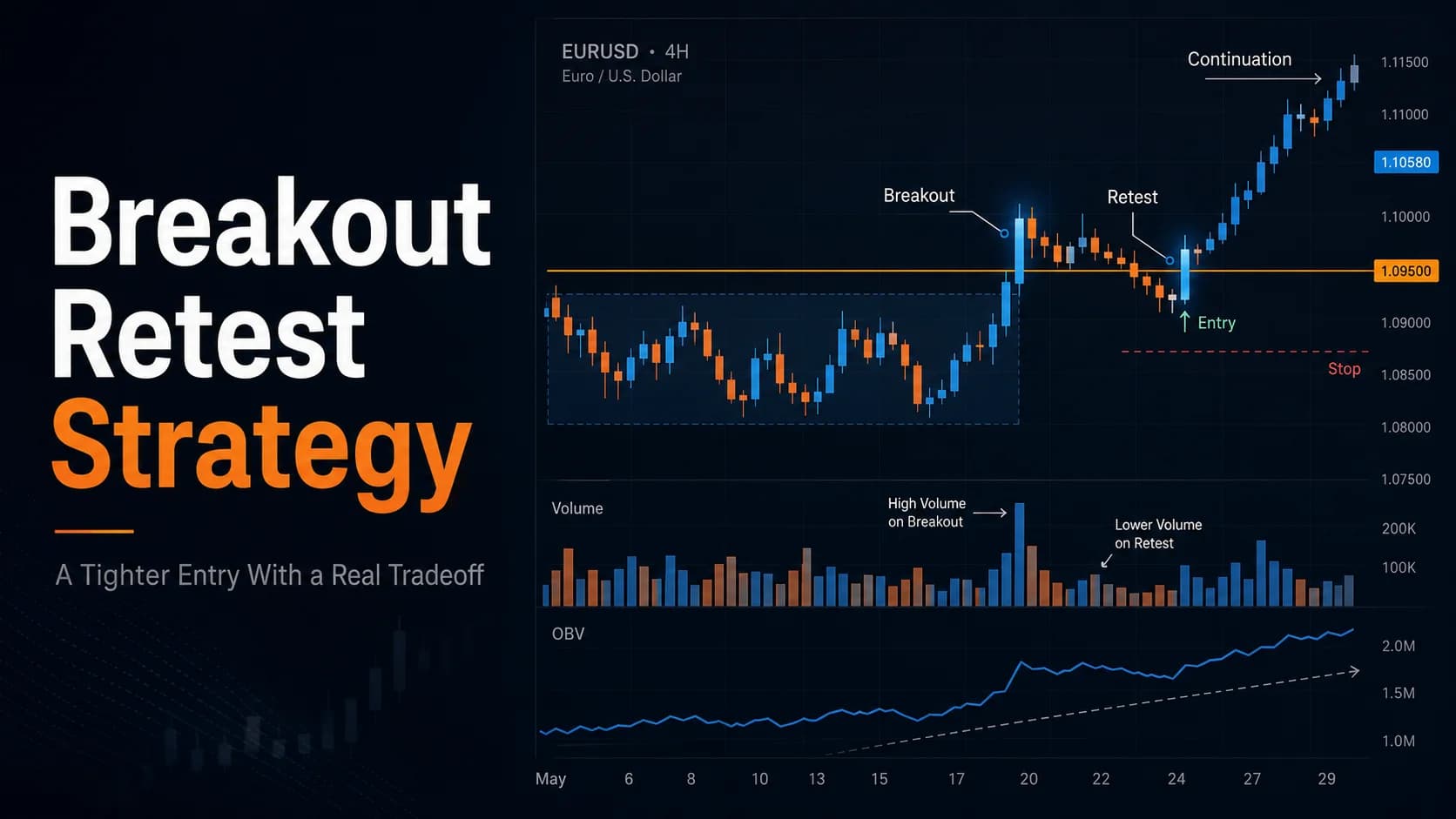
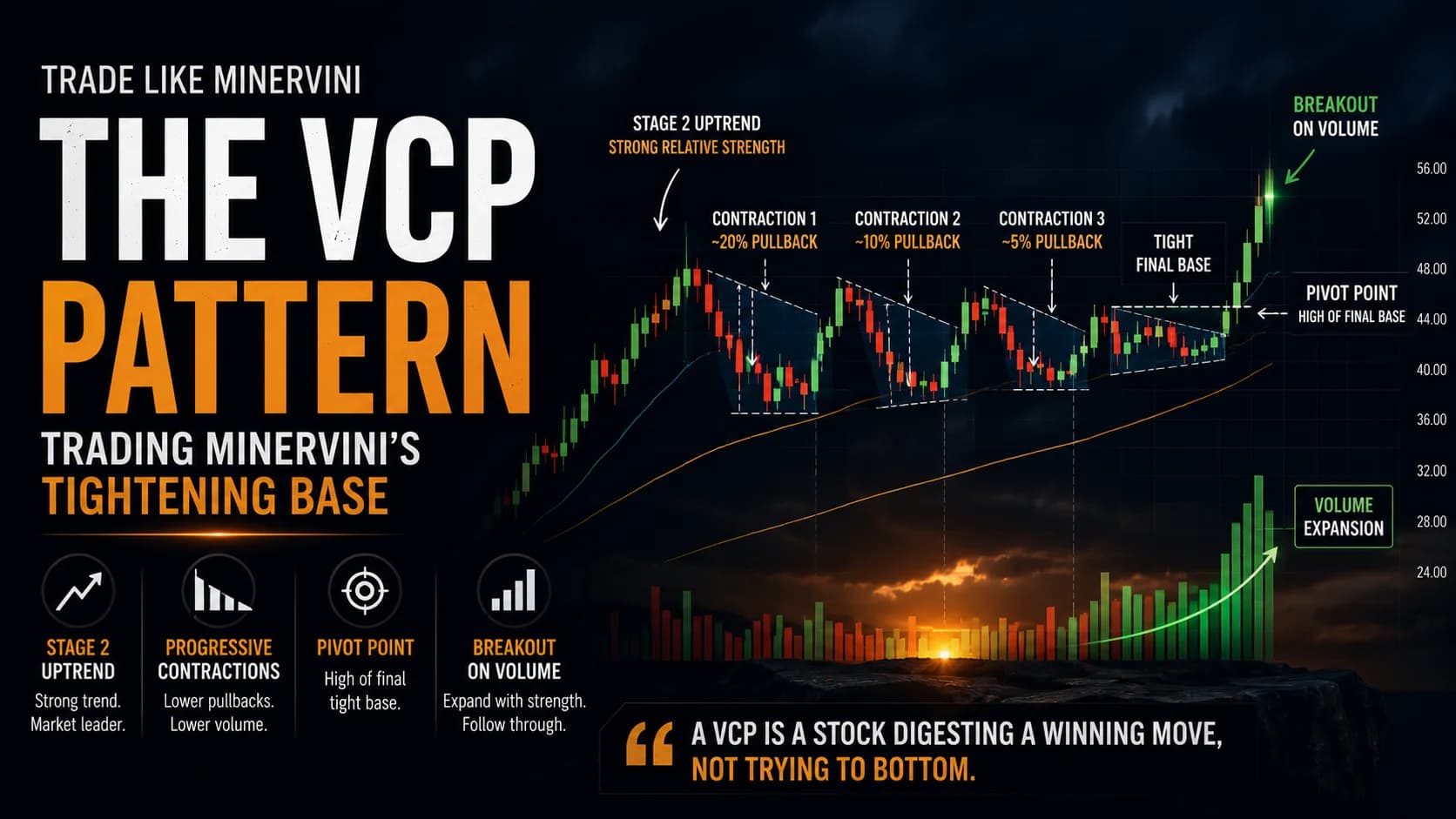
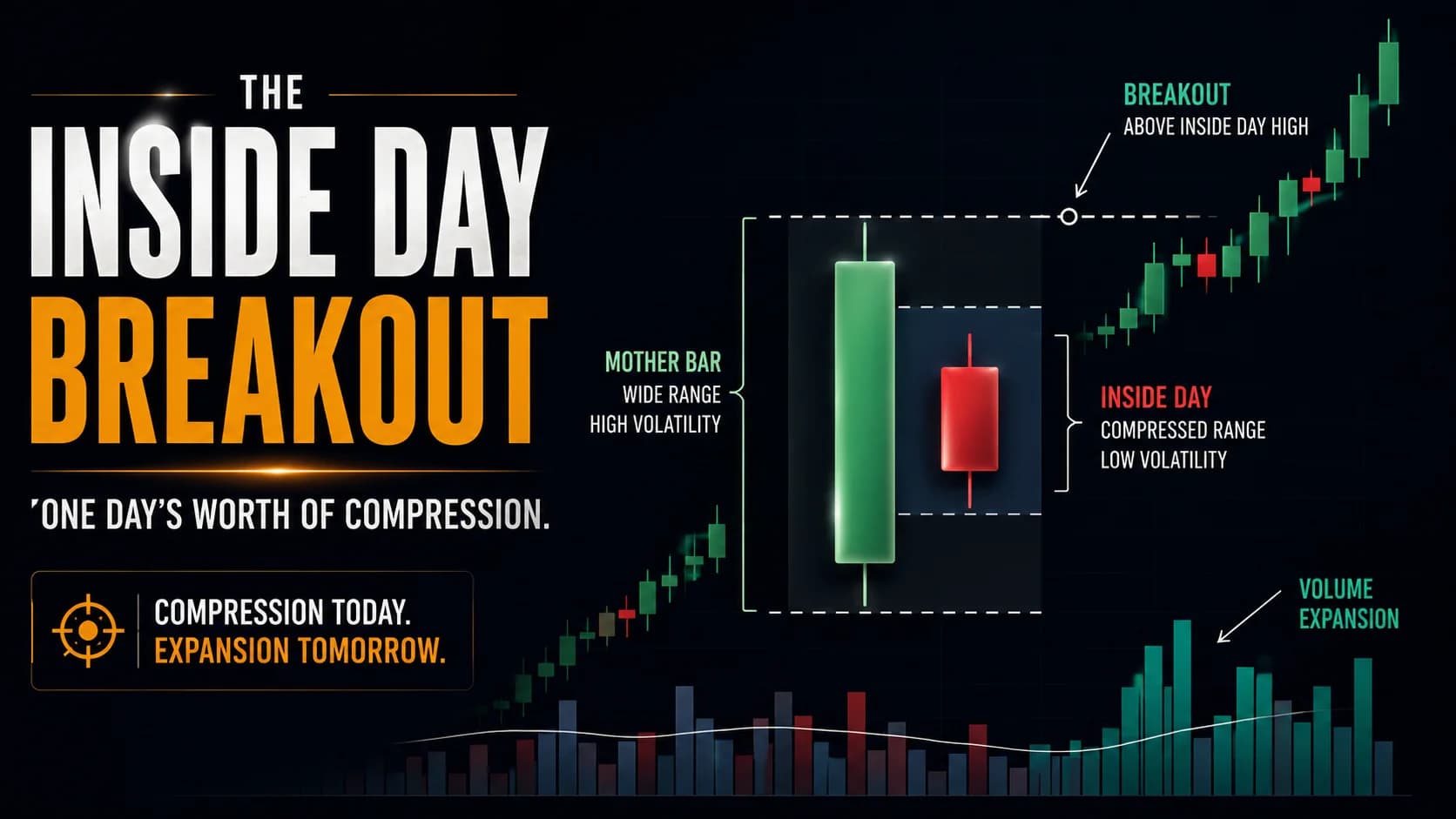
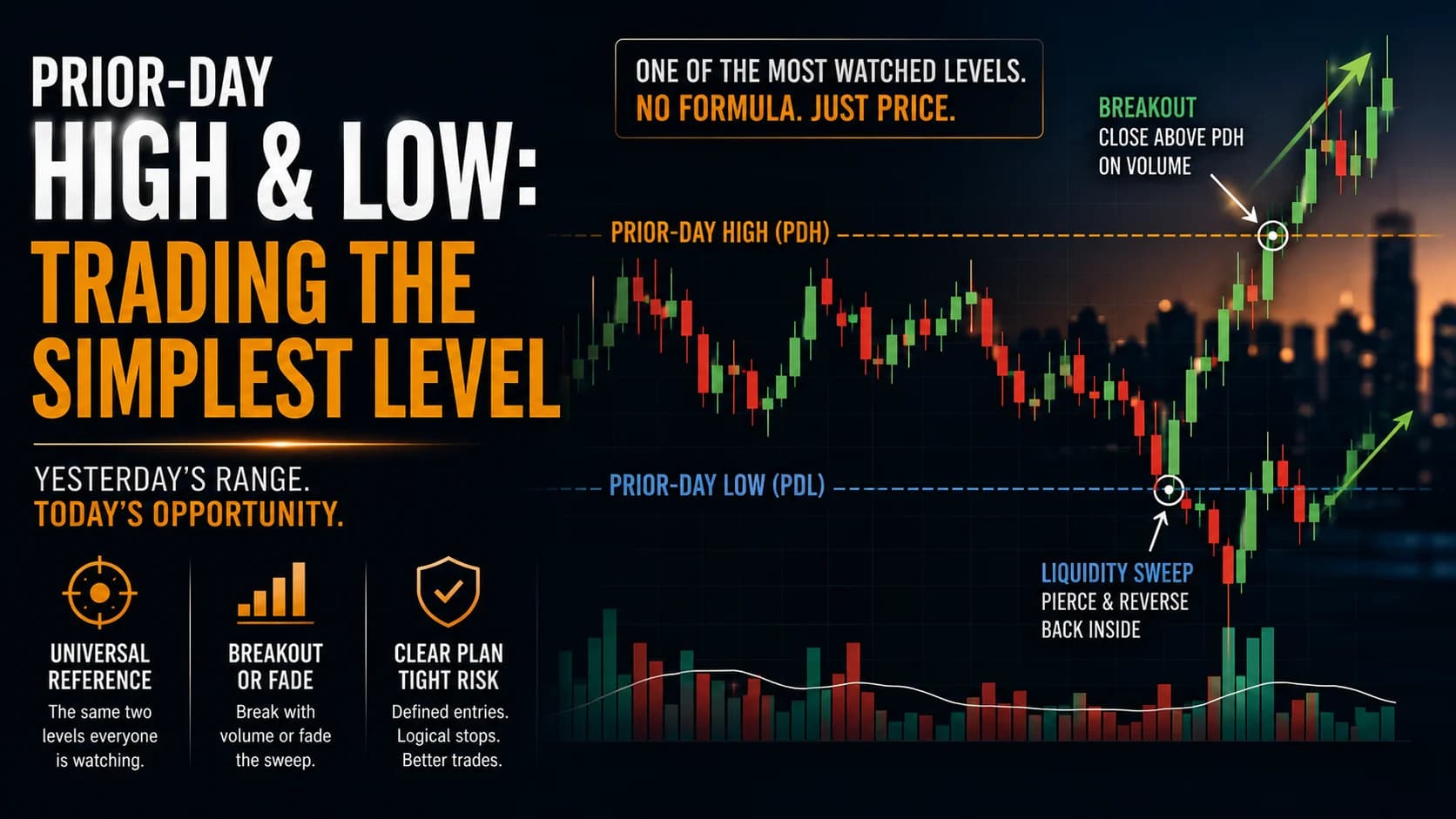
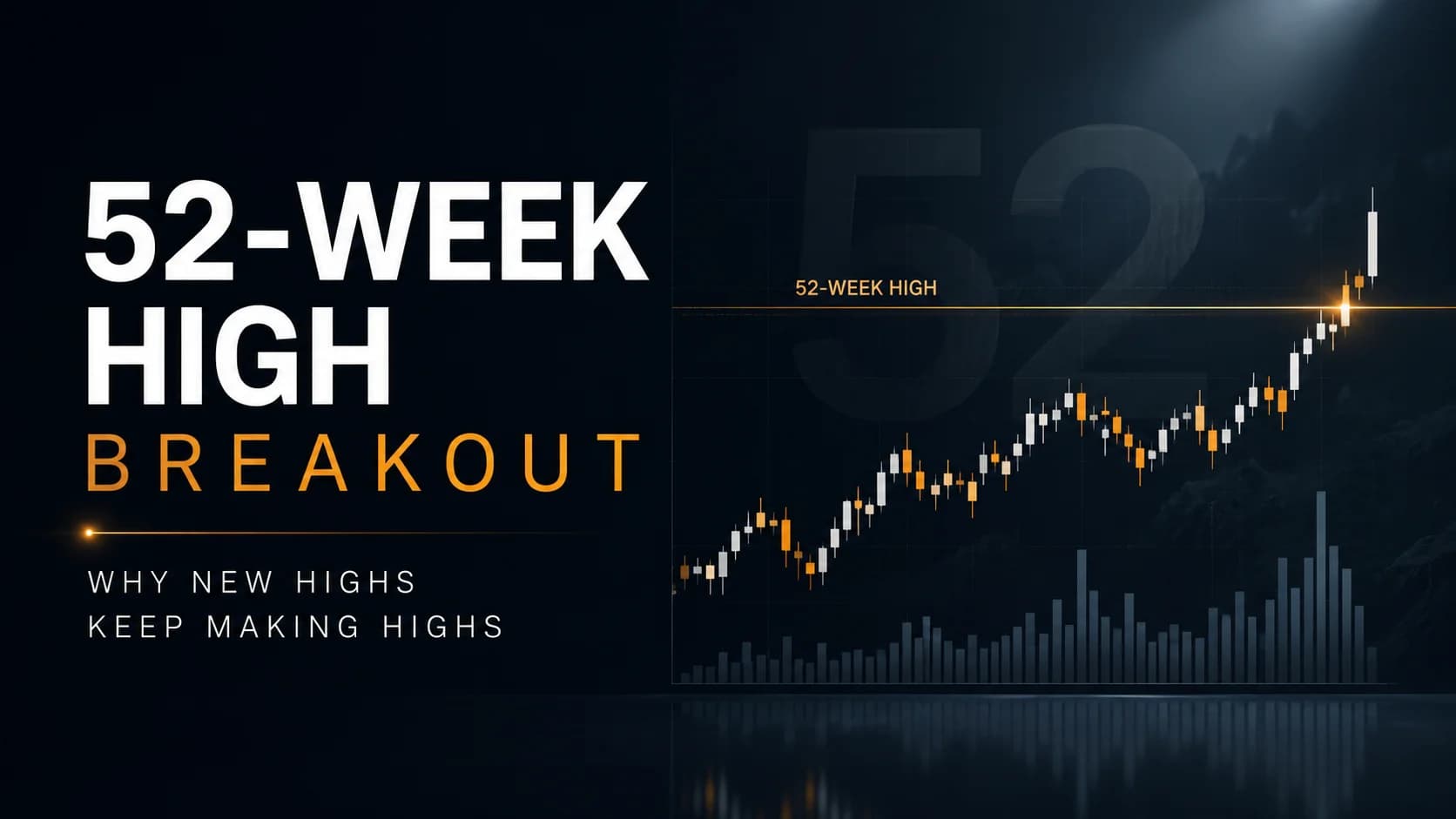
Breakout vs. fakeout checklist, volume confirmation, retest entries, VCP patterns, inside day plays, prior-day high/low breaks, and 52-week high breakouts — with failure modes on every setup.
2 of 9 published ~1h read
5
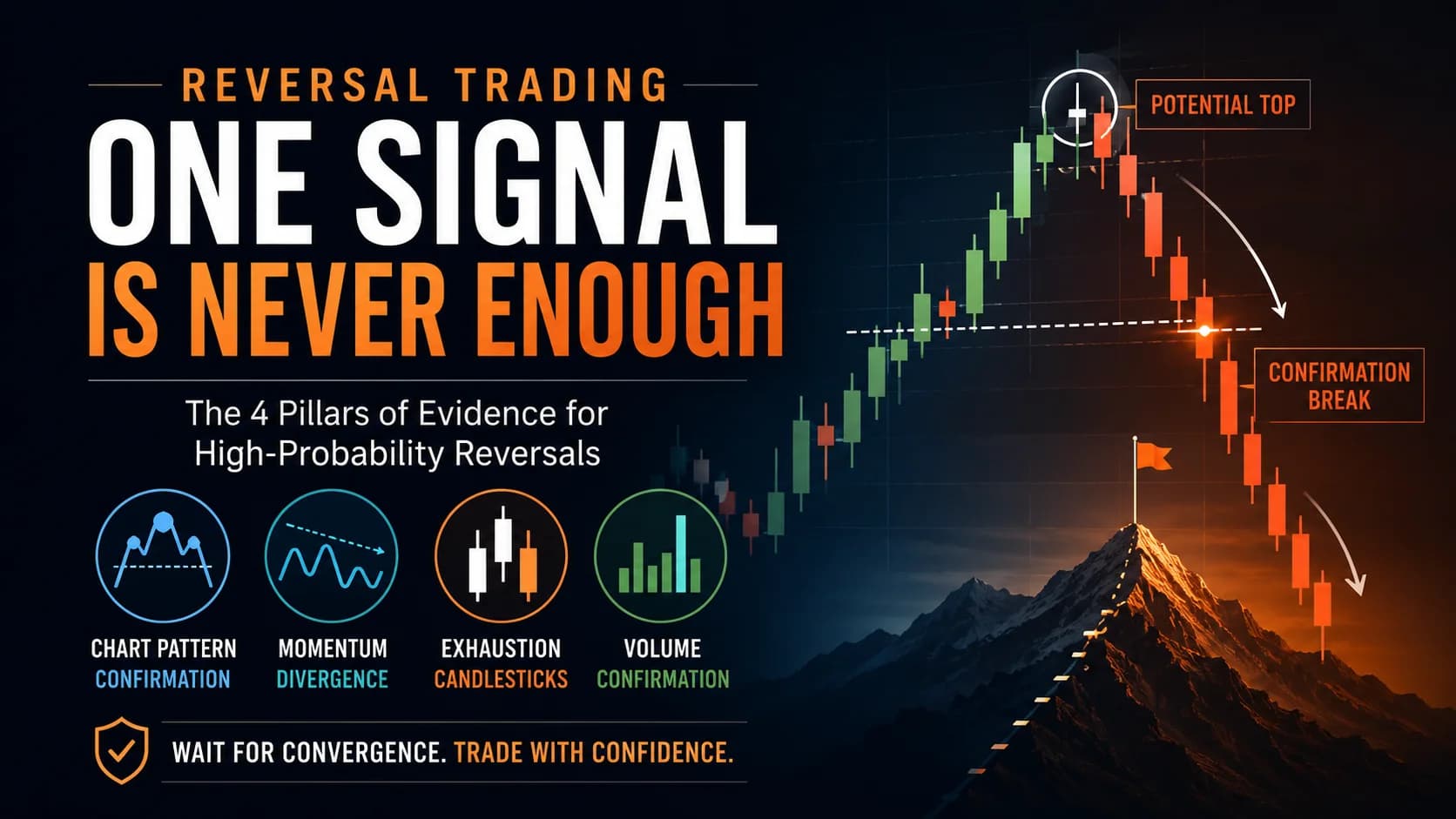
Module 5· Calling the Turn

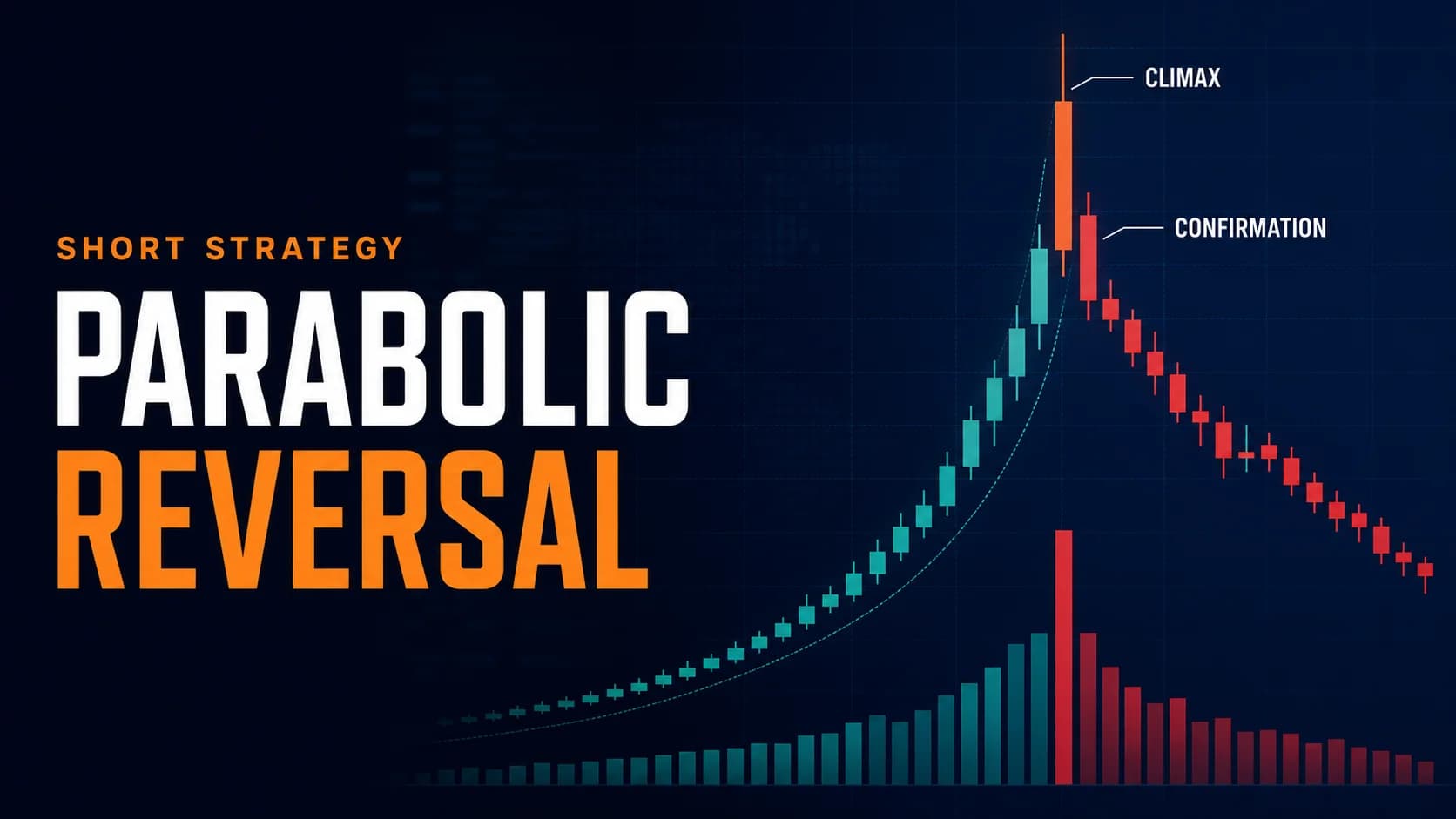
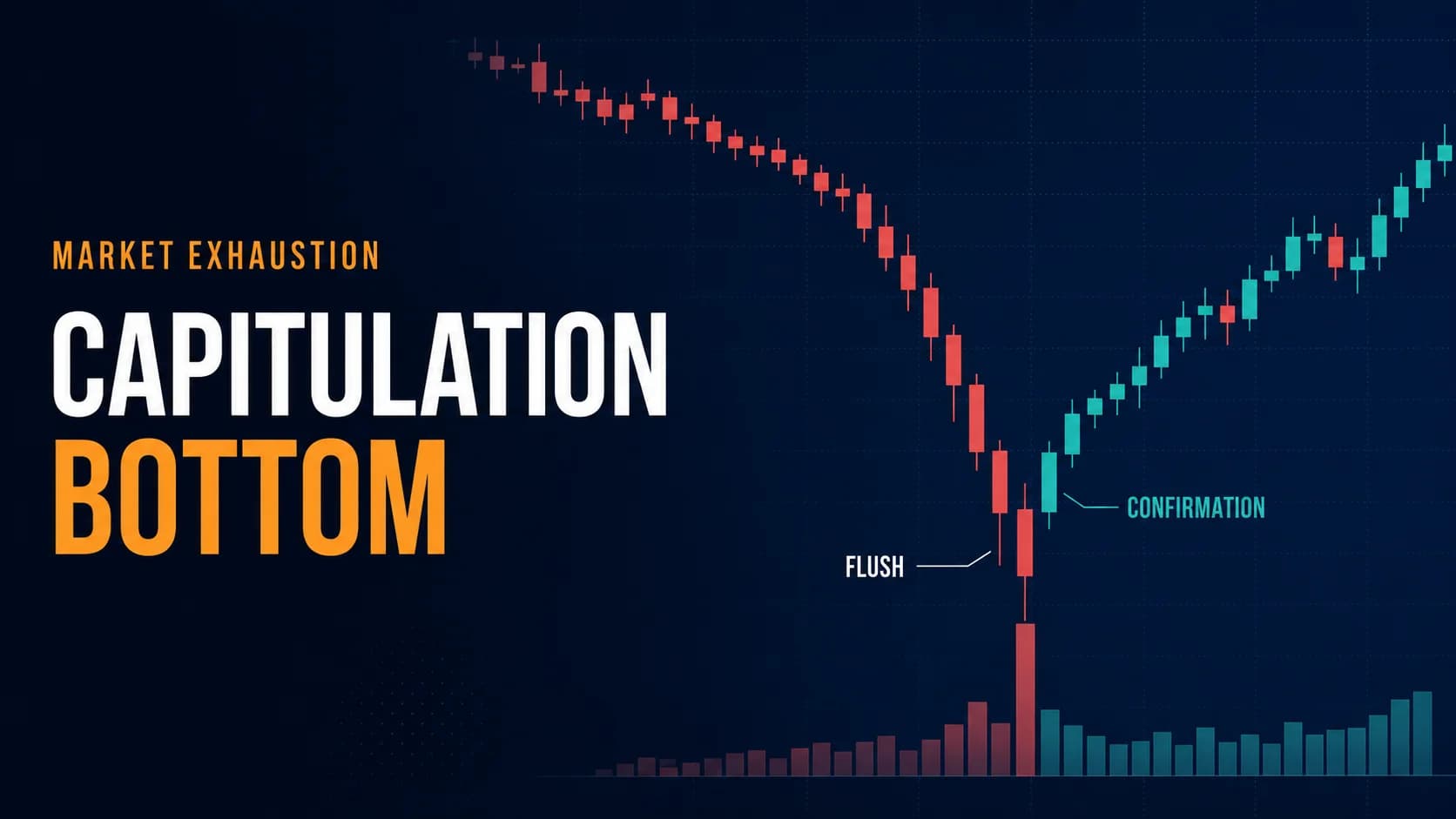
Reversal Strategies
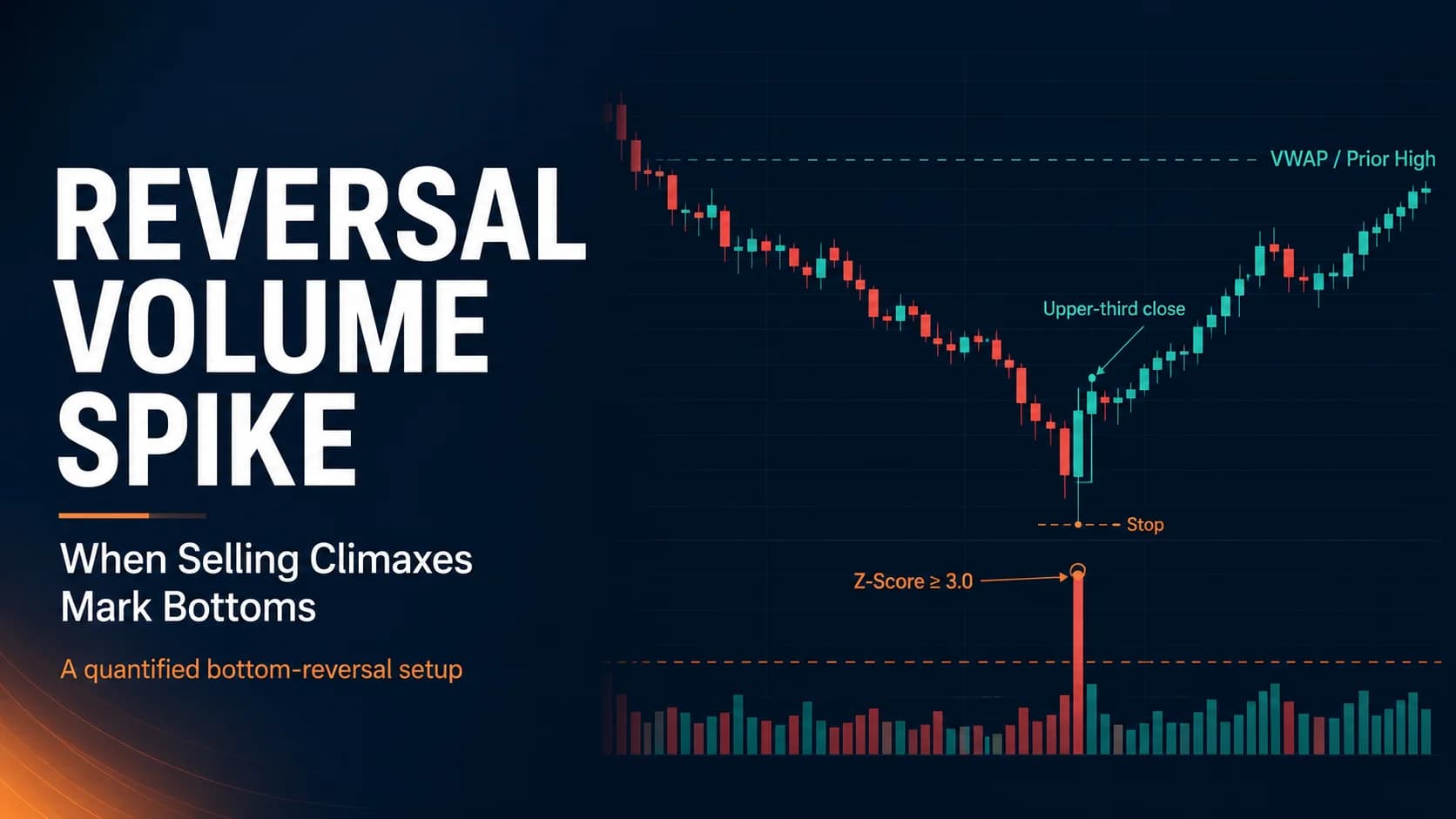
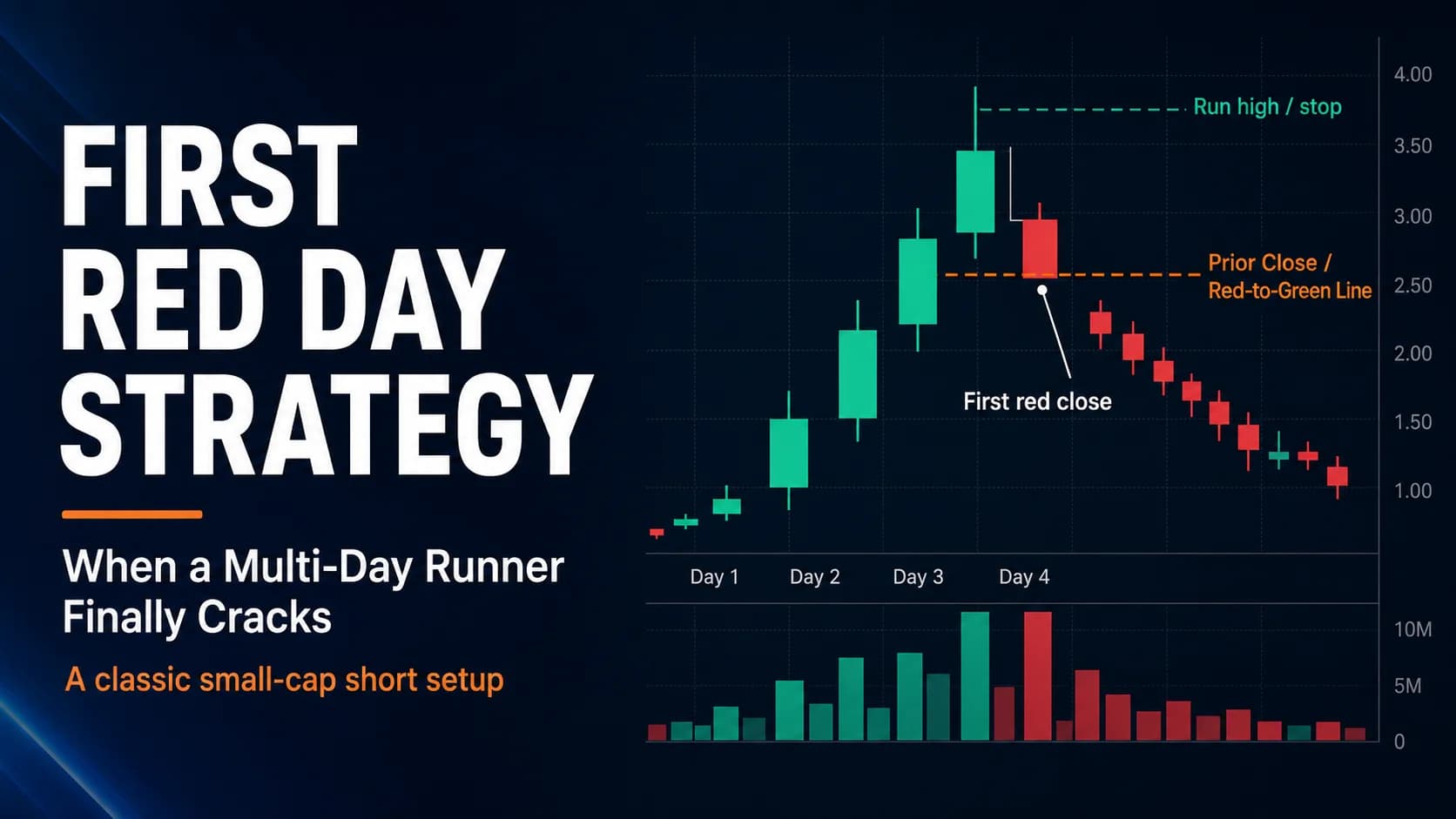
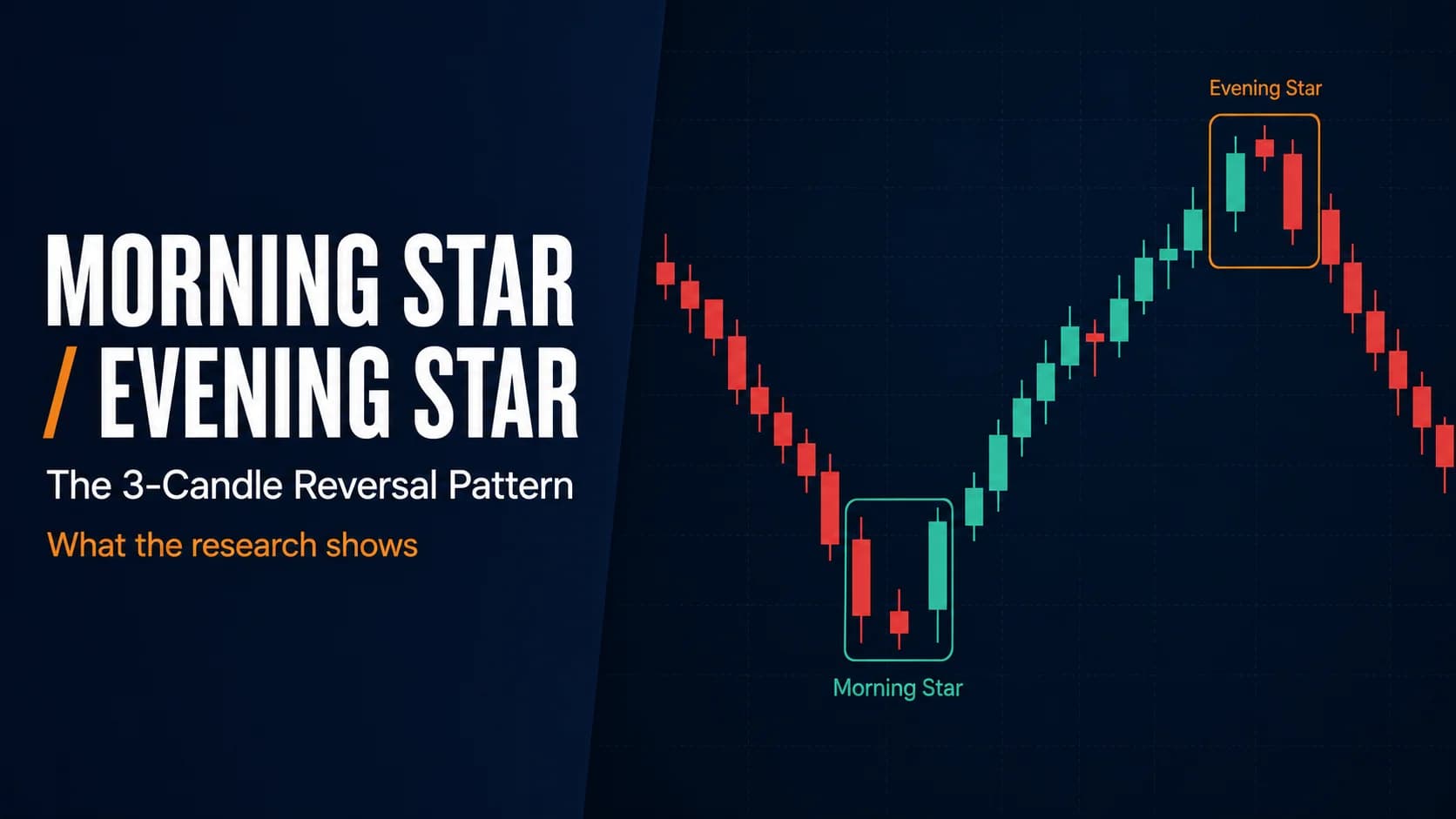
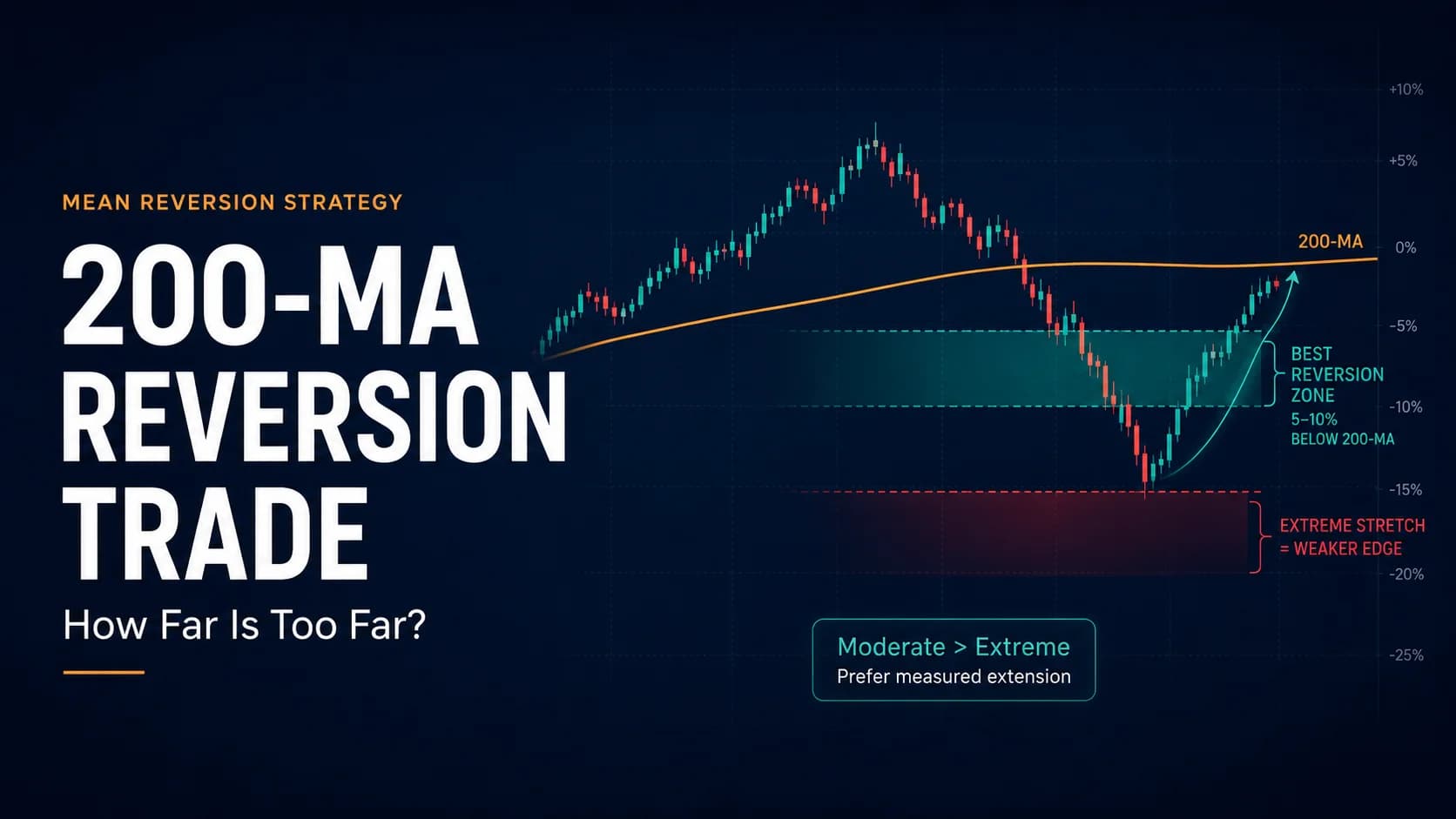
Parabolic short setups, capitulation bottoms, volume-spike reversals, the first red day, morning and evening star patterns, and the 200-MA reversion — identifying when a move is exhausted.
3 of 9 published ~1h read
6
Module 6· Fast Money, Tight Rules

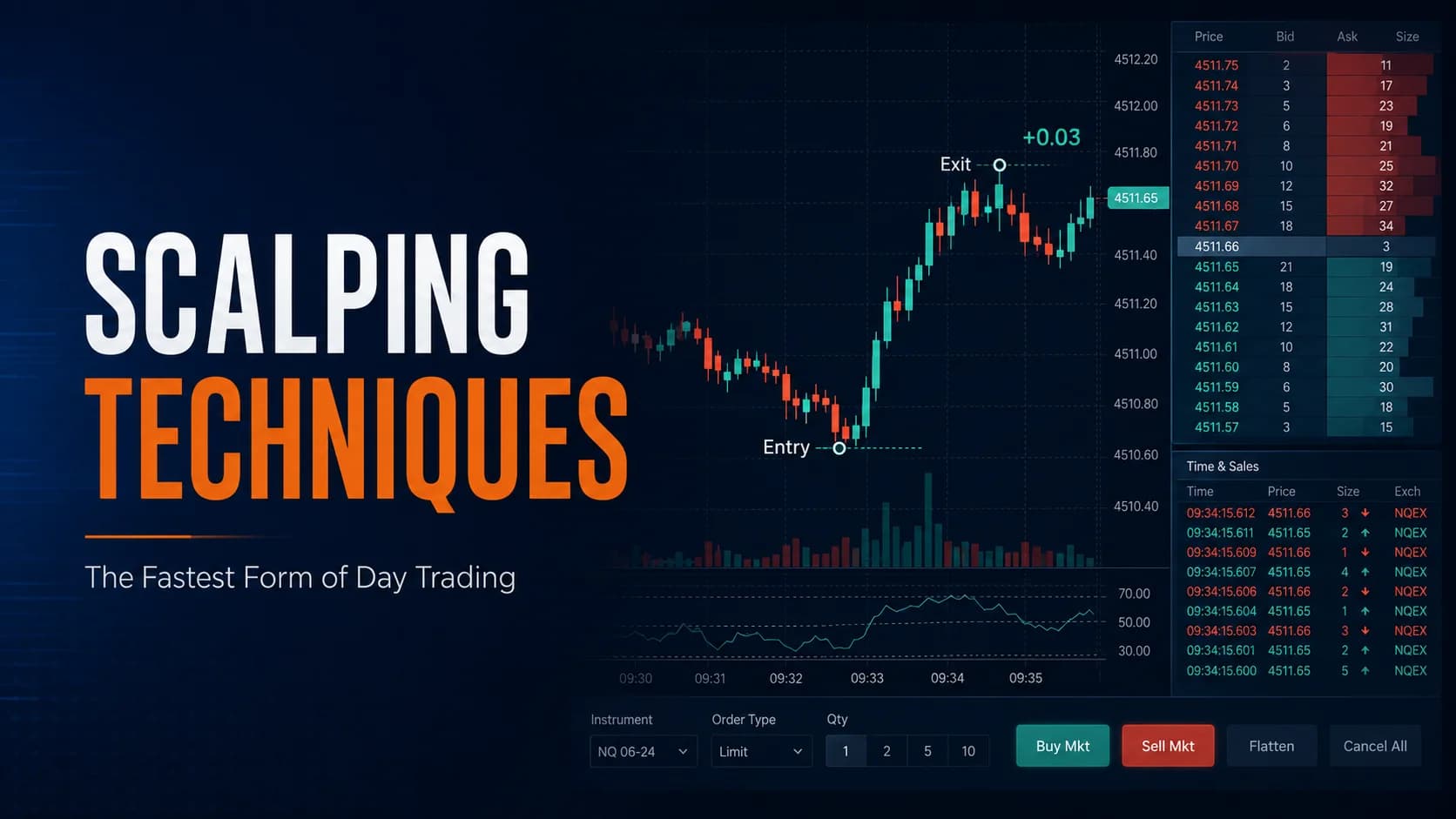
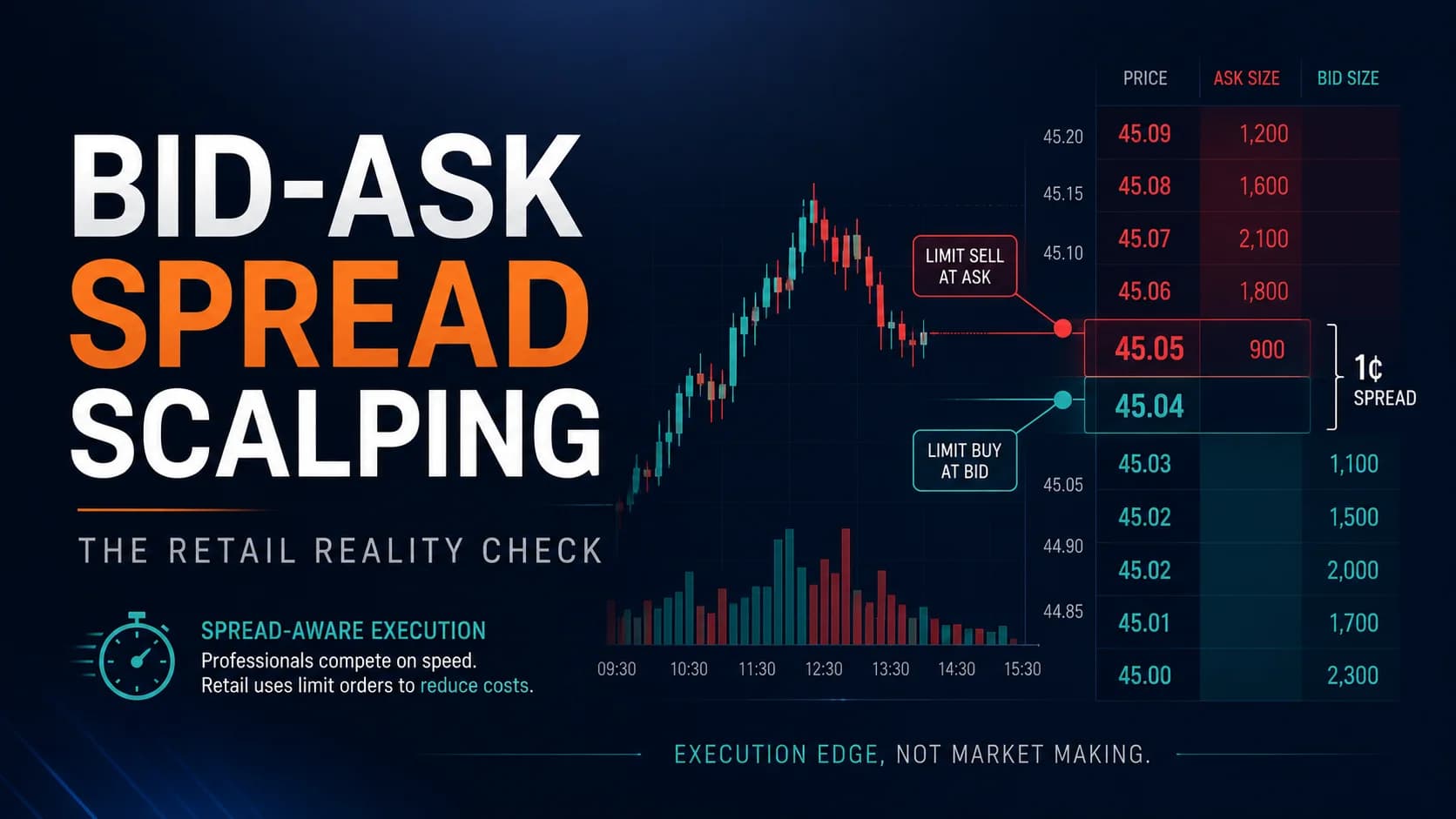
Momentum & Scalping

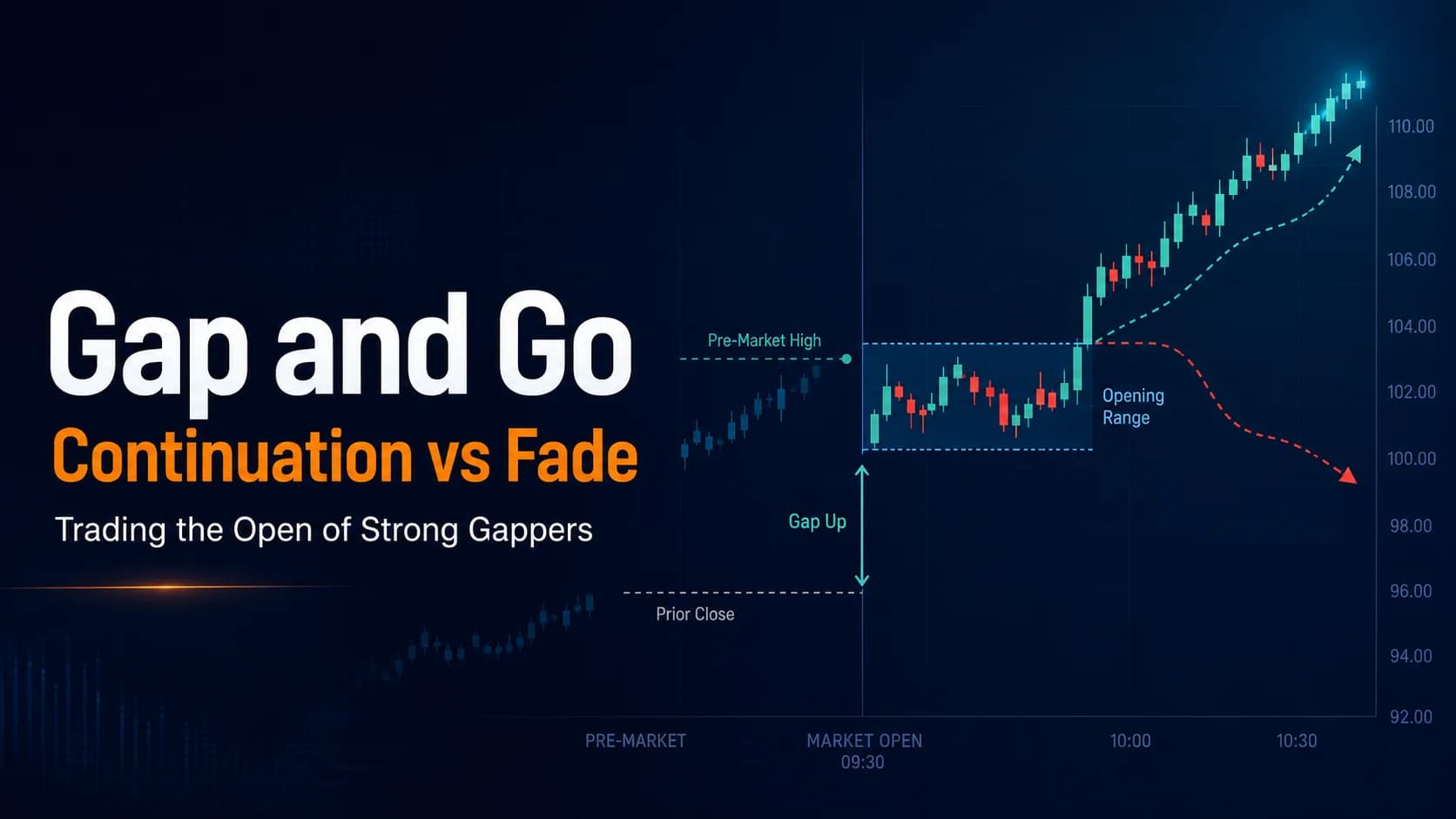
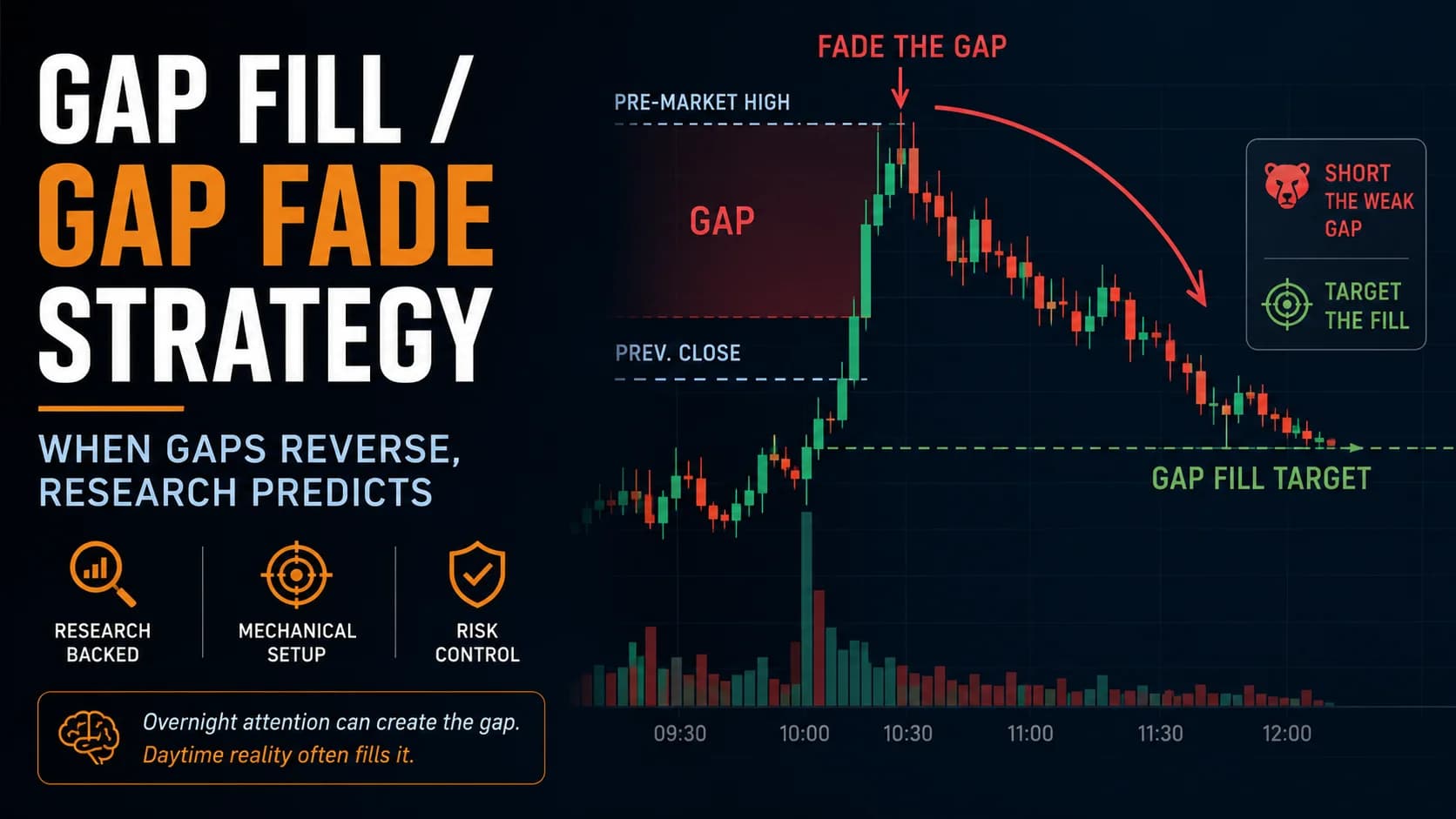
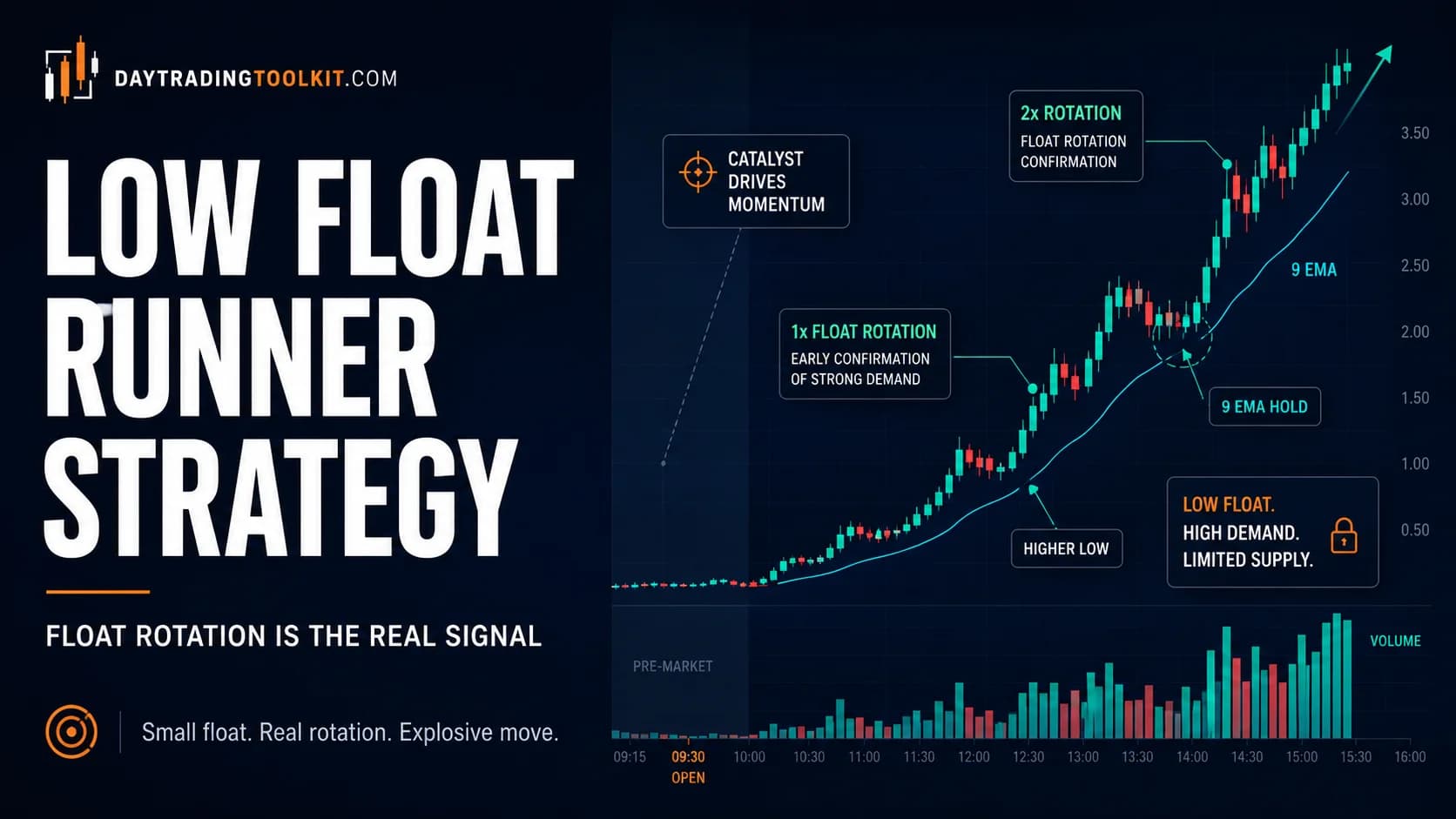
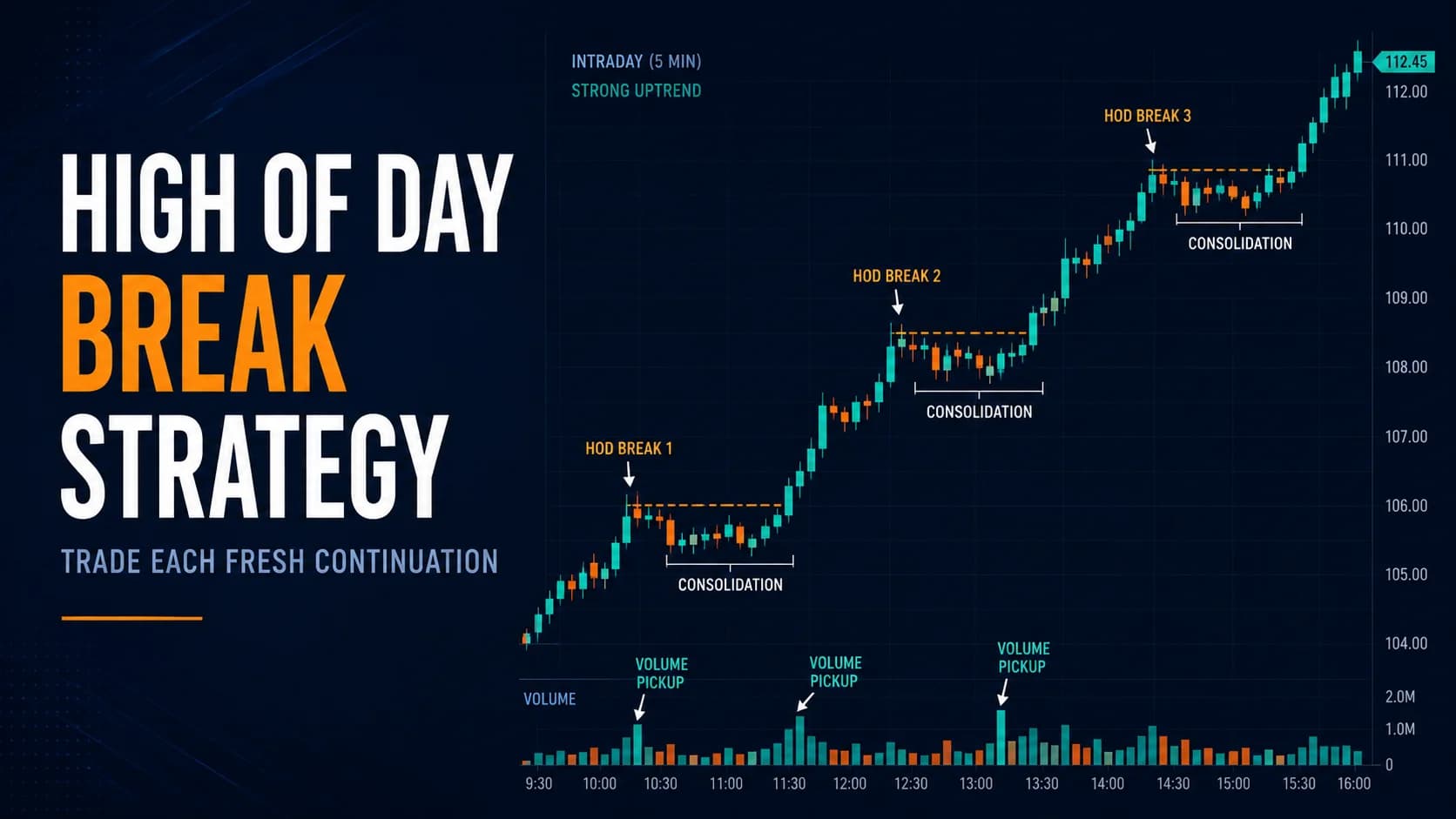
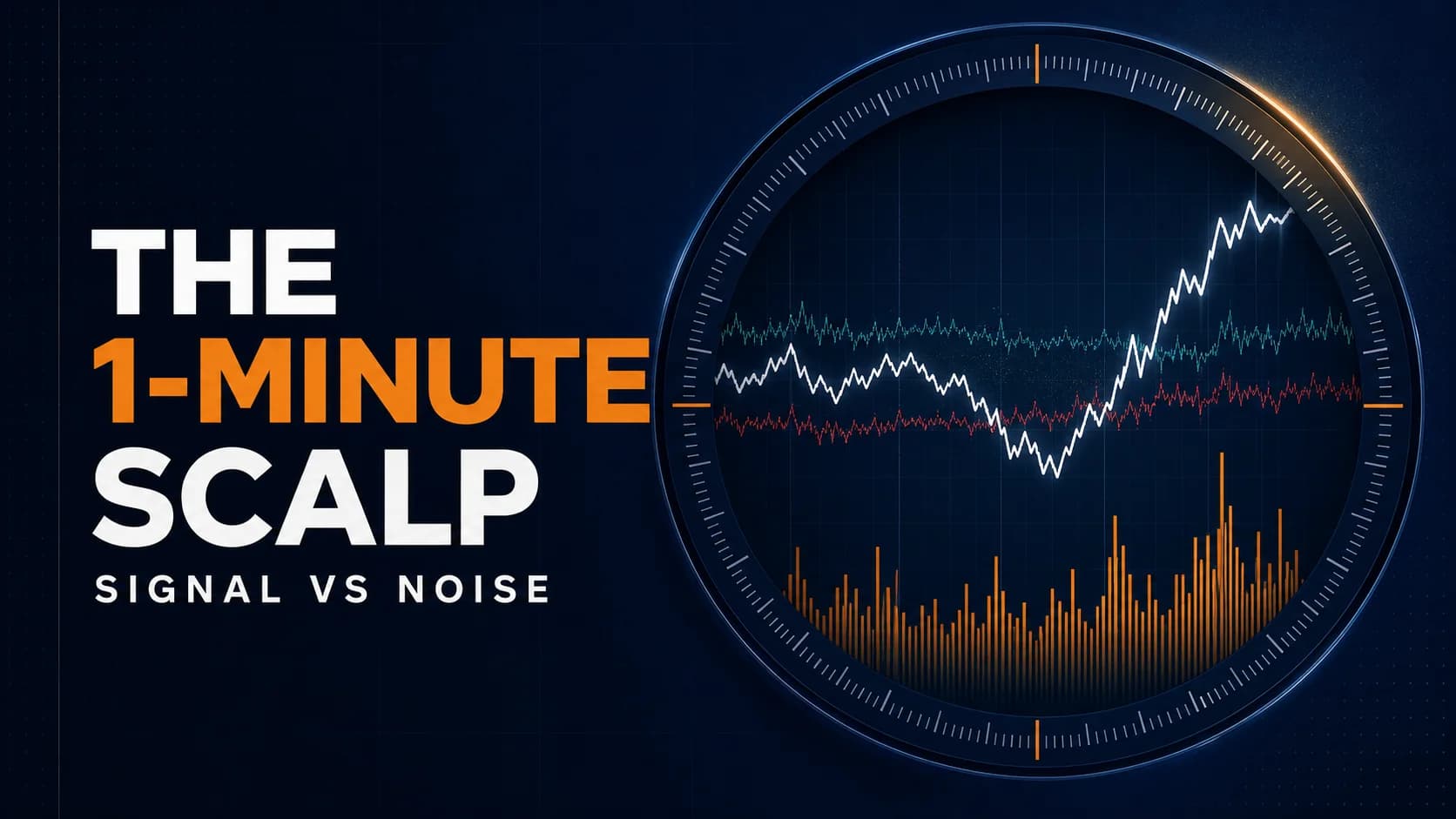
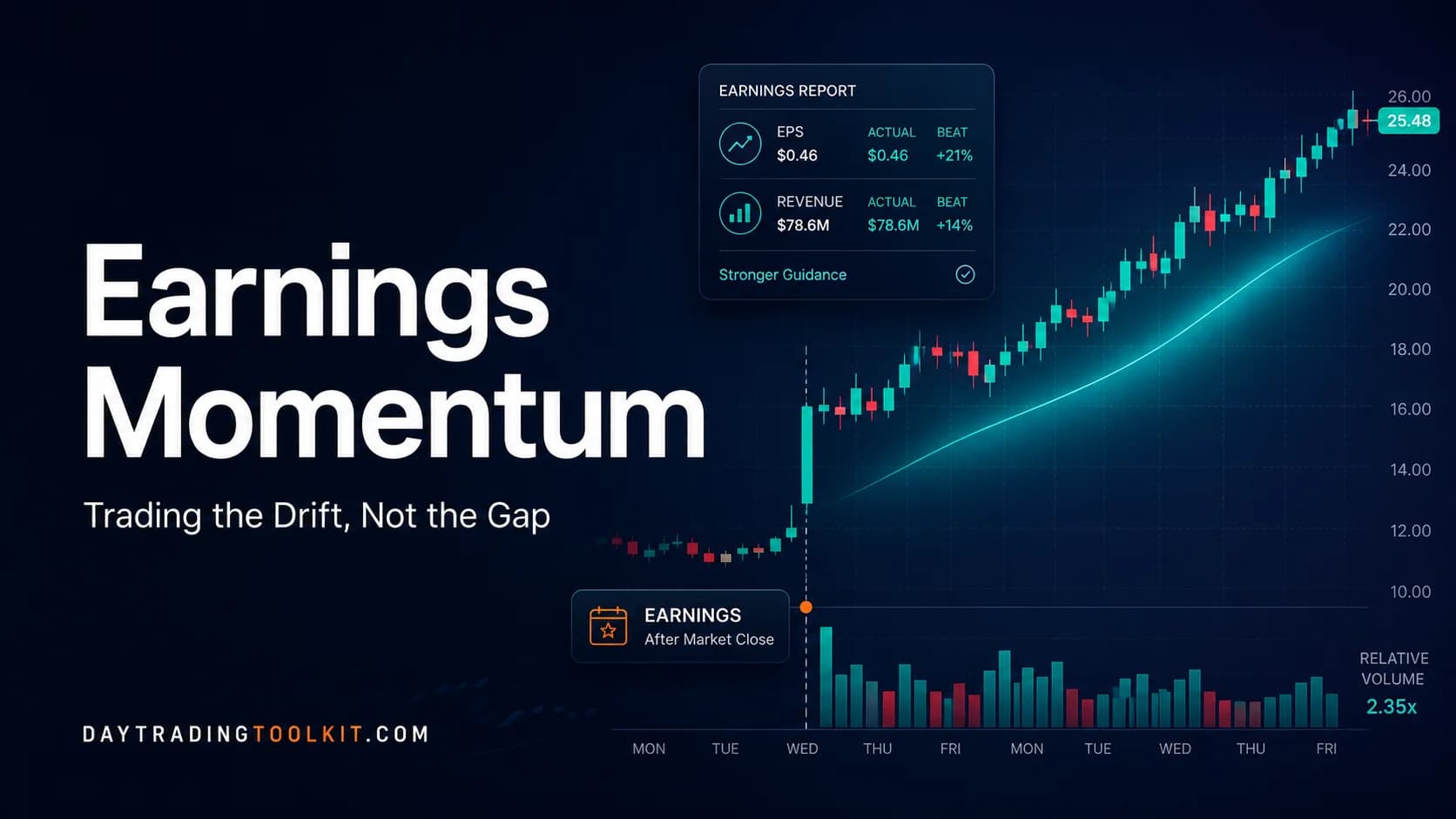
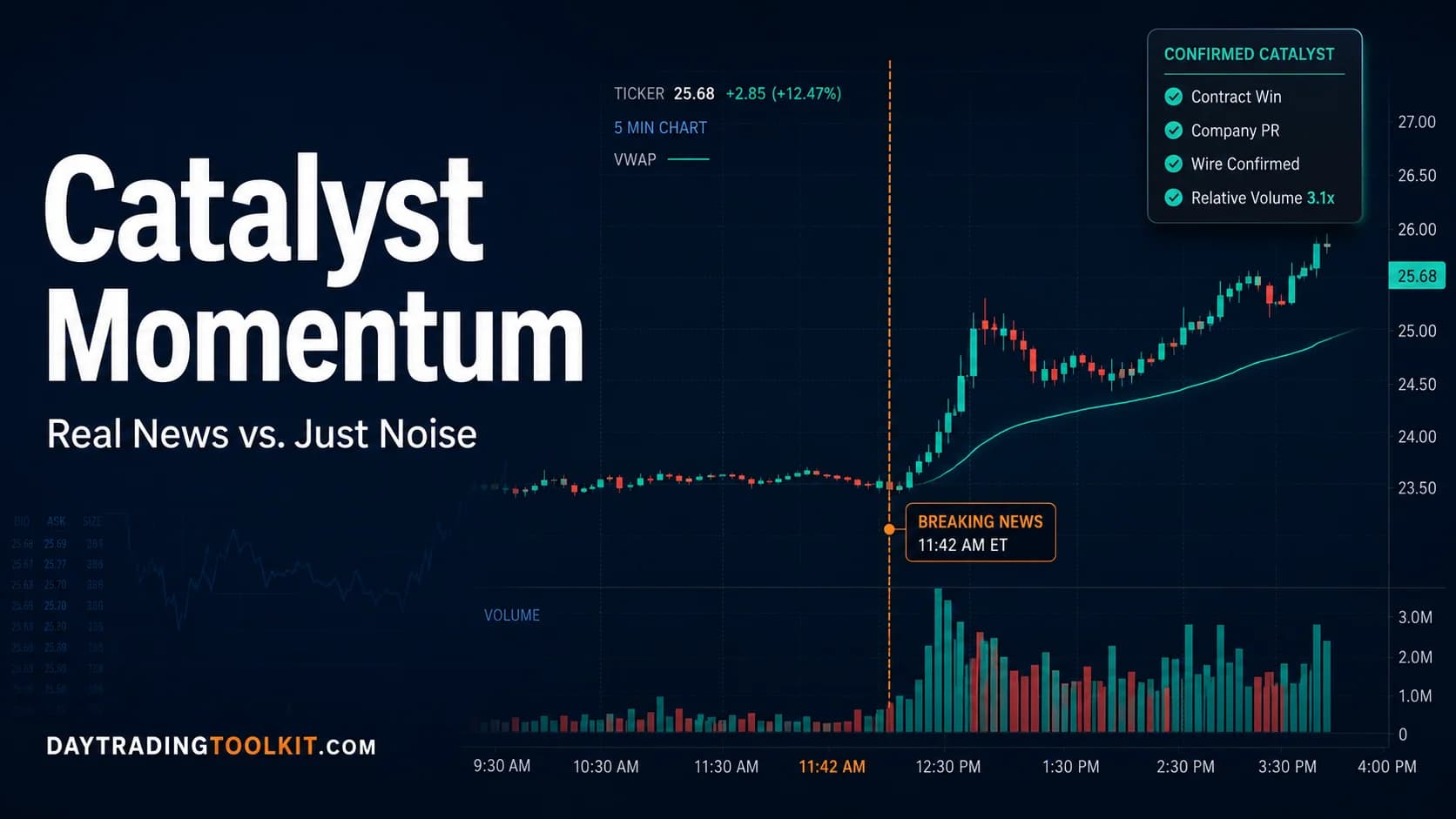
Gap-and-go, low-float runners, high-of-day breaks, 1-minute scalps, earnings momentum, and catalyst plays — strategies built for explosive moves in the first 90 minutes of the session.

1 of 10 published ~1h read
7
Module 7· Patterns That Actually PayComing Soon

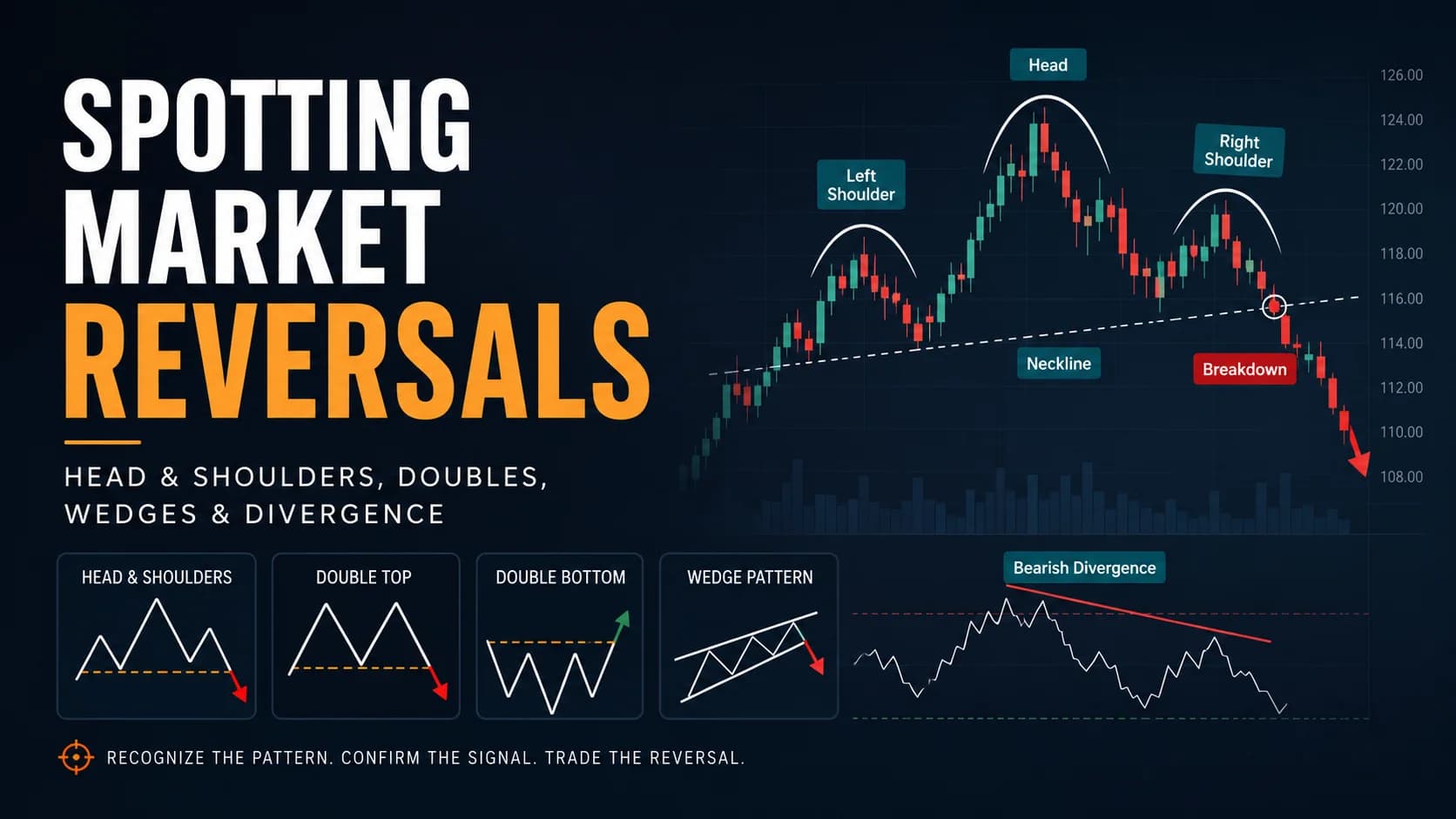
Chart Pattern Playbook

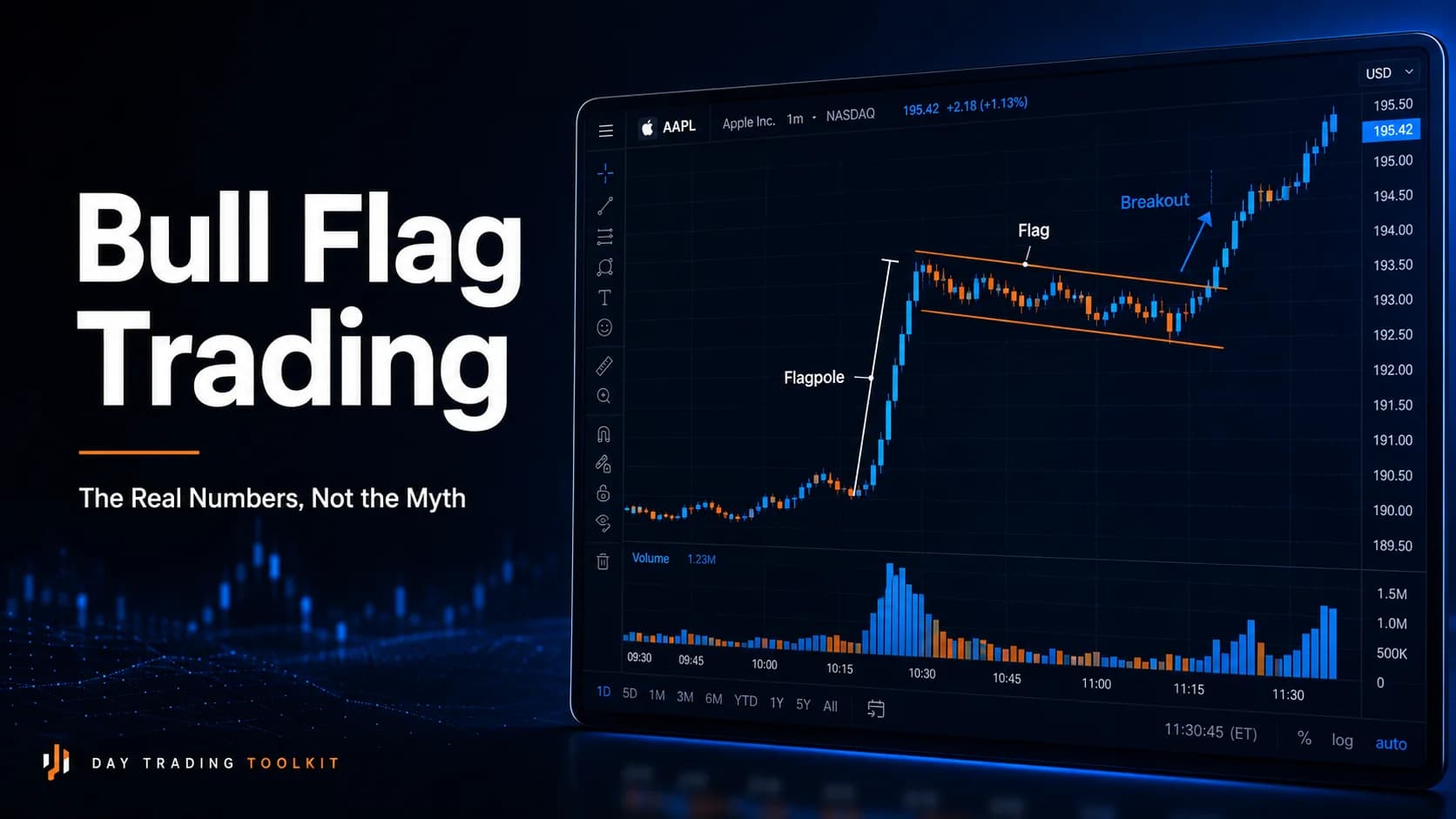
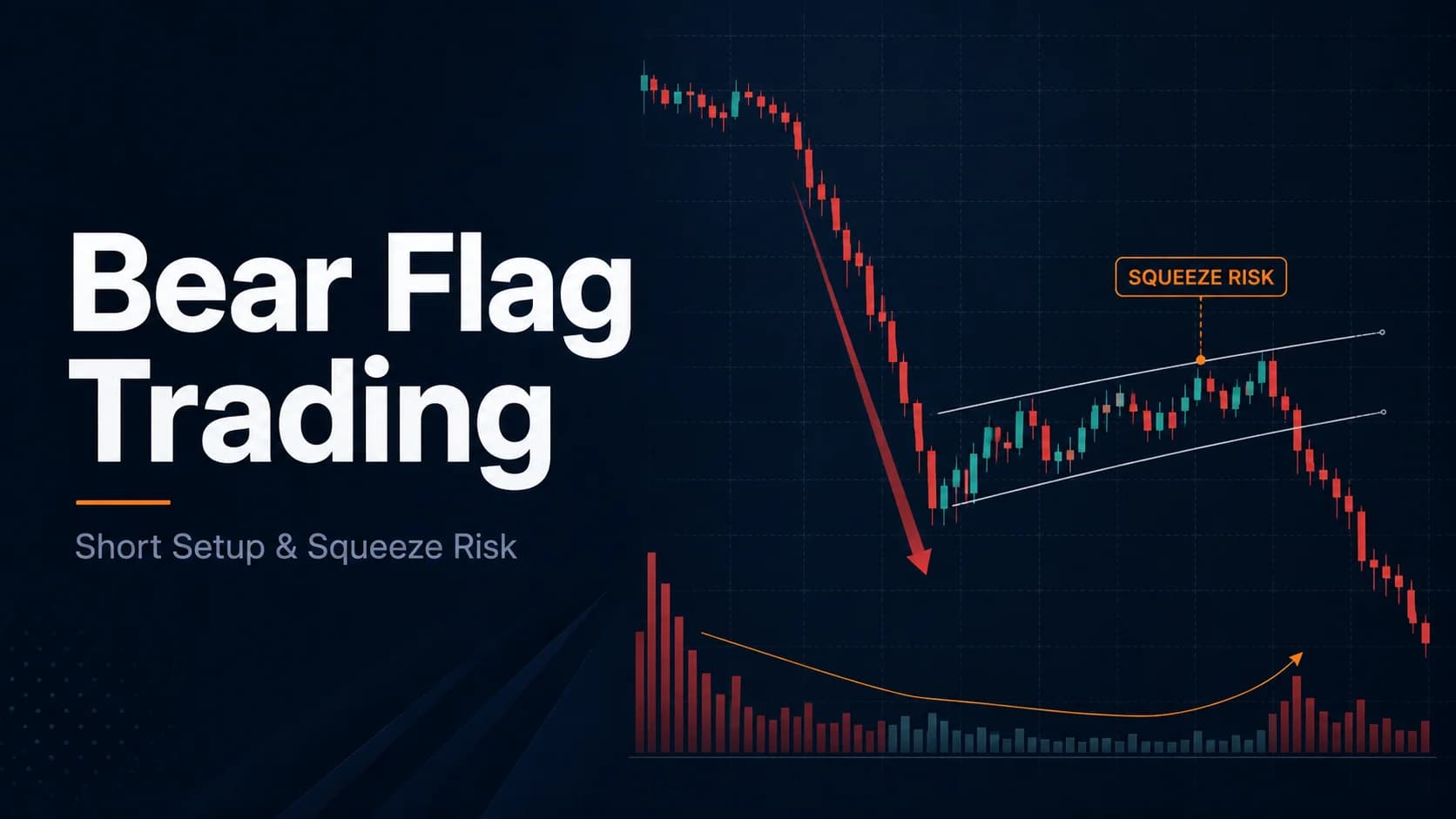
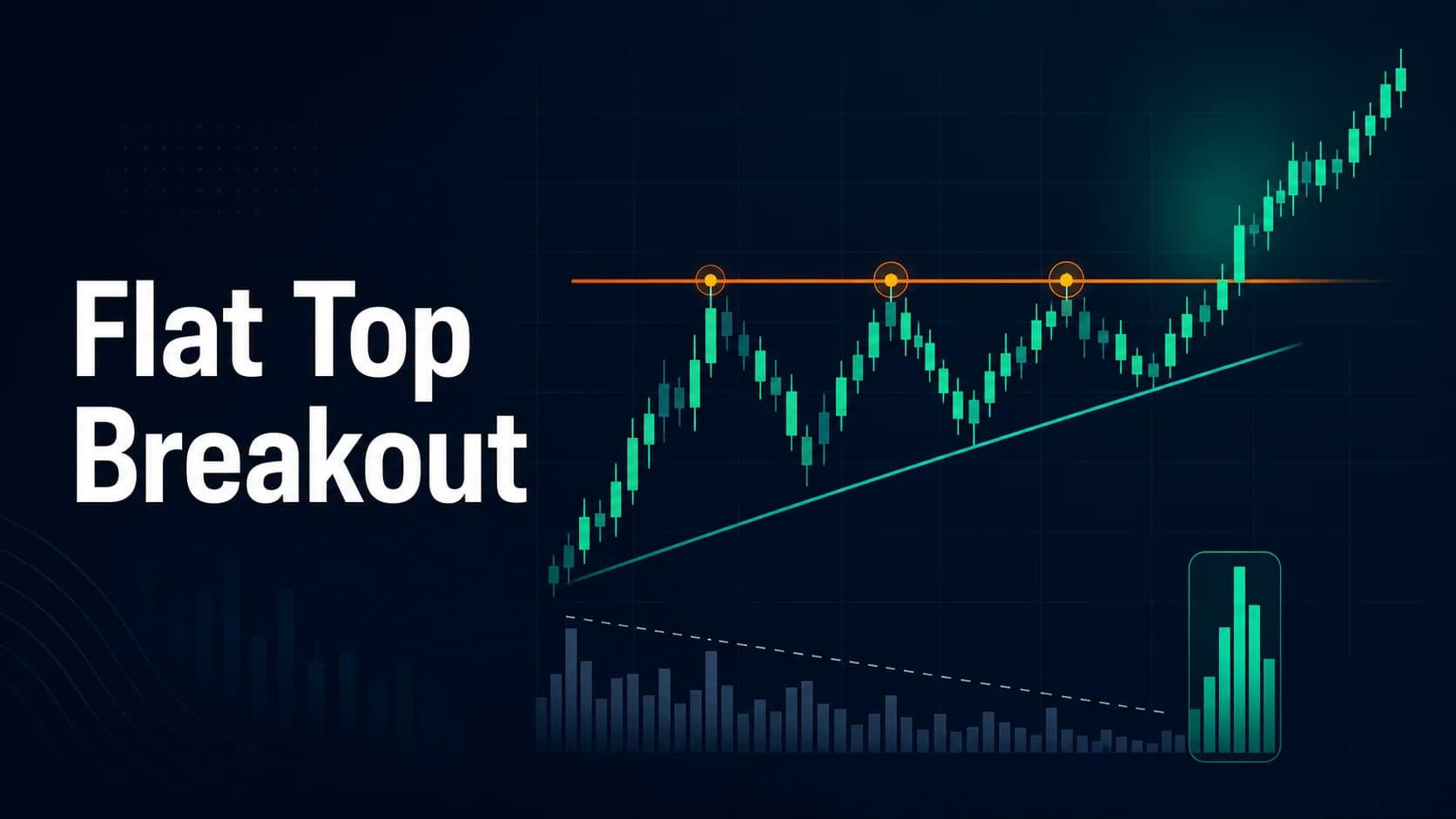
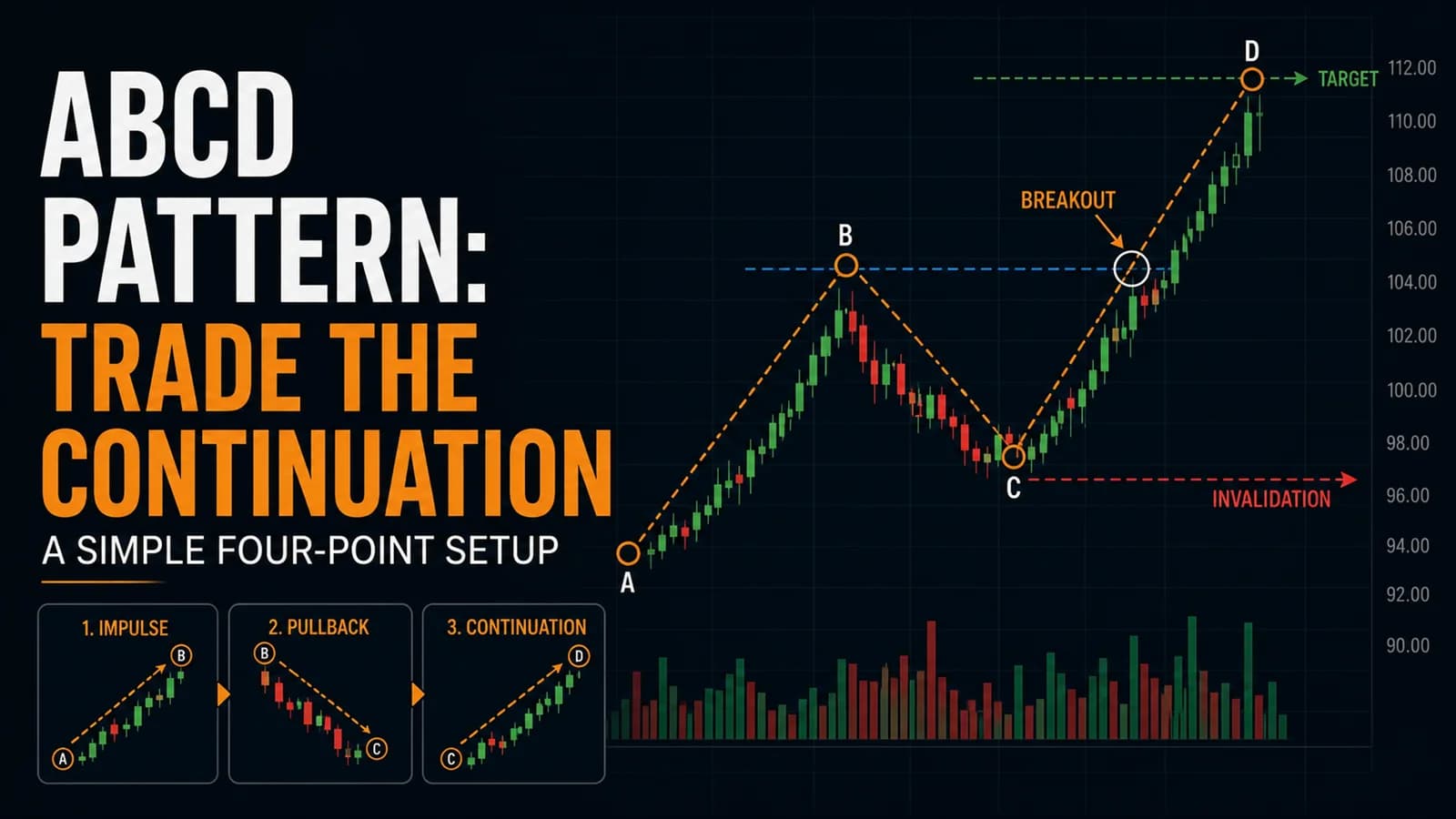
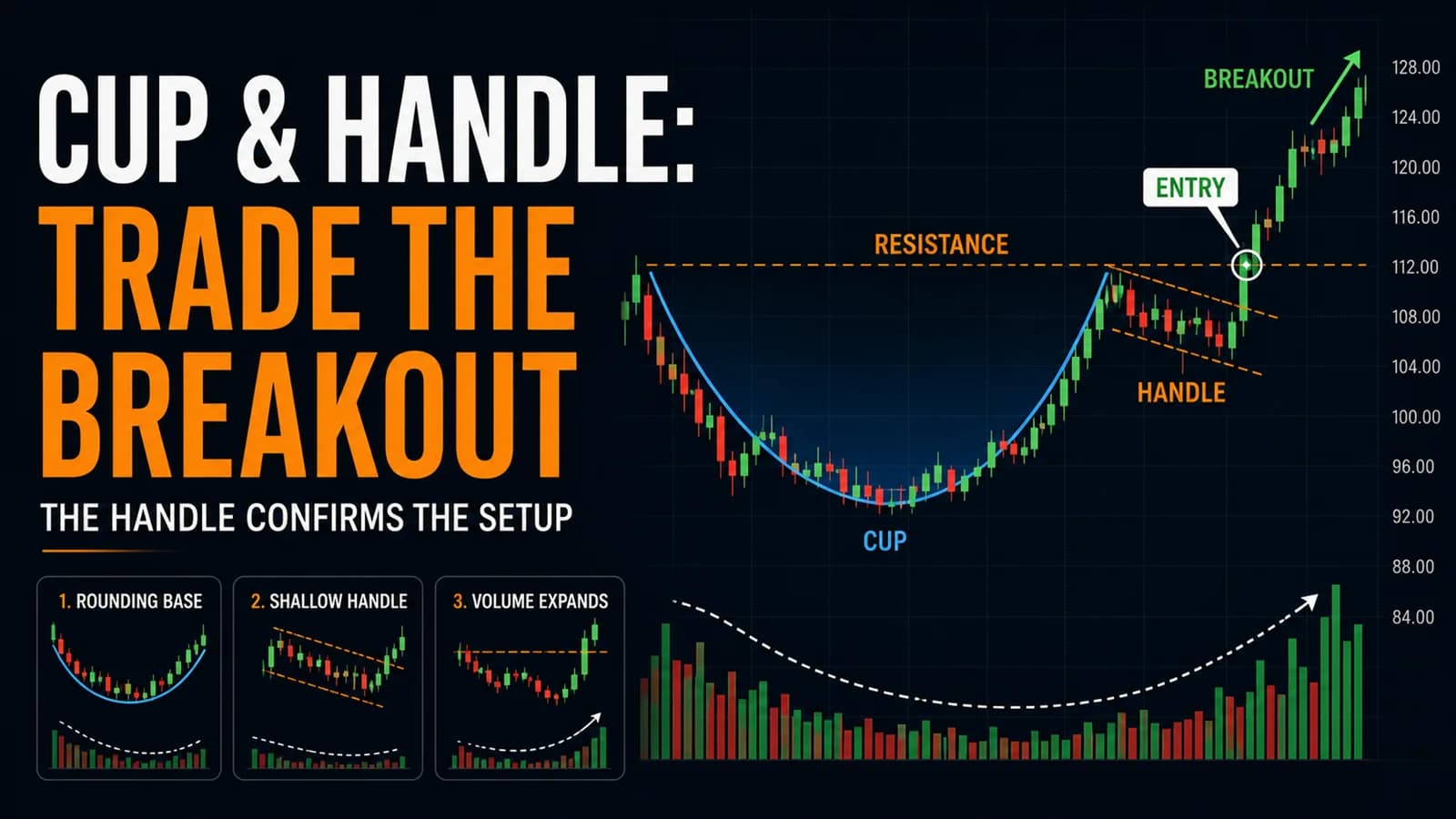
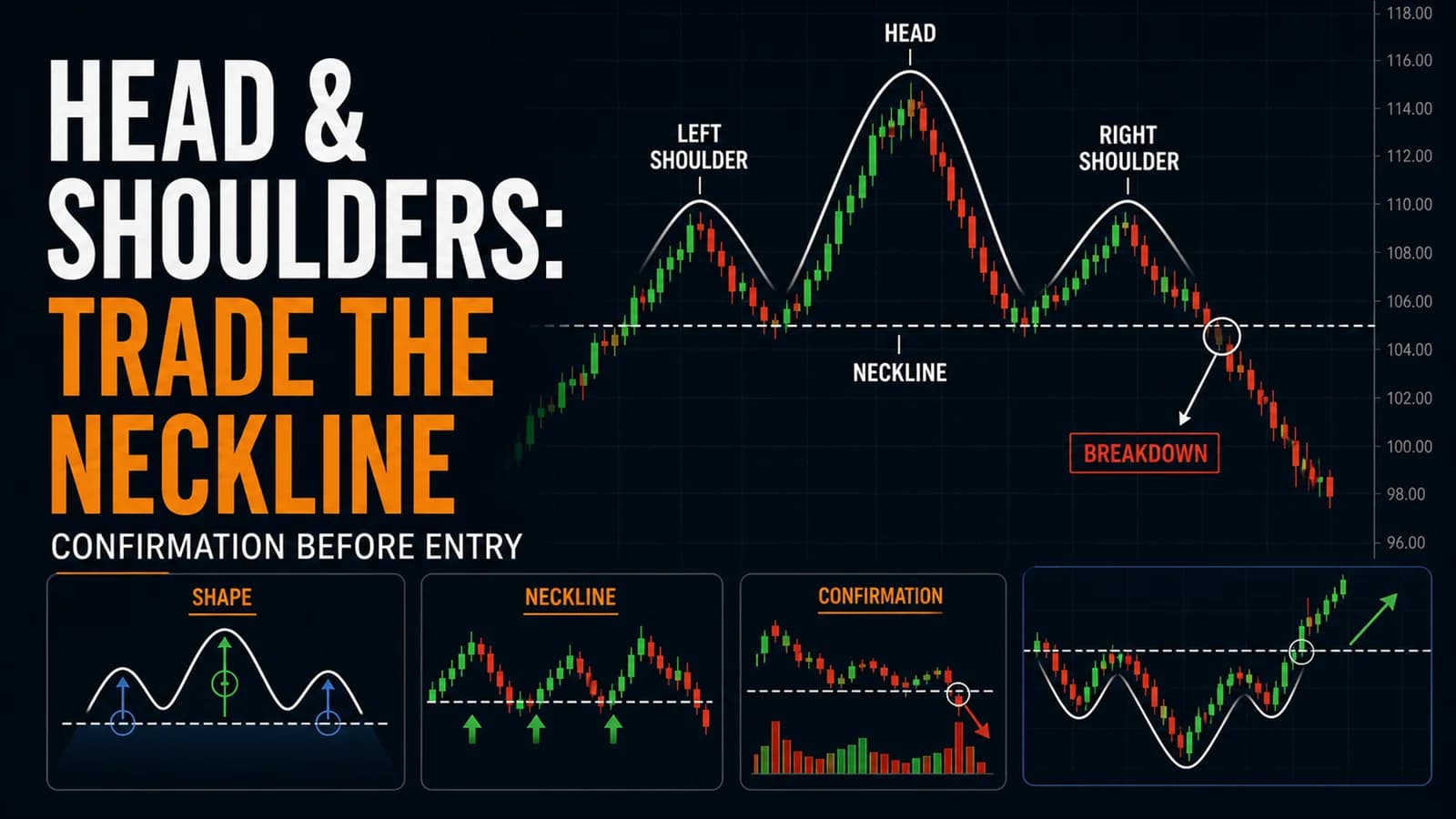
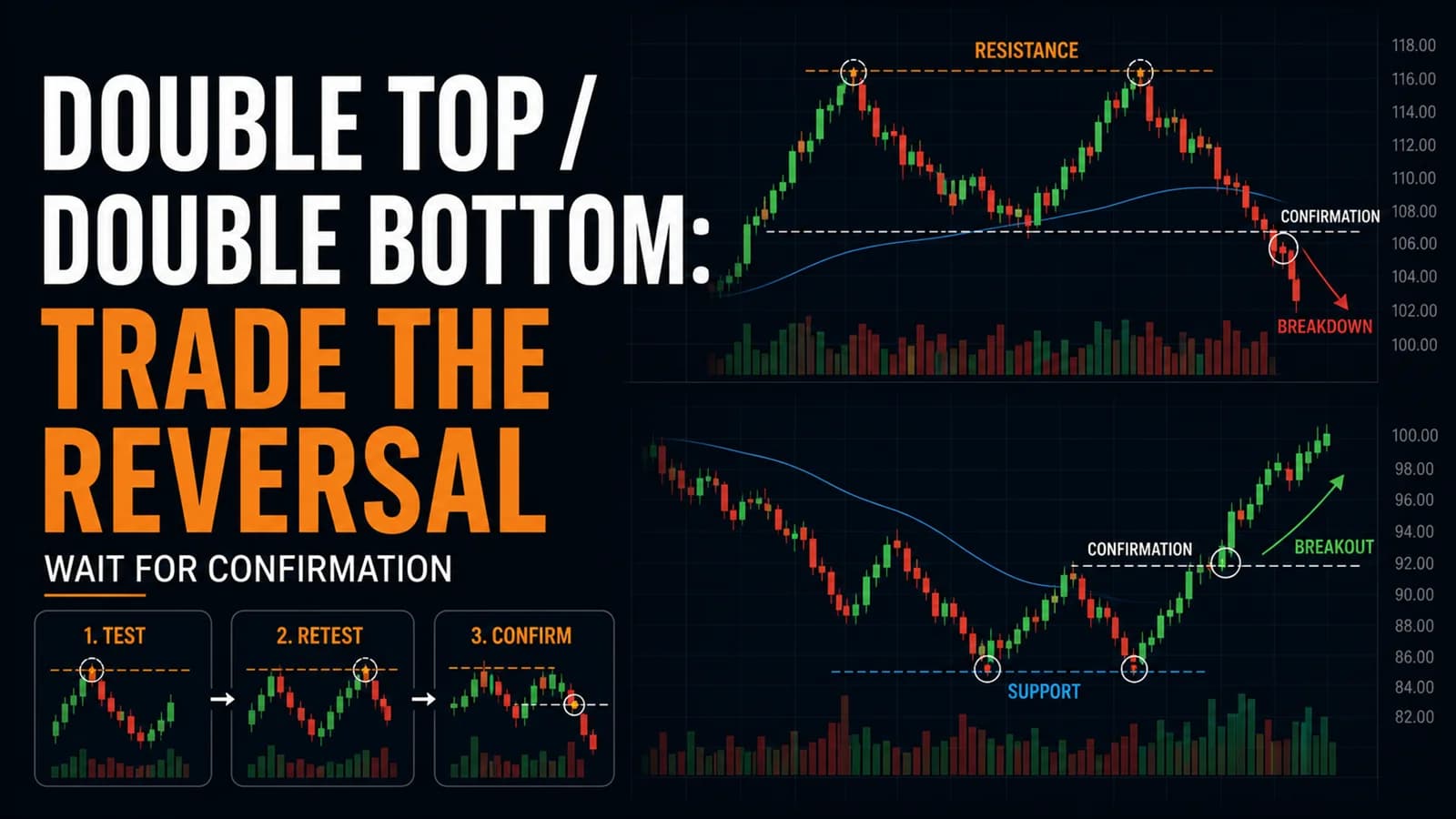
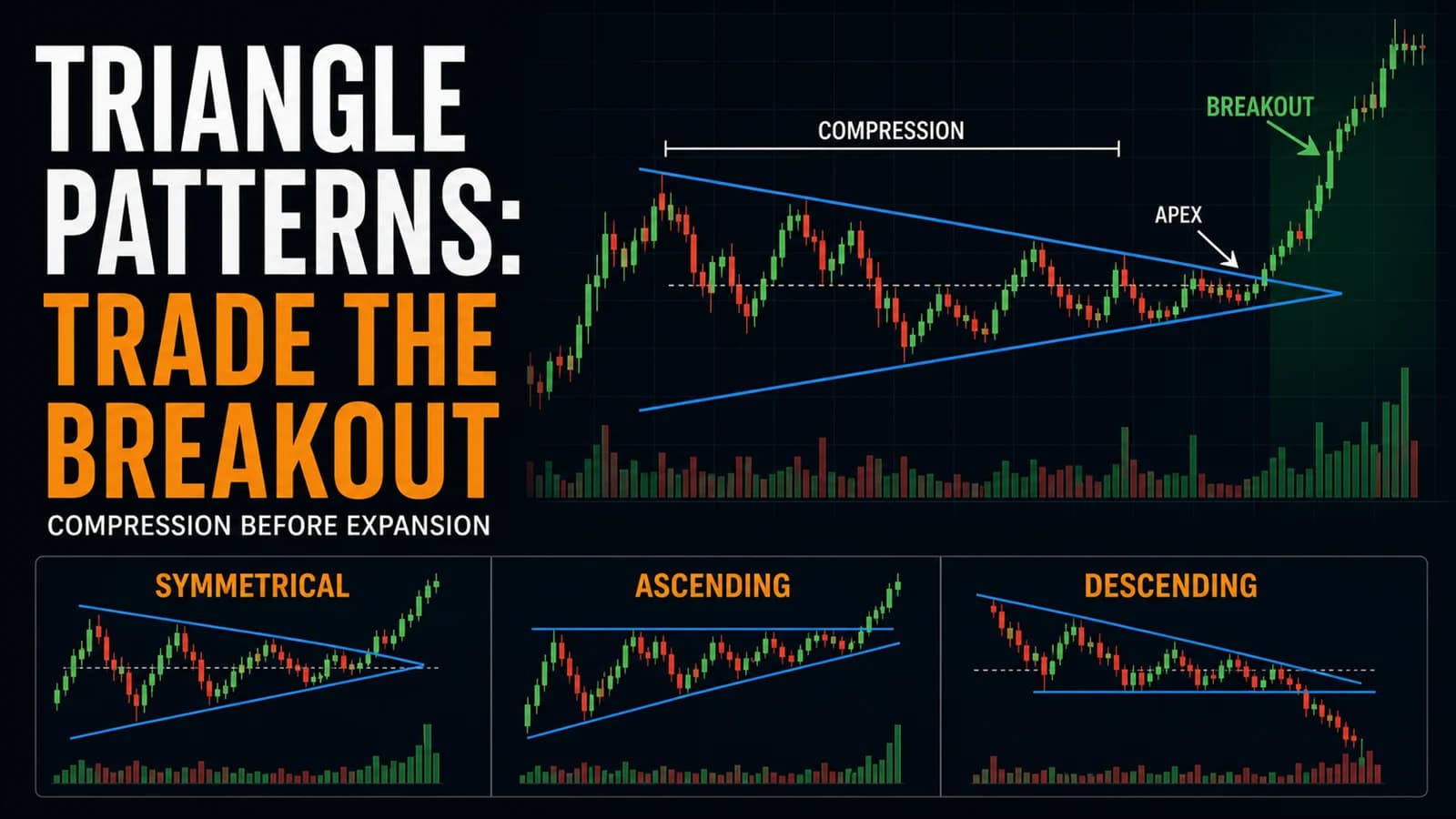
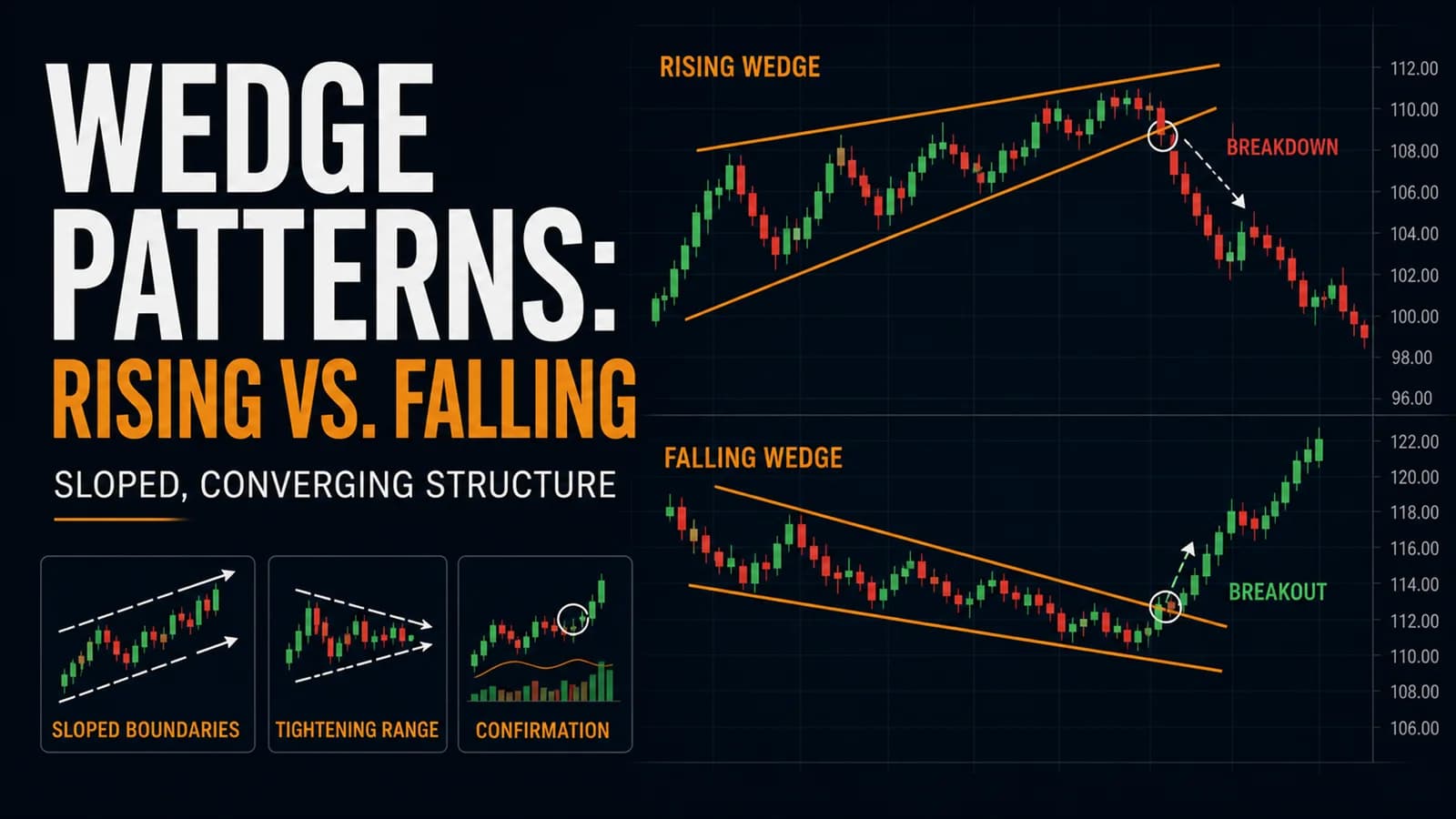
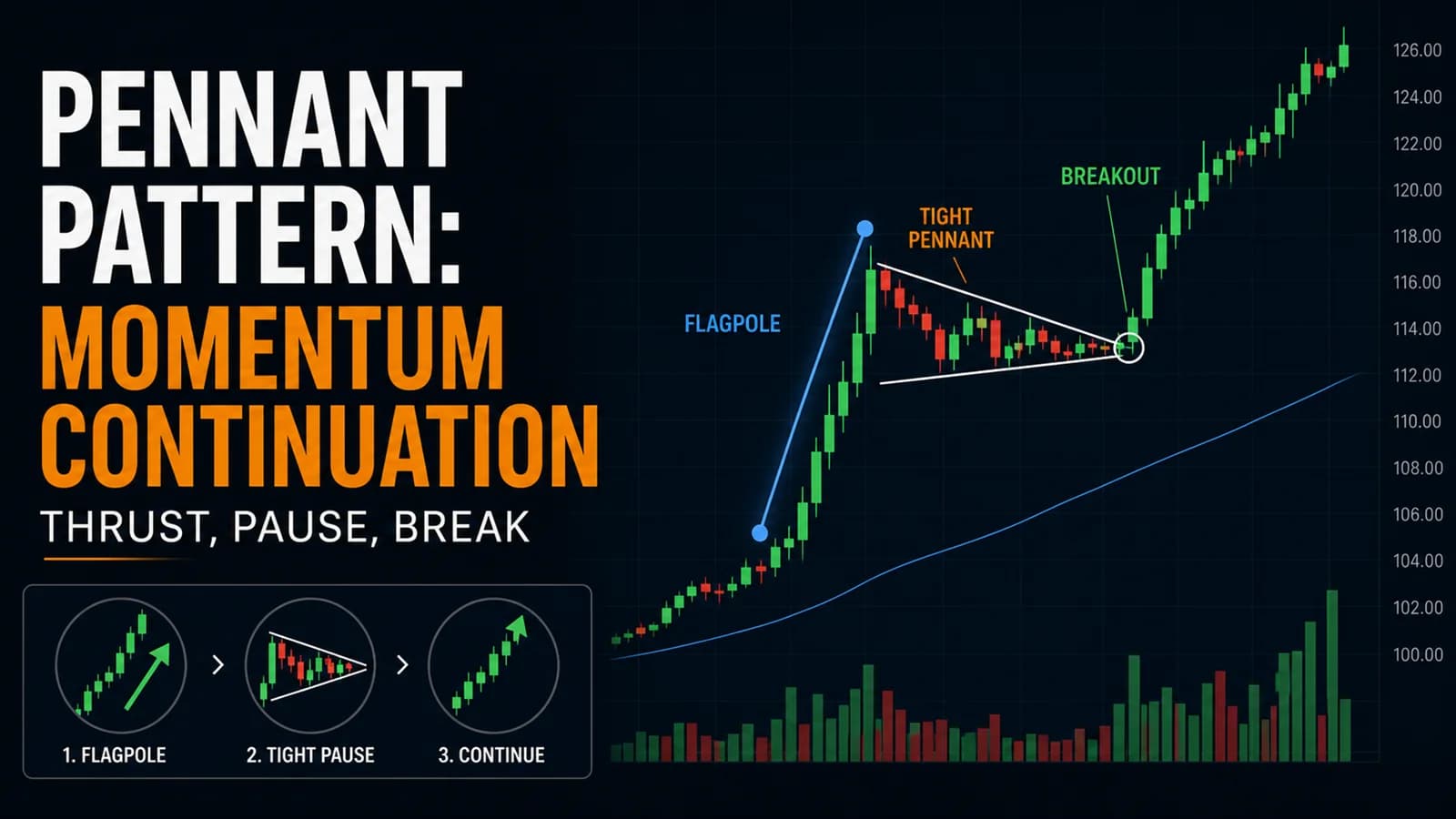
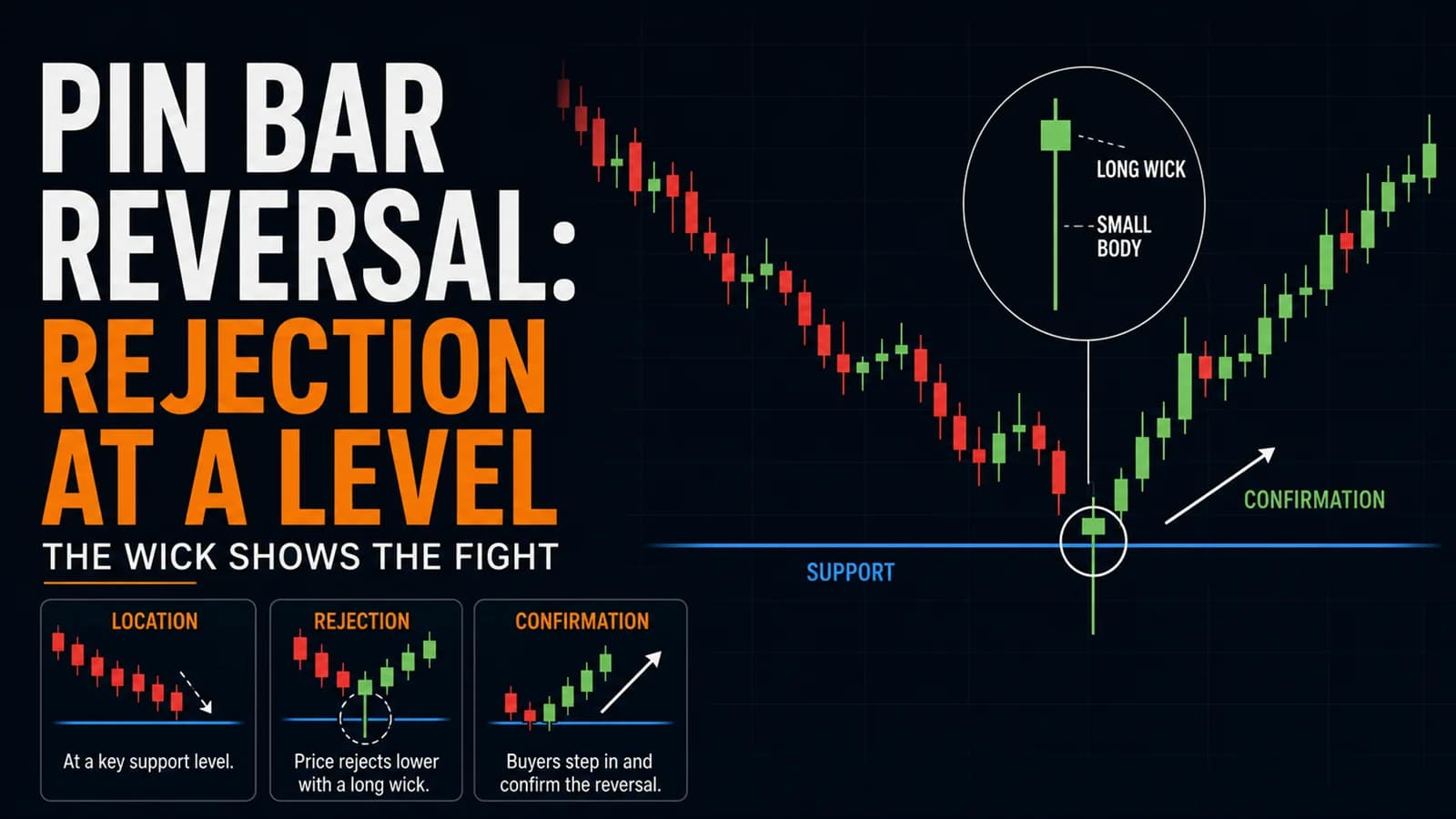
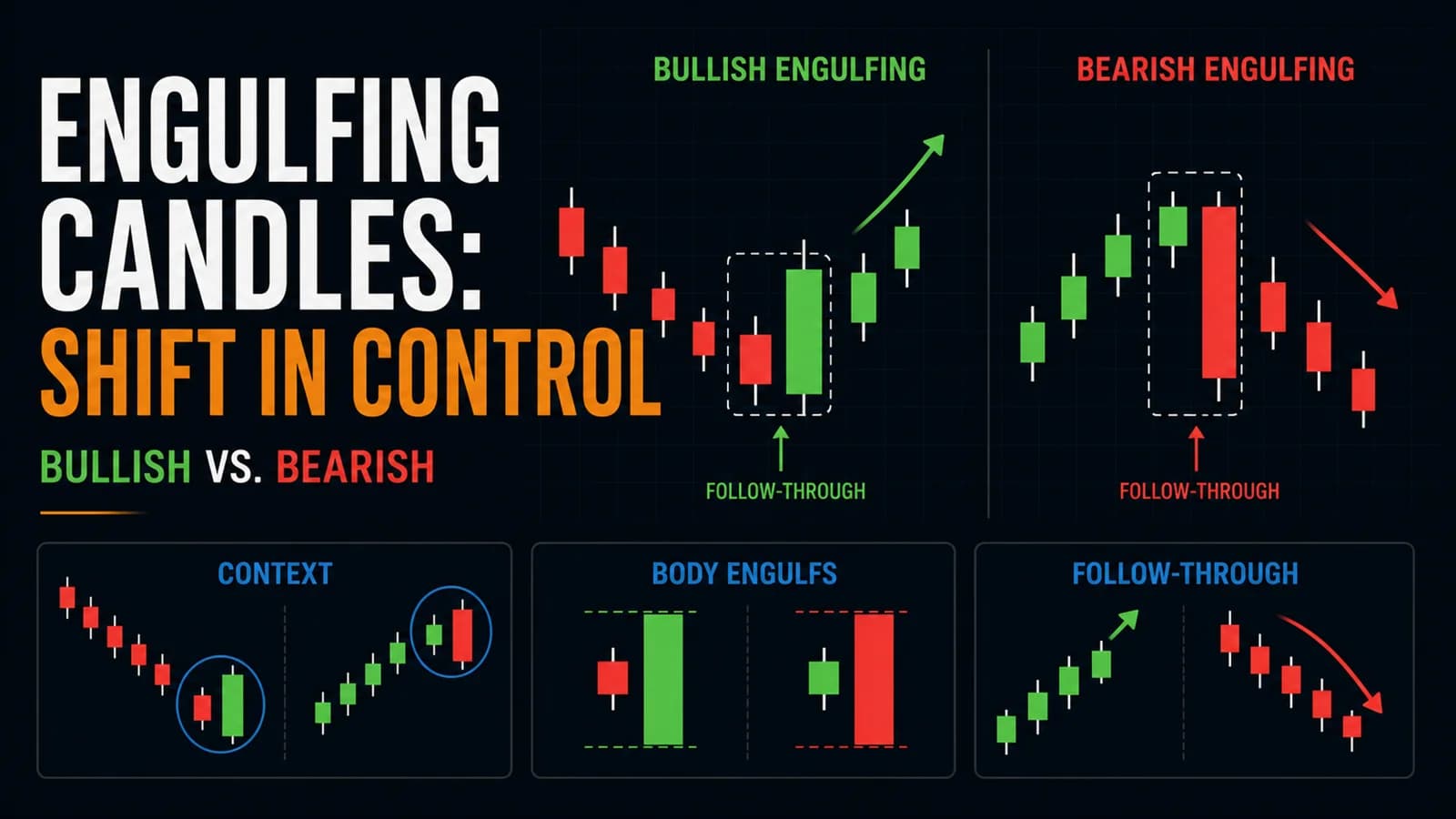
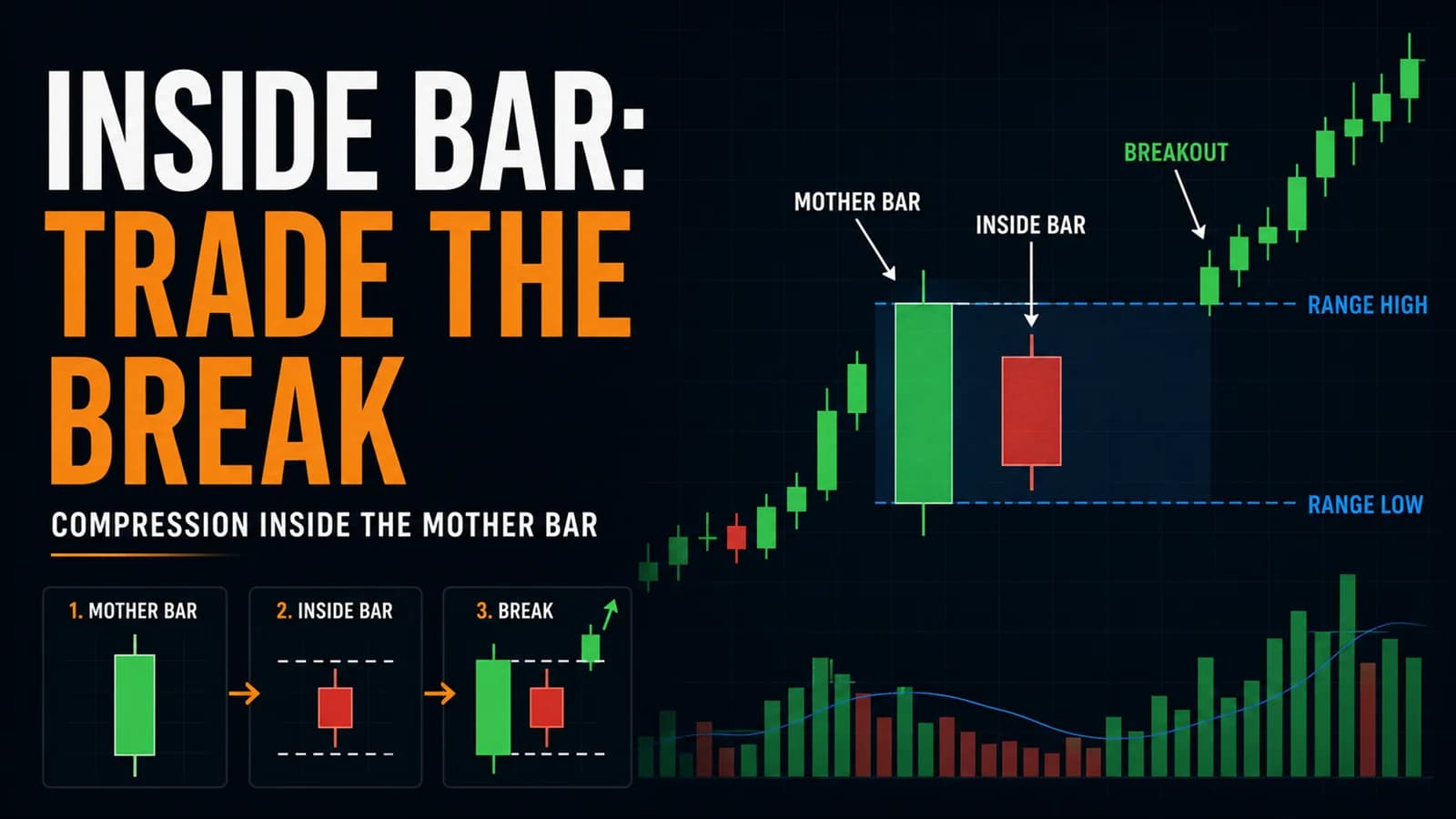
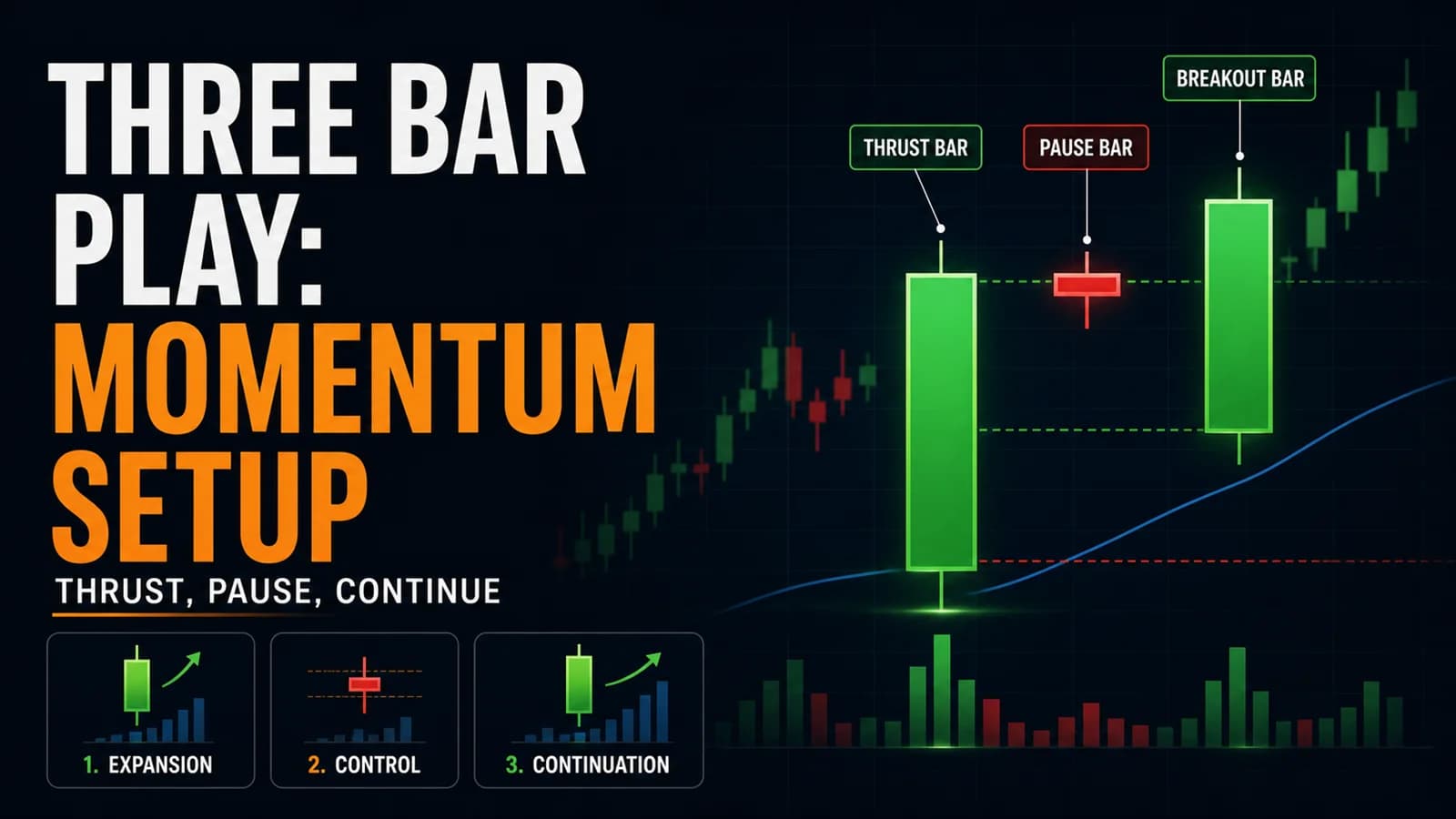
Bull flags, bear flags, flat tops, ABCD, cup and handle, head and shoulders, double tops/bottoms, symmetrical triangles, wedges, pennants, pin bars, engulfing candles, inside bars, and the three-bar play.

14 articles planned

We're writing these guides now — check back soon or subscribe for updates.

8
Module 8· When the Signal MattersComing Soon

Indicator-Based Strategies

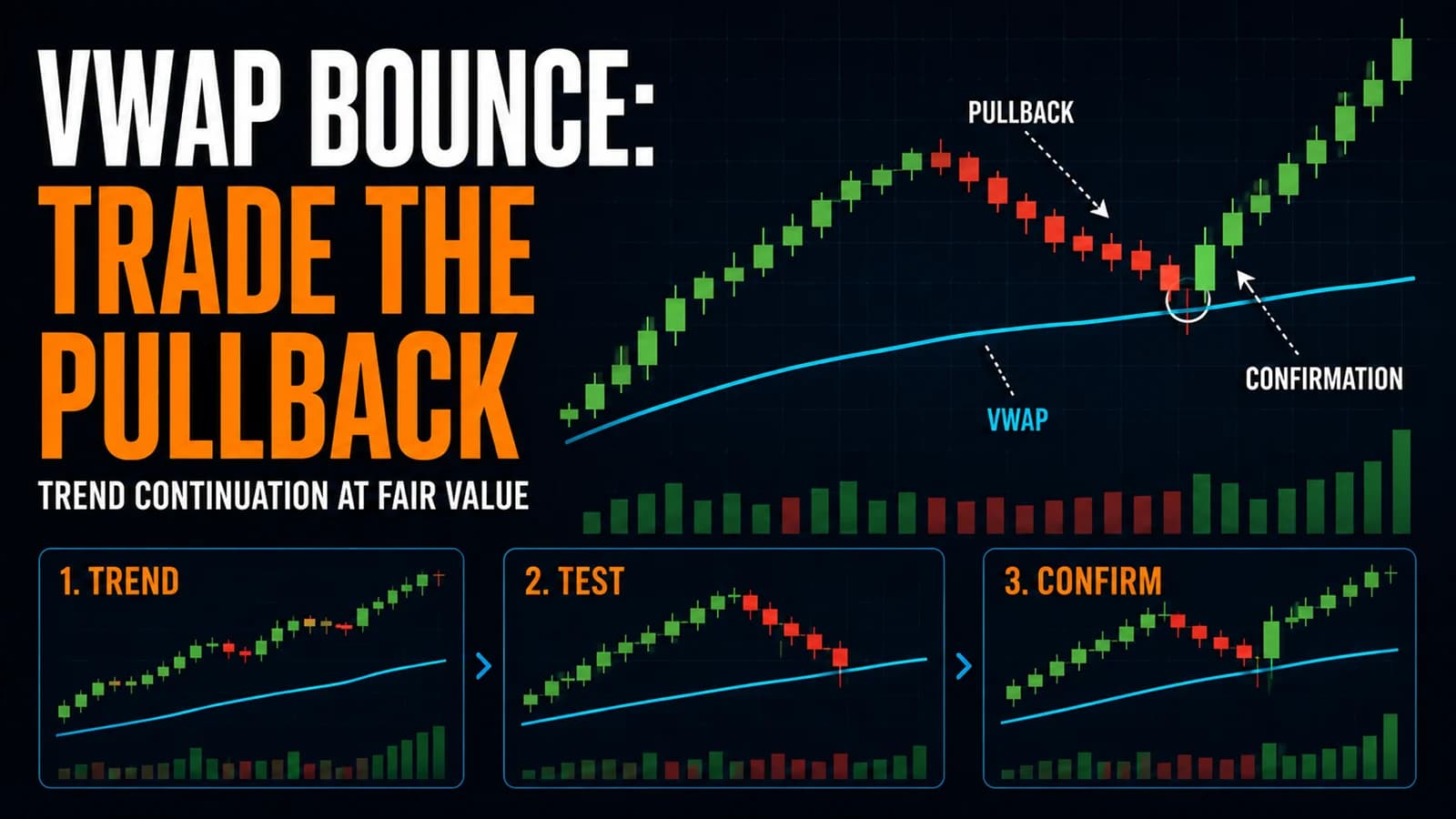
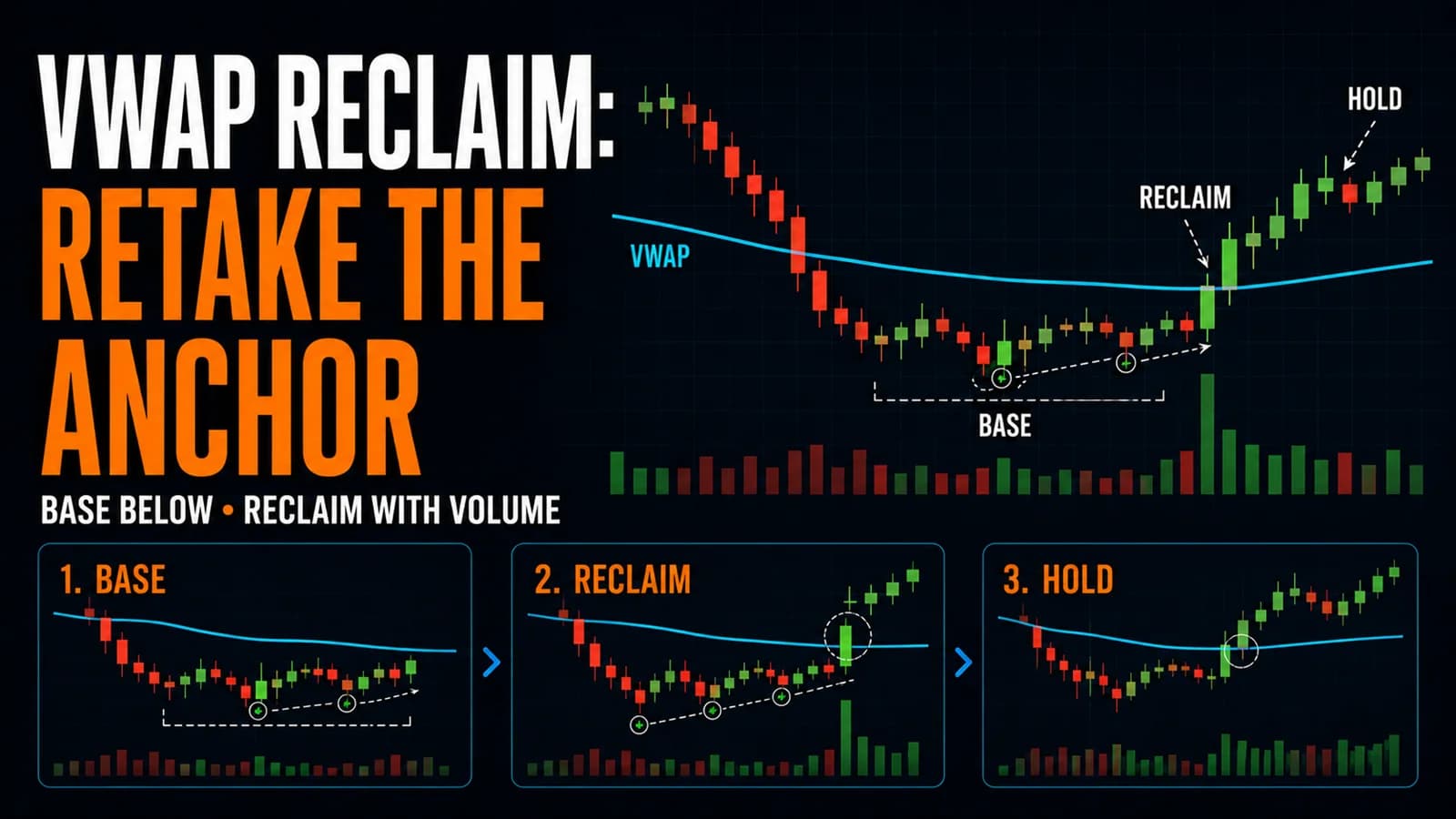
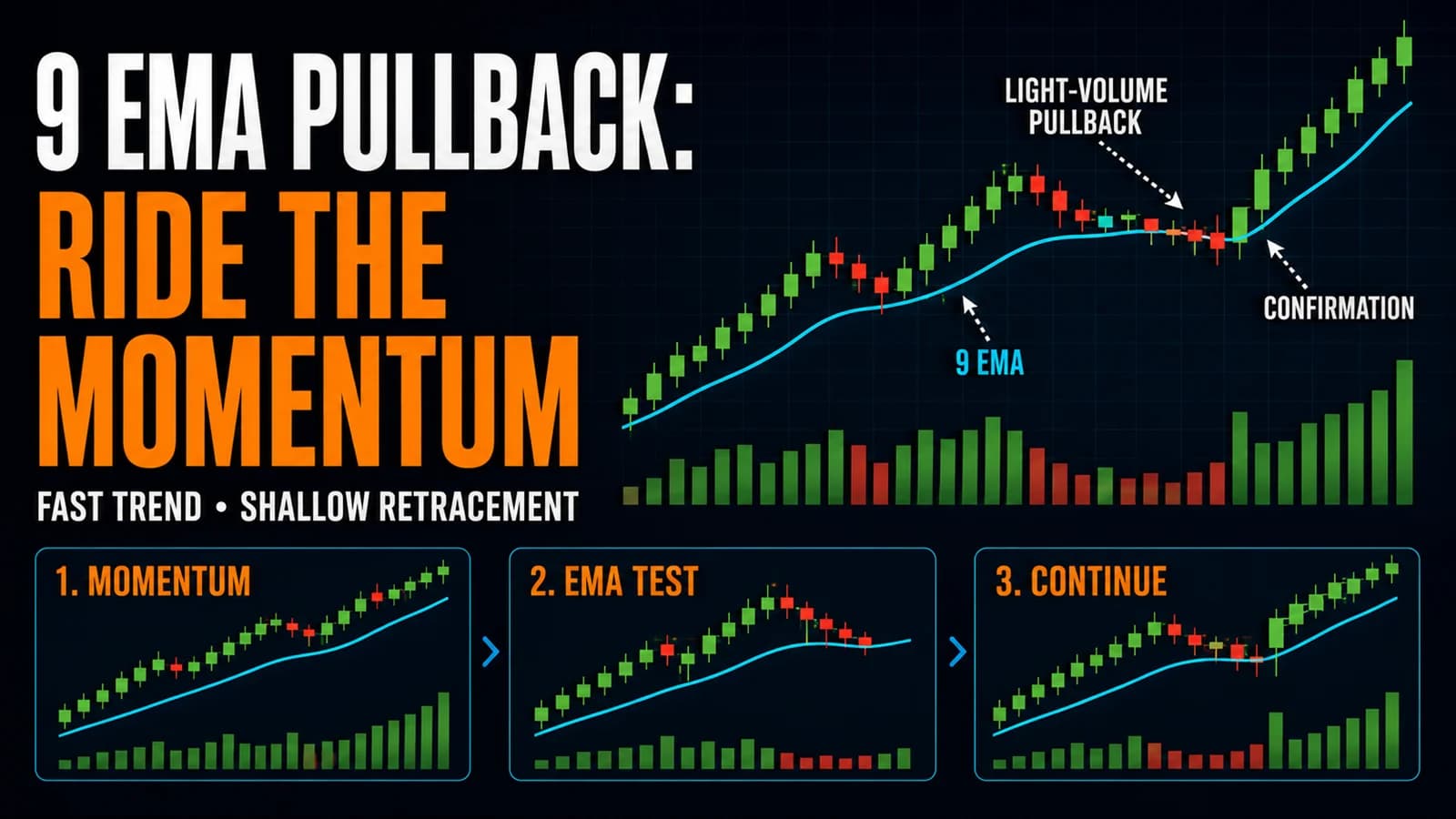
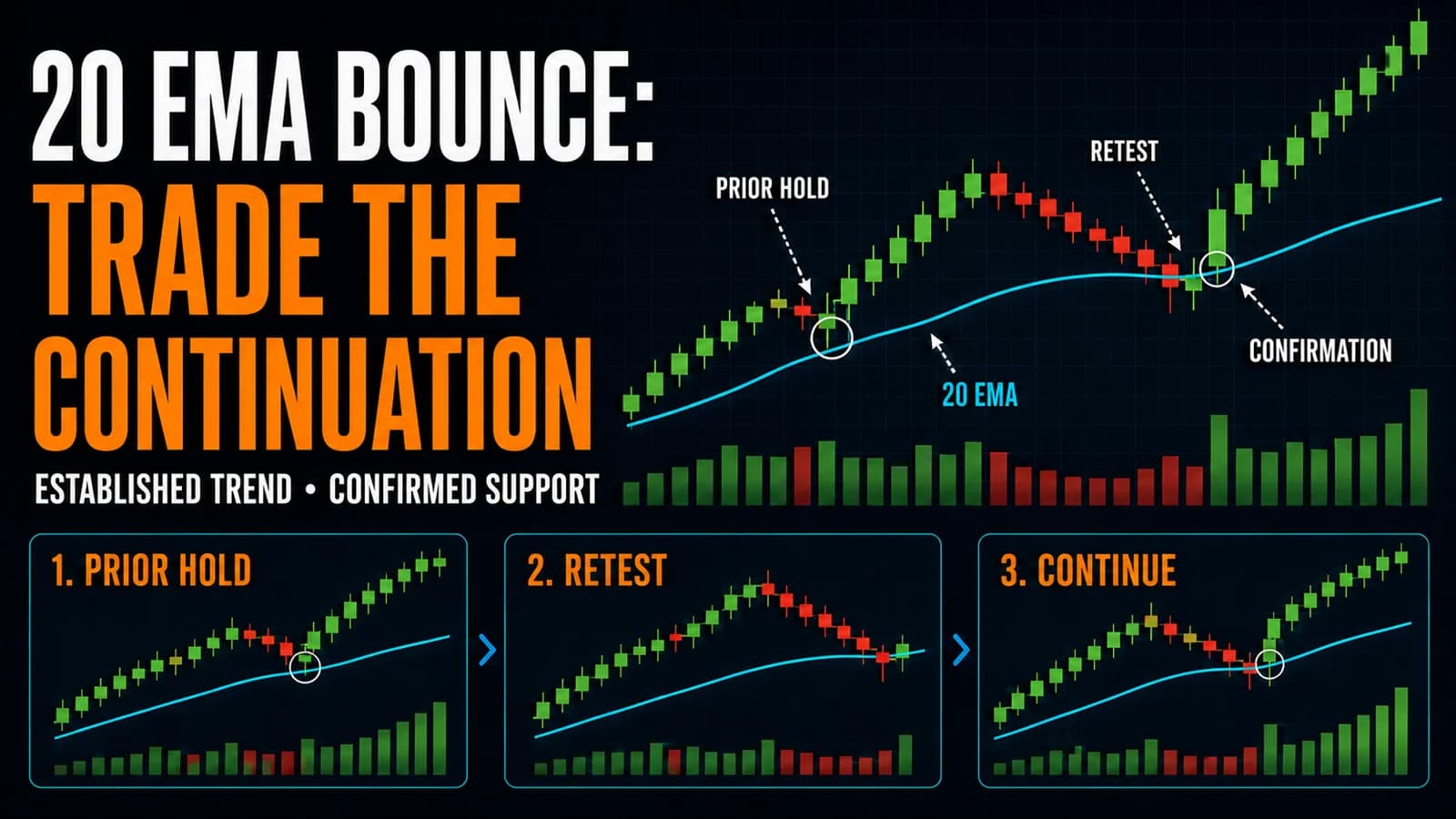
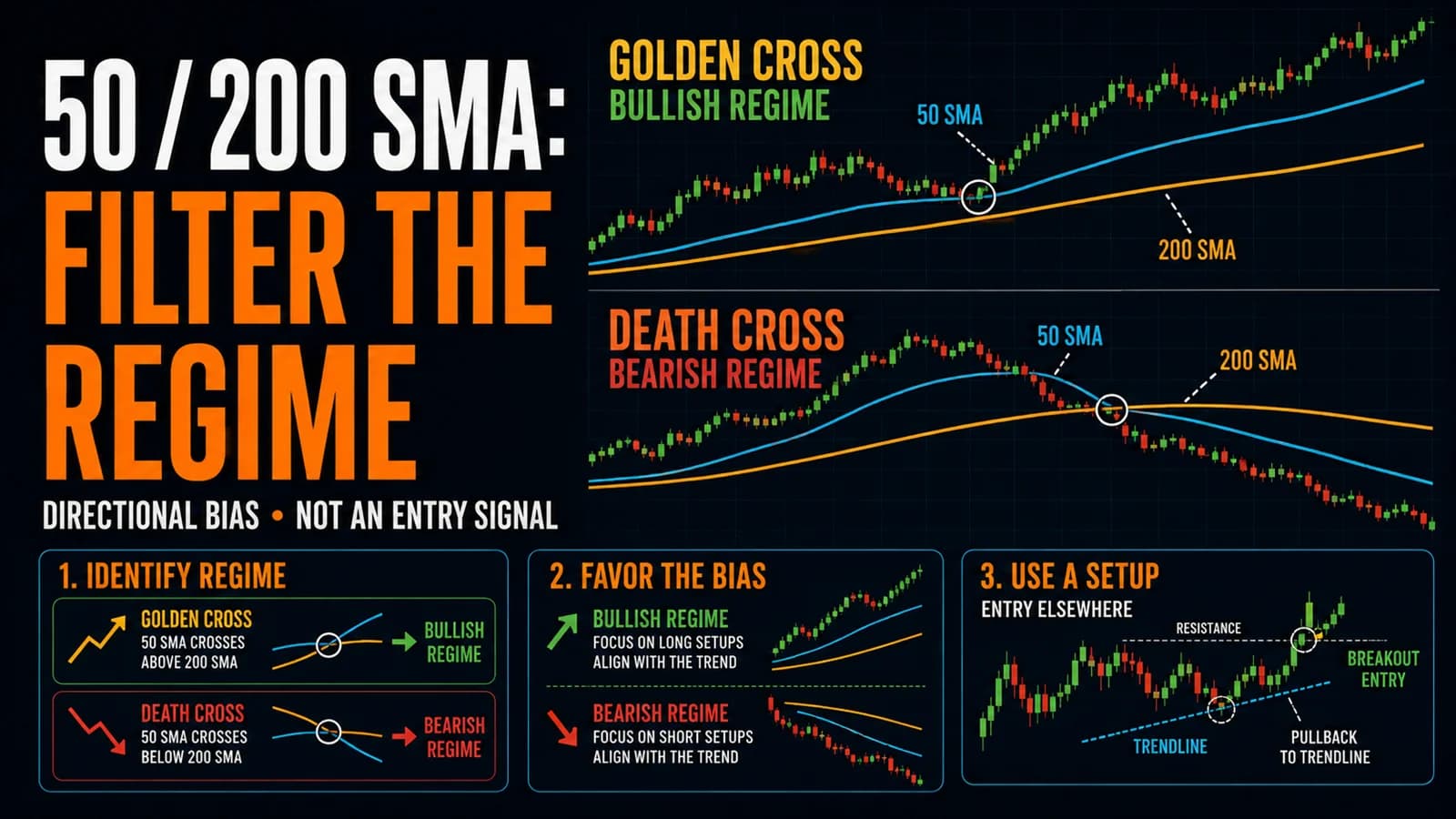
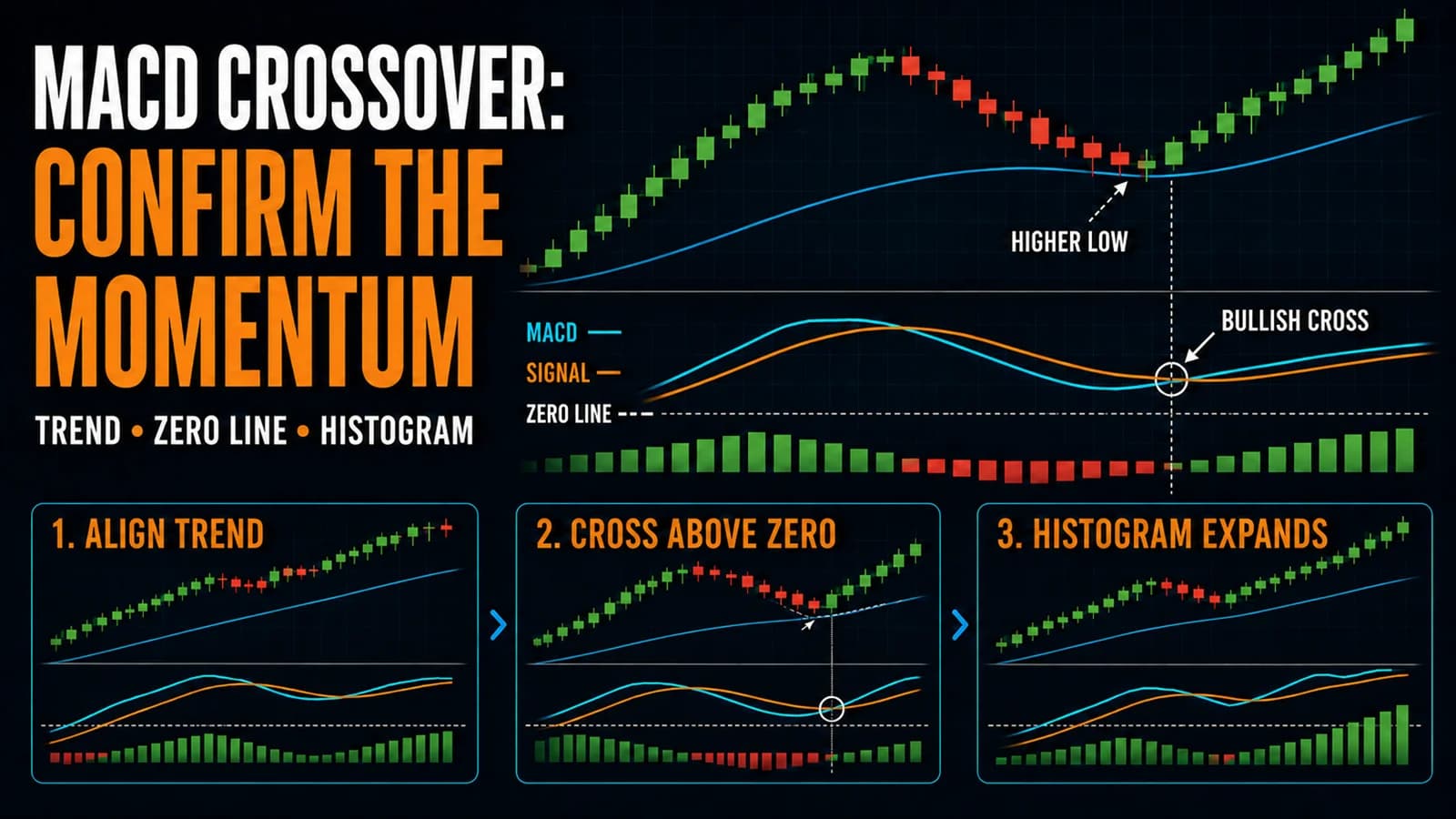
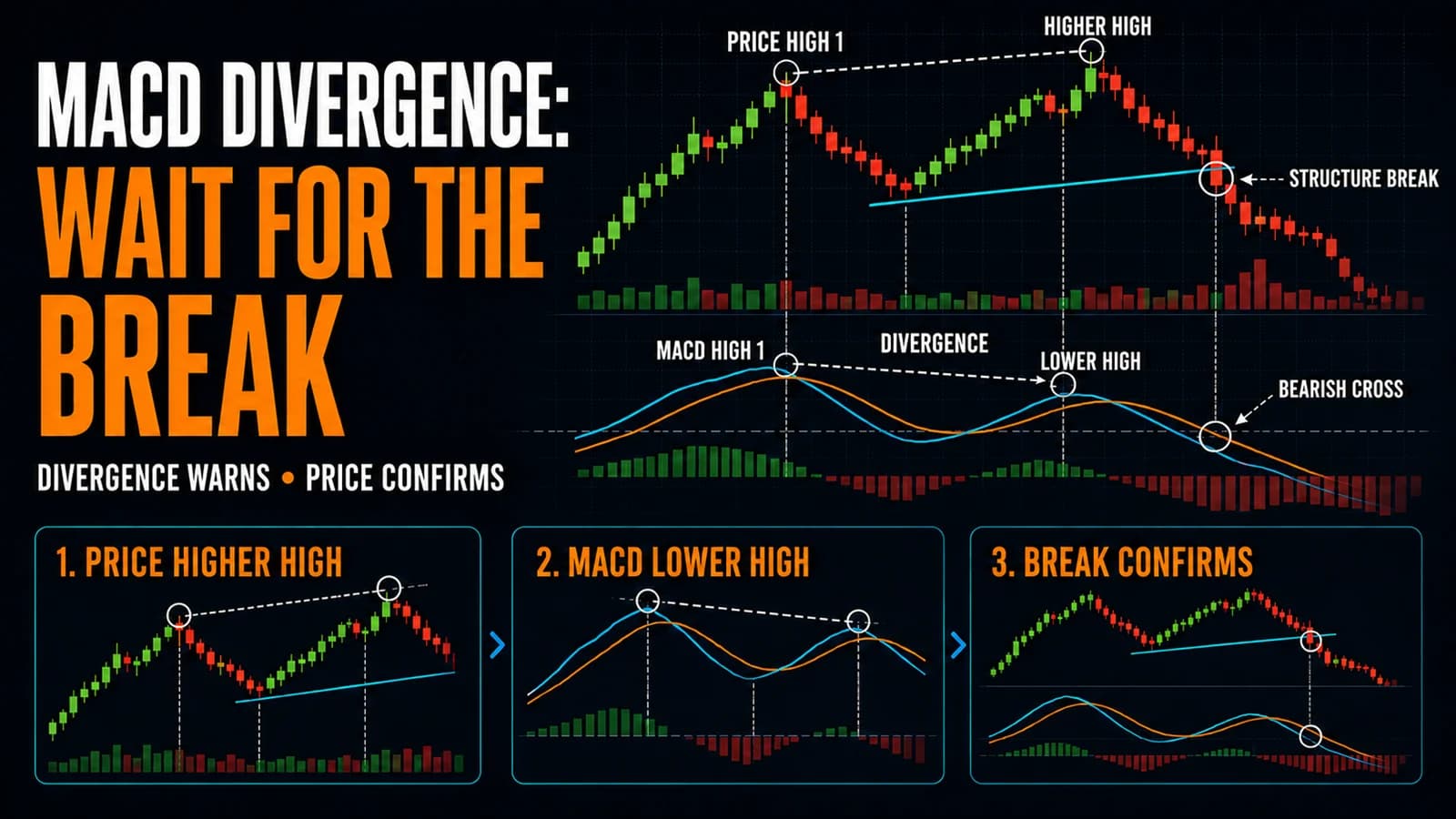
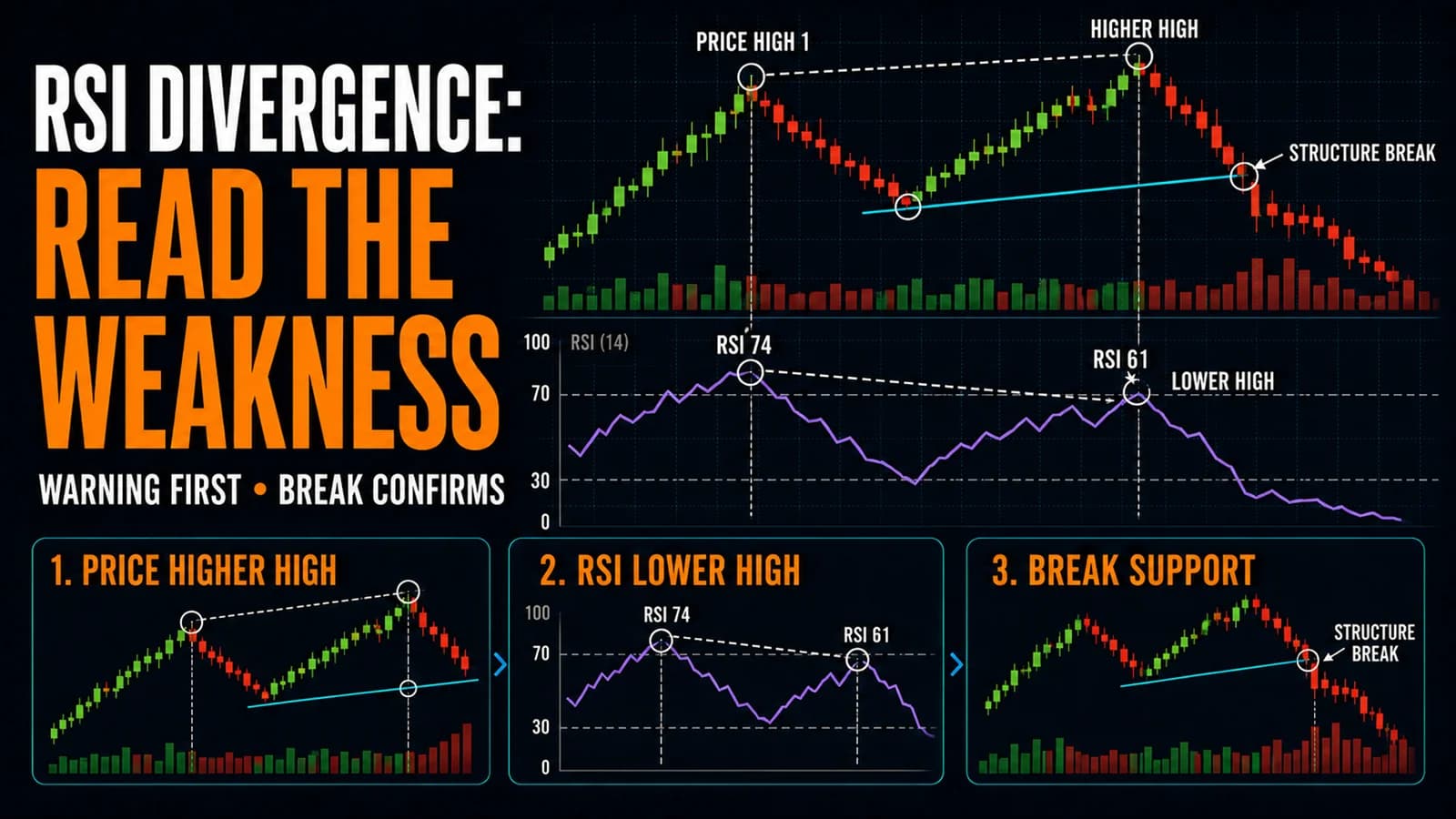
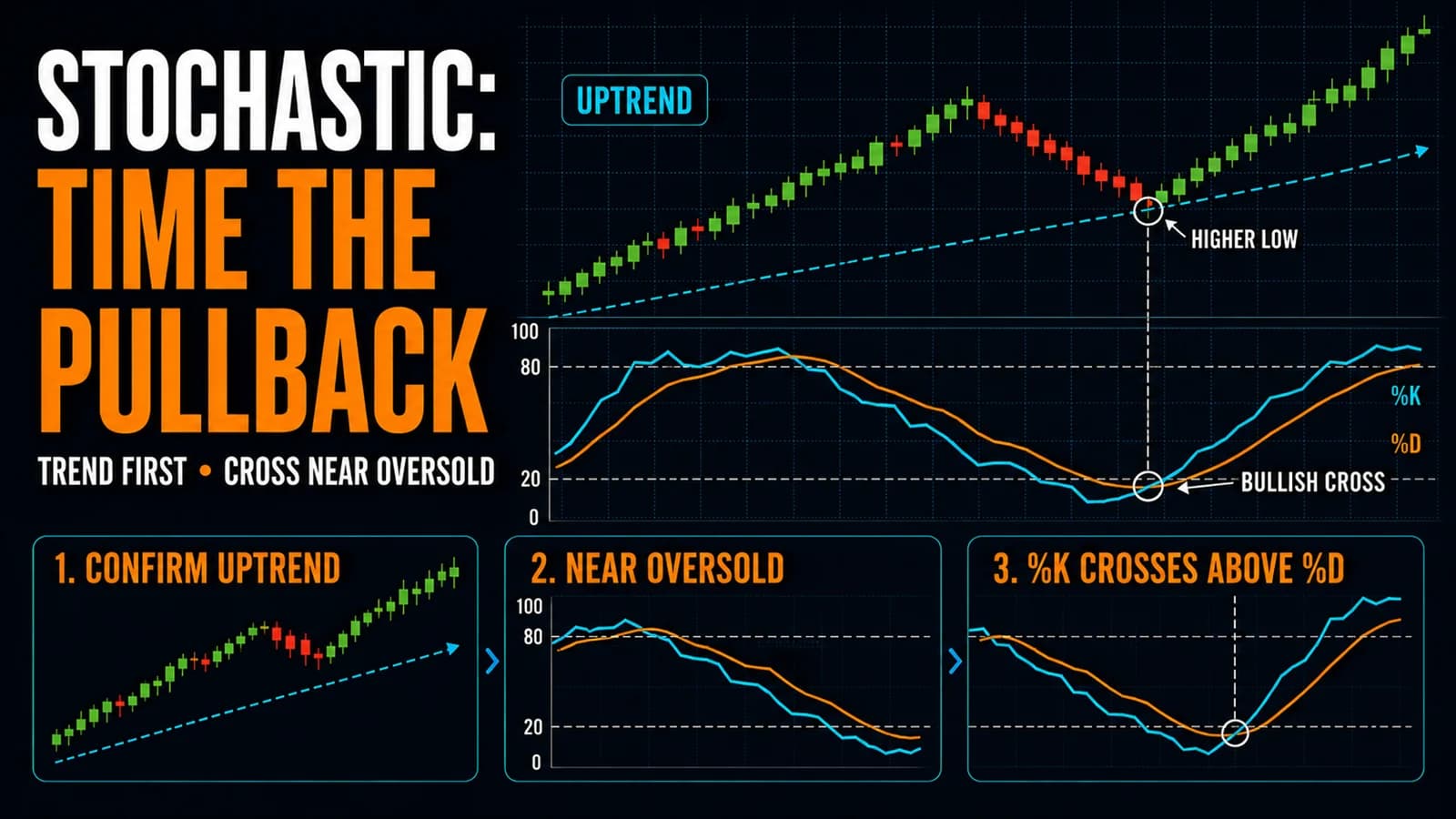
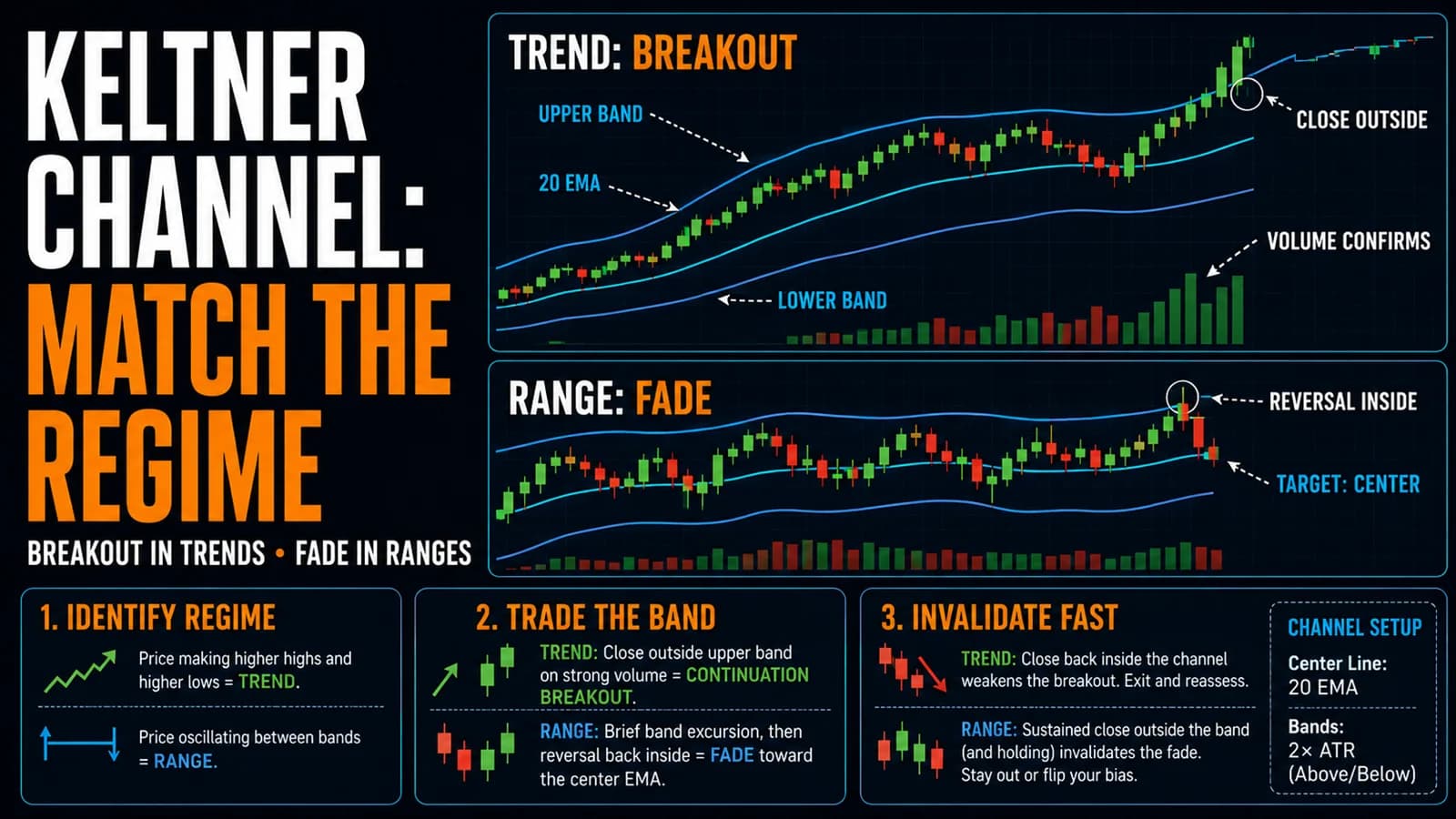
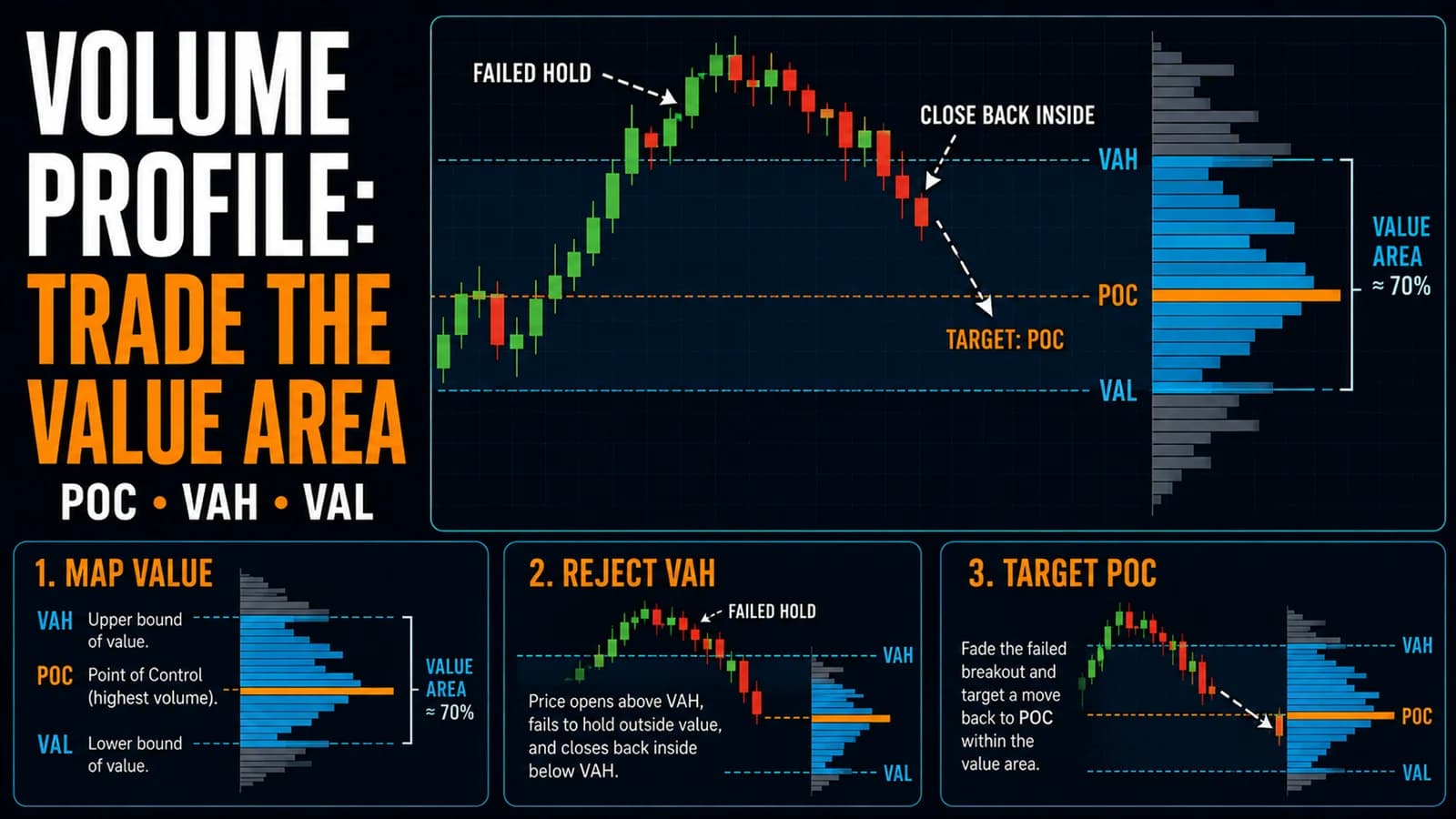
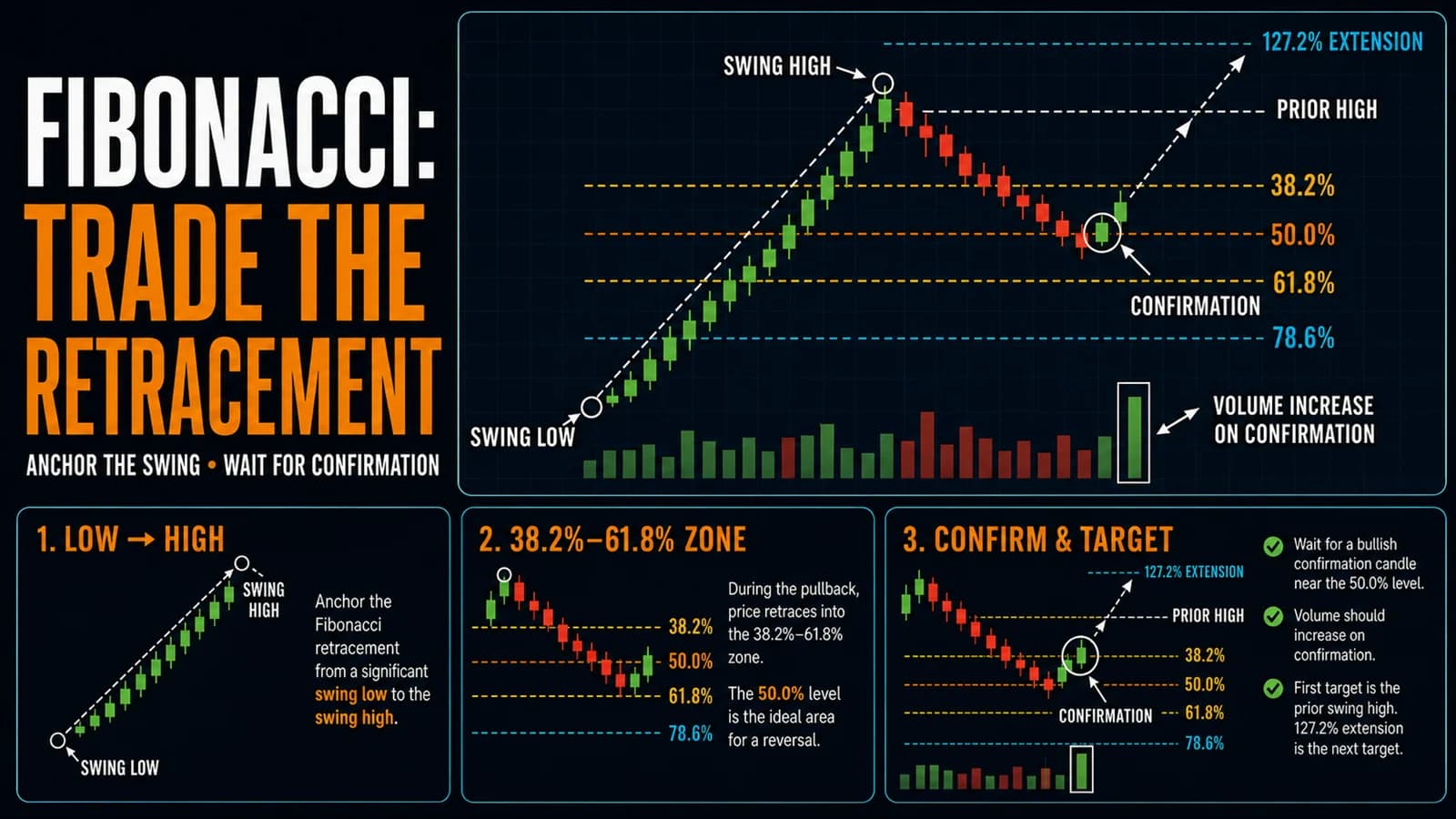
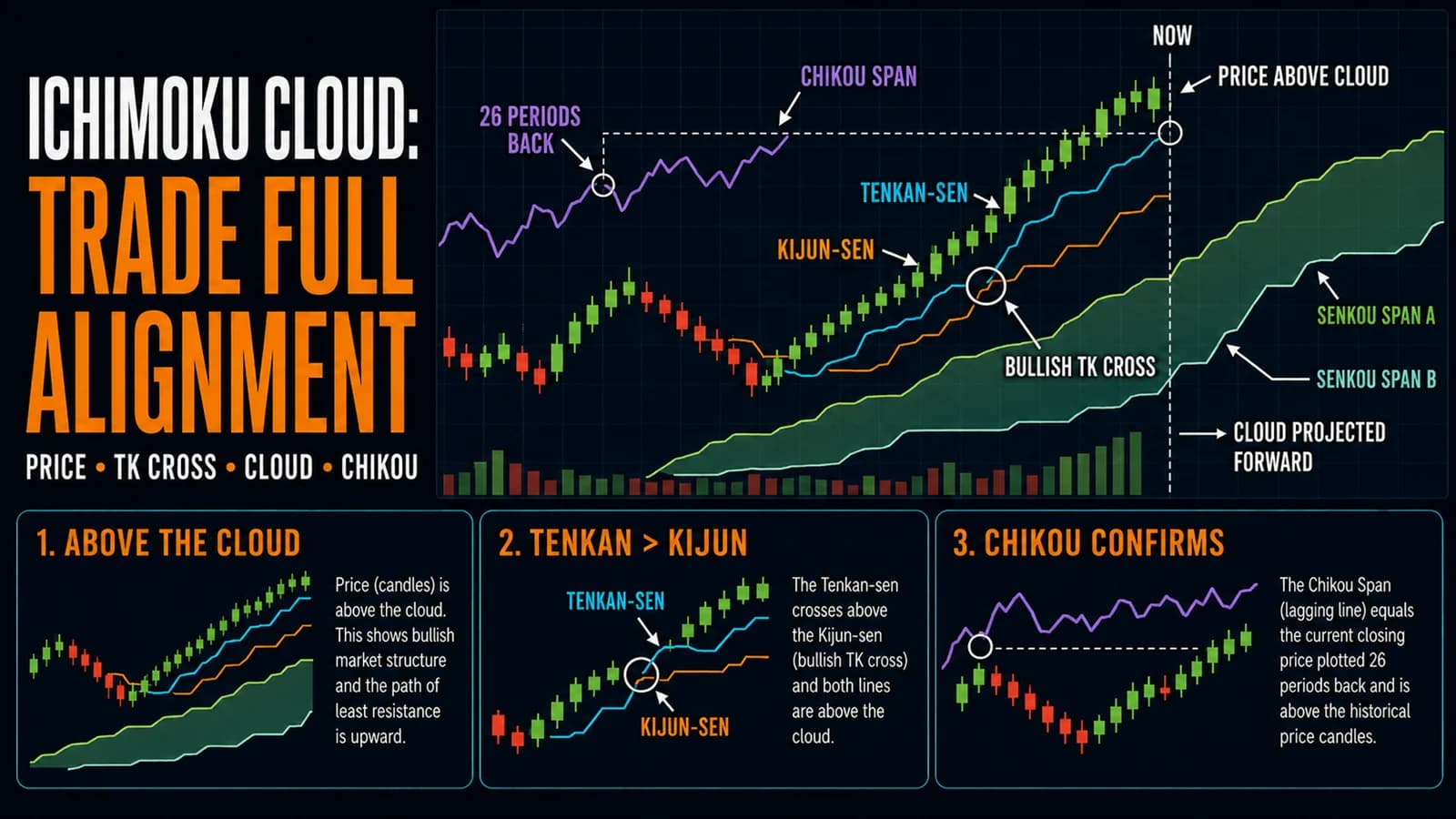
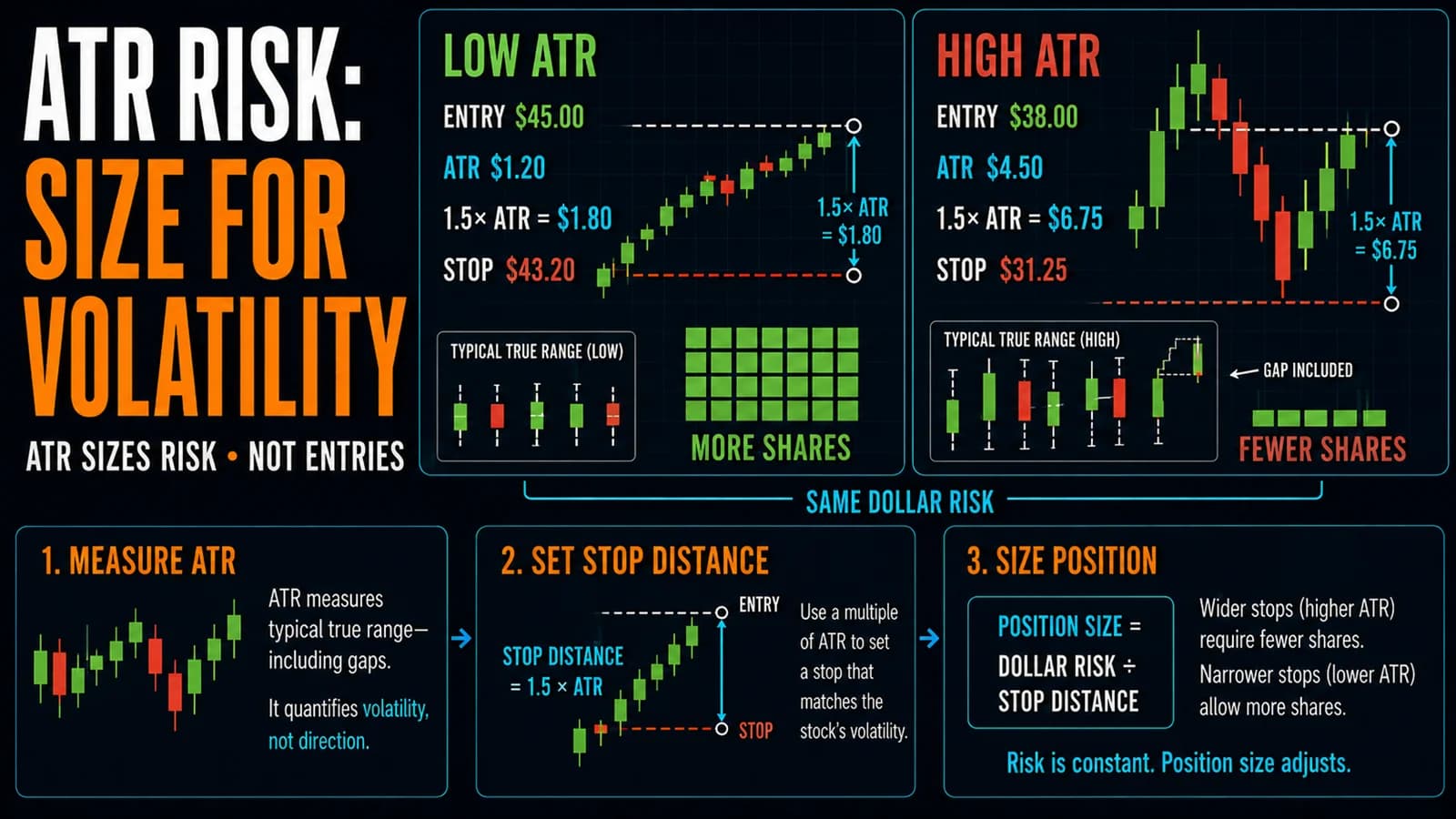
VWAP bounce, VWAP reclaim, 9/20 EMA pullbacks, SMA crossovers, MACD divergence, RSI divergence, Stochastic oscillator, Keltner channels, volume profile, Fibonacci retracements, Ichimoku, and ATR-adjusted sizing.

14 articles planned

We're writing these guides now — check back soon or subscribe for updates.

9
Module 9· Seeing the InvisibleComing Soon

Order Flow & Tape Reading

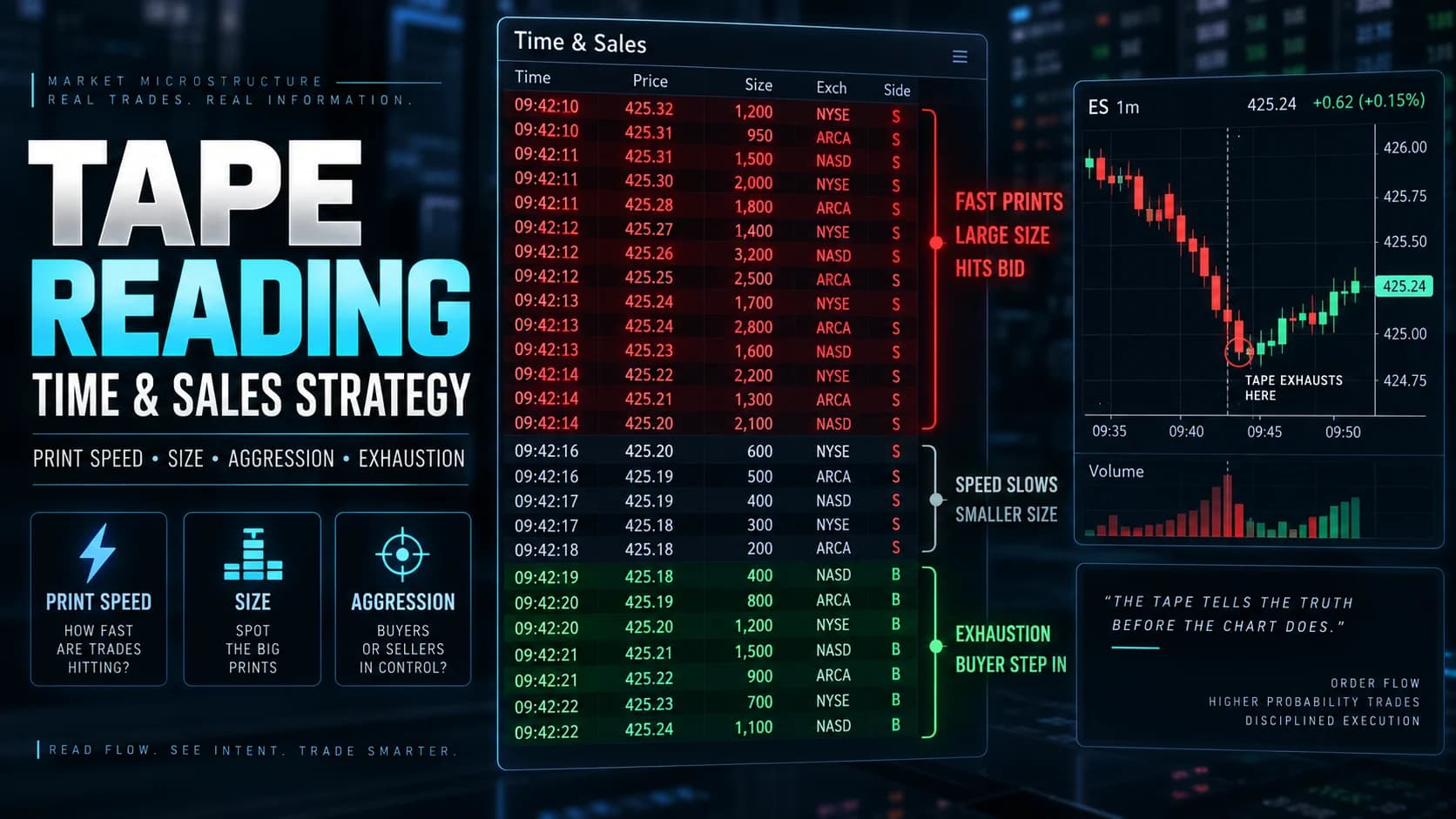
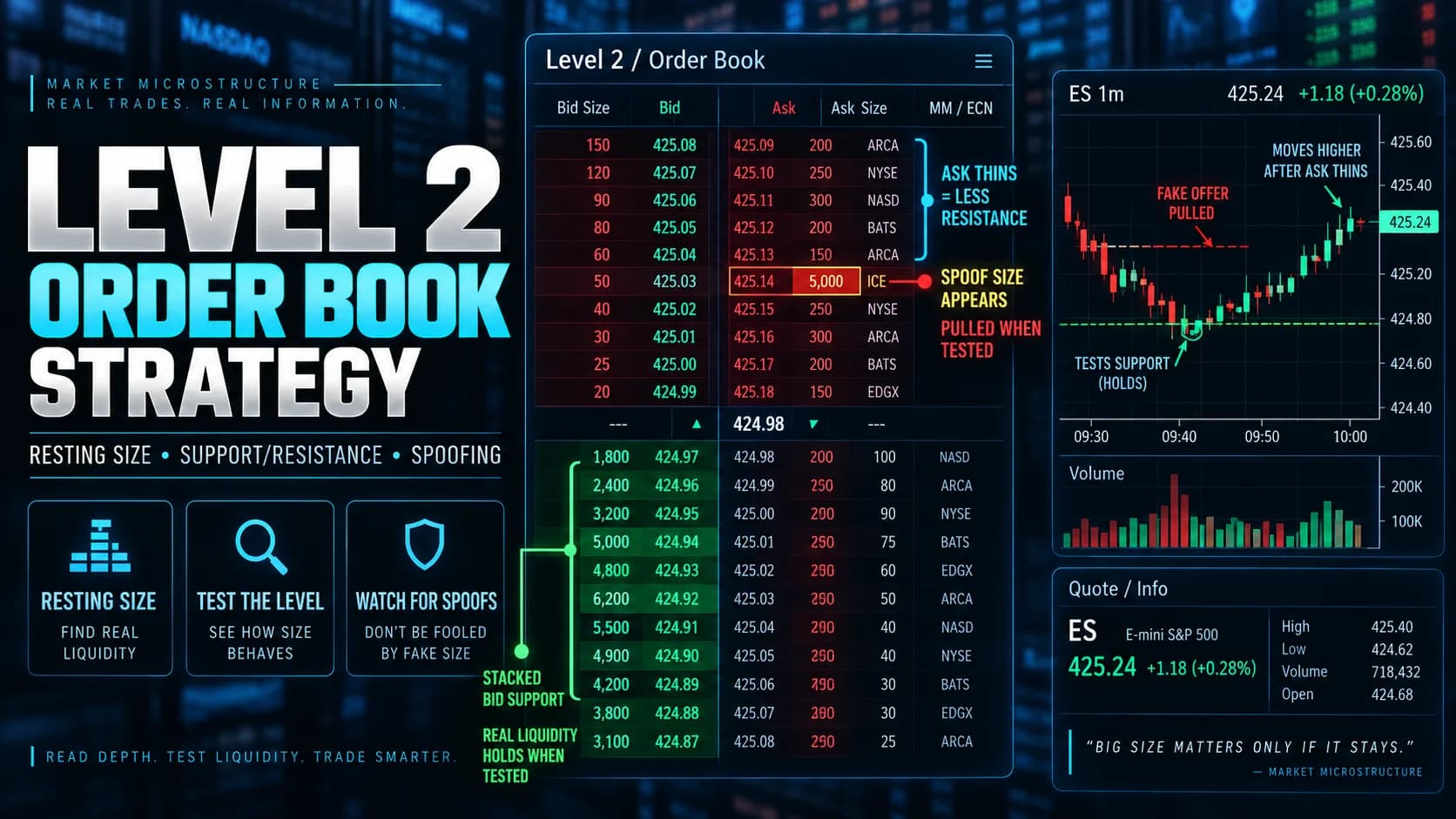
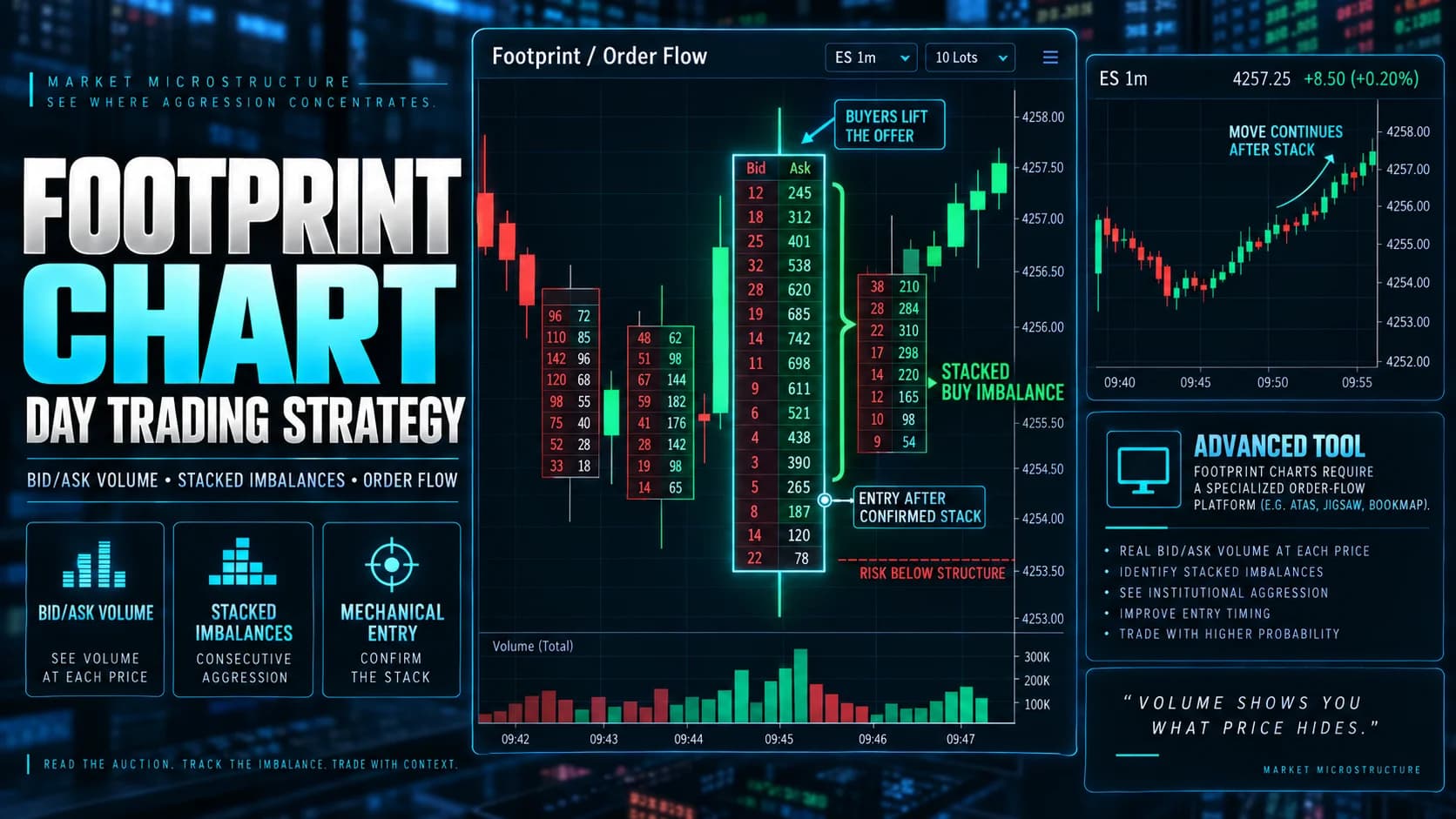
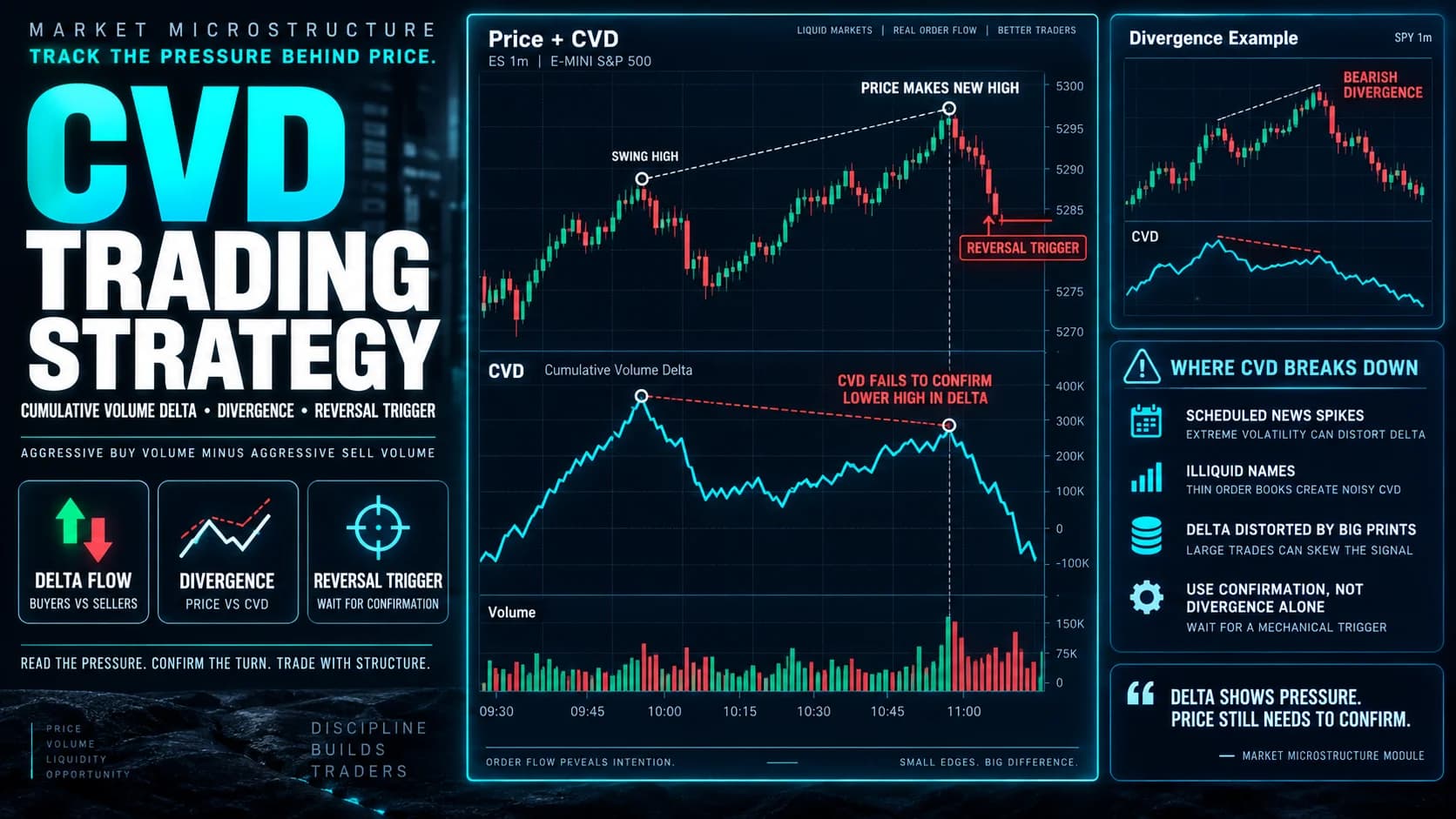
Time and sales reading, Level 2 order book edge, footprint charts, CVD, market profile TPO, auction market theory, SMC concepts, order blocks, fair value gaps, liquidity grabs, and dark pool prints.

13 articles planned

We're writing these guides now — check back soon or subscribe for updates.

10
Module 10· When You Trade Matters

Time-of-Day Playbooks

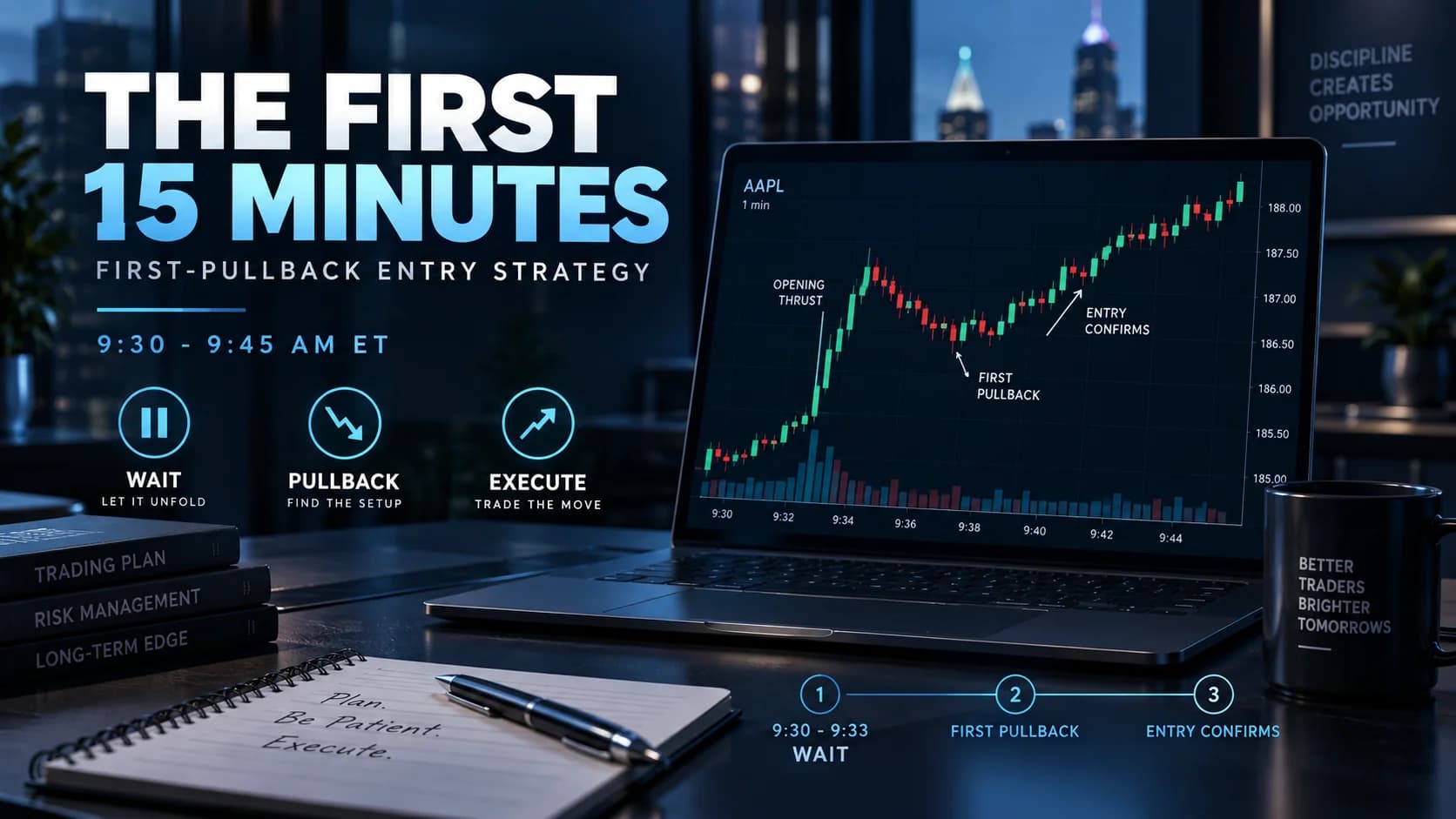
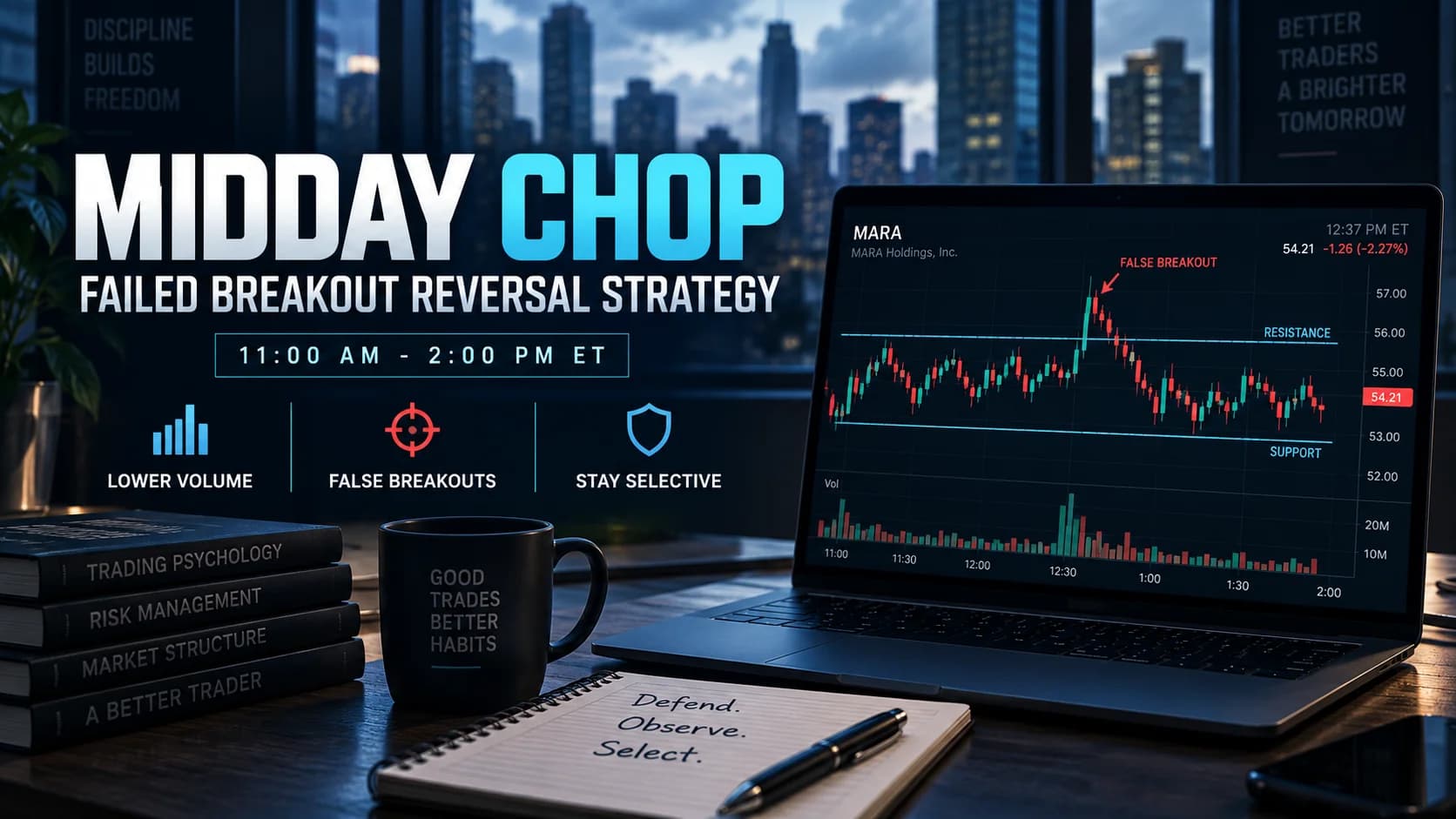
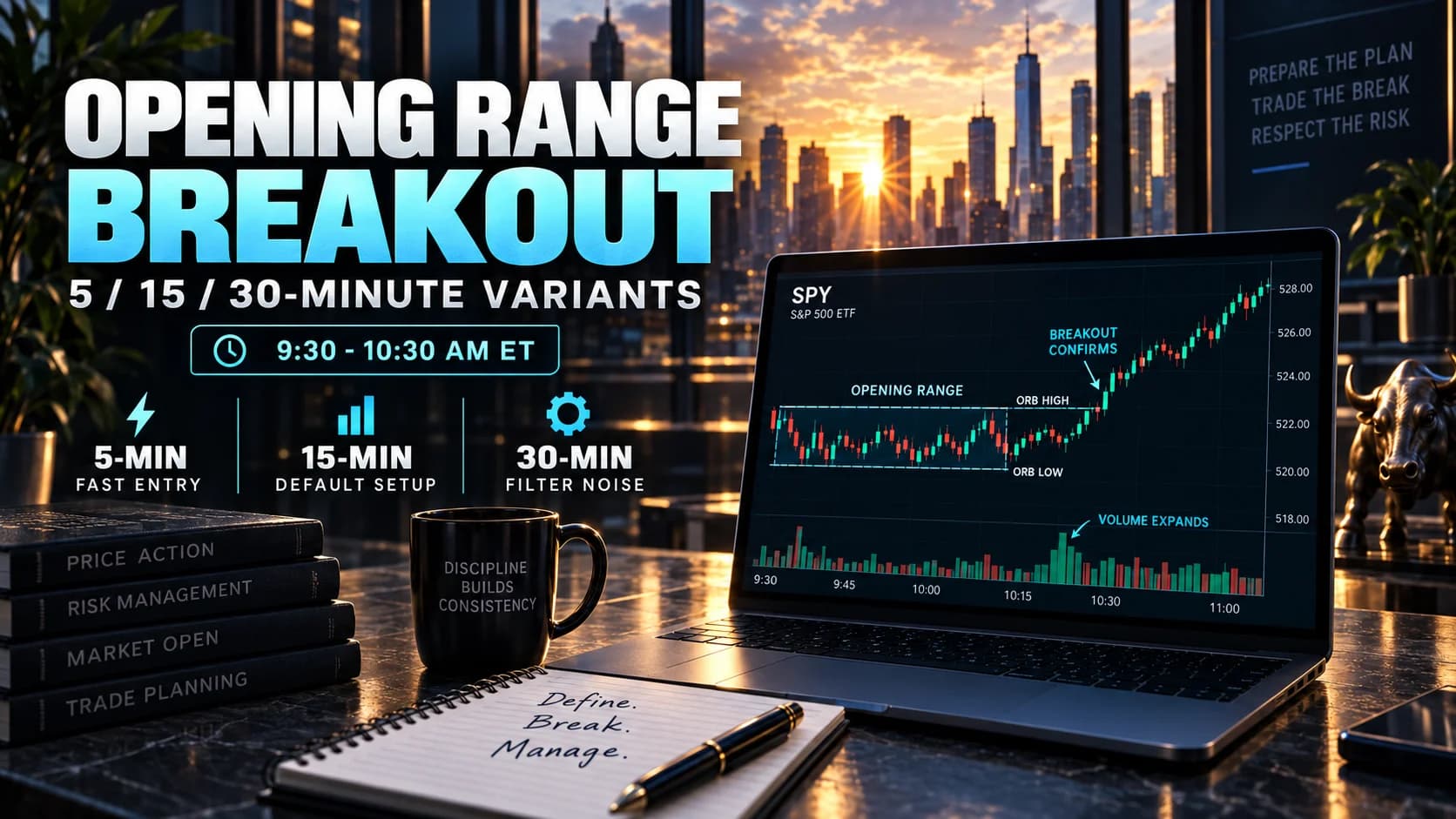
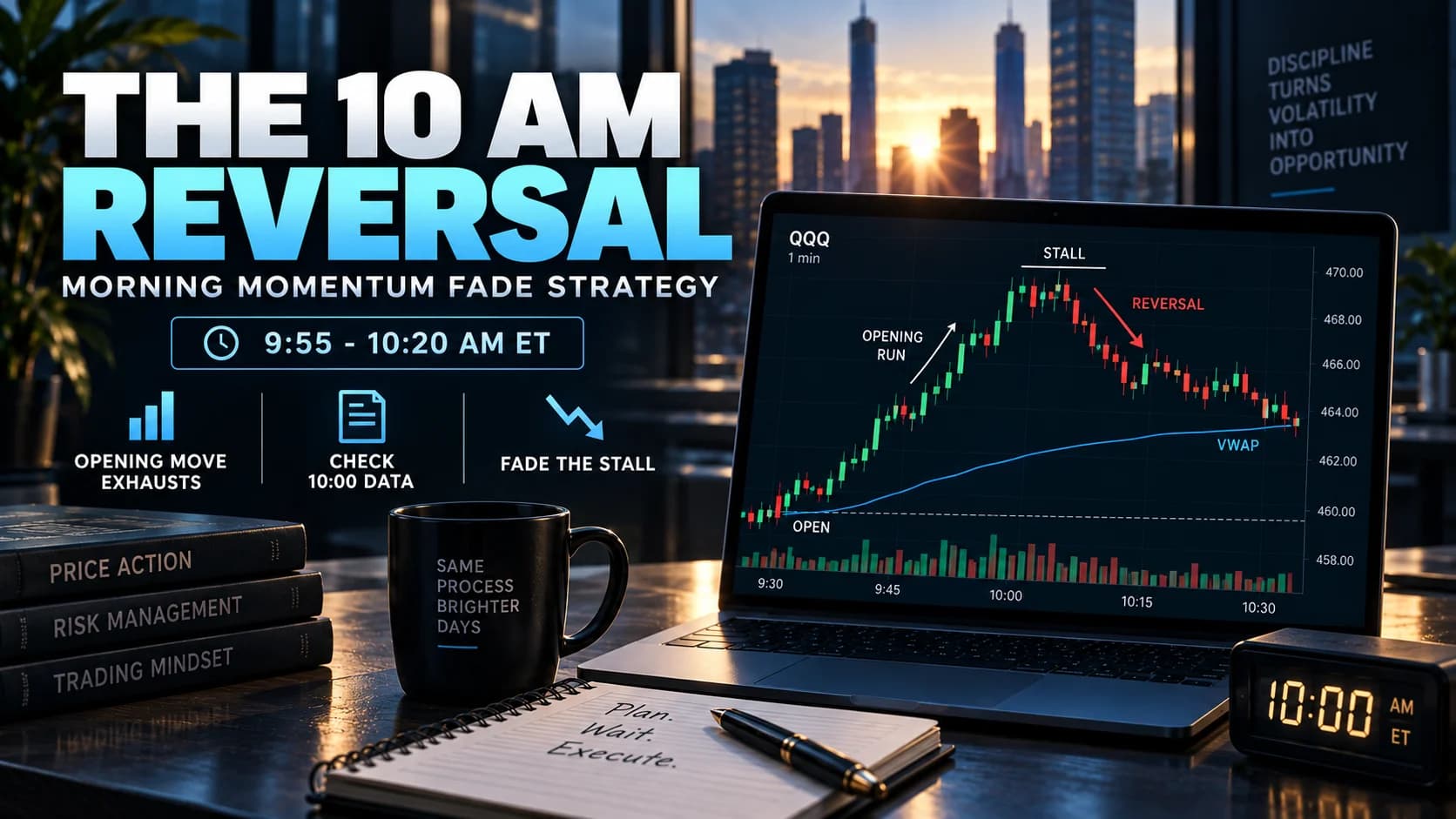
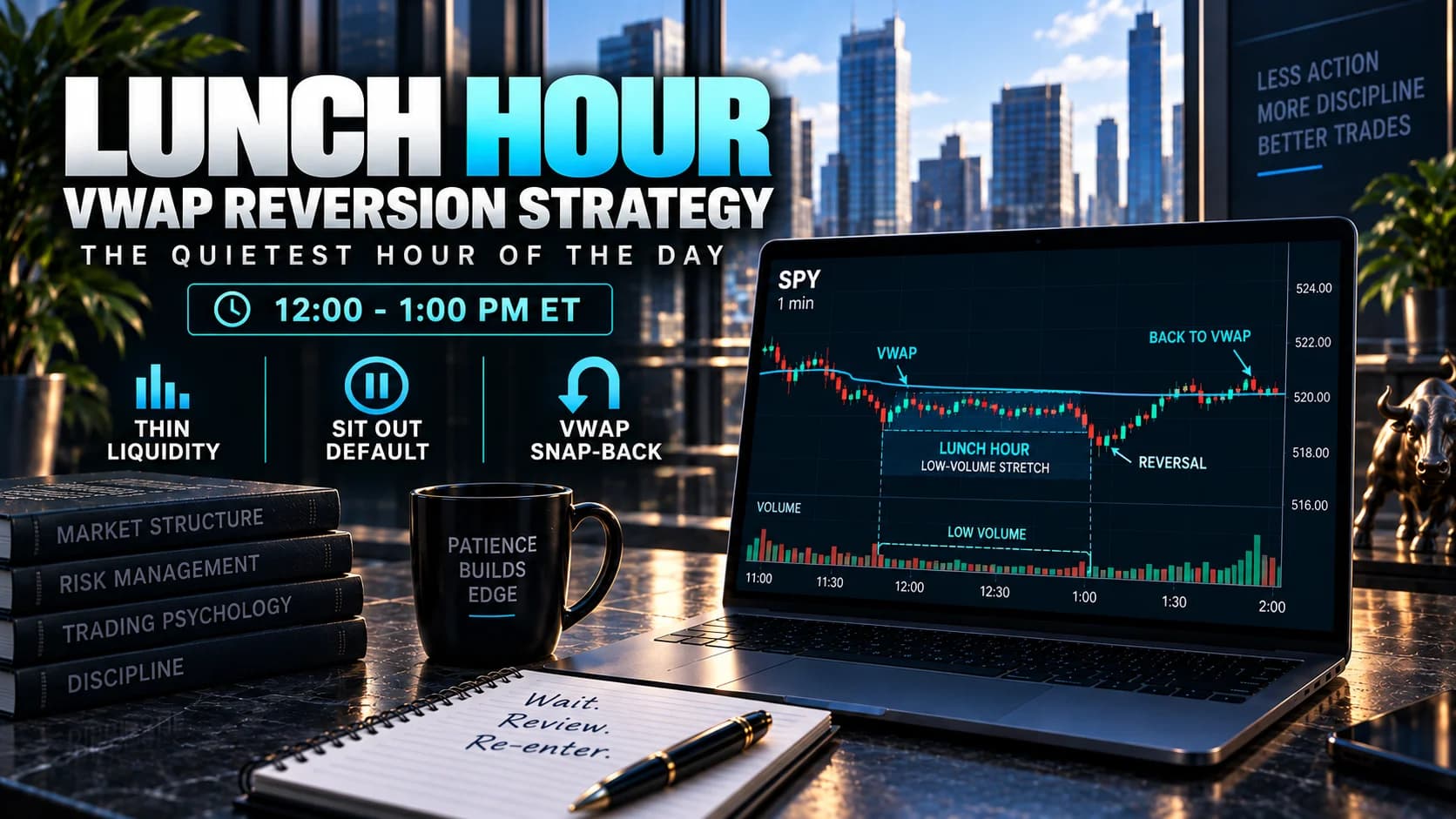
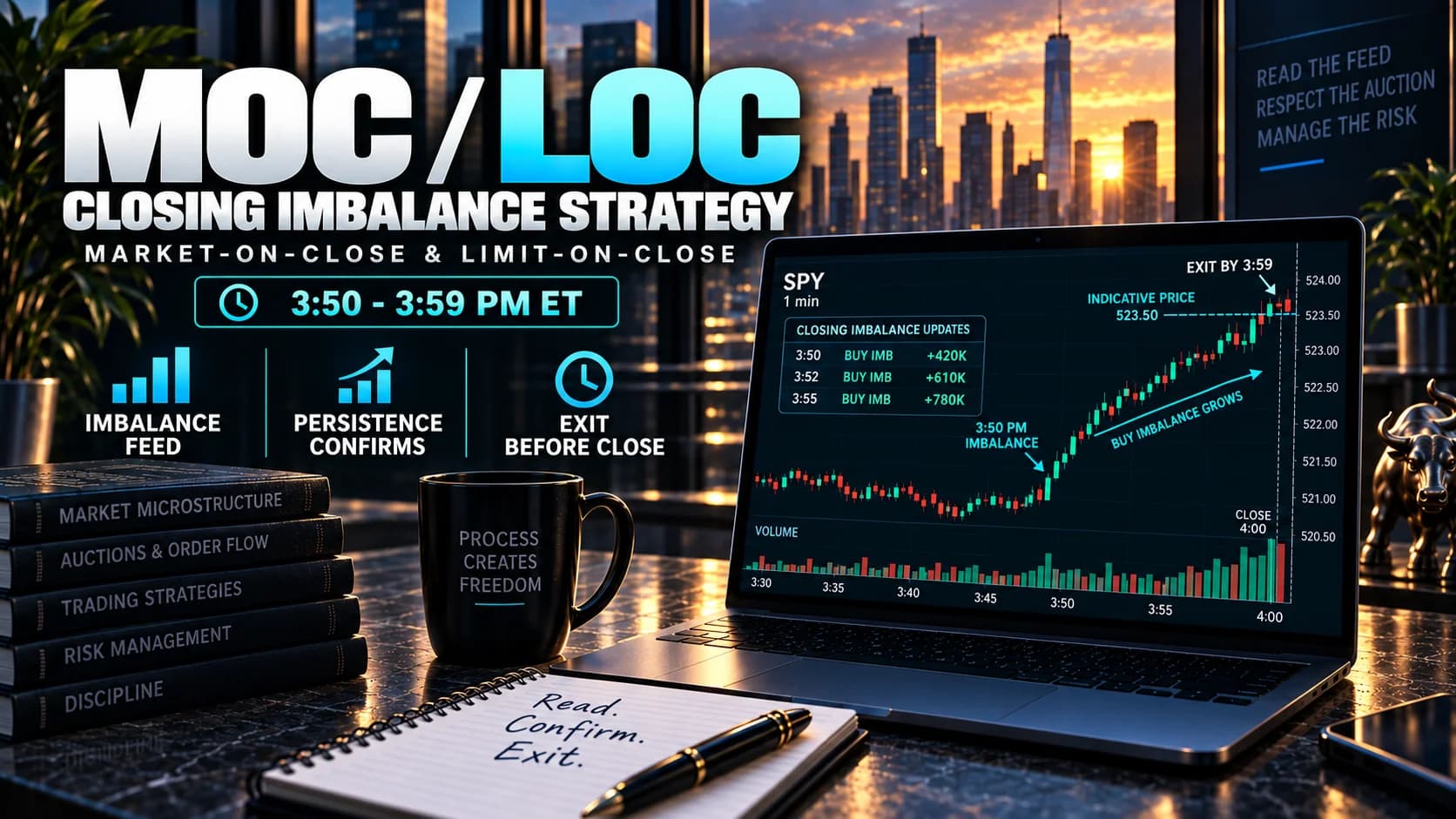
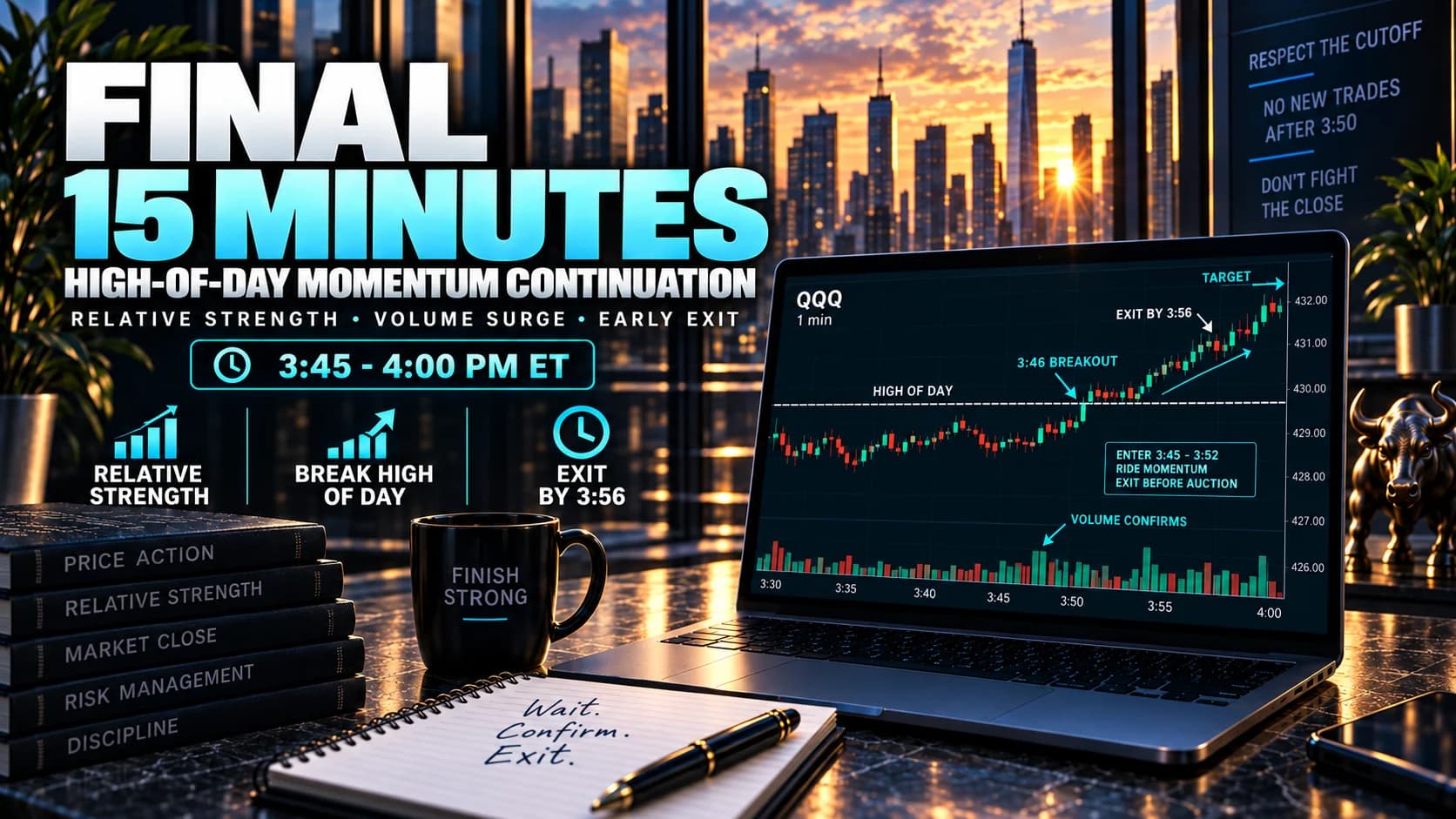
Pre-market prep, the open, first 15 minutes, midday chop survival, power hour, opening range breakout, initial balance, the 10 AM reversal, lunch rules, MOC/LOC orders, after-hours plays, and the 3:45 PM setup.

5 of 12 published ~1h read
11
Module 11· Trade the Calendar

Economic Event Playbooks

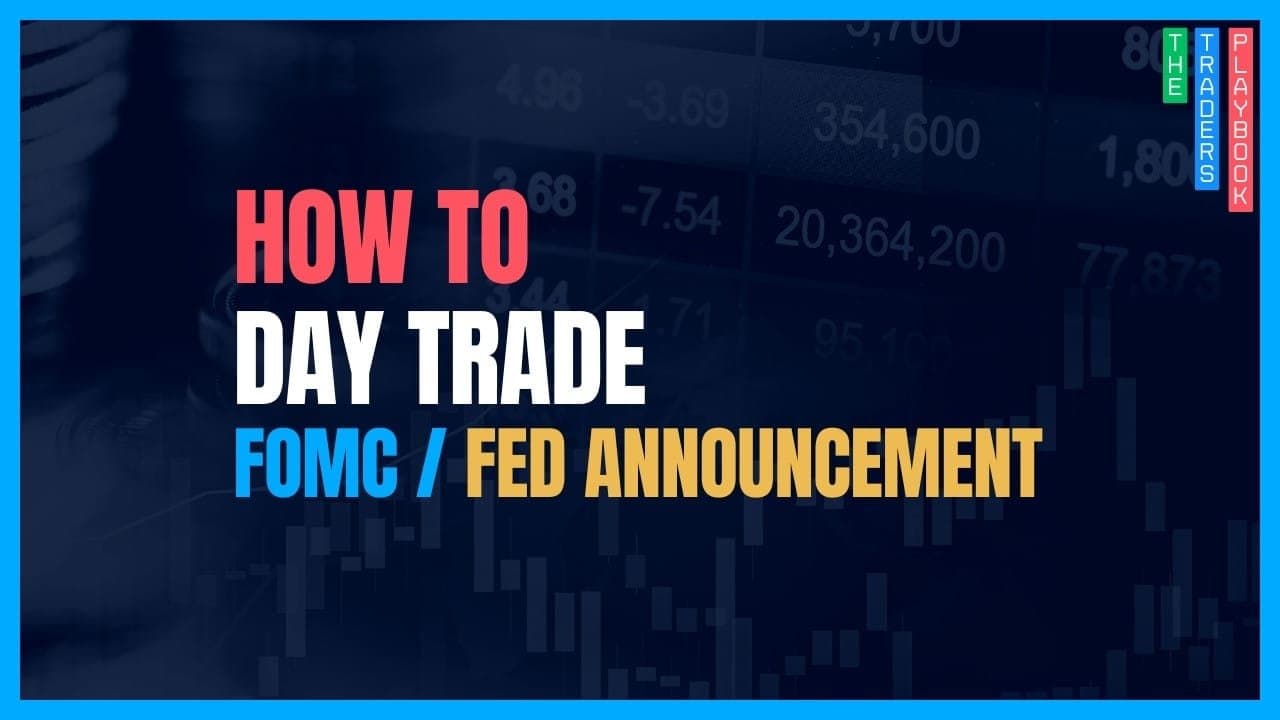
CPI, NFP, FOMC, earnings, PPI, retail sales, Fed speeches, EIA oil reports, GDP, ISM, consumer confidence, jobless claims, and housing data — intraday reaction maps for every major macro release.

9 of 17 published ~2h read
12
Module 12· One-Day Opportunity Maps

Special Events & Catalysts

Stock halts, quadruple witching, IPO day, short squeezes, window dressing, pump-and-dumps, 3-day weekends, FDA decisions, stock splits, Russell rebalancing, S&P inclusions, lockup expirations, secondary offerings, and more.

7 of 20 published ~2h read
13
Module 13· Read the Room First

Market Regime & Top-Down

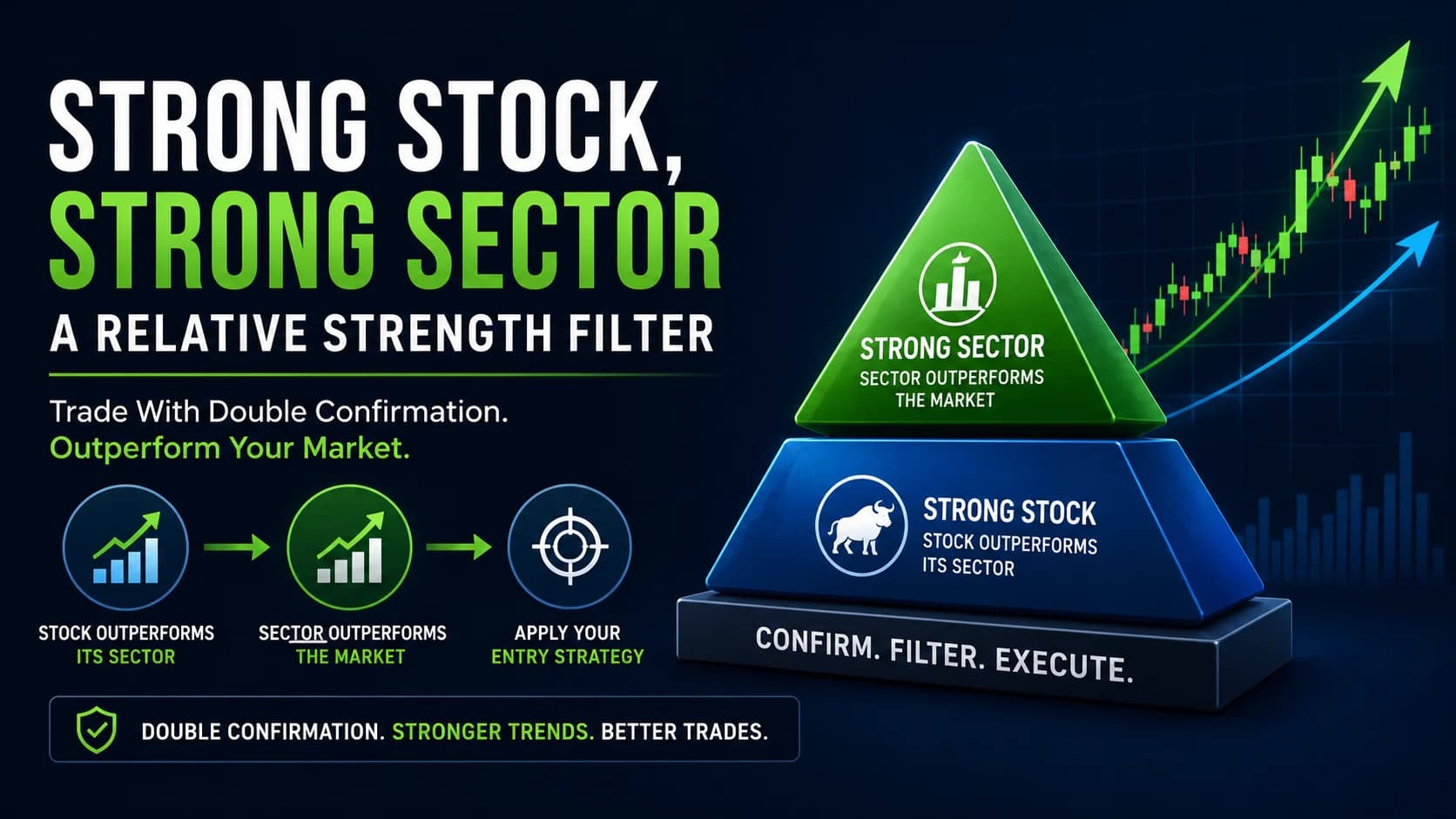
Identifying bull/bear/range regimes, high-VIX playbooks, sector rotation, intermarket analysis, SPY/QQQ correlation, market internals (TICK, TRIN, A/D), DXY and bond yield strategies, and real seasonality edges.

6 of 14 published ~1h read

Module 14 · Stocks · Options · Futures · Forex · Crypto · CFDs

Asset-Class Strategies

14A
Module 14A· Equities — ETFs, Large-Cap, Small-Cap

Stock-Specific Strategies

ETF day trading (SPY, QQQ, IWM), penny stocks, mega-cap tech plays, mid-cap sweet spots, small-cap volatility, inverse ETFs, volatility ETFs, leveraged ETFs, sector rotation plays, and meme stock survival.

2 of 10 published ~1h read
14B
Module 14B· Derivatives — 0DTE, Spreads, Volatility

Options Day Trading

0DTE options, iron condors, vertical spreads, long straddles and strangles, gamma squeeze plays, max pain pinning, volatility crush after earnings, and cash-secured puts — with honest risk disclosures on each.

3 of 9 published ~1h read
14C
Module 14C· Futures — /ES, /NQ, Commodities

Futures Strategies

/ES and /NQ scalping, micro E-mini approaches for smaller accounts, bond futures (/ZB, /ZN), gold futures (/GC), crude oil (/CL), natural gas (/NG), silver (/SI), copper (/HG), and Russell 2000 (/RTY) strategies.

4 of 9 published ~1h read
14D
Module 14D· FX — Major Pairs, Session Plays

Forex Day Trading

EUR/USD, GBP/USD, USD/JPY strategies, the carry trade, London session edge, New York session setups, Asia session approaches, and the London-NY overlap sweet spot for active currency traders.

2 of 8 published ~1h read
14E
Module 14E· Digital Assets — BTC, ETH, Altcoins

Crypto Day Trading

Bitcoin-specific setups, Ethereum and L2 plays, altcoin narrative momentum, BTC halving cycle strategies, crypto funding rate edge, arbitrage frameworks, and the honest memecoin day trading guide.

3 of 8 published ~1h read
14F
Module 14F· CFDs — Index and International Markets

CFD Trading Strategies

An introduction to CFD trading mechanics and risk for international traders, plus index CFD strategies for SPX500, NAS100, and GER40 — with margin rules and overnight exposure explained.

1 of 2 published ~1h read

Modules 15 – 17 · Algorithmic · Strategy Building · Prop Firm

Advanced & Specialized

15
Module 15· Code Your Edge

Algorithmic & AI Strategies

Algorithmic trading for retail traders, trading bot types, semi-automation with alerts, AI sentiment analysis, Pine Script intro, Python for traders, TradingView strategy tester, walk-forward analysis, Monte Carlo simulation, and backtest quality metrics.

4 of 12 published ~1h read
16
Module 16· Build, Test, Refine

Strategy Building & Edge

Finding your first edge, specializing one setup, defining hard entry and exit rules, avoiding curve fitting, forward testing protocols, performance metrics beyond win rate, when to abandon a failing strategy, position sizing across strategy types, scaling in/out, and pyramiding.

3 of 17 published ~1h read
17
Module 17· Pass the Challenge, Keep the CapitalComing Soon

Prop Firm Strategies

Prop firm challenge frameworks, trailing drawdown adaptation, Topstep Combine strategy, FTMO challenge approach, Apex Trader rules, the consistency rule trap, post-challenge funded account trading, and position sizing math most traders get wrong.

8 articles planned

We're writing these guides now — check back soon or subscribe for updates.

Strategy briefing

Get practical setup notes before your next session

Receive strategy breakdowns, risk notes, and tool workflows that help you trade with a cleaner plan.

Unsubscribe anytime.

Expand Your Edge

More Resources for Strategy Traders

A strategy is only part of the edge. These hubs cover the psychology, tools, market context, and platform decisions that determine whether any strategy actually pays off in live trading.

Common questions

What is the most profitable day trading strategy?

There is no single most profitable strategy — profitability depends on market regime, instrument liquidity, and the trader's execution discipline. Momentum and opening range breakout (ORB) work well in trending sessions; mean reversion works in ranging sessions. Master one strategy with documented edge before chasing a second.

What is the simplest day trading strategy for beginners?

Opening Range Breakout (ORB) — mark the high and low of the first 15 minutes, enter on a break with volume, stop on the opposite side of the range, target a multiple of the range. Clear rules, mechanical execution, easy to paper trade. Most beginners over-complicate; ORB removes that risk.

What is the 3-5-7 rule in trading?

The 3-5-7 rule is a position sizing and risk framework: never risk more than 3% on a single trade, 5% on related trades, or 7% of capital total at any moment. It's a guideline some traders use to cap exposure. Some prefer the stricter 1% rule. The point is having any documented risk limit, not the specific numbers.

How do you pick stocks for day trading?

Day traders filter by volume (above-average premarket activity), float (low-float for momentum, high-float for safer breakouts), and catalyst (earnings, news, sector rotation). A scanner like Trade Ideas or Finviz applies these filters in real time. The Tools & Tutorials hub covers scanner setup in depth.

What is the 1% rule in day trading?

The 1% rule means risking no more than 1% of your account on any single trade. On a $10,000 account, that's $100 maximum loss per trade. It protects you from a string of losses — even 10 consecutive losers cost less than 10% of the account. Most professional traders risk 0.5-1% per trade.

How many strategies should a day trader have?

One, mastered, before adding a second. Most struggling traders run three to five half-learned strategies and have no idea which is actually profitable. Pick one playbook, trade it for 100 sessions while journaling, and only expand once you can quote the expectancy from memory.

What is the best time of day to day trade?

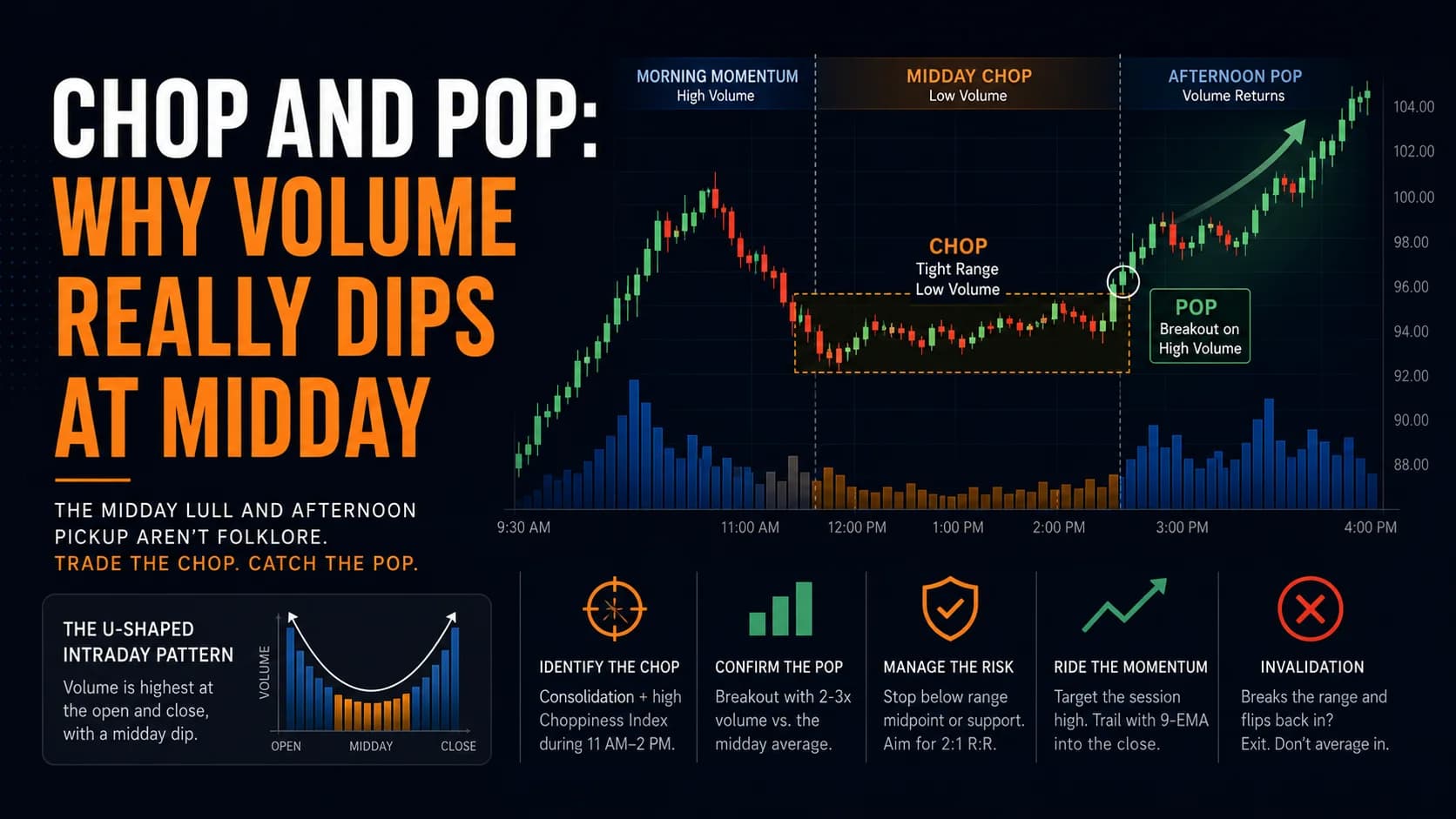
The first 90 minutes after the US open (9:30-11:00 ET) carry the highest volume and clearest setups. Midday (11:00-14:00 ET) is choppy and traps fresh traders. The closing hour (15:00-16:00 ET) sees a second volume spike. Most consistent day traders focus on the open and avoid the middle.

What strategy do most day traders use?

Momentum trading and opening range breakouts dominate retail day trading volume. Both rely on identifying stocks moving on volume after a catalyst (earnings, news, sympathy). Mean reversion and scalping are common secondary strategies. Most successful traders combine one primary strategy with one or two situational backups.