

Sep 11, 2026
Tokenized Stocks Explained: What Day Traders Need to Know
Tokenized stocks promise 24/7 trading and instant settlement. Here's how they actually work, what's regulated, and the real risks for day traders.
29 practical guides on the essentials around every trade that a strategy alone does not cover, such as how your profits are taxed, what algorithms and AI tools can really do, which account type to use and what each trade really costs.
All guides
The practical knowledge that sits around every trade: how trading profits are taxed, algorithmic and AI trading, cash and margin accounts, the full cost of a trade, position sizing and risk math, and the market rules that change how stocks trade. Newest guides first.
Sep 11, 2026
Tokenized stocks promise 24/7 trading and instant settlement. Here's how they actually work, what's regulated, and the real risks for day traders.
Aug 30, 2026
Learn why the 2-year Treasury yield moves stocks, how it differs from the 10-year yield, and how day traders can use it around major economic events.
Aug 30, 2026
Interactive Brokers and Robinhood both launched AI trading agents in 2026, built very differently. Here's what each does, and what testing found on the claims.
Aug 29, 2026
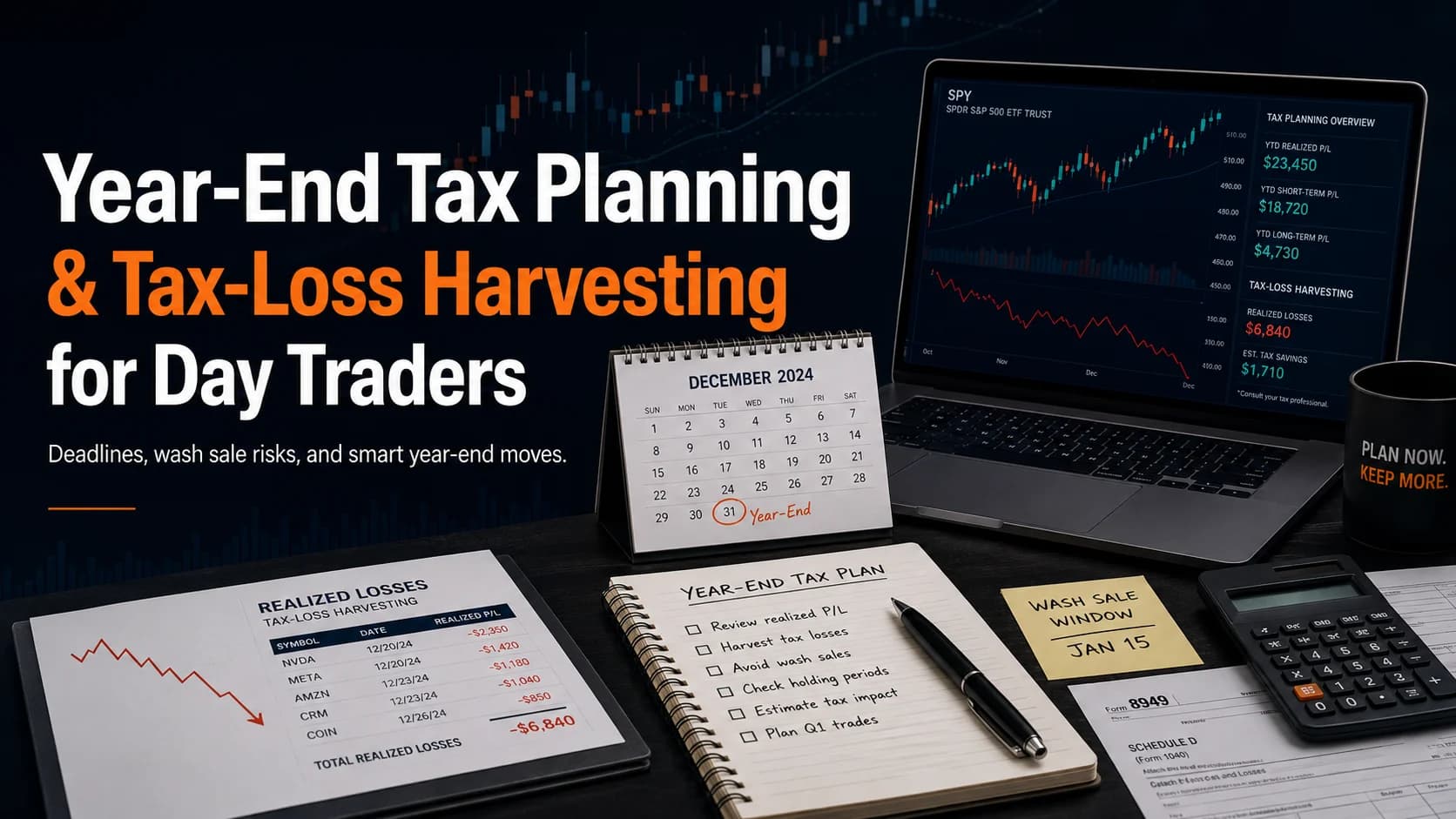
Year-end tax moves for day traders: the wash sale timing trap, equipment deadlines, retirement contributions, and the Q4 estimated payment due January 15.
Aug 29, 2026
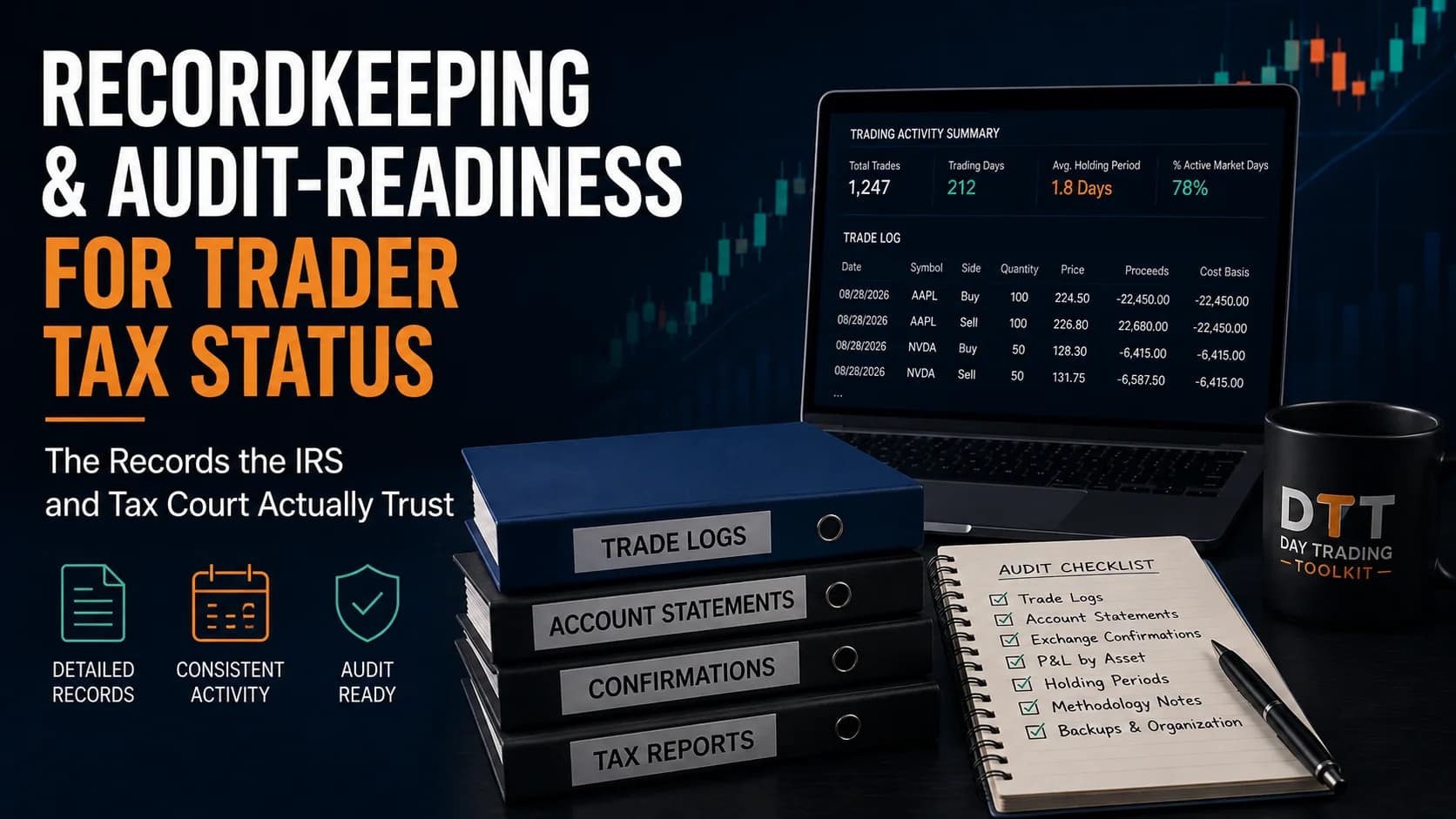
A $20M/year trader lost his TTS case over his own old letter, not his trading volume. Here's how to build audit-proof records for Trader Tax Status.
Aug 29, 2026
Trading one crypto for another is a taxable event even with no cash involved. See how crypto's property classification and cost basis choices affect your tax.
Aug 29, 2026
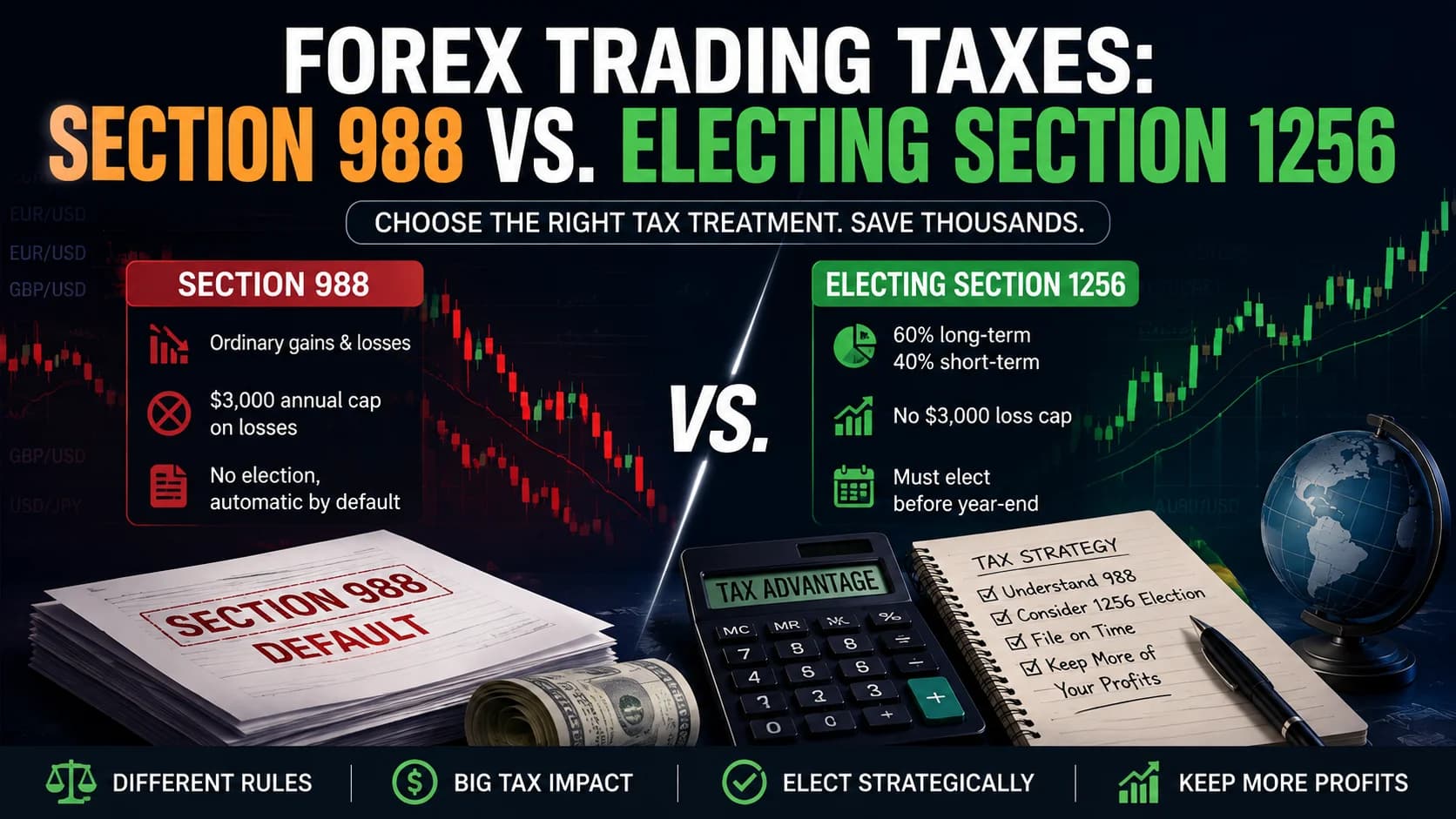
Forex defaults to Section 988 ordinary tax treatment. Here's when electing capital gains or 1256 treatment makes sense, and the deadline that trips people up.
Aug 29, 2026
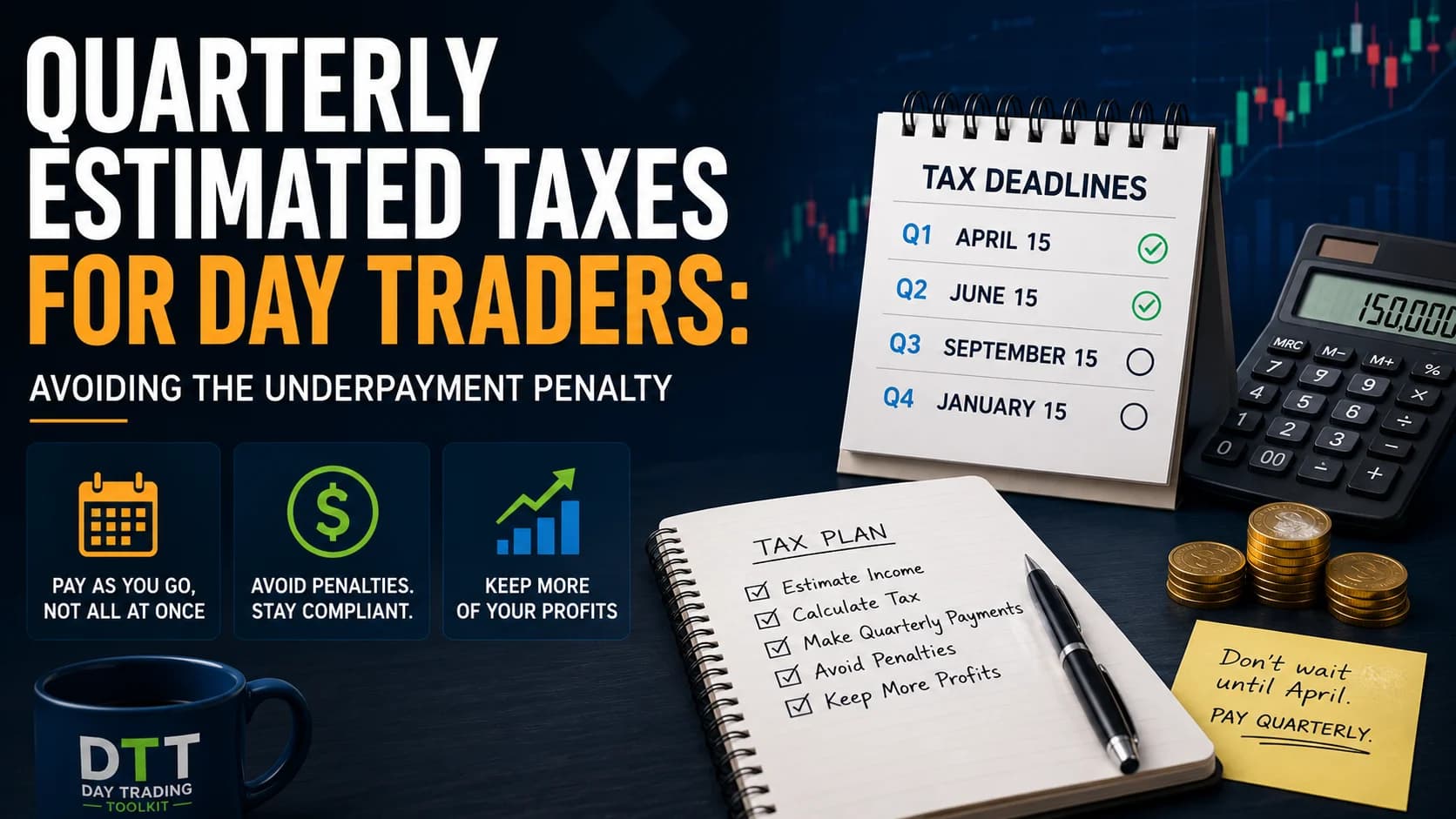
Day traders can owe a penalty even after paying their full tax bill, since the IRS checks quarter by quarter. Here's the safe harbors and the real fix.
Aug 29, 2026
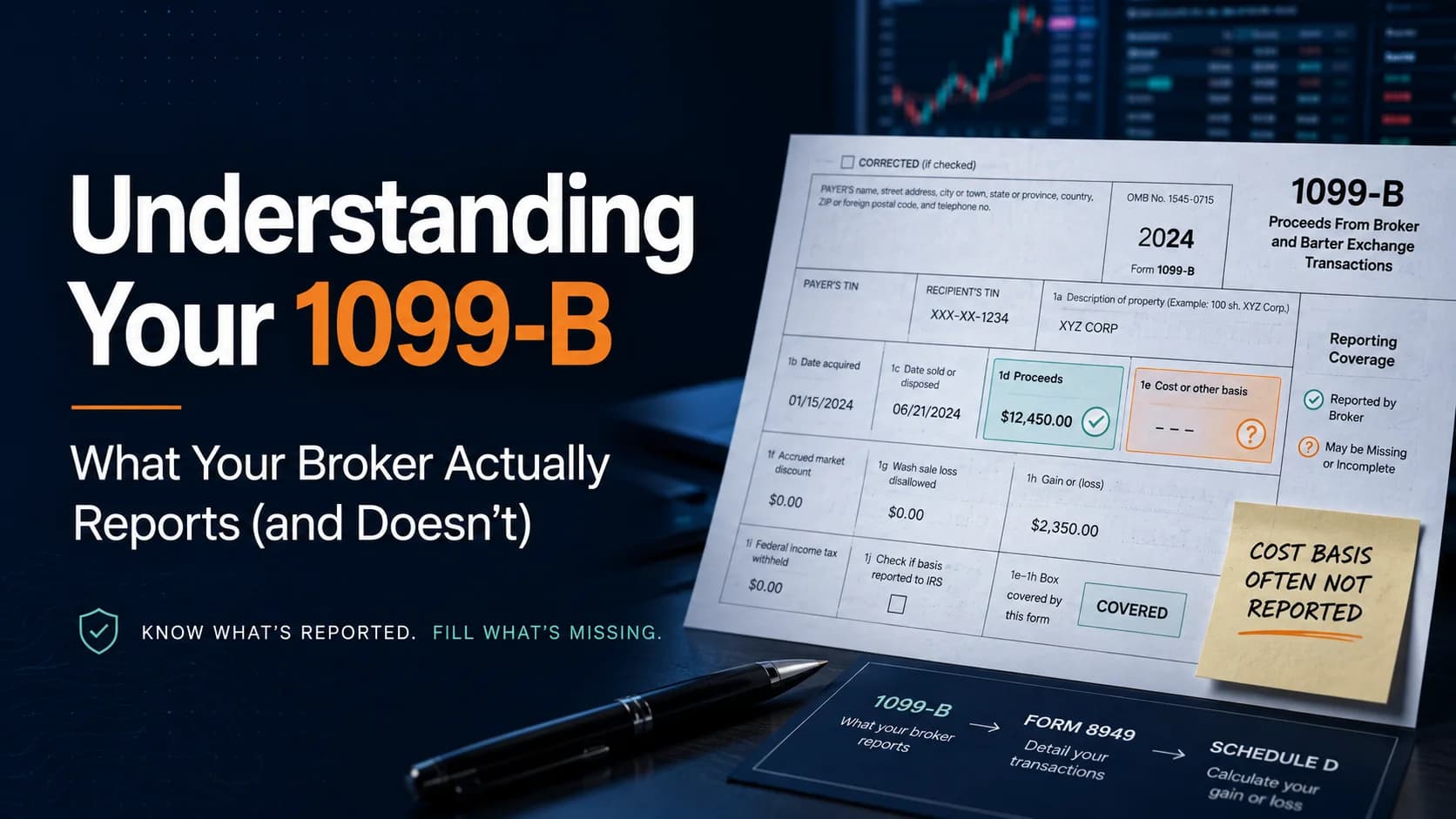
A blank cost basis box on your 1099-B can turn a small gain into a six-figure IRS notice. Here's exactly what the form reports, and what it doesn't.
Aug 29, 2026
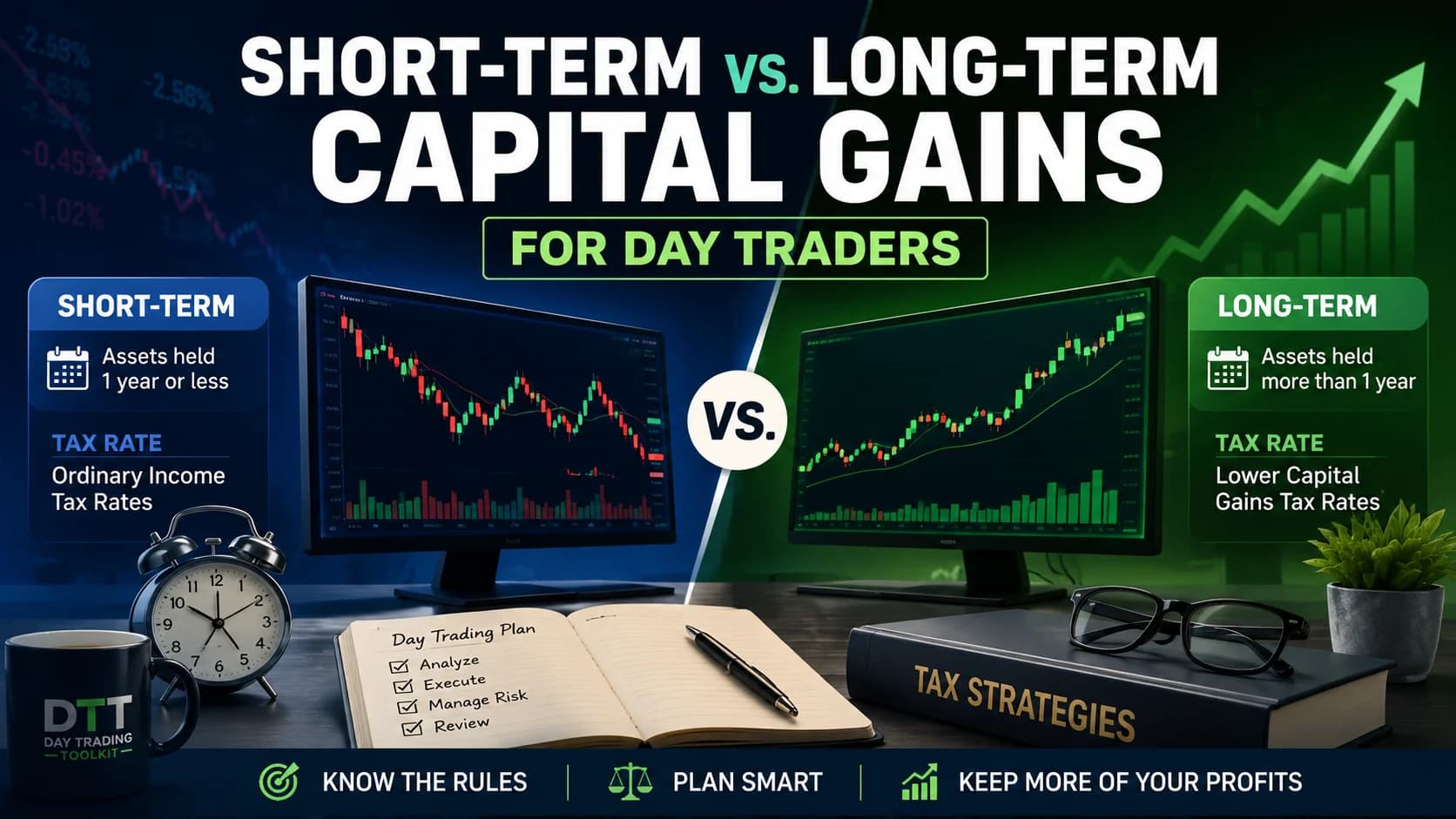
Nearly every day trade is taxed as a short-term gain at your full ordinary rate, not the discounted long-term rate. Full 2026 numbers and real examples.
Jul 30, 2026
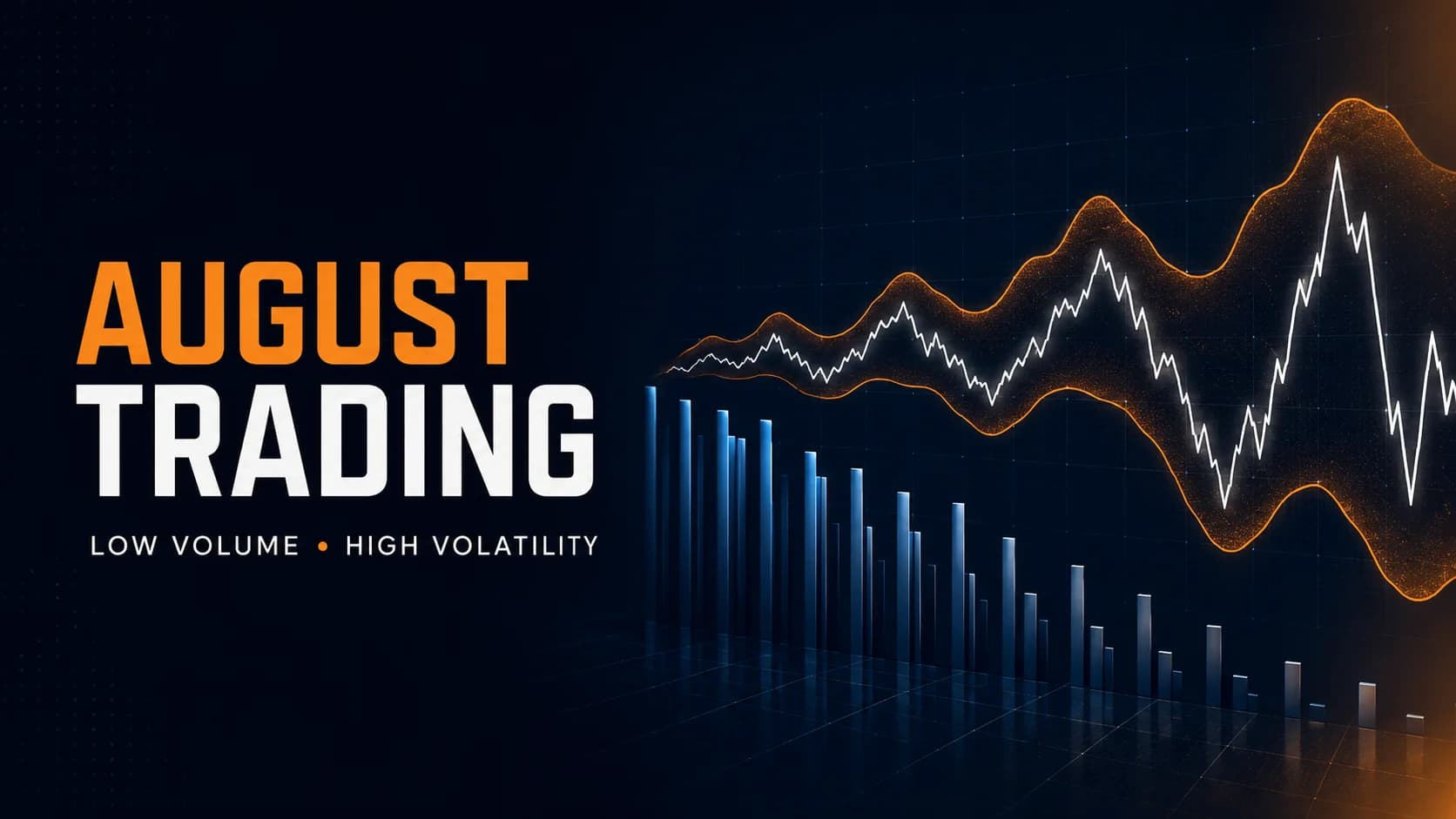
August sees some of the year's lowest trading volume — and some of its sharpest moves. Here's the seasonal pattern and how to trade around it.
Jul 4, 2026
Nasdaq's new Fast Entry rule lets mega-IPOs join the Nasdaq-100 in 15 trading days, not a year. Here's the mechanism and how to trade the next one early.
May 13, 2026
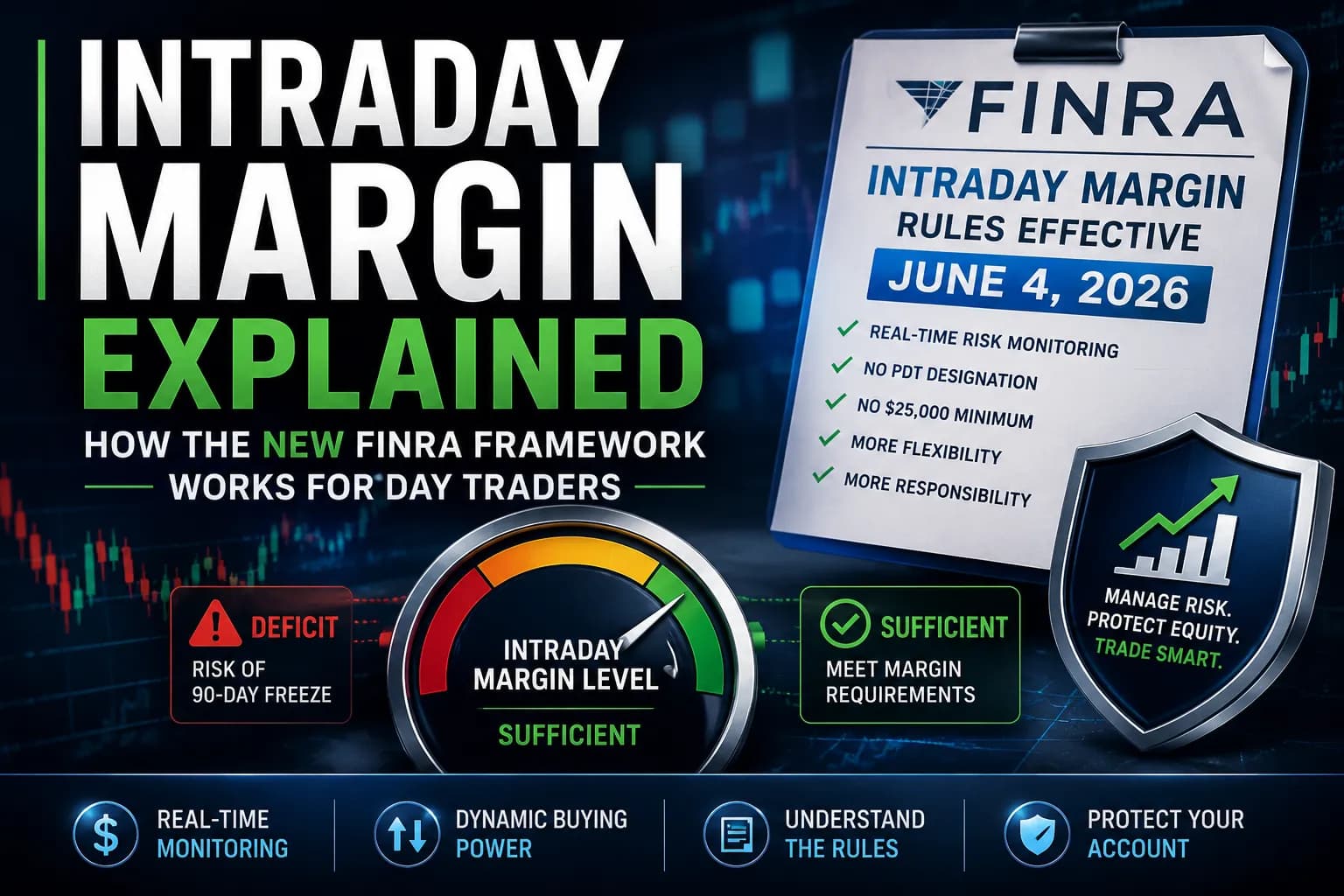
The PDT rule is gone. Here's how the new intraday margin system works — deficits, buying power, 90-day freezes, and what it means for your account.
Feb 26, 2026
The 5-Level AI Framework exposes what's real vs. hype in AI trading bots — SEC enforcement cases, red flags, and how to evaluate any tool.
Feb 26, 2026
Master AI day trading with our 4-Level Framework. Learn what AI tools actually do, their real limitations, and how to build a human-AI partnership that works.
Oct 28, 2025
See exactly which expenses day traders can deduct with Trader Tax Status, the 2026 bonus depreciation rules, and the audit triggers to avoid.
Oct 28, 2025
S-Corps don't cut self-employment tax for day traders like they do other businesses, since trading gains were never subject to it. Here's what actually works.
Oct 28, 2025
A wash sale inside an IRA permanently destroys your loss under Revenue Ruling 2008-5. Here's the 61-day rule, the IRA trap, and crypto's 2026 status.
Oct 28, 2025
Section 1256 contracts get a 60/40 tax split regardless of holding period. See which futures and options qualify, the SPX vs SPY trap, and 2026 savings.
Oct 28, 2025
The Section 475(f) election erases the wash sale rule and $3,000 loss cap, but one Tax Court case shows how easily the paperwork can cost you everything.
Oct 28, 2025
What actually decides Trader Tax Status in Tax Court, from Endicott to Nelson to Poppe, the real benchmarks, and how to build an audit-proof claim.
Oct 28, 2025
The complete 2026 guide to day trading taxes: Trader Tax Status, mark-to-market, Section 1256, forex, crypto, deductions, entities, and year-end planning.
Oct 16, 2025
A plain-English answer to "what is algorithmic trading?" Learn the basics, see simple examples, and understand how it's different from manual trading.
Aug 31, 2025
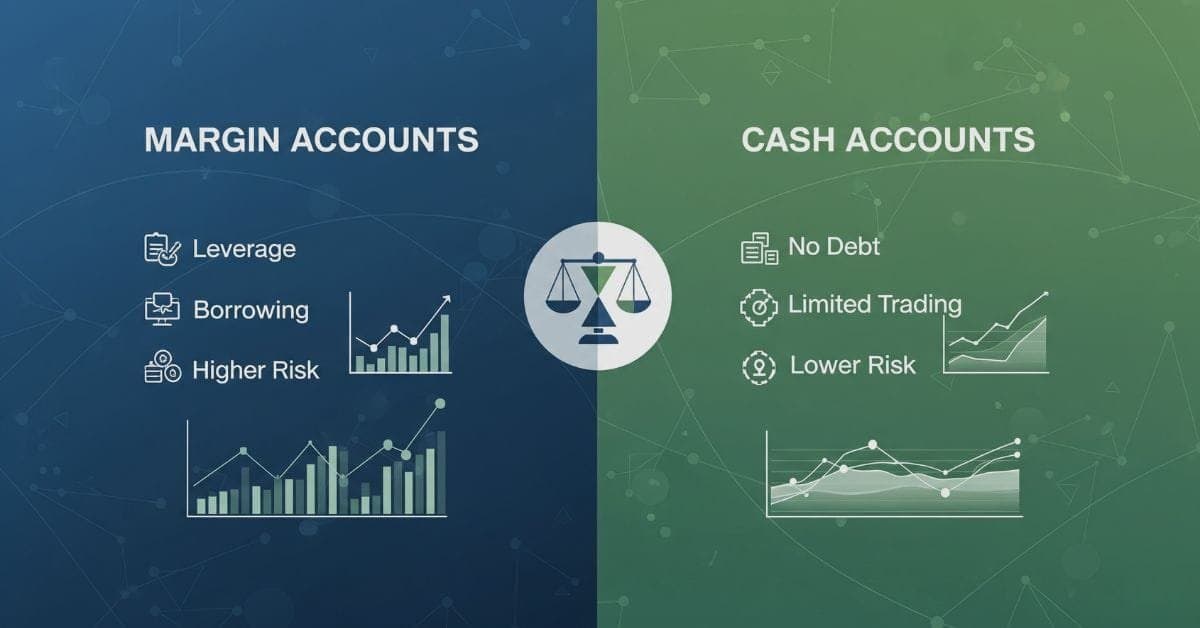
Learn the key differences between margin vs cash accounts for day trading — PDT rules, buying power, and which account type fits your strategy.
Aug 30, 2025
Learn how to calculate position size in forex and stocks. Discover the 1–2% rule, volatility-based sizing, and how to manage risk on every trade.
Aug 30, 2025
Discover the power of compounding in trading. Learn how reinvesting profits and consistent strategies can grow your account exponentially over time.
Aug 30, 2025
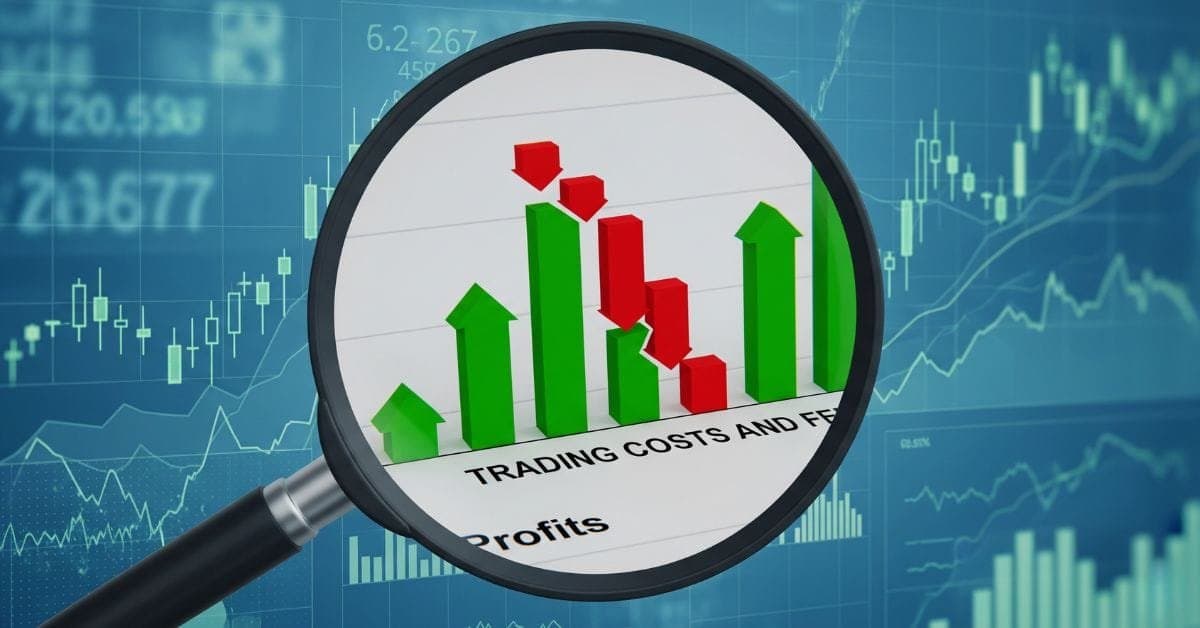
Discover the hidden trading fees that drain your profits. Spreads, commissions, rollover costs, and our calculator to track real performance.
Aug 29, 2025
Learn how to calculate your reward/risk ratio with simple formulas and real examples. See why a 40% win rate can still be profitable with the right ratio.
Aug 29, 2025
Learn how to use stop loss and take profit orders for consistent results. Strategies, common mistakes, and our calculator to plan smarter trades.
Free newsletter
Practical guides on taxes, accounts, costs and risk as they are published. No spam, no course to sell.
Unsubscribe anytime.
Day Trading Basics covers the practical knowledge that sits around every trade rather than the trade setups themselves: how trading profits are taxed, cash and margin accounts, what a trade really costs, position sizing and risk math, algorithmic and AI trading, and the market rules that change how stocks trade.
These topics decide how much of a winning trade you keep and how much a losing trade can cost, whichever strategy you use.
Each guide takes one topic and explains it in plain English, with examples where they help. Every guide in the category is listed on this page, newest first.
The Beginner's Guide is a course you read in order, while Day Trading Basics is a library of standalone guides you read when a topic comes up.
The Beginner's Guide has 101 short lessons in ten modules, from market foundations and your trading setup through risk management, psychology and going live, so a new trader sees the whole picture once. Day Trading Basics goes deeper on single topics that matter at particular moments, such as tax rules before filing season, account types before opening a brokerage account, or margin rules after a regulation change.
The two work together: a course lesson introduces a topic, and a basics guide on the same topic covers the details.
Strategies guides explain how to trade a setup, and Day Trading Basics guides explain the rules and costs that apply to every setup.
A strategy guide covers when to enter, where to place a stop and when to take profit on a particular pattern. A basics guide covers what happens around that trade: the commission, spread and slippage it pays, how its profit or loss is taxed, whether your account type allows it, and how many shares to buy for the risk you set.
You need both, because a strategy that looks profitable on a chart can still lose money once trading costs, taxes and position size are counted.
Start with the Beginner's Guide, then read a Day Trading Basics guide when you reach the step it covers.
A practical order is cash and margin accounts before opening a brokerage account, trading costs and position sizing before your first live trade, and the tax guides before the end of your first trading year, while year-end decisions such as tax-loss harvesting can still make a difference.
The guides do not depend on each other, so if you already trade you can go straight to any topic in the list.
Partly. The tax and account guides follow U.S. rules, while the guides on trading math, trading costs and automation apply in any market.
Tax guides are based on U.S. federal tax law and IRS rules, and account guides follow U.S. brokerage rules set by FINRA and the SEC, such as margin requirements and settlement times. Traders in other countries face different tax treatment and account rules, so for them those guides are background, not a substitute for local rules.
Position sizing, reward-to-risk math, spreads, slippage and how trading algorithms work are the same wherever you trade.
No. The guides are general education about how the rules work, not advice for your personal situation.
Tax outcomes depend on details such as your filing status, other income, the instruments you trade, whether you qualify for trader tax status and which elections you have made, so the same trade can be taxed differently for two traders.
Use the guides to understand the rules and prepare better questions, and make decisions such as the mark-to-market election or forming a business entity with a CPA or tax professional who knows trader taxation.
New guides are added as topics come up, including when a rule change affects day traders, and each new guide appears at the top of this page.
The list is sorted newest first and every card shows its publish date, so you can see what has been added since your last visit. Recent guides have covered changes such as the new intraday margin rules and a new exchange rule for large IPOs.
To get new guides without checking back, sign up for the free newsletter on this page.