Learn Day Tradingfor Free
The free 101-lesson day trading course for beginners, plus 140+ strategy guides and honest tool reviews. We go beyond definitions: when a setup works, when it fails, and what it costs to trade. Built on SEC and FINRA rules and peer-reviewed research.
Inside the free library
Every strategy is a playbook with its entry, stop and target.
Where to Start with Day Trading
We have structured content for every stage. Start where you are — not where you think you should be.
New to Day Trading
Never placed a trade? Start with our free 101-lesson day trading course. Zero assumed knowledge.
Start Lesson 1Need a Trading Strategy
Trading but losing money inconsistently? Find your edge with 140+ documented day trading strategies.
Browse StrategiesTrading Psychology
Know your strategy but can't execute it? Learn the psychology of consistent day trading.
Read PsychologyChoosing Trading Tools
Scanners, charting platforms, brokers. Honest day trading tool reviews for workflow, pricing, and real fit — not commissions.
Read Tool ReviewsExplore Day Trading Topics
Every main section of the site, with the number of articles in each.
- 101 lessons
Day Trading for Beginners
101 lessons - 144 strategies
Day Trading Strategies
144 strategies - 29 guides
Day Trading Basics
29 guides - 27 articles
Trading Psychology & Risk
27 articles - 45 reviews
Trading Tool Reviews
45 reviews - 31 comparisons
Trading Platform Comparisons
31 comparisons - 54 articles
Stock Market Insights
54 articles - 42 tutorials
Trading Tools & Tutorials
42 tutorials - Free tools
Trading Calculators
Free tools - A–Z glossary
Trading Dictionary
A–Z glossary
How to Start Day Trading in 5 Steps
Trading is a skill that takes time. This is the honest sequence — in order.
Markets, order types, risk, reading charts — the non-negotiables.
Platform, scanner, broker, hotkeys, screen layout.
Simulate trades daily until your process is automatic. Minimum 3 months.
Minimum share size. Risk ≤1% per trade. Build real-money experience slowly.
Weekly review of your trades. The journal is what separates learners from earners.
Latest Day Trading Articles

Weekly Market Insights: October 26 to 30
Big Tech reports into a market that has stopped rewarding AI spending on faith, with the Fed, $100 oil and next week's midterms crowding the same five days. Here's what to follow during the October 26 to 30 trading week.
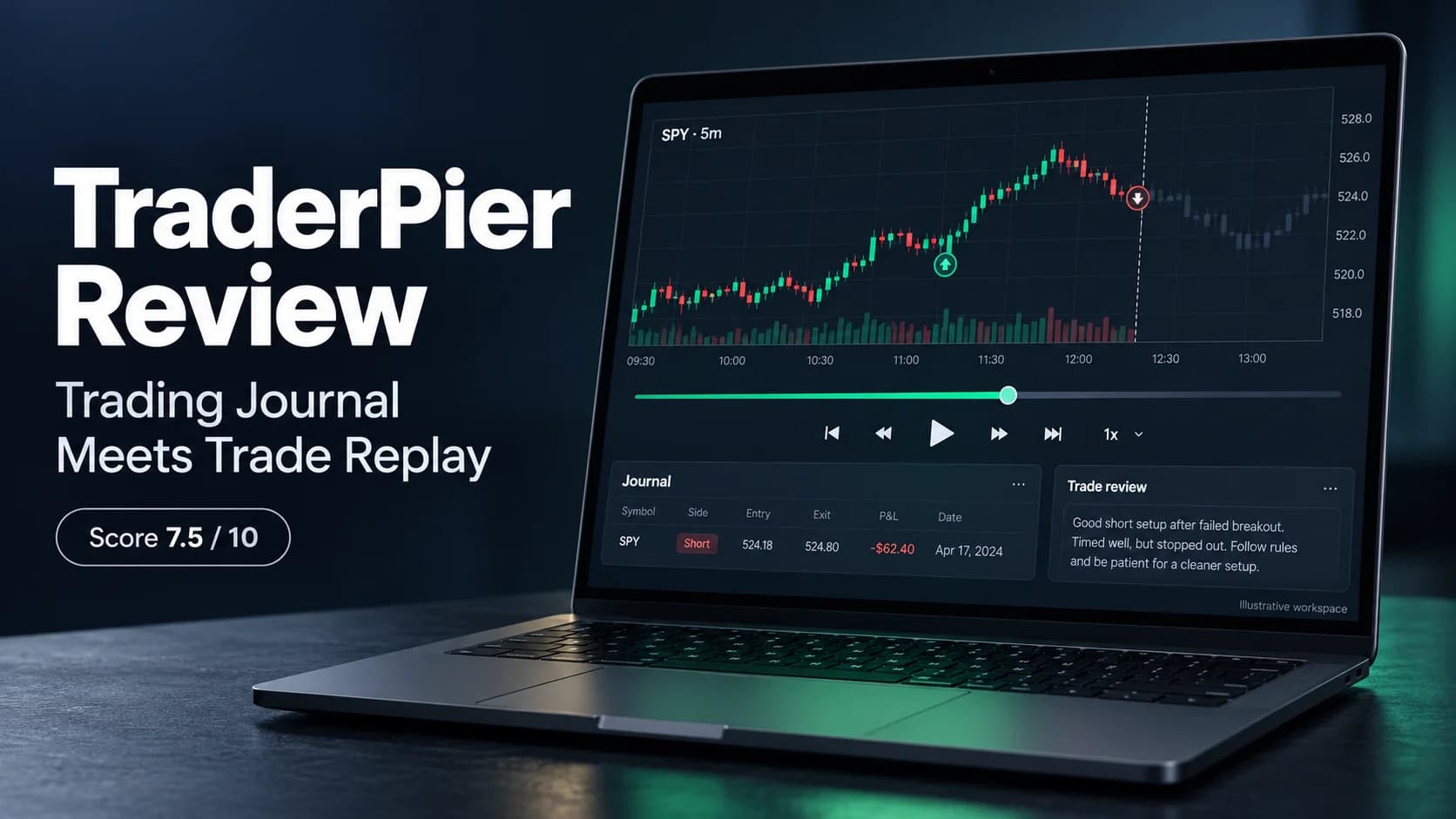
TraderPier Review: A Trading Journal That Lets You Replay the Trade
TraderPier connects your stock-trading journal to chart replay, with a Free plan, CSV imports and paid AI and backtesting tools. Here is where it fits and where it falls short.
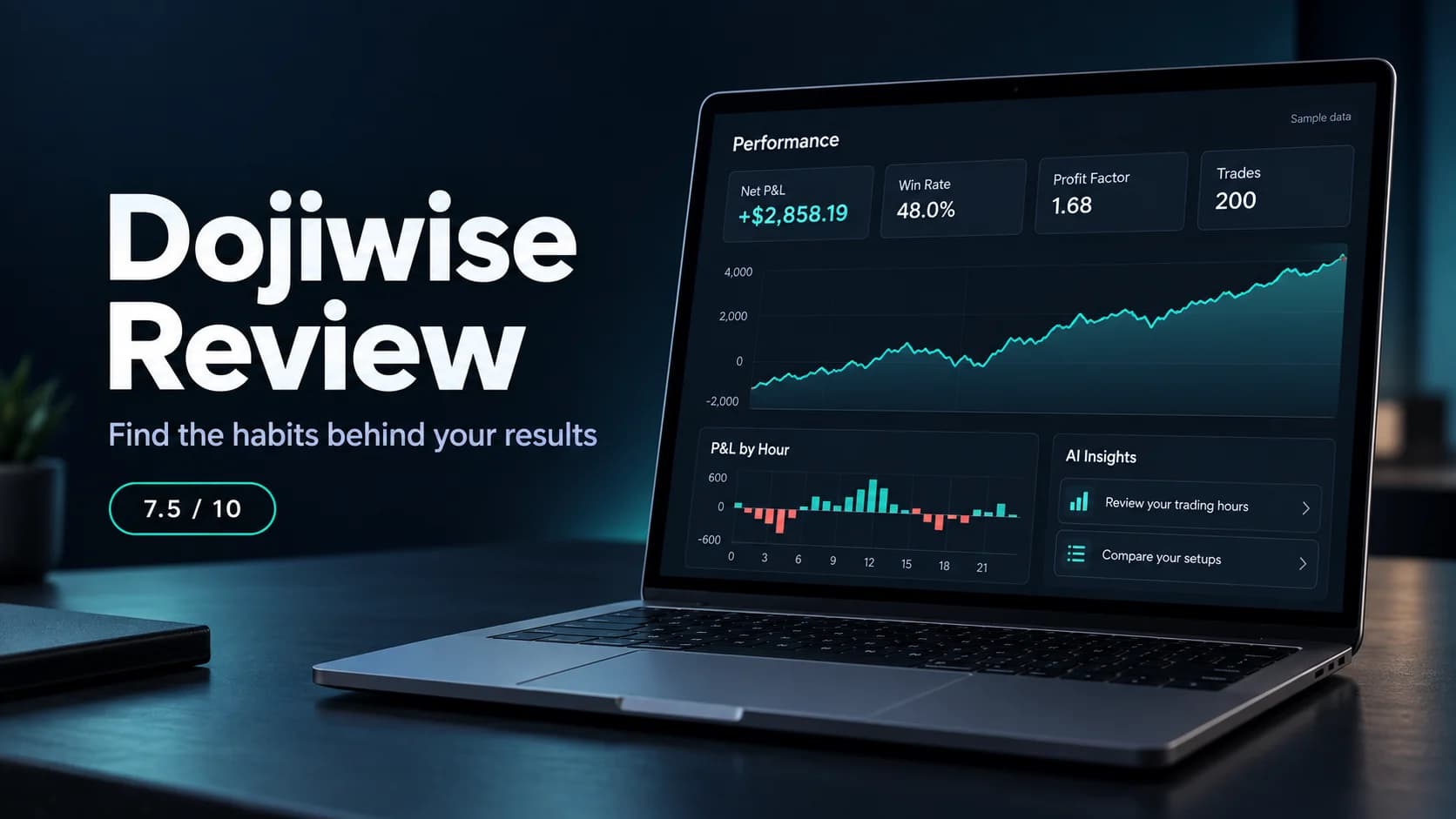
Dojiwise Review: An AI Trading Journal That Shows Its Work
Dojiwise is a browser-based trading journal that breaks your results down by setup, session and time of day, then uses AI to explain the patterns with the numbers shown underneath.
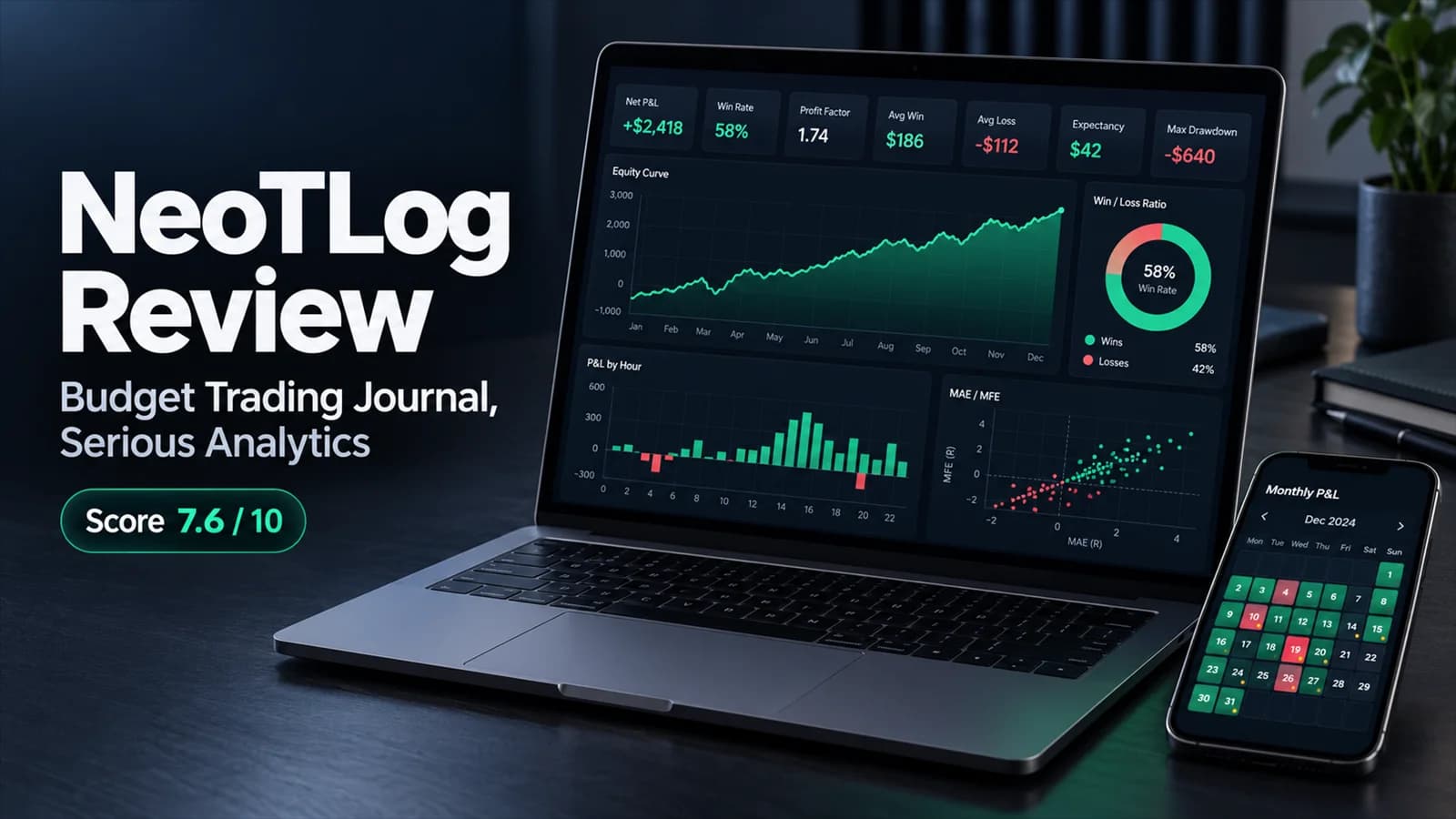
NeoTLog Review: A Budget Trading Journal With Serious Analytics
NeoTLog is a low-cost, browser-based trading journal that turns broker export files into clear analytics, with a usable Free plan and MAE/MFE from $9 a month.
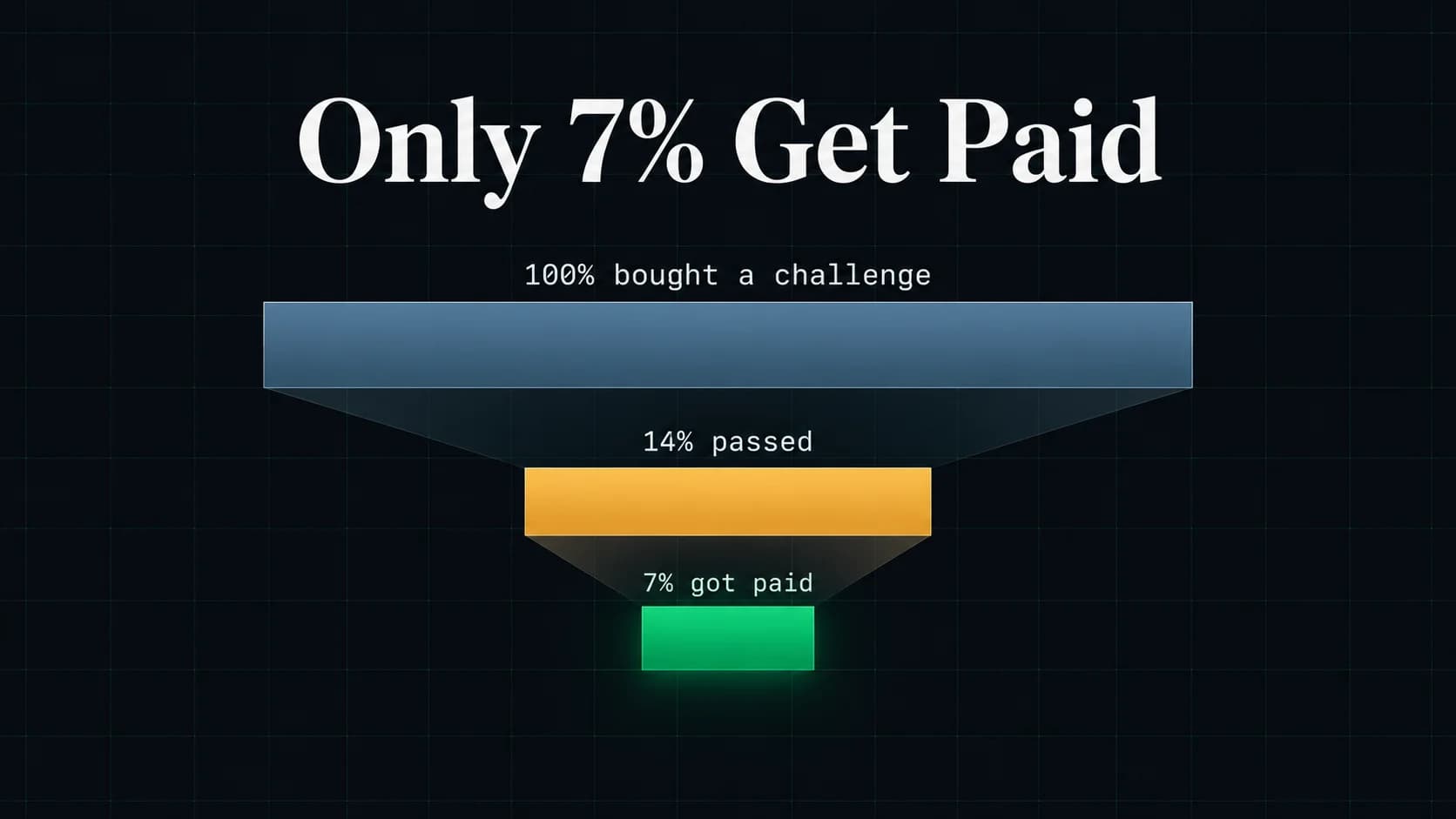
Prop Firm Challenges by the Numbers: Why Only About 7% of Traders Ever Get Paid
Across 300,000+ prop firm accounts, about 14% of traders passed a challenge and only about 7% ever got paid. Here's why most traders fail, the fee math the ads skip, and how to know when a challenge actually makes sense.
Our Top-Rated Stock Scanner for Day Trading
Trade Ideas
Agentic AI stock scanning, signal discovery, and strategy validation for active traders.
“Holly AI, customizable scans, broker-connected workflow, and OddsMaker backtesting help turn market noise into a faster idea-to-validation process.”
Agentic AI That Thinks and Moves Like a Pro Trader
Holly AI signals
AI-assisted trade discovery for active markets.
Custom scans
Screeners, alerts, watchlists, and market filters.
OddsMaker
Backtest scanner alerts without writing code.
Execution flow
Broker integrations and one-click trading tools.
Day Trading Statistics: What the Research Shows
We don't sell you a dream. Here's what peer-reviewed research says about retail trading results — and why we built this site.
How far the US households that traded most trailed the market each year (11.4% vs. 17.9% annual returns), across 66,465 brokerage accounts.
Source: Barber & Odean, 2000 · Journal of Finance
Average return against the market over the next 20 days for the stocks Robinhood users bought most heavily each day.
Source: Barber, Huang, Odean & Schwarz, 2022 · Journal of Finance
Share of day traders who predictably beat the market after fees, in Taiwan: the most complete day trading data anywhere, covering every trade on the exchange for 15 years.
Source: Barber, Lee, Liu & Odean, 2014 · Journal of Financial Markets
These stats exist to help you go in with open eyes — not to discourage you. The traders who know the odds and prepare accordingly are the ones who beat them.

Kazi Mezanur Rahman
Founder & Editor, DayTradingToolkit
- Primary sources cited
- Rankings never for sale
- All affiliates disclosed
- No profit guarantees
Who Writes DayTradingToolkit
Day Trading FAQs
Straight answers about learning day trading, what it costs, and how this site works.
Still have a question?
Contact usCan I learn day trading for free?
Yes. A full day trading curriculum, strategy library, and tool reviews are available on DayTradingToolkit at no cost. There is no email gate, no paid tier, and no upsell to a course. All 101 lessons and 140+ strategy guides are open access.
How long does it take to learn day trading?
Most traders need 6-12 months of structured study plus daily paper trading before going live with small size. Skill development is non-linear — early progress is fast, then a long plateau follows. Treat any source that promises mastery in 30 days as a marketing claim, not a realistic timeline.
Do I need to pay for a day trading course?
No. Most paid courses repackage publicly available concepts behind a paywall. The same fundamentals — risk management, chart reading, strategy execution, psychology — are covered free in our 101-lesson curriculum. Paid programs add community and accountability, not unique knowledge.
Where do I start with day trading?
Start with the Beginners Guide — 101 free lessons across 10 modules, beginning with market basics and ending with your first paper trade. After the curriculum, move to the Strategies hub to pick one playbook to master, and read the Psychology hub to handle losses without blowing up.
What should I learn first as a day trader?
Market mechanics, order types, and how the bid-ask spread works — before any strategy. Most beginners skip foundations and lose money learning them through bad fills. Day Trading Basics covers these terms. Strategies and platform setup come after, not before.
Is day trading worth learning in 2026?
It depends on your goals. Research consistently finds that most retail day traders lose money: in Taiwan, where every trade is on record, fewer than 1% of day traders predictably beat the market after fees, and in the US the most active traders trailed the market by 6.5 percentage points a year. If you treat day trading as a skill to build slowly with money you can afford to lose, it can be worthwhile. If you treat it as fast income, it usually is not.