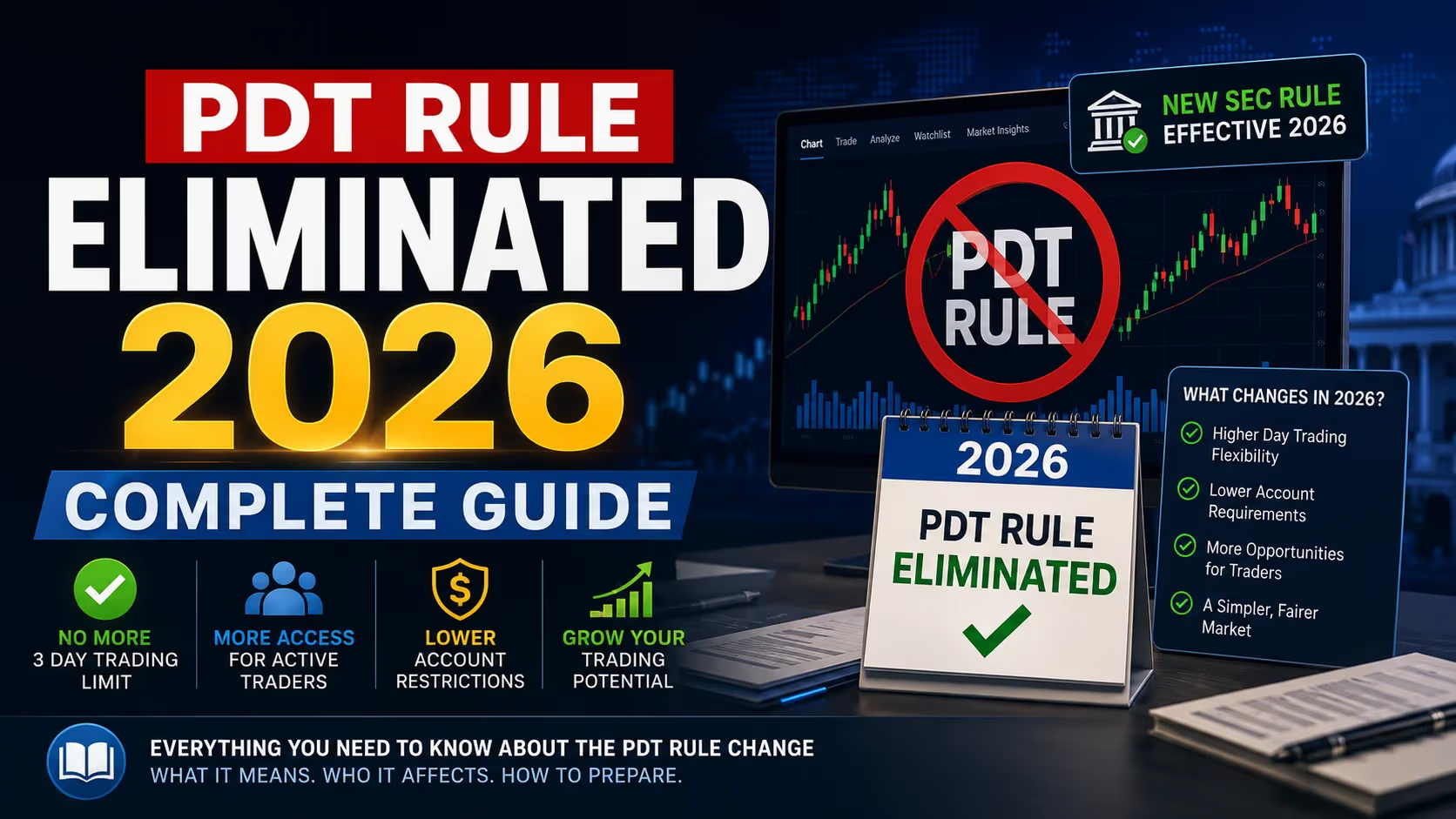


For 25 years, a single number kept most people out of active day trading: $25,000. That was the cost of admission — the minimum balance you had to keep in a MarginMargin is borrowed capital from your broker that lets you control a larger position than your cash balance would otherwise allow — a $25,000 account with 4:1 intraday margin can control up to $100,000 in positions, amplifying both profits aRead definition → account before your broker would let you place a fourth day trade in a five-day window. Fall below it, and your account got flagged, restricted, sometimes frozen for 90 days.
As of June 4, 2026, that number is gone. Not lowered. Gone.
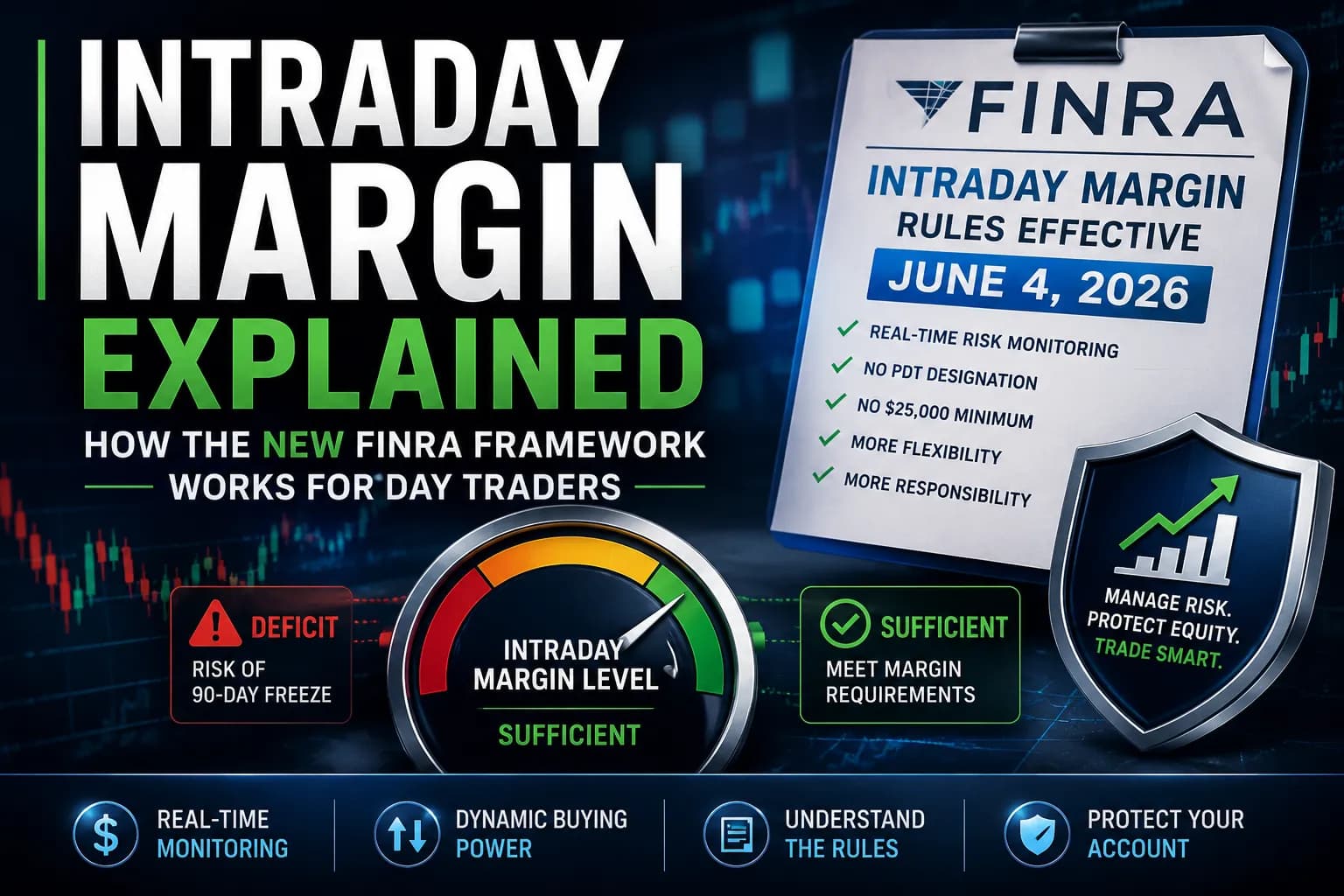
The Securities and Exchange Commission approved FINRA's rule change SR-FINRA-2025-017, which scraps the Pattern Day Trader designation, the day-trade counter, and the $25,000 minimum equity requirement in their entirety. In their place sits a modern intraday margin framework — one that measures actual risk in real time instead of counting how many times you click "buy."
So here's the honest question this article is built to answer: a barrier that stood for a quarter century just fell — now what? Because access and edge are two very different things, and the traders who treat this moment well are going to look very different from the ones who treat it like a green light.
The Wall That Stood for 25 Years Just Came Down
The mechanics here are worth understanding once, then moving on — and we've covered them in full in our complete breakdown of the rule change. The short version: the old rule treated four day trades in five business days as a trigger. Cross it without $25,000 in your account, and you were a "pattern day trader" — locked down.
What replaced it is fundamentally different. Instead of counting trades, brokers now calculate your day-trading buying power based on the actual risk of your positions, repriced throughout the session rather than once at yesterday's close. If you want the full picture of how that math works, our guide on the new intraday margin framework walks through it in plain English.
One detail nobody should skip: the rule is effective everywhere, but your broker may not have flipped the switch yet. FINRA gave firms until October 20, 2027 to fully implement the new system. Some are moving fast — Charles Schwab, for example, planned to stop counting day trades in early June. Others will take longer. Before you assume the wall is down at your specific brokerage, confirm it directly with them.
Access Isn't the Same as an Edge
Here's the part the celebration headlines leave out.
Removing the $25,000 minimum doesn't make day trading easier. It makes it accessible. Those are not the same thing — and conflating them is exactly how a lot of newly-unlocked accounts are going to evaporate over the next year.
The research on day trader profitability is consistent and uncomfortable. Across the foundational academic work — the most-cited being Barber, Lee, Liu, and Odean's long-running study of an entire market's day traders — the large majority of active day traders lose money over time, and only a tiny fraction stay reliably profitable net of costs. The $25K barrier coming down changes who can sit at the table. It does nothing to change the odds at the table.
If anything, the barrier was doing two jobs. It locked out under-capitalized traders, yes — that was the unfair part. But it also slowed down a lot of beginners who would have over-traded a $500 account into zero. That second function is gone now too. The brake and the gate were the same piece of metal.
None of this is a reason to sit out. It's a reason to walk in clear-eyed. If you want a grounded sense of what this path actually pays, read our honest look at what day traders realistically earn before you let a marketing headline set your expectations.
What Actually Separates Winners in a More Crowded Market
When capital was the barrier, having $25,000 was a kind of edge. It meant you'd cleared a hurdle most people couldn't.
That edge just disappeared. When everyone can step into the arena, the thing that separates traders shifts to something you can't simply deposit: process, DisciplineTrading discipline is the consistent application of your predefined rules — entries, stops, targets, position sizing, maximum daily loss — regardless of what you're feeling in the moment.Read definition →, and the ability to see the right setup before the crowd piles in.
Think of it like a stadium that used to charge $25,000 for a ticket suddenly opening the gates for free. The seats FillA fill is the execution of an order — when your buy or sell order is matched with a counterparty and the transaction is completed, you've received a fill.Read definition → up. The same game is being played — but now the field is more crowded, the noise is louder, and standing out requires actual skill rather than just having shown up with deep pockets.
In practice, the traders who tend to survive a crowded field share a few habits. They specialize in a small number of setups instead of chasing everything that moves. They size positions so a string of losses can't end them — the boring math covered in our risk management fundamentals that newer traders skip and then relearn the hard way. And they have a reliable way to find their setups quickly, because in a market full of new participants, the difference between catching a move and chasing it is often measured in seconds.
That last point — seeing the trade first — is where tooling starts to matter.
Starting Smaller Is Now Realistic — Here's the Math
For the first time in a generation, you can day trade actively without $25,000 sitting in your account. The practical floor is now around $2,000 to hold a margin account, though individual brokers can set higher internal minimums, so check yours.
But "you can" and "you should at full speed" are different sentences.
The new intraday margin system is risk-based, which cuts both ways. It can give a disciplined small-account trader more flexibility than the old rule ever did. It can also let an undisciplined one take on more exposure than their account can absorb — and amplify a bad day into a blown account. Leverage doesn't care whether you've earned the right to use it.
If you're sizing up whether your capital is enough to start, our guide on how much you actually need to start day trading has been fully updated for the post-PDT rules. The honest answer for most people starting small: trade tiny, treat the first stretch as tuition, and let your size grow with your competence — not with your account balance.
Where a Tool Like Trade Ideas Fits the New Landscape
If the edge is now "seeing the right setup first," the obvious question is how you actually do that across thousands of tickers without staring at charts all day. This is the GapA gap is a price discontinuity on a chart where a stock opens significantly higher or lower than the previous session's close, leaving a visible empty space — gap-ups are driven by overnight buying pressure or positive news; gap-downs by seRead definition → a real-time scanning platform is built to fill.
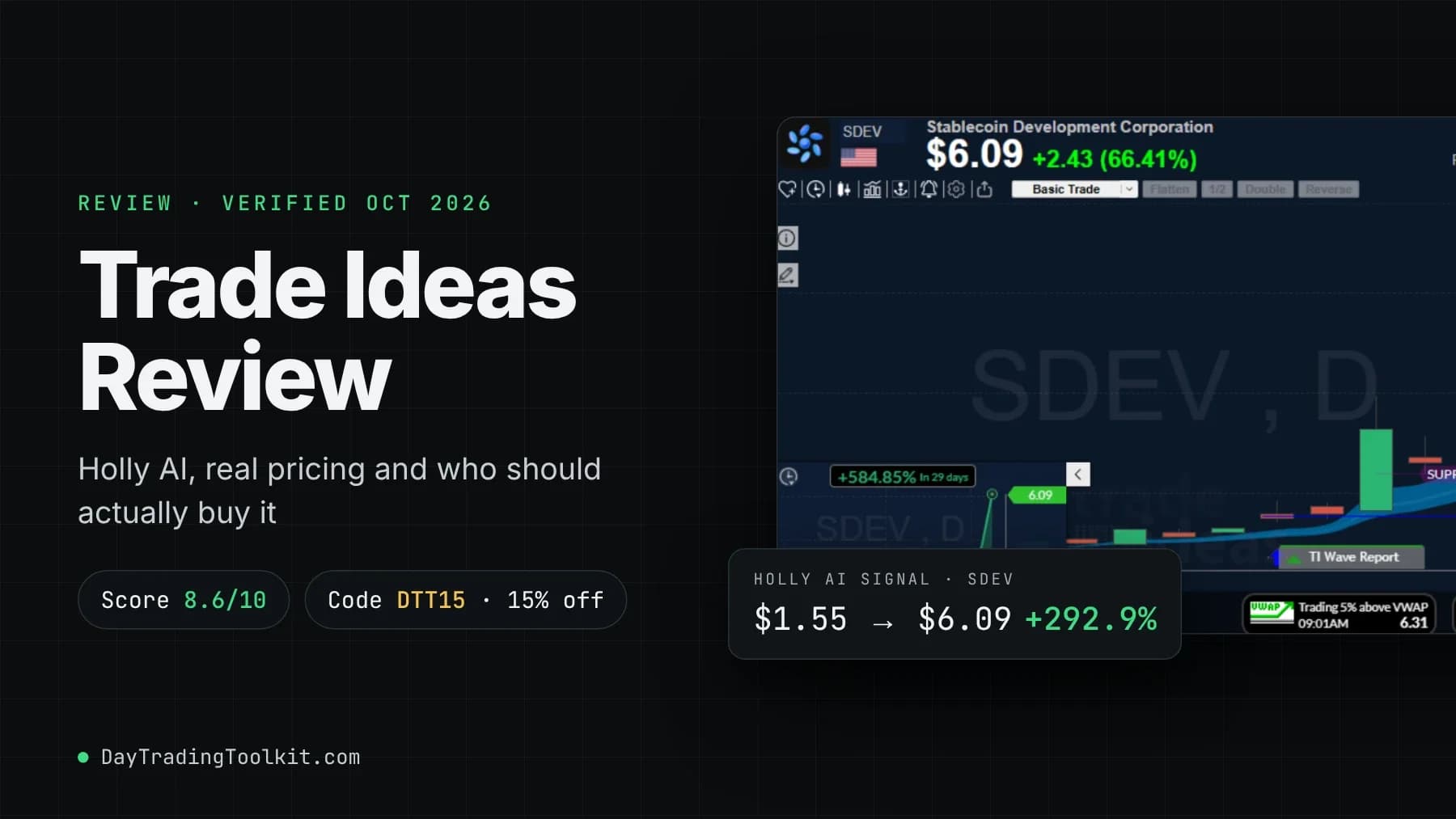
Trade Ideas is one of the more comprehensive platforms in this category — and it's worth being precise about what that means, because it gets miscalled "a stock scanner" all the time. It's closer to a full workstation. Real-time scanning with 500+ filters, Holly AI (a set of signal channels built on nightly BacktestingThe process of running a defined trading strategy against historical price data to evaluate how it would have performed before risking real capital. A well-constructed backtest gives you a statistical baseline — win rate, profit factor, maxRead definition → across historical data — signals, not promises, with results that vary by market condition), built-in charting, paper trading to rehearse without real money, OddsMaker for testing how a setup behaved historically, and Brokerage Plus for one-click execution through brokers like Interactive Brokers and E\*TRADE.
Here's the honest framing, because it matters: a platform like this doesn't make money. Traders make money — or lose it — using the data a platform surfaces. Trade Ideas is decision-support infrastructure. It helps you spot more potential setups matching your criteria, faster, and rehearse them before risking capital. What it can't do is supply the discipline, the risk management, or the judgment. That part is on you, and no software changes that.
For active traders who scan pre-market, trade momentum, and want their scanner, charts, alerts, and execution in one place, it earns its keep on workflow efficiency alone. For someone trading twice a week or still in their first few months, it's more horsepower than the job needs yet — and our full Trade Ideas review is candid about exactly that fit question.
The Trade Ideas "100 Days Free" Offer (June 8–15 Only)
Trade Ideas timed a promotion to the moment the wall came down, and we've secured an exclusive code for DayTradingToolkit readers. Here's the deal, plainly:
Commit to TI Pro Premium Annual and your first 100 days are free — applied as $585 off your first year. The full Trade Ideas Pro toolkit, with no feature trimmed.
To claim it, use the exclusive code DTT100 at checkout through this link:
A few honest notes so you can decide cleanly. This is an annual commitment — frame it as buying a year of tooling and getting roughly a season of it free, not as a discount on a monthly whim. The value lands if you're going to actually use the platform daily; it doesn't if you're not yet trading consistently. Active traders often find a serious platform's cost justified by the time it saves and the setups it surfaces — but that return depends entirely on the trader, not the software.
The window is tight: June 8 through June 15. After that, the offer closes, and current pricing reverts to whatever standard discounts are running — which you can always check on our deals page.
Before You Jump In: A Reality Check
A barrier coming down is genuinely good news. For 25 years, the rule locked out people with skill but not capital, and that was never fair. Celebrating that is fine.
What's not fine is treating "I can now" as "I now should, at maximum size." The PDT rule removed a gate. It did not remove the risk on the other side of it — and the new intraday margin system can hand a small account more rope than it knows what to do with.
So if you're stepping through the open gate, step through it the way the survivors do. Start small enough that being wrong ten times in a row is survivable. Pick one or two setups and get genuinely good at them before adding more. Build a process before you build a position. And treat any tool — Trade Ideas included — as something that sharpens a process you already have, not a substitute for one you don't.
The wall is down. The work is exactly the same as it always was.
Frequently Asked Questions
Does the PDT rule change mean I can day trade with any amount of money now?
The Pattern Day Trader designation and its $25,000 equity requirement were eliminated entirely on June 4, 2026, not reduced to a smaller number. The remaining floor is the standard margin-account minimum, which has long been about $2,000. That said, brokers are free to impose their own stricter internal thresholds, so the practical minimum at your specific firm may be higher.
Key Takeaway: You can now day trade actively with far less capital — but "can" and "should at full size" are different decisions, and small-account discipline matters more than ever.
What is the new minimum to day trade after June 4, 2026?
The new framework drops the $25,000 requirement and the day-trade-counting system altogether. Instead, your day-trading buying power is calculated from the real-time risk of your positions under the new intraday margin rules. The $2,000 figure is simply the existing margin-account minimum, not a new day-trading-specific number.
Key Takeaway: The capital barrier dropped dramatically, and you can see exactly how the replacement math works in our guide to the new intraday margin framework.
Will my broker actually let me day trade freely starting June 4?
FINRA set June 4, 2026 as the effective date but granted an 18-month transition period through October 20, 2027 for firms that need time to upgrade their systems. Some brokers moved quickly, while others are rolling out the change in stages. Until your specific broker transitions, its existing restrictions may still apply to your account.
Key Takeaway: Confirm directly with your broker whether the new framework is live on your account before assuming the old limits no longer apply.
Does removing the $25,000 rule make day trading less risky?
Documented research consistently shows the large majority of active day traders lose money over time. If anything, easier access means more under-prepared traders entering, and the risk-based margin system can let a small account take on more exposure than it can safely handle.
Key Takeaway: Treat the open gate as an opportunity to learn carefully, not as a signal that day trading suddenly became safe.
What does the Trade Ideas 100 days free offer actually include?
The promotion covers the full TI Pro Premium Annual plan — real-time scanning, Holly AI signal channels, charting, paper trading, OddsMaker backtesting, and Brokerage Plus execution — with no features trimmed. The first 100 days are credited as a $585 reduction on the annual price. It's structured as an annual commitment, not a month-to-month discount.
Key Takeaway: You can claim the offer through our exclusive Trade Ideas link with code DTT100 between June 8 and June 15.
Is a scanner like Trade Ideas worth it for a smaller account now?
With the capital barrier gone, more small accounts can trade actively, and the edge shifts toward finding the right setups quickly. A comprehensive platform helps with exactly that. But it's built for traders who use it daily; if you're trading a couple of times a week or still learning the fundamentals, the horsepower outruns the need.
Key Takeaway: Match the tool to your activity level — our Trade Ideas review breaks down precisely which trader profiles get value from it.
Do I still need a margin account to day trade?
The intraday margin system that replaced the PDT rule applies to margin accounts, which is where day-trading buying power is calculated. Cash accounts remain an option for some traders but come with settlement constraints that limit how rapidly you can recycle capital. The roughly $2,000 minimum applies to opening and holding the margin account.
Key Takeaway: Most active day traders will use a margin account, so understand both the buying power it provides and the amplified losses it can produce.
Does the rule change affect futures, forex, or crypto day trading?
The $25,000 minimum was a FINRA rule governing equities and equity options. Futures, forex, and crypto operate under different regulatory and margin structures and were always free of the pattern-day-trader designation. This change is specific to stock and options traders using margin.
Key Takeaway: If you trade futures, forex, or crypto, the PDT change doesn't alter your account rules — though the broader shift in retail access is still worth watching.
What happens to the Trade Ideas offer after June 15?
The exclusive DTT100 deal is tied to this specific window and won't be available afterward. Standard Trade Ideas pricing and any longer-running promotions will still apply, but the $585 first-year value from this campaign expires when the window closes.
Key Takeaway: If the platform fits your trading, the window to claim this specific offer is June 8–15 — and you can check for any later discounts on our deals page.
Disclaimer
Article Sources
- FINRA — Understanding the New Intraday Margin Requirements - FINRA's official explainer of the framework replacing the PDT rules, including the June 4, 2026 effective date and transition period.finra.org
- FINRA — Regulatory Notice 26-10 - The notice confirming the effective date and implementation guidance for member firms.finra.org
- SEC — Rule Filing SR-FINRA-2025-017 - The SEC's file on the rule change that eliminates the day-trade count, PDT designation, and $25,000 minimum.sec.gov
- FINRA — Rule 4210 (Margin Requirements) - The underlying margin rule amended by the change.finra.org
- Barber, Lee, Liu & Odean — "Do Day Traders Rationally Learn About Their Ability?" - Foundational academic research documenting that the large majority of active day traders are unprofitable over time.faculty.haas.berkeley.edu