

Author Profile
Kazi Mezanur Rahman
Founder, independent researcher, and editor of DayTradingToolkit. A one-person publication focused on risk-first trading education and documented tool research. He trades his own capital as a retail trader and combines personal market experience with systematic primary-source research.
Areas of expertise
461
Published articles
Risk-first
Editorial focus
Independent
Review standard
About the Author
Kazi Mezanur Rahman is the founder, independent researcher, and editor behind DayTradingToolkit, a one-person publication. He built the site to organize practical trading education, primary-source research, calculators, and documented tool reviews in one place.
Kazi trades his own capital as a retail trader. He does not present himself as a professional trader, full-time trader, financial adviser, broker, accountant, or attorney. His experience comes from personal market participation combined with systematic research. The editorial approach is intentionally conservative: explain risks plainly, disclose affiliate relationships, avoid profit promises, clearly distinguish research from first-hand experience, and correct material errors when they are found.
Kazi oversees the site’s education library, research methodology, review structure, and content updates across beginner lessons, strategy explainers, psychology guides, calculators, and software comparisons.
Author Archive
Articles by Kazi Mezanur Rahman
Page 1 of 39. Showing 12 of 461 published guides, reviews, and trading resources.

Xi Comes to Washington, the Fed's First Hike Lands, and Index Money Moves Before Monday's Open: Weekly Market Insights, September 21-25
Xi Jinping arrives at the White House Thursday for the first Chinese state visit since 2015, the Fed just hiked to 3.75-4.00 percent with more projected, the 10-year is sitting on 5 percent, and Bloom Energy and SanDisk join their new indices before Monday's open. The full catalyst map, watchlist, and scenario tree for September 21-25.
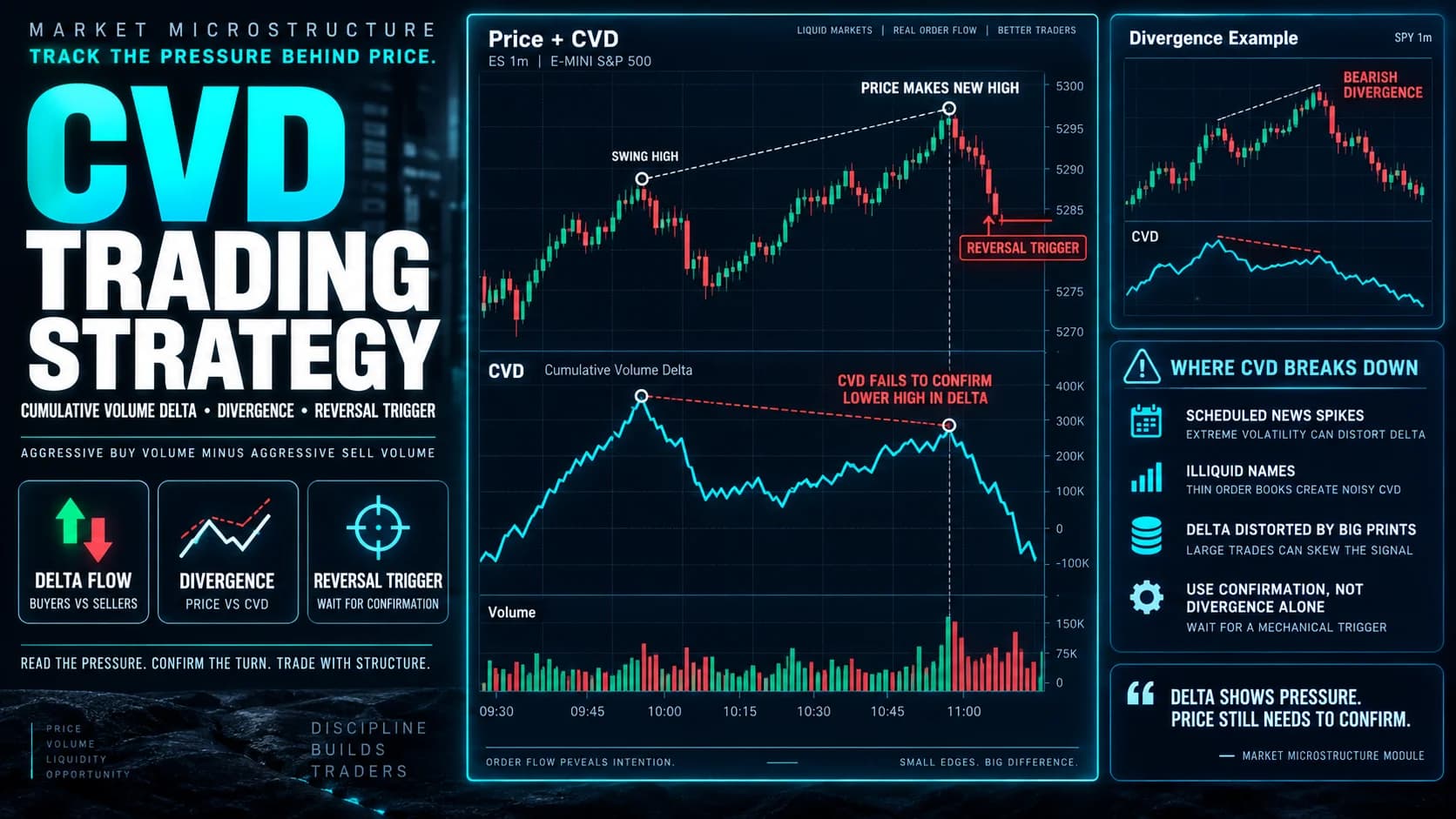
The Cumulative Volume Delta (CVD) Trading Strategy
A mechanical framework for trading cumulative volume delta divergence, including why CVD resets differently across platforms and why a divergence can run much longer than it looks like it should.
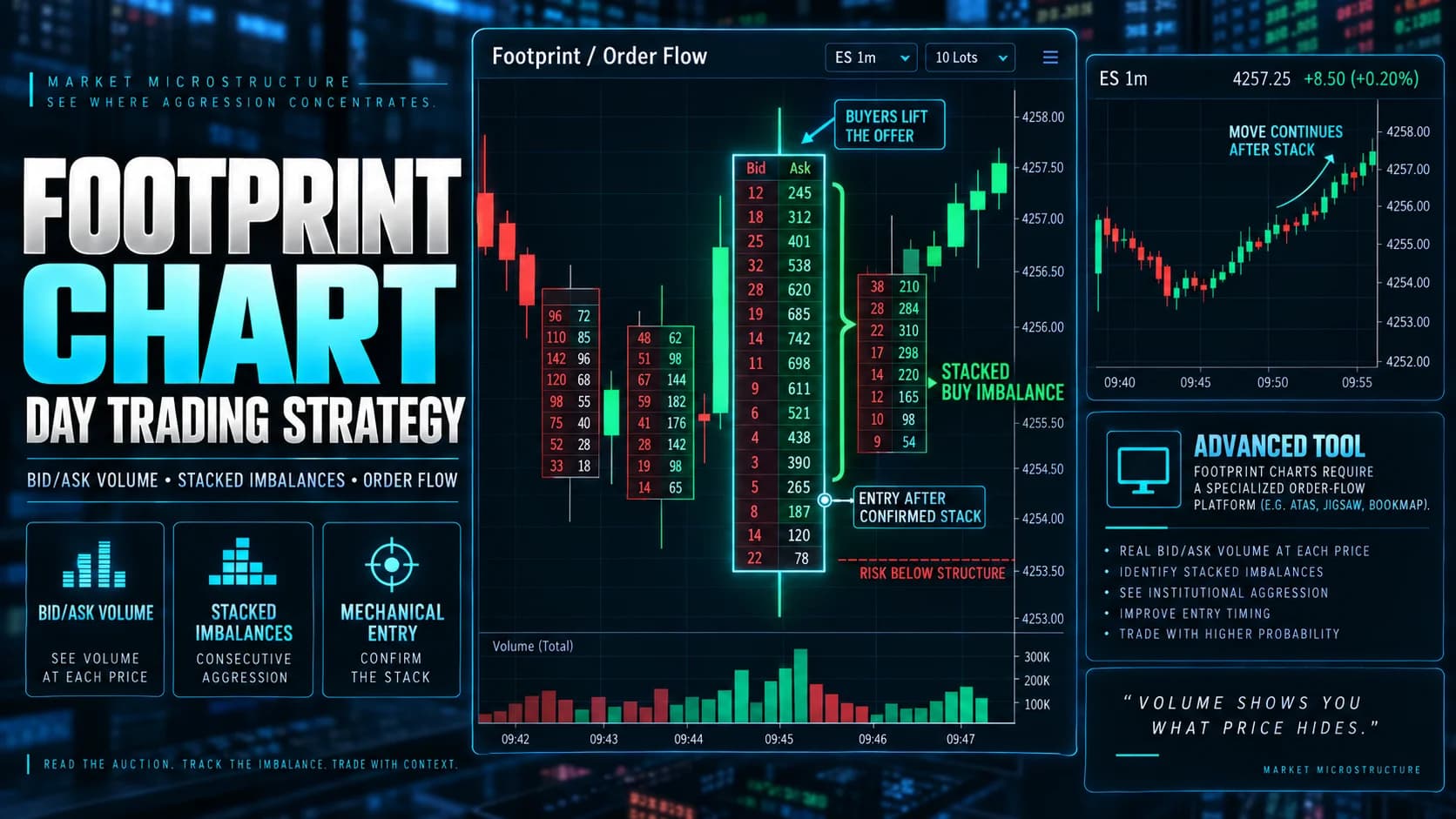
The Footprint Chart Day Trading Strategy
How footprint charts work, the stacked imbalance setup that gives them a real trading edge, and why the data quality behind a footprint chart matters more than the chart itself.
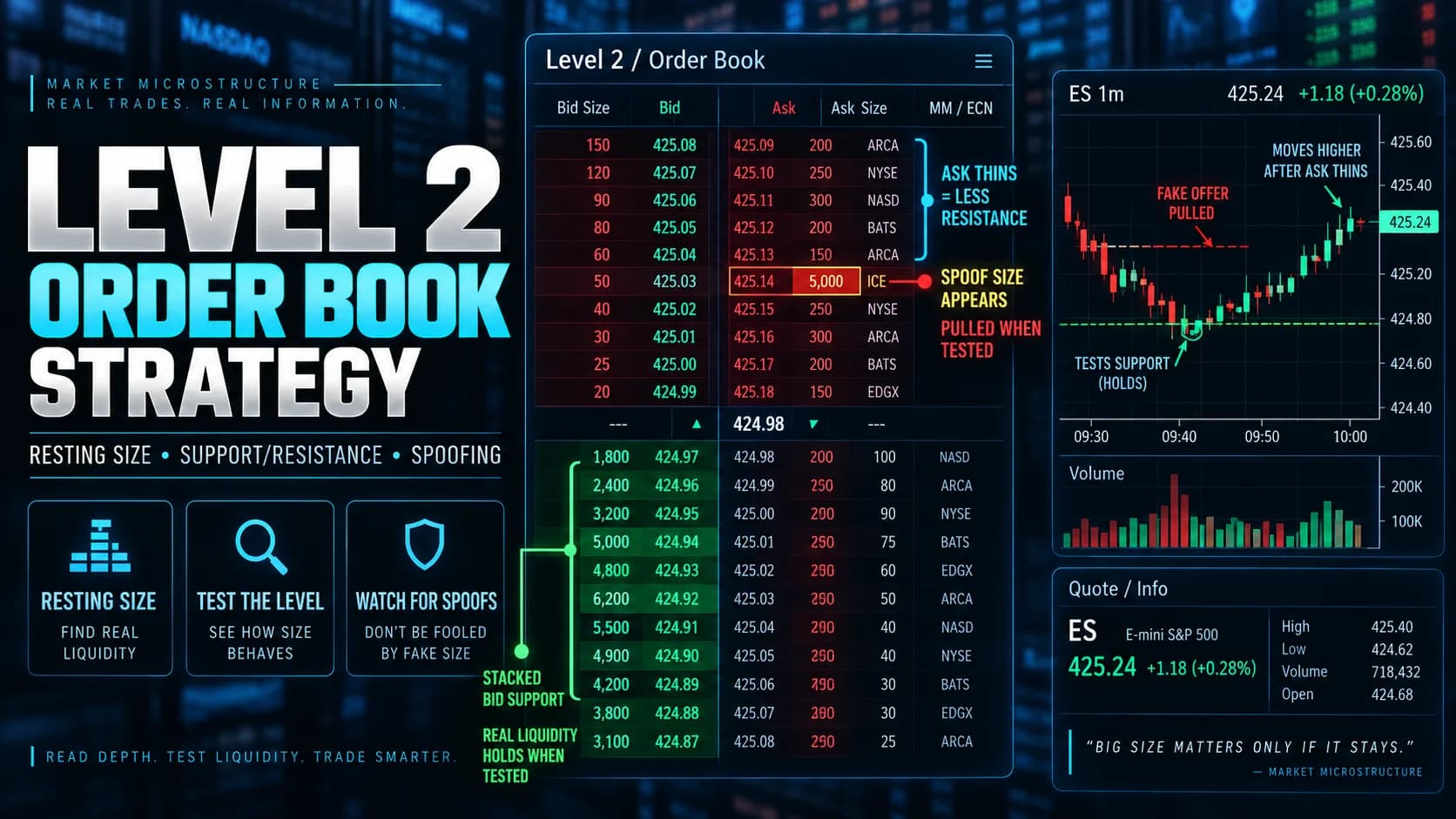
The Level 2 Trading Strategy: Reading the Order Book for Edge
How to read Level 2 depth for a real trading edge: the absorption setup, how to tell genuine resting size from spoofed orders, and why the order book lies more than most traders realize.
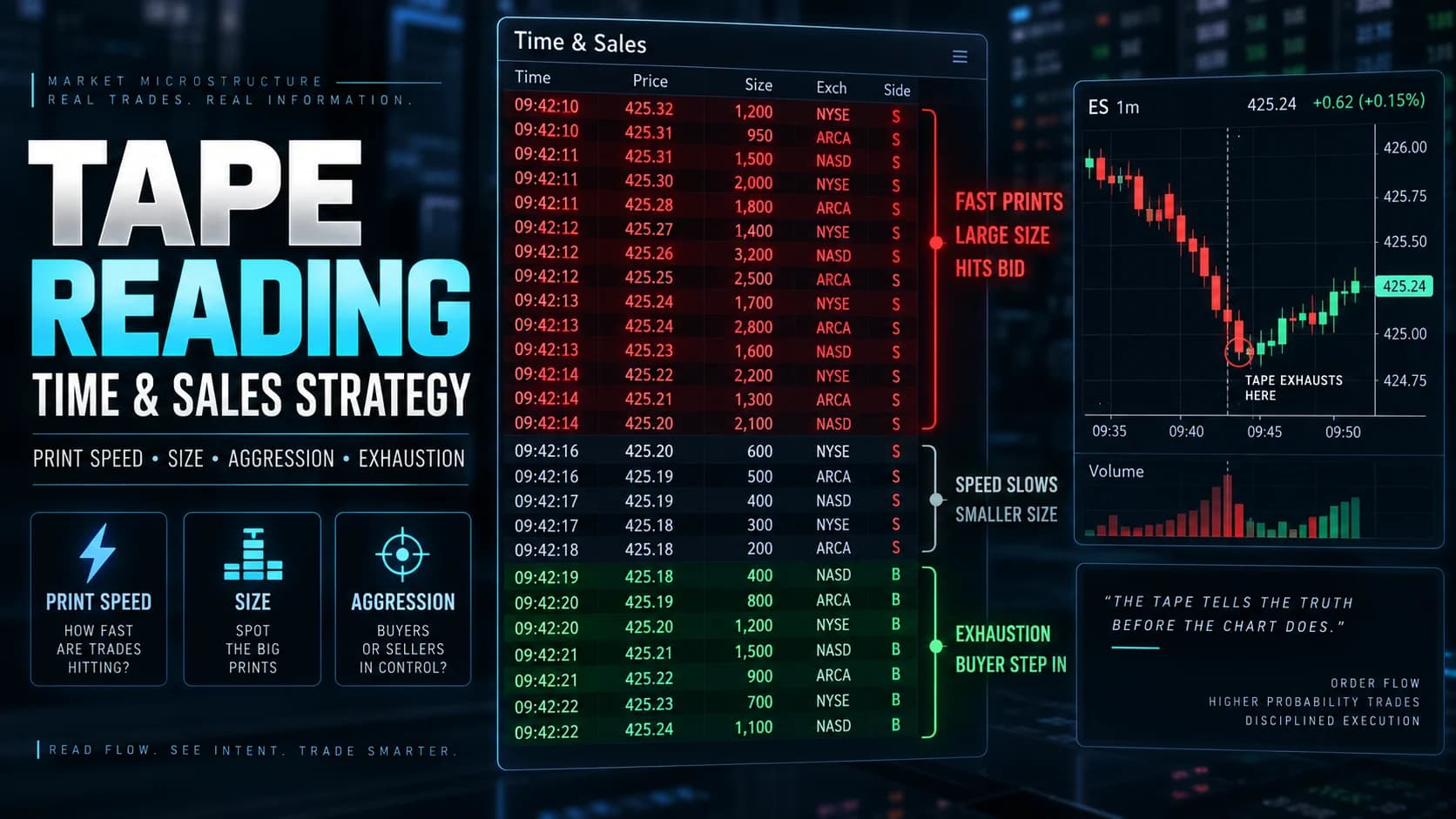
Tape Reading for Day Traders: Reading Time & Sales Like a Pro
A mechanical framework for reading Time & Sales: how to spot a genuine exhaustion print in real time, why the tape lies more often than it used to, and how to build a tradeable trigger around it.

Trading the Final 15 Minutes: The 3:45 PM Setup Playbook
The last 15 minutes concentrate the day's heaviest volume as MOC orders, institutional flow, and day-trade closeouts collide. Learn the narrow momentum setup and why most traders should stop opening new trades by 3:50 PM.

The After-Hours Trading Strategy: Risks, Setups, and When to Skip It
After-hours liquidity is even thinner than pre-market, and many earnings-driven pops fade by the next open. Learn the confirmed-breakout setup built for trading earnings reactions after the close.

The Market-on-Close (MOC) and Limit-on-Close (LOC) Strategy
Exchanges publish live closing order imbalance data starting around 3:50 PM ET. Learn how MOC and LOC orders work, how to read the imbalance feed, and the setup built around it.
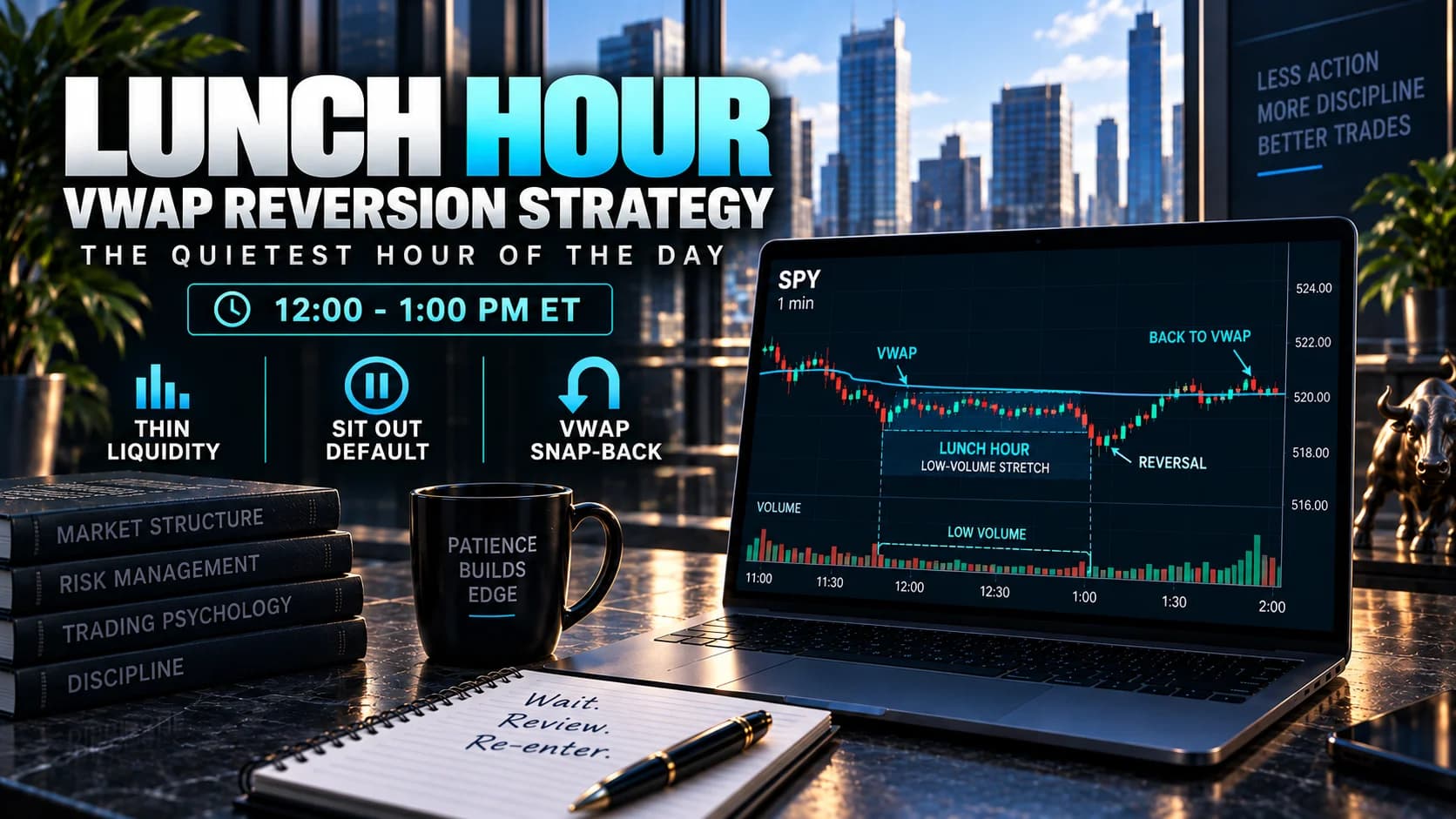
The Lunch Hour Trading Strategy: When to Sit Out (And When Not To)
Noon to 1 PM ET is the single quietest hour of the trading day. Learn why, the sit-out default that applies most days, and the narrow VWAP reversion setup for the rare exception.
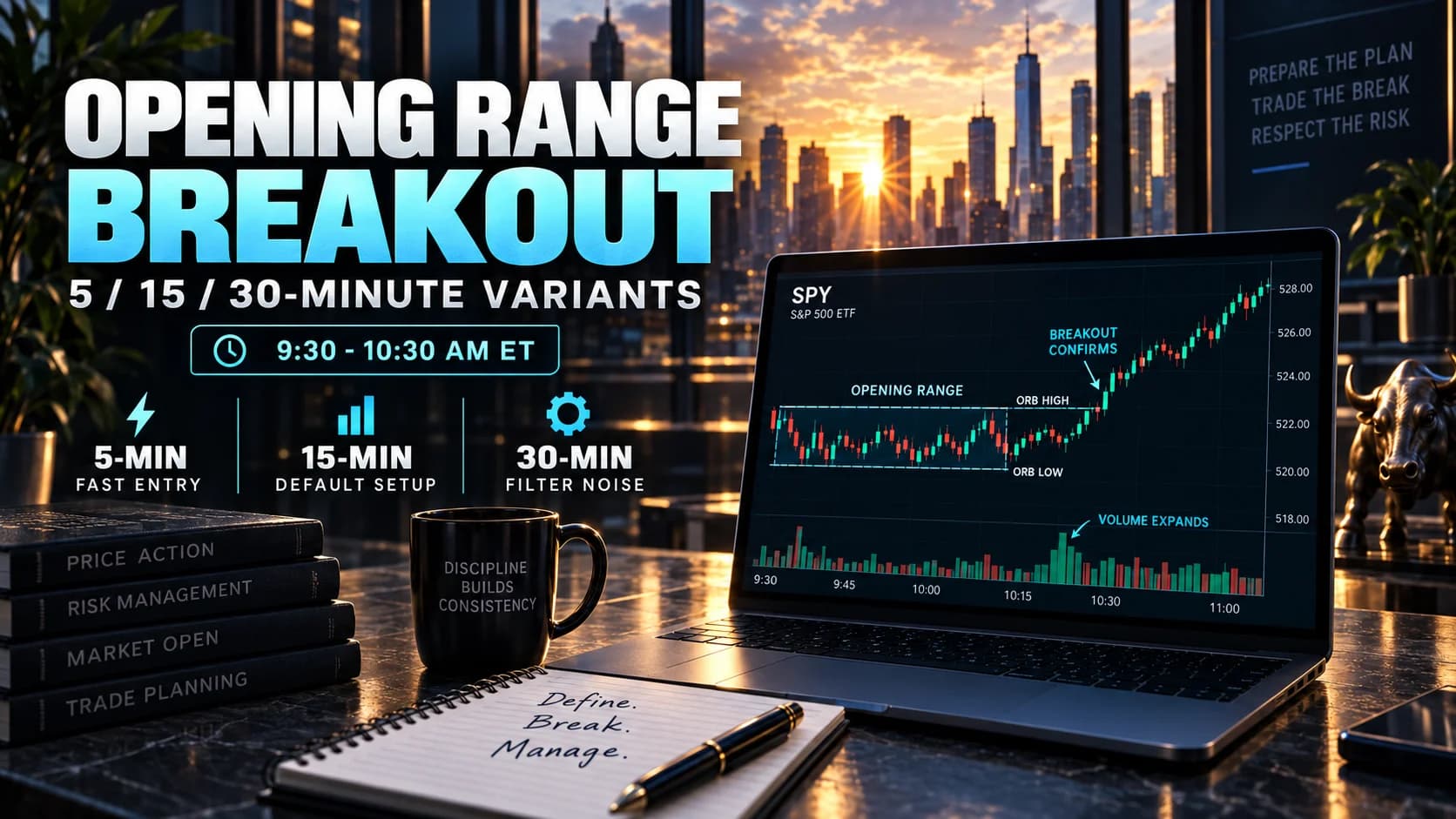
The Opening Range Breakout (ORB) Strategy: 5, 15, and 30 Minute Variants
The full breakdown of the Opening Range Breakout strategy across 5, 15, and 30-minute variants: which timeframe fits which stock, the mechanical setup specs, and where each one fails.

The Initial Balance (IB) Trading Strategy: First-Hour Edge
The first 60 minutes of trading set an Initial Balance that predicts the rest of the day more often than traders realize. Learn the day-type framework and the range extension setup built on it.
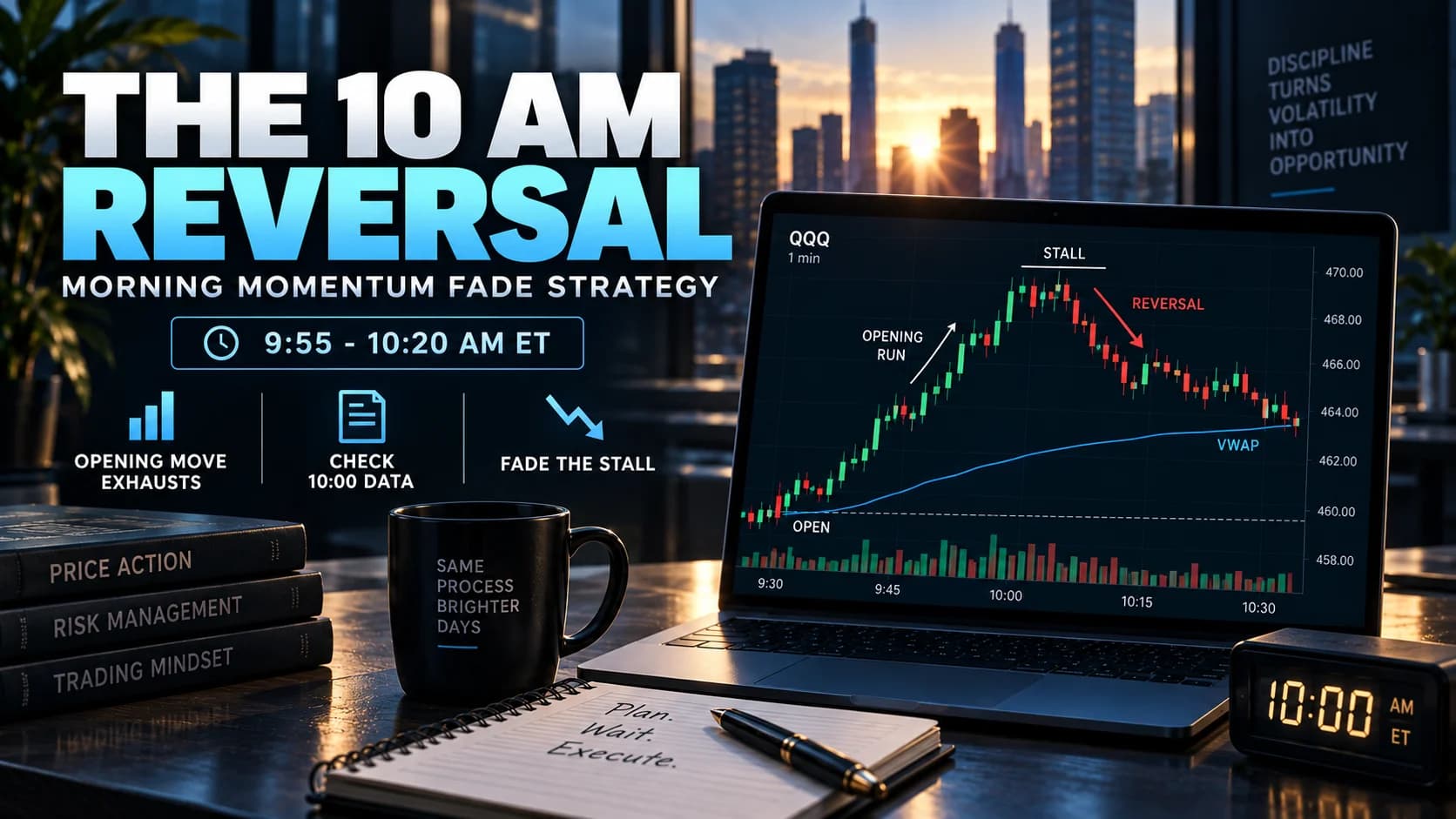
The 10 AM Reversal Strategy: Why the Hour Mark Matters
A stock's opening momentum often stalls and reverses right around 10:00 AM ET. Learn the two real forces behind it and the mechanical fade setup built to trade it.