
The Lunch Hour Trading Strategy: When to Sit Out (And When Not To)

In this article9 sections
Noon to 1:00 PM ET isn't just a slower version of the broader midday session. It's the single quietest hour of the entire trading day, the actual trough of the volume curve, and treating it the same way as 11:15 AM or 1:45 PM misses what makes this specific hour genuinely different. Most mornings, the correct move during this window isn't a smaller trade. It's no trade at all.
This is a narrower, more specific companion to this hub's broader midday chop playbook, which covers the full 11 AM to 2 PM stretch and its two tradable setups. This article zooms into the single lowest-liquidity hour inside that stretch and answers a more pointed question: is there anything actually worth trading here, and if so, what does it look like?
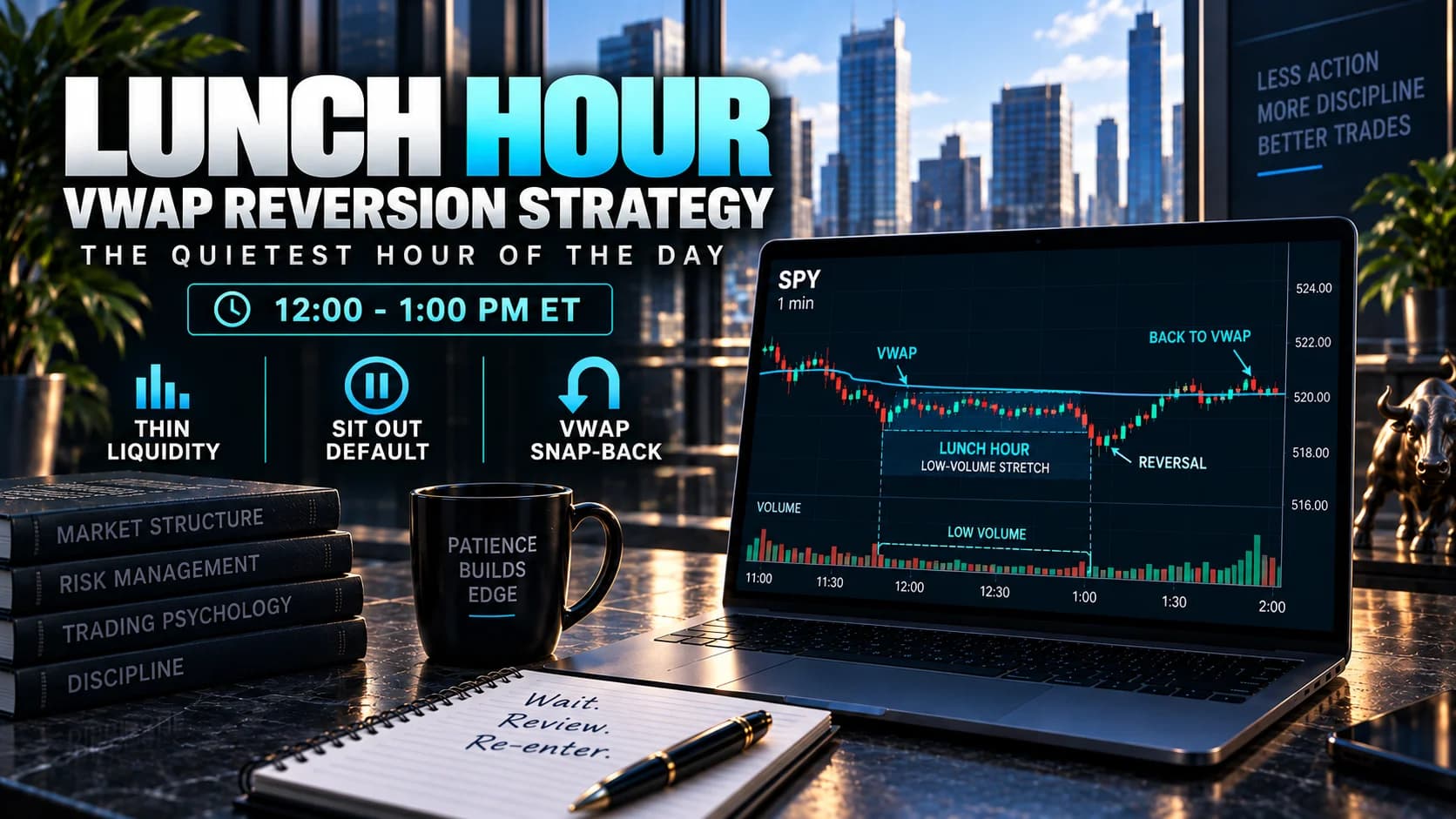
What is the lunch hour in day trading? The lunch hour refers to roughly 12:00 to 1:00 PM ET, the specific single hour within the broader midday session where trading volume typically reaches its daily low point, corresponding to the lunch break for New York-based institutional trading desks.
Why Noon to 1 PM Is the Single Quietest Hour of the Day
The broader midday chop covers a roughly three-hour stretch of reduced volume, but that reduction isn't flat across the whole window. Academic research on intraday volatility, comparing hourly data across major exchanges, has specifically identified the lunch period as showing a distinct volatility trough, not just a general slowdown, a dip deep enough that some markets outside the U.S. (Tokyo among them) actually pause trading entirely during it.
The U.S. market doesn't close for lunch, but the underlying cause of that trough, institutional trading desks in New York stepping away from active execution during the actual lunch hour, still applies. Volume during this specific 60-minute window tends to run measurably lower than either the hour before it (11:00 to noon) or the hour after it (1:00 to 2:00 PM), which is a meaningfully different claim than just saying "midday is slow."
The Sit-Out Default: A Decision Framework, Not a Trading Setup
The single most useful thing this article can offer is permission to treat this hour as genuinely optional, not a test of discipline to be endured while forcing trades anyway.
The practical framework: check current volume against the stock's own recent baseline at 12:00 PM. If it's running meaningfully below even the reduced pace of the surrounding midday hours, and nothing on the calendar (a scheduled data release, an unusual news event) explains an exception, the correct default is closing the platform, stepping away, and coming back for the 1:00 to 2:00 PM handoff into the afternoon. This isn't a failure of discipline. It's the discipline.
For traders who want a defined exception rather than a blanket rule, the setup below is the one this playbook considers genuinely fit for this specific hour, and it's deliberately narrow.
The Lunch Hour VWAP Reversion Setup Specification
Where the broader midday playbook fades failed range breakouts, this hour's much lower liquidity favors a tighter, more mechanical fade: a stretched move away from VWAP with no news behind it, in the single hour where genuine trend continuation is statistically least likely to be real.
- Component
- Market Conditions Required
- Rule
- No scheduled economic release or company-specific news in the current session; broad market (SPY/QQQ) itself flat and non-trending during this hour
- Component
- Time of Day
- Rule
- Entries taken 12:00 PM to 1:00 PM ET only; this setup is not used outside this specific window
- Component
- Stock Selection Criteria
- Rule
- Liquid, actively-traded stock or index ETF with an established, reliable VWAP; no fresh catalyst in the prior 30 minutes
- Component
- Entry Trigger
- Rule
- Price stretches at least 0.5% away from VWAP on volume visibly below even this hour's already-reduced average, then prints a 1-minute reversal candle back toward VWAP
- Component
- Stop Loss
- Rule
- Beyond the stretch extreme, sized tightly given the setup's small expected move
- Component
- Initial Profit Target
- Rule
- VWAP itself; this setup does not target a level beyond VWAP
- Component
- Trade Management
- Rule
- Full exit at VWAP, no trailing; this is a single-target, mean-reversion scalp, not a trend trade
- Component
- Invalidation Criteria
- Rule
- Price continues stretching away from VWAP on rising volume, meaning a real move is developing rather than a low-liquidity overextension
| Component | Rule |
|---|---|
| Market Conditions Required | No scheduled economic release or company-specific news in the current session; broad market (SPY/QQQ) itself flat and non-trending during this hour |
| Time of Day | Entries taken 12:00 PM to 1:00 PM ET only; this setup is not used outside this specific window |
| Stock Selection Criteria | Liquid, actively-traded stock or index ETF with an established, reliable VWAP; no fresh catalyst in the prior 30 minutes |
| Entry Trigger | Price stretches at least 0.5% away from VWAP on volume visibly below even this hour's already-reduced average, then prints a 1-minute reversal candle back toward VWAP |
| Stop Loss | Beyond the stretch extreme, sized tightly given the setup's small expected move |
| Initial Profit Target | VWAP itself; this setup does not target a level beyond VWAP |
| Trade Management | Full exit at VWAP, no trailing; this is a single-target, mean-reversion scalp, not a trend trade |
| Invalidation Criteria | Price continues stretching away from VWAP on rising volume, meaning a real move is developing rather than a low-liquidity overextension |
The single-target design in Trade Management is deliberate and worth explaining. This setup exists because the lunch hour's extremely thin liquidity makes a stretch away from VWAP with no news behind it statistically more likely to be noise than signal. It is not built to catch a trend; it's built to catch a specific, small, low-liquidity overreaction snapping back to a fair-value benchmark, and asking it to do more than that misunderstands what the setup actually is.
Case Study: A Lunch-Hour VWAP Snap-Back
Picture a large-cap industrial name, ticker GHI, trading quietly through the morning with no particular catalyst, comfortably tracking its VWAP. At 12:22 PM, a single moderate-sized sell order pushes price down 0.6% below VWAP in the space of two minutes, on volume noticeably lighter than even the hour's already-reduced pace, with no news or data behind the move.
At 12:24 PM, price prints a 1-minute candle reversing back toward VWAP. Entry at that reversal candle's close, stop below the stretch low, sized tightly given the setup's small target. The single profit target is VWAP itself, reached by 12:35 PM as the thin selling pressure that caused the stretch fully absorbs back into the day's normal flow.
That's the entire trade: not a directional bet on where GHI is heading for the rest of the day, but a narrow read on a specific, low-liquidity overreaction that the setup spec is built to identify and fade back to a known reference point.
Where This Setup Breaks Down
The most damaging failure is trading this setup on a stock with a genuine, developing catalyst. A stretch away from VWAP that's actually driven by real news, even minor news that hasn't fully hit the wires yet, can keep extending well past the setup's stop, since the underlying premise (a low-liquidity overreaction with nothing behind it) simply doesn't apply. The Market Conditions row's requirement of no scheduled release or company-specific news is not optional context here.
A second failure is trying to extend this setup's single VWAP target into a larger trend trade after it starts working. The entire logic behind capping the target at VWAP is that this hour's thin liquidity doesn't reliably support a larger move either direction; asking a lunch-hour mean-reversion scalp to behave like a Golden Hour breakout misapplies a tool built for a specific, narrow job.
A third failure is simply forcing this setup too often. On many days, no stretch away from VWAP meeting this setup's volume and news filters will actually occur during the lunch hour, and that's the expected, normal outcome, not a sign the setup needs loosening.

How This Differs From the Broader Midday Chop Playbook
The midday chop playbook covers the full 11 AM to 2 PM window and offers two setups built for that broader stretch: fading a failed range breakout, and marking a tight consolidation coil for a later breakout. Both of those setups can, in principle, trigger at any point within that three-hour window, including during the lunch hour itself.
This article's VWAP reversion setup is deliberately scoped tighter, both in time (only the single noon-to-1 PM hour) and in structure (a single, capped mean-reversion target rather than a range-boundary trade). A trader following the broader midday playbook doesn't need this article's setup as an addition; they need this article mainly for the sit-out framework, the explicit permission and reasoning to treat the literal lunch hour as the point in the broader midday window where standing aside entirely is most justified.
Tools for Confirming Genuinely Thin Liquidity
Distinguishing "this hour's normal reduced volume" from "unusually thin even for this hour" requires comparing current volume against that stock's own recent lunch-hour baseline, not against the overall daily average. Trade Ideas supports building volume alerts scoped to specific time windows, which makes this specific, narrow comparison practical rather than something estimated by eye.
Fitting the Lunch Hour Into a Complete Trading Day
The most productive use of this hour, for the large majority of trading days, isn't finding a trade inside it. It's using the enforced pause to review the morning honestly, refine the afternoon watchlist, and arrive at 1:00 PM ready for the handoff back into more active conditions, the same preparation logic covered in the broader midday chop playbook. Treating this hour as recovery time rather than a productivity gap is, for most traders, the actual edge.
Lunch Hour Trading FAQs
Why does this playbook treat noon to 1 PM as meaningfully different from the rest of the midday session?
That distinction matters practically because the lunch hour's liquidity is thin enough to make even the broader midday playbook's range-based setups less reliable inside this specific window, which is why this article scopes its own setup even tighter, to a single mean-reversion target rather than a range-boundary trade.
Key Takeaway: The lunch hour is a genuine trough inside the broader midday lull, not just an arbitrary hour-long slice of it.
Why does the VWAP reversion setup use only a single target instead of scaling out like most other setups in this hub?
Adding a second, further-out target would imply the setup can reliably predict a larger move continuing past VWAP, which isn't a claim this hour's typically thin liquidity supports.
Key Takeaway: A single, capped target matches this setup's narrow purpose; don't stretch it into a trend-following tool.
How is a "genuine stretch away from VWAP" distinguished from the start of a real intraday trend?
A stretch away from VWAP on rising or above-average volume, even during the lunch hour, is a different animal and falls under this setup's invalidation criteria rather than its entry trigger.
Key Takeaway: Low volume behind the stretch is what qualifies it as noise; rising volume disqualifies it from this specific setup.
Is it ever correct to take a larger, trend-following trade during the lunch hour instead of sitting out?
This article's sit-out default and VWAP reversion setup are both built around the assumption of no fresh catalyst. A real, breaking news event during lunch overrides that assumption completely and should be treated on its own terms.
Key Takeaway: A genuine catalyst during lunch is a different situation entirely, not an exception to squeeze into this article's specific setup.
How many genuinely qualifying VWAP reversion setups should a trader expect to see in a typical lunch hour?
A trader seeing several "qualifying" setups during a typical lunch hour is very likely loosening the filters without realizing it. Scarcity here is the expected, correct outcome, not a sign the setup needs adjustment.
Key Takeaway: A quiet lunch hour with no trades taken is the setup working as intended, not a missed opportunity.
Does this setup work the same way on small-cap or low-float stocks as it does on large caps and index ETFs?
This setup is scoped to liquid, actively-traded large-cap stocks and index ETFs specifically because their VWAP-reversion behavior during genuinely thin conditions is more consistent and better understood than a small-cap's idiosyncratic volatility.
Key Takeaway: Keep this setup to liquid large-cap names and index ETFs; small-cap and low-float stocks need a different framework.
Why not just apply the broader midday playbook's failed-breakout setup during the lunch hour instead of using a separate one?
The VWAP reversion setup instead uses a benchmark, VWAP, that doesn't depend on the current hour's own price action to define itself, which fits better with how thin and directionless the literal lunch hour tends to be.
Key Takeaway: A benchmark-based setup (VWAP) suits the lunch hour's extreme thinness better than a range-based setup built on that same hour's own unreliable price action.
Disclaimer
Article Sources
- Lunch Break and Intraday Volatility of Stock Returns: An Hourly Data Analysis of Tokyo and New York Stock Markets - peer-reviewed research specifically identifying the lunch-period volatility trough this article is built around.
- Unraveling the Dynamics of SPY Trading Volumes: A Comprehensive Analysis of Daily and Intraday Liquidity Trends - research analyzing intraday liquidity patterns specifically in SPY, directly relevant to trading the lunch-hour window on index ETFs.
- Intraday Seasonalities and Nonstationarity of Trading Volume in Financial Markets (PLOS One) - peer-reviewed research on intraday volume seasonality patterns across individual stocks.
Was this helpful?
Be the first to weigh in

Written by
Kazi Mezanur RahmanFounder, independent researcher, and editor of DayTradingToolkit. A one-person publication focused on risk-first trading education and documented tool research. He trades his own capital as a retail trader and combines personal market experience with systematic primary-source research.
Keep Reading
Strategies
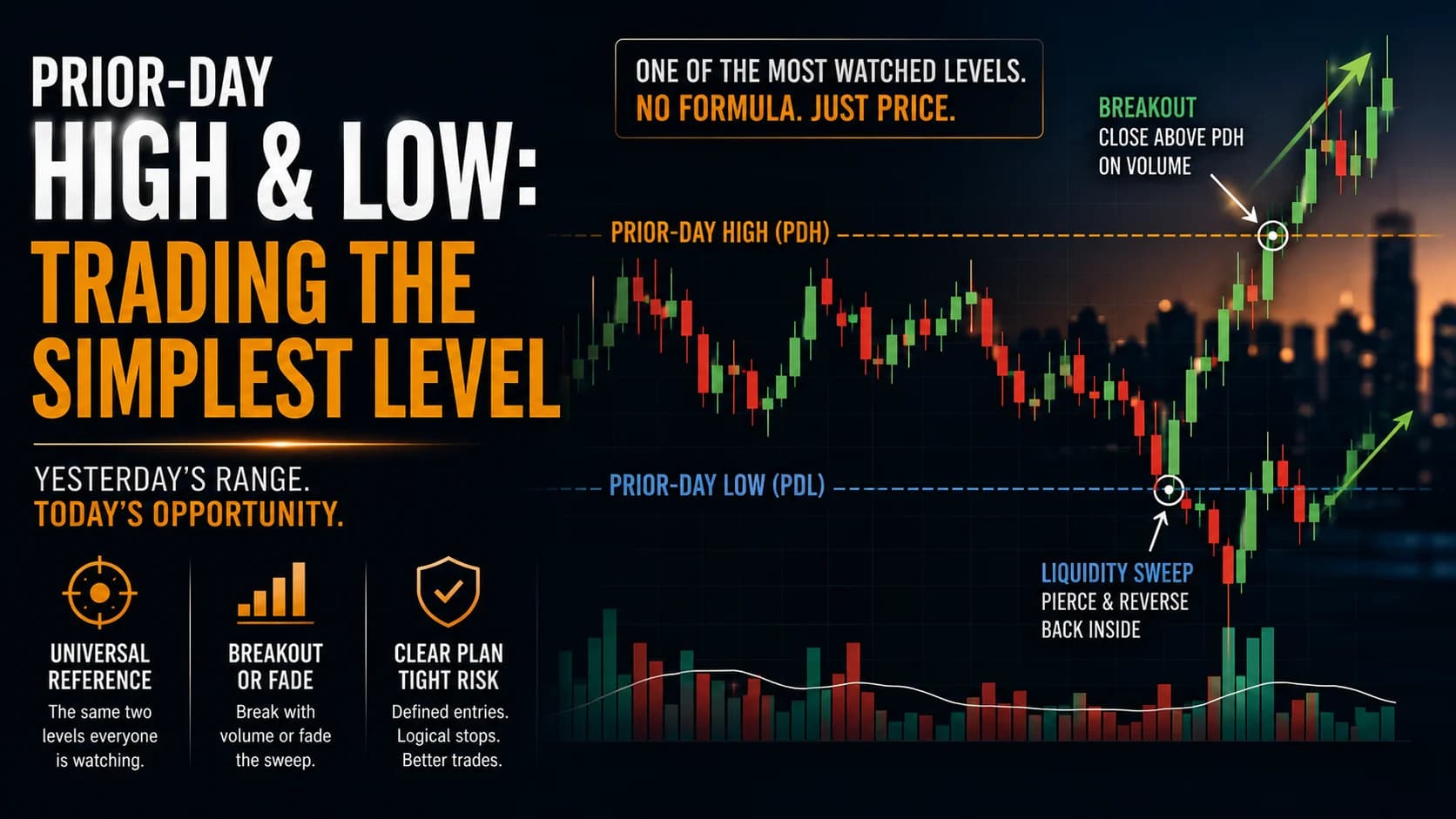
Trading the Breakout of Prior-Day High/Low Levels
PDH and PDL need no formula, just yesterday's range. This guide covers the breakout, the liquidity-sweep fade, and why stops cluster right at these levels.
Strategies
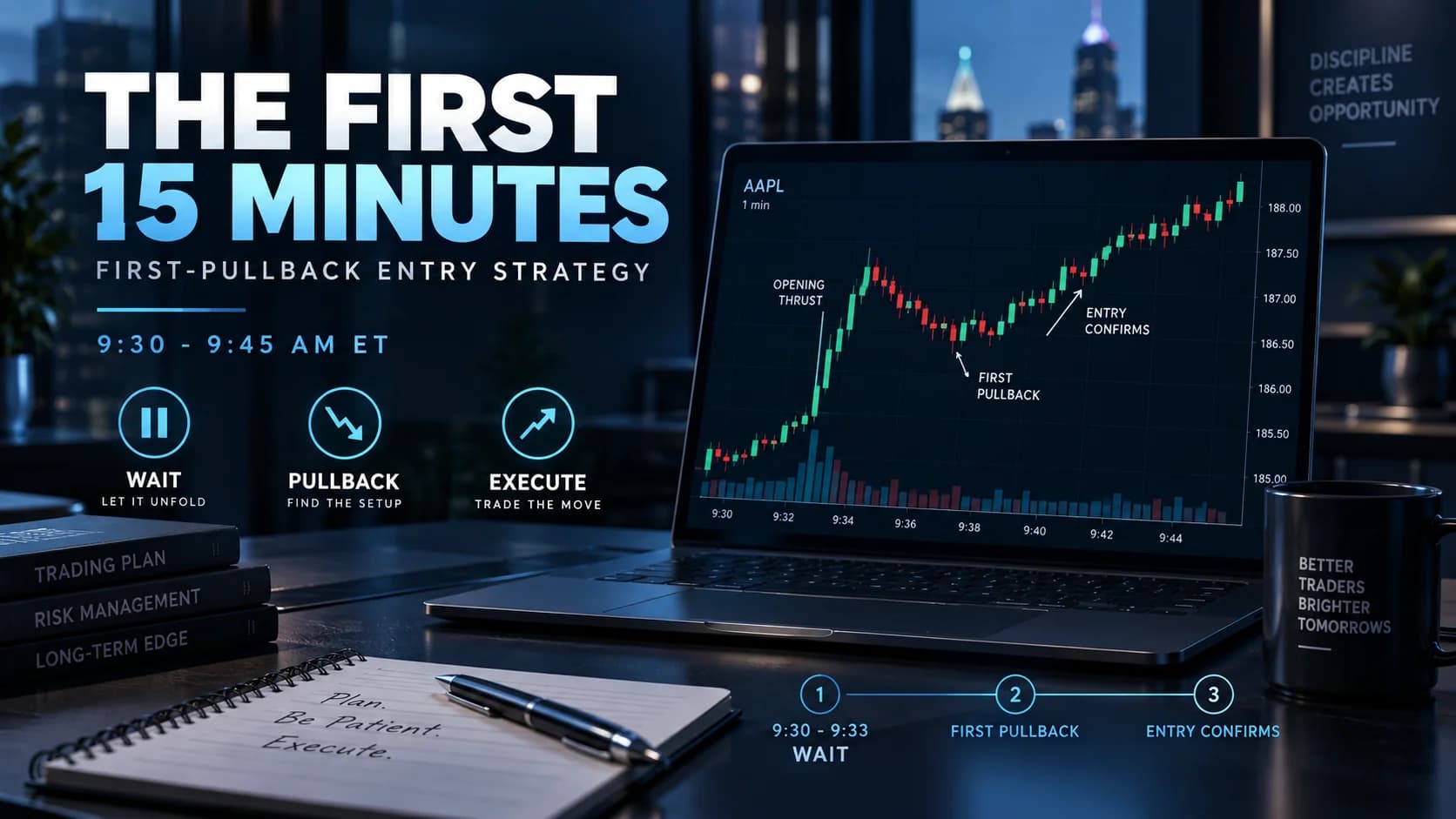
The Trader's Playbook: How to Day Trade the First 15 Minutes
The opening auction leaves an imbalance that takes a few minutes to resolve. This playbook covers what's structurally different about the first 15 minutes and the one pullback setup built around it.

Strategies
Trading Choppy Markets: A Pro Trader's Survival Guide
Choppy markets chew through accounts fast. This guide covers reading real chop with ADX, when standing aside is the trade, and how to fade range edges safely.
Strategies
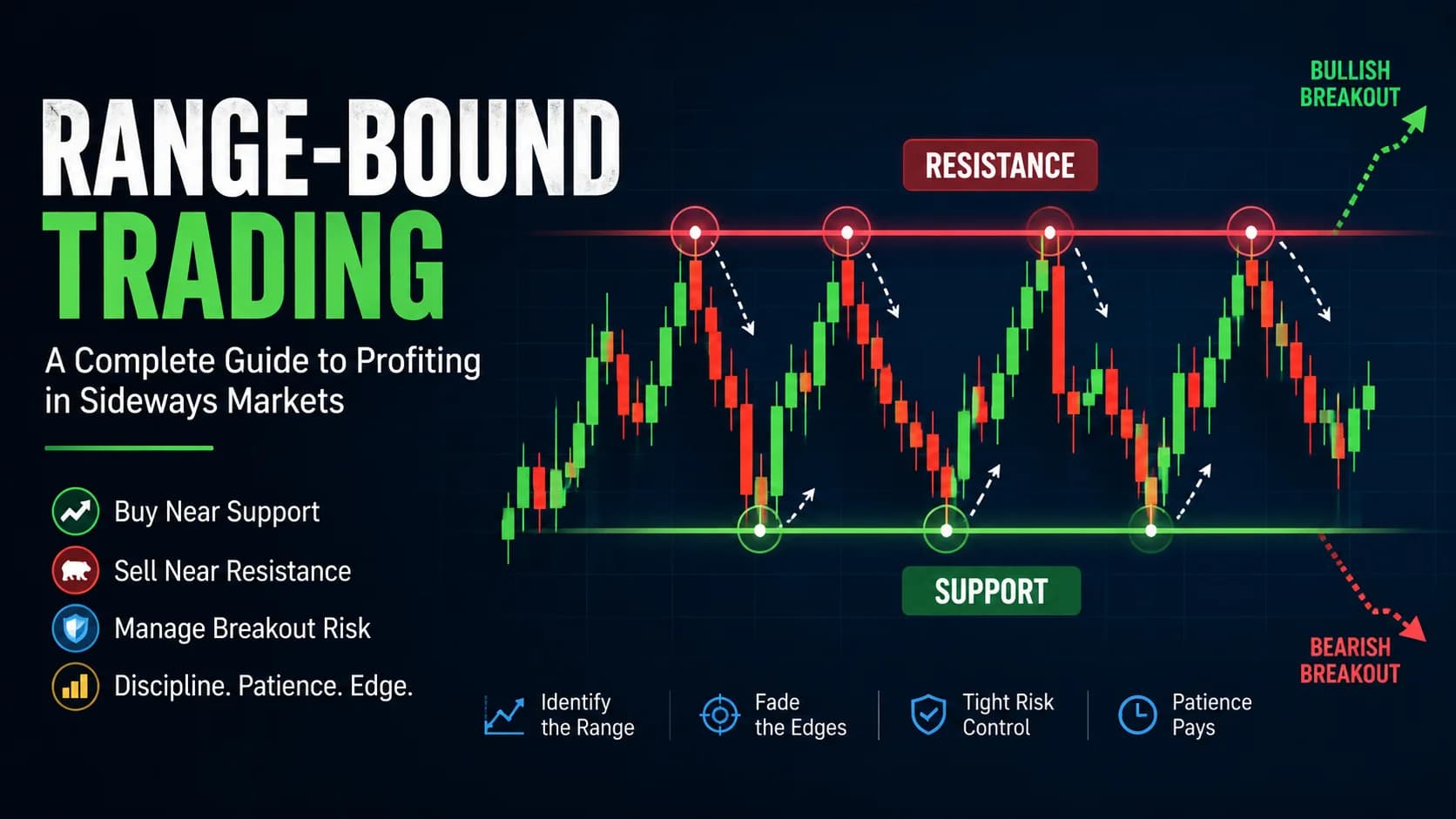
Range-Bound Trading: A Complete Sideways Market Guide
Learn range-bound trading strategies for sideways markets — how to identify a genuine range, fade the edges with confirmation, and manage the breakout risk.
Comments
No comments yet. Be the first to share your thoughts.