
The After-Hours Trading Strategy: Risks, Setups, and When to Skip It

In this article9 sections
At 4:03 PM ET, a company reports earnings that beat estimates by a wide margin, and the stock is suddenly up 12% on the after-hours tape. It's tempting to treat that the same way a pre-market gapper gets treated the next morning. It shouldn't be. The after-hours session runs on even thinner liquidity than pre-market, with none of the built-in ninety minutes that pre-market trading gets before real volume shows up at the open, and a meaningful share of after-hours earnings pops fade significantly by the time the regular session actually opens.
This is the mirror image of this hub's pre-market playbook, and the same rules-based discipline applies, adjusted for a session that's structurally even less forgiving.
What is after-hours trading? After-hours trading refers to the buying and selling of stocks after the regular session closes at 4:00 PM ET, typically running until 8:00 PM ET for most brokers, when volume and liquidity are lower than even the pre-market session and price reactions to earnings and news releases first appear.
Why After-Hours Liquidity Is Thinner Than Even Pre-Market
Pre-market trading has a built-in resolution mechanism: the regular session opens ninety minutes to two hours after most pre-market catalysts break, giving the market time to digest the news with full institutional participation before the day actually starts. After-hours trading has no equivalent close deadline pulling in that same resolution. A stock can trade on thin after-hours volume for four straight hours with no forcing event to bring in the liquidity a pre-market gapper eventually gets at 9:30 AM.
Most companies that report earnings after the close do so specifically because 4:00 PM is a natural, expected reporting window, not because the after-hours session offers better price discovery. The result is a session where genuinely large, fundamental news (an earnings beat or miss, a guidance change) collides with the day's thinnest liquidity, producing some of the most exaggerated, least reliable price moves of the entire 24-hour cycle.
The After-Hours Earnings Reaction Setup Specification
- Component
- Market Conditions Required
- Rule
- Confirmed earnings release (not rumor or leaked guidance) with a clear beat or miss on both revenue and earnings per share, not just one
- Component
- Time of Day
- Rule
- Entries taken only in the first 30 minutes after the release, typically 4:00 to 4:30 PM ET for after-close reporters
- Component
- Stock Selection Criteria
- Rule
- After-hours volume already exceeding 200,000 shares within the first 15 minutes of the reaction; price above $10
- Component
- Entry Trigger
- Rule
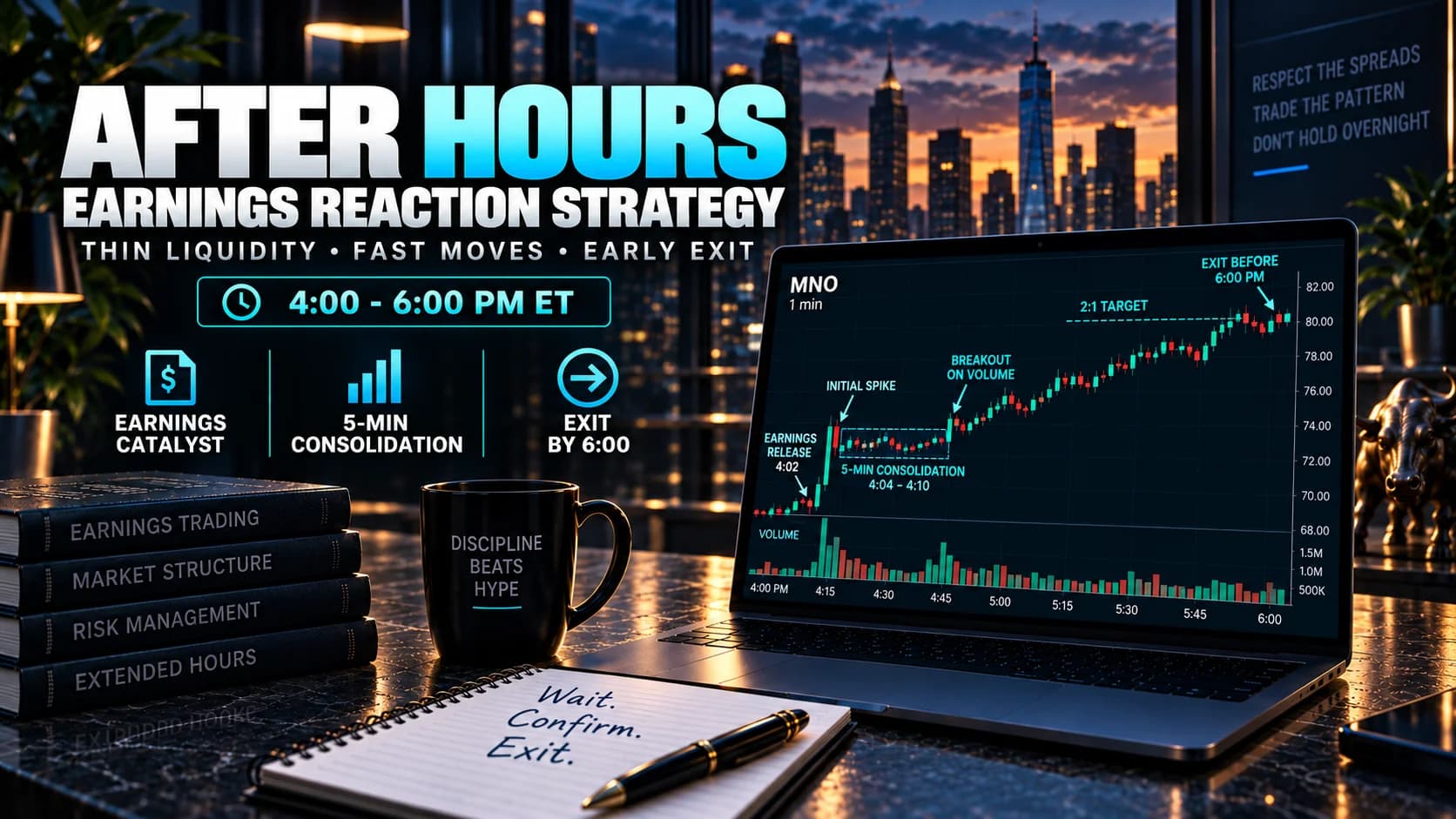
- Price holds a consolidation range for at least 5 minutes after the initial reaction spike, then breaks that range's high (long) or low (short) on renewed volume
- Component
- Stop Loss
- Rule
- Below the consolidation range low (long) or above the range high (short)
- Component
- Initial Profit Target
- Rule
- Minimum 2:1 reward-to-risk, taken in full; this setup does not hold overnight
- Component
- Trade Management
- Rule
- Full exit by 6:00 PM ET regardless of where the trade stands, well ahead of the session's thinnest final hours
- Component
- Invalidation Criteria
- Rule
- Price fails to hold the consolidation range and reverses through it before the entry trigger fires, or volume never clears the 200,000-share threshold
| Component | Rule |
|---|---|
| Market Conditions Required | Confirmed earnings release (not rumor or leaked guidance) with a clear beat or miss on both revenue and earnings per share, not just one |
| Time of Day | Entries taken only in the first 30 minutes after the release, typically 4:00 to 4:30 PM ET for after-close reporters |
| Stock Selection Criteria | After-hours volume already exceeding 200,000 shares within the first 15 minutes of the reaction; price above $10 |
| Entry Trigger | Price holds a consolidation range for at least 5 minutes after the initial reaction spike, then breaks that range's high (long) or low (short) on renewed volume |
| Stop Loss | Below the consolidation range low (long) or above the range high (short) |
| Initial Profit Target | Minimum 2:1 reward-to-risk, taken in full; this setup does not hold overnight |
| Trade Management | Full exit by 6:00 PM ET regardless of where the trade stands, well ahead of the session's thinnest final hours |
| Invalidation Criteria | Price fails to hold the consolidation range and reverses through it before the entry trigger fires, or volume never clears the 200,000-share threshold |
The 6:00 PM hard exit in Trade Management is a deliberate, conservative adjustment from the pre-market playbook's 9:25 AM close-out. After-hours liquidity generally gets thinner, not thicker, as the evening goes on, the opposite of pre-market's trajectory toward the open, which is exactly why this setup exits earlier relative to its own session rather than later.
Case Study: An After-Hours Earnings Beat With a Confirmed Breakout
Picture a mid-cap software name, ticker MNO, reporting earnings at 4:02 PM that beat both revenue and EPS estimates meaningfully, with management also raising forward guidance. The stock spikes from a $45.00 close to $49.50 in the first two minutes of the reaction.
Between 4:04 and 4:10 PM, MNO consolidates in a tight range between $48.80 and $49.60, holding the bulk of its initial gain rather than fading it, a healthier sign than an immediate, sharp reversal would be. At 4:11 PM, price breaks above $49.60 on renewed volume. Entry at $49.65, stop at $48.75 (below the consolidation low), for $0.90 of risk per share. The 2:1 target sits at $51.45.
MNO clears that target by 4:35 PM as after-hours buying continues, and the position exits in full, well ahead of the 6:00 PM cutoff, with no exposure carried into the thinnest, least predictable final hours of the after-hours session or into the following morning's pre-market.
Where This Setup Breaks Down
The most common and most damaging failure is holding a position too long, hoping an after-hours gain survives into the next morning's open unchanged. A meaningful share of large after-hours earnings reactions compress significantly by the following pre-market or regular-session open, as the wider market gets a chance to digest the news with real liquidity and often reprices it, sometimes substantially, in either direction. Treating an after-hours gain as locked in simply because it's still showing on the screen at 7:00 PM is a costly assumption.
A second failure is trading a reaction that hasn't actually consolidated. A stock that spikes and keeps spiking in a straight line with no pause, the after-hours equivalent of the momentum-without-a-level problem covered in this hub's pre-market guide, offers no logical stop-loss level and shouldn't be traded under this setup's rules regardless of how strong the initial move looks.
A third, more structural failure is the session's execution risk itself: after-hours spreads on names without heavy institutional coverage can run extremely wide, and a stop-loss order that would fill cleanly during the regular session can slip substantially in the after-hours book. Position sizing under this setup should account for that added slippage risk, not just the stated stop distance.
The Order Type and Broker Access Problem
Not every broker offers full after-hours access, and among those that do, order type support varies meaningfully. Standard stop-loss orders frequently don't route in extended hours at all, the same limitation covered in this hub's pre-market guide, which means a stop-limit order with an extended-hours time-in-force setting is typically required instead. Confirming exactly what a specific broker supports for after-hours trading, order types, session hours, and any additional fees, is a prerequisite before trading this setup with real size, not a detail to discover mid-trade.

Why Many After-Hours Moves Fade by the Next Open
This is worth stating as a genuine, researched pattern rather than a vague caution: academic research on overnight earnings announcements has found that a real share of the initial after-hours price reaction reflects incomplete price discovery under thin liquidity, information that gets meaningfully revised once trading resumes with full participation. That doesn't mean every after-hours mover fades; well-supported, high-conviction beats with strong volume behind them often do hold or extend. It does mean the size of an after-hours move, by itself, isn't a reliable predictor of where a stock settles once real liquidity returns, which is exactly why this setup's stop-loss and 6:00 PM exit exist rather than relying on the move holding simply because it happened.
Scanning for After-Hours Earnings Movers
Standard pre-market gap scanners frequently miss the earliest minutes of an after-hours reaction entirely, since most retail scanning tools default to regular or pre-market session data. A scanner built to track after-hours volume and price movement in real time closes that gap. Trade Ideas supports after-hours alerting directly, which matters here more than in almost any other setup in this hub given how quickly the highest-volume window of the reaction can pass.
Fitting After-Hours Trading Into a Day Trader's Plan
Trading the after-hours session sits slightly outside the strict definition of a day trade, since the position is opened after the regular session has already closed. The discipline that applies is the same discipline this hub applies everywhere else: define the setup, the stop, and the exit time before entering, and treat any after-hours position as a distinct, self-contained trade with its own hard close-out, not as an extension of anything that happened during the regular session. The temptation to let a strong after-hours winner "ride" into the next morning specifically to avoid taking a smaller, guaranteed gain is a discipline question worth naming honestly, and it belongs with the broader trading psychology and risk material as much as with any rule in this setup spec.
After-Hours Trading FAQs
Why does this setup require both a revenue and an EPS beat, rather than just one or the other?
Requiring both metrics to beat is a stricter filter than many pre-market catalyst screens use, reflecting how much less forgiving the after-hours session's thin liquidity is of an ambiguous, mixed reaction.
Key Takeaway: A mixed earnings beat is a lower-quality setup under this framework than a clean beat across both revenue and earnings.
How is the after-hours consolidation range different from the pre-market consolidation used in the pre-market playbook?
The 200,000-share threshold in this setup's Stock Selection Criteria is calibrated to after-hours conditions specifically; applying the pre-market playbook's volume thresholds directly to an after-hours setup would likely be too permissive given how much less total volume the after-hours session typically sees.
Key Takeaway: After-hours volume thresholds should be calibrated to that session's own thinner baseline, not borrowed directly from pre-market rules.
Why does this setup exit by 6:00 PM instead of holding until the after-hours session actually closes?
Exiting by 6:00 PM captures the window when the bulk of genuine reaction volume typically occurs, while avoiding the session's thinnest, least liquid final stretch.
Key Takeaway: After-hours liquidity worsens toward the session's end, which is why this setup exits well before that session actually closes.
Is it ever appropriate to hold an after-hours earnings winner into the next day's open?
This setup, as written, is scoped to a same-session, closed-out trade specifically to avoid that additional overnight risk. A trader who wants to hold an earnings reaction overnight is making a different, swing-oriented decision that calls for its own separate risk framework.
Key Takeaway: Holding overnight is a different trade with different risk than the same-session setup described here.
What specifically makes after-hours order execution riskier than during the regular session?
That slippage risk should factor into position sizing under this setup, treating the stated stop distance as a minimum expected loss rather than a guaranteed maximum one.
Key Takeaway: Size positions with after-hours slippage risk in mind, not just the stated stop-loss distance.
Does this setup work on stocks reporting earnings before the market opens instead of after it closes?
The two scenarios share a similar underlying logic, react to a confirmed catalyst with volume and consolidation confirmation, but the specific setup, thresholds, and session mechanics differ enough to warrant separate treatment.
Key Takeaway: Use the pre-market playbook for before-the-open reporters and this setup specifically for after-the-close reporters.
How reliable is the size of an initial after-hours move as a predictor of where the stock settles the next day?
That's exactly why this setup trades the confirmed, volume-backed breakout of a consolidation rather than the raw size of the initial spike, and why it closes out the position well before the next session even opens.
Key Takeaway: A large after-hours move is not a reliable prediction of the next day's price; trade the confirmed pattern, not the headline percentage.
Disclaimer
Article Sources
- FINRA: Extended-Hours Trading, Know the Risks - regulator guidance on the specific risks of trading outside regular market hours.
- Overnight Earnings Announcements and Preopening Price Discovery - academic research on how after-hours earnings reactions get revised once full-liquidity trading resumes.
- A Review of the Post-Earnings-Announcement Drift - peer-reviewed literature review on how markets continue reacting to earnings surprises in the days following an announcement.
Was this helpful?
Be the first to weigh in

Written by
Kazi Mezanur RahmanFounder, independent researcher, and editor of DayTradingToolkit. A one-person publication focused on risk-first trading education and documented tool research. He trades his own capital as a retail trader and combines personal market experience with systematic primary-source research.
Keep Reading
Strategies
Trading the Breakout of Prior-Day High/Low Levels
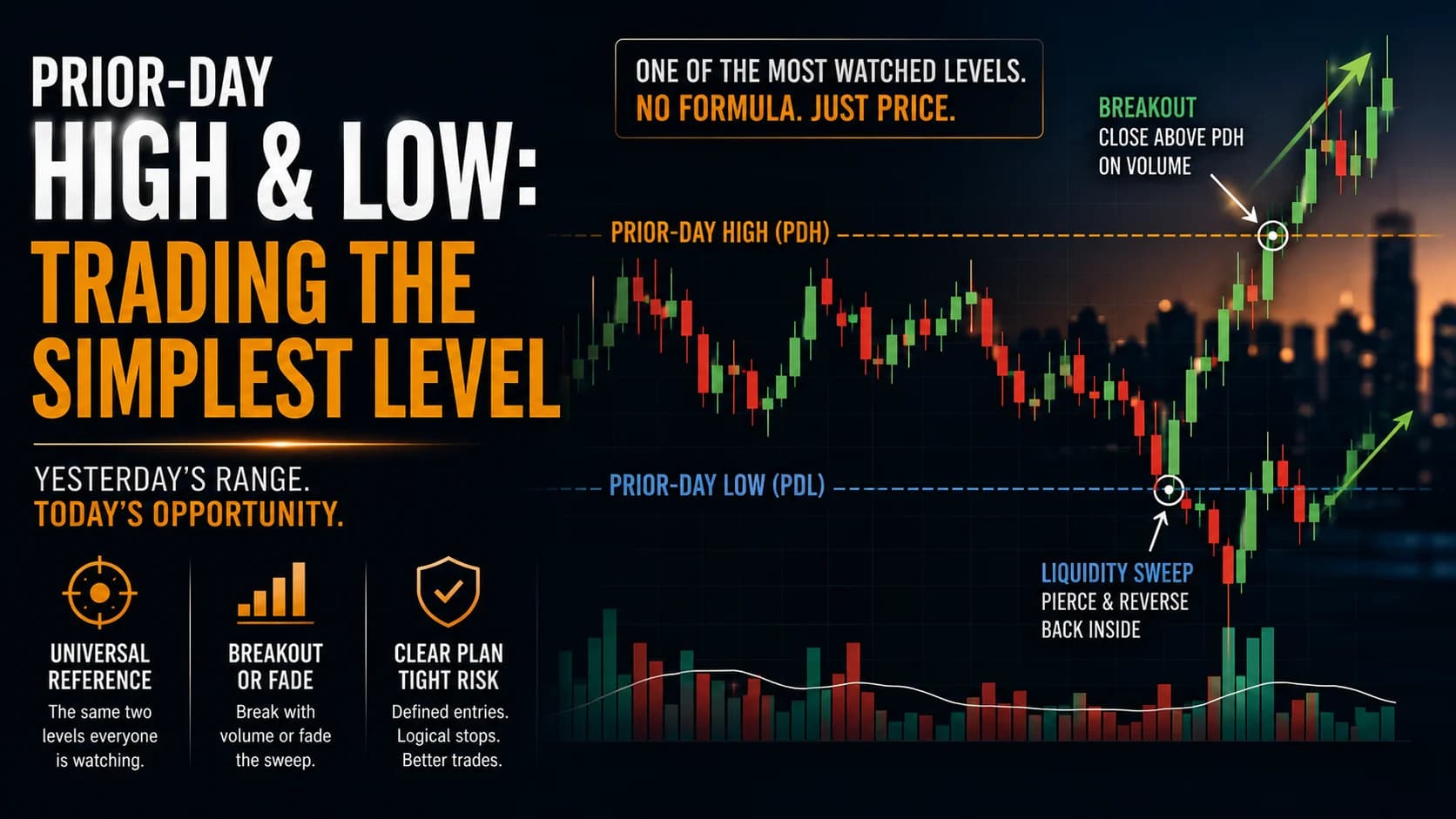
PDH and PDL need no formula, just yesterday's range. This guide covers the breakout, the liquidity-sweep fade, and why stops cluster right at these levels.
Strategies
Trading Breakouts From Consolidation: The Volatility Contraction Pattern
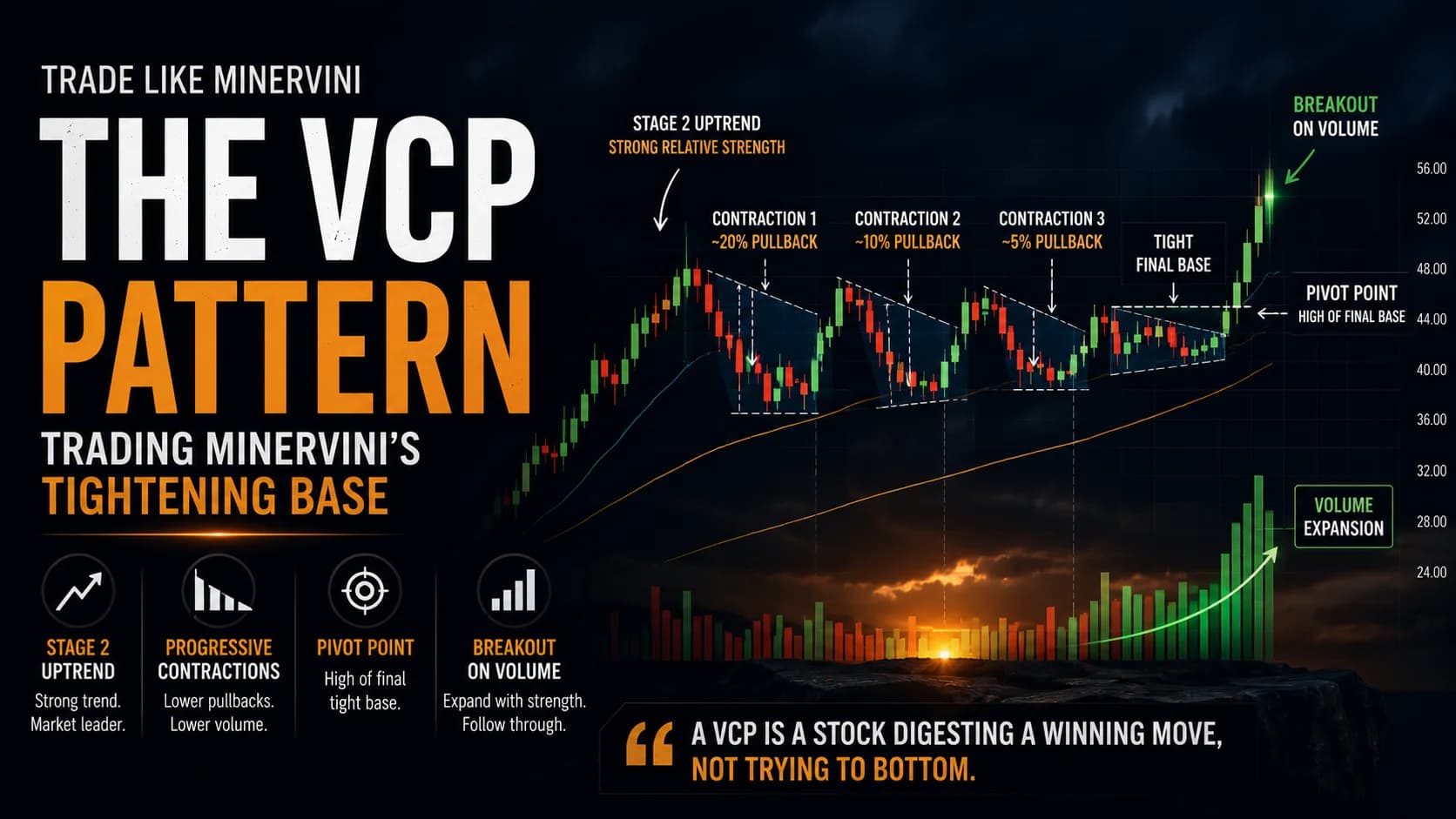
The VCP isn't just a volatility squeeze. This guide covers the staged contraction sequence, the pivot point, and why context matters as much as the pattern.
Strategies
The 52-Week High Breakout Strategy: Trading Stocks at New Highs
Investors anchor on the 52-week high, and that bias is exactly why breaking it carries real weight. This guide covers the research and trading the breakout.
Strategies
The Bollinger Band Squeeze Strategy: Trading Volatility Compression
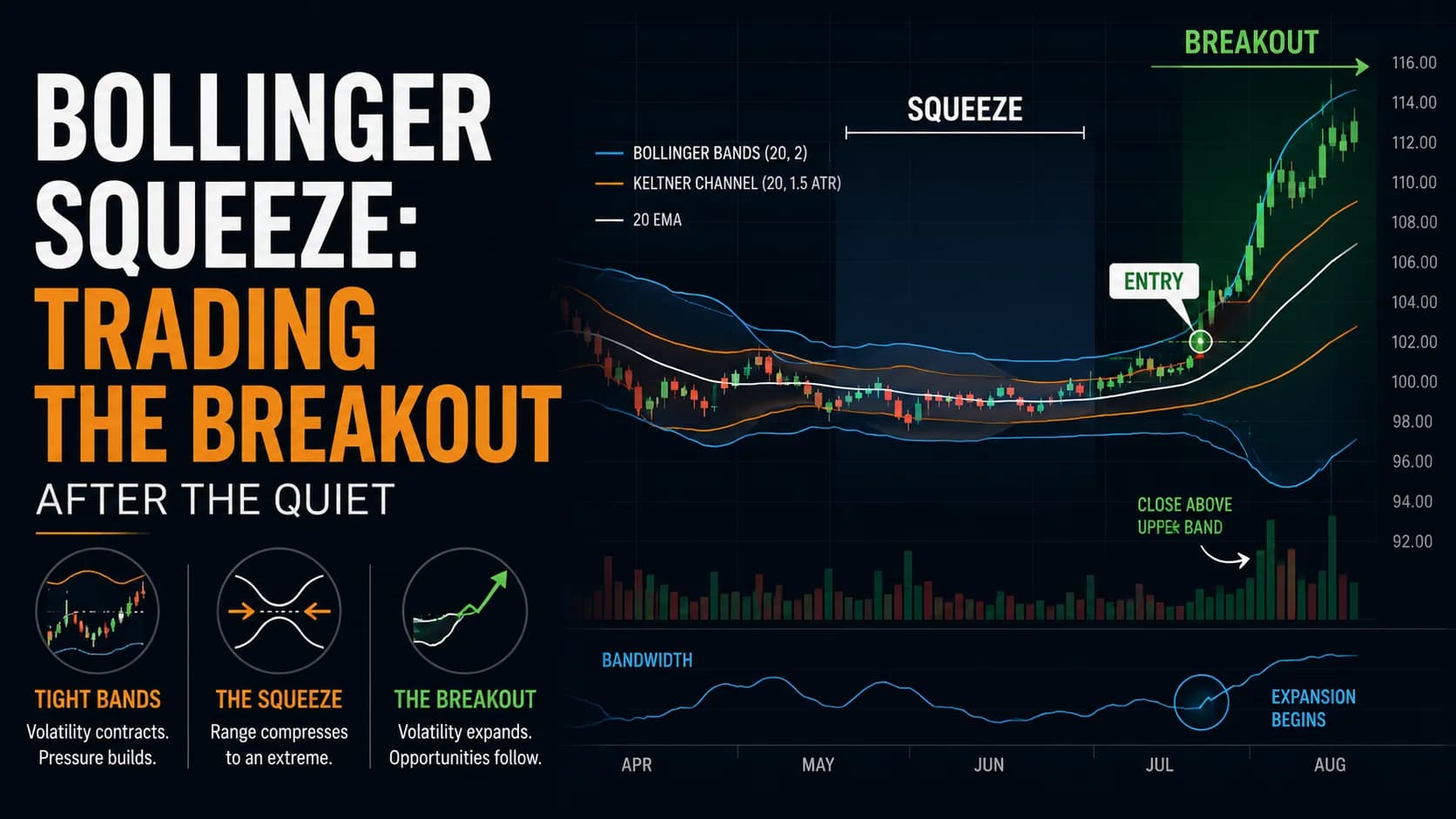
Tight Bollinger Bands signal a coiled market. This guide covers measuring real squeeze compression, trading the breakout direction, and avoiding false starts.
Comments
No comments yet. Be the first to share your thoughts.