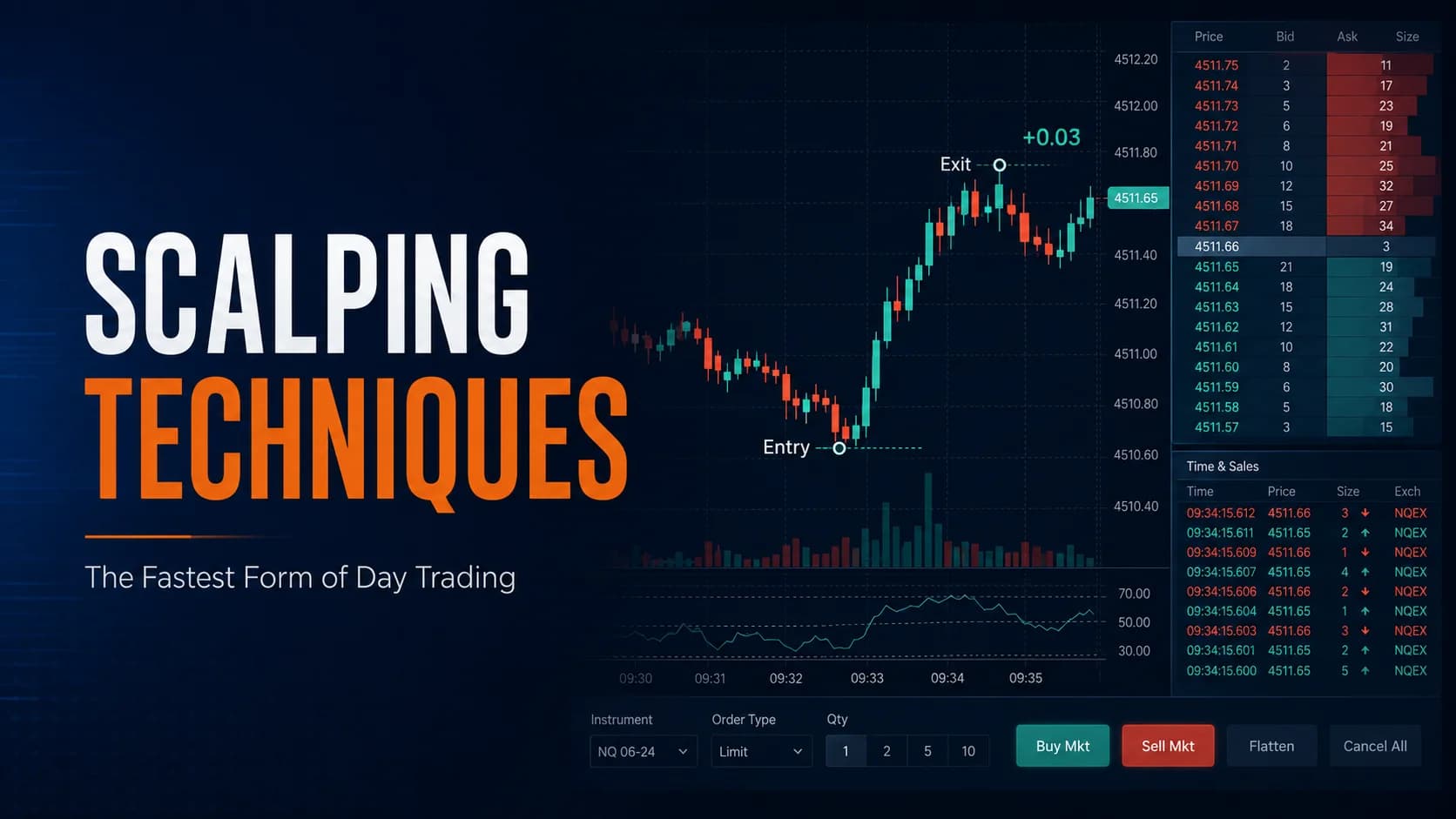
Life in the Fast Lane: An Introduction to Scalping Techniques

In this article10 sections
Every strategy covered elsewhere on this hub holds a position for minutes, sometimes hours. Scalping throws that out entirely. It's the trading equivalent of Formula 1 racing: positions lasting seconds to a couple of minutes, profit targets measured in pennies, and an edge built on repetition rather than getting one trade spectacularly right.
What is scalping? Scalping is the fastest form of day trading — a style built on capturing very small, fleeting price movements repeatedly throughout the session rather than holding for a larger move. Trades typically last seconds to a few minutes, profit targets run just a few cents per share, and a single session might involve dozens to hundreds of individual trades.
It sounds appealing on paper: darting in and out of the market, stacking up small, quick wins. And for a specific kind of trader, with a specific kind of setup, it's a genuinely viable way to trade. But it's worth being direct from the outset: scalping is intense, expensive to execute properly, and not sustainable for most people who try it. This guide covers the mindset, the tools, the common approaches, and the economics — honestly enough that you can decide for yourself whether it fits before spending real money finding out.
What Is Scalping? The Fastest Form of Day Trading
Scalping sits at the extreme end of the day trading spectrum. Investopedia describes it as a strategy aimed at capturing minor price changes, often involving anywhere from ten to several hundred trades in a single session. The Corporate Finance Institute frames it similarly: buying and selling the same stock within minutes, rarely holding through longer stretches of the session.
A few characteristics separate scalping from every other style on this hub:
Ultra-short time horizons. Trades last seconds to a few minutes. Some scalpers are in and out in under 30 seconds — compare that to a trend-following trade that might run for hours.
Tiny profit targets. A single scalp might target $0.03 to $0.10 per share. On 1,000 shares, that's $30 to $100 gross before costs — modest on its own, but the strategy isn't built around any single trade.
Extreme frequency. The edge, if it exists, comes from volume: many small, consistent wins rather than a handful of large ones.
No overnight exposure. Every position closes before the session ends. Zero gap risk, zero overnight news exposure — the tradeoff for that safety is that every dollar of profit has to be earned during market hours, with no room for a position to "work itself out" over time.
The Scalper's Mindset: Do You Have What It Takes?
Thriving — or even just surviving — as a scalper requires a specific mental setup that's genuinely different from the patience trend-following or swing-style trading rewards.
Extreme focus. Processing information from charts, Level 2, and time and sales happens almost instantaneously, for hours at a stretch. Distractions aren't just unhelpful here — they're costly.
Fast decision-making. Recognizing a setup, entering, managing, and exiting often happens within seconds. There's no room for extended deliberation once the trigger is in front of you.
Strict discipline. Profit targets are tiny and stops are tighter still. Letting a small loss grow because of hope that it comes back is one bad habit away from erasing a week of otherwise correct trades.
Emotional detachment at the micro level. Handling a high volume of small wins and losses without getting attached to any single outcome is a different skill than managing the psychology of a handful of larger daily trades.
Fast adaptation. A stock that scalps beautifully at 9:45 AM can go dead by 10:30. Recognizing that shift and stepping aside matters as much as recognizing the original setup.
Traders who prefer to analyze deeply, take their time, and let a trade breathe will likely find scalping feels like pure chaos — and that's a completely reasonable reaction, not a failure of nerve. Different styles suit different temperaments.
Why Scalpers Even Bother: The Potential Upside
Given the intensity, the appeal is worth understanding directly.
Opportunity inside chop. Scalping can find edges even when the broader market is stuck in a tight, directionless range — conditions that frustrate trend followers but still produce enough micro-volatility for a scalper to work with.
No overnight or swing risk. Every position closes the same session, eliminating exposure to overnight gaps entirely.
A potentially smoother equity curve. Many small, consistent trades can produce a steadier-looking equity curve than a trend-following approach with fewer, larger wins and correspondingly larger drawdowns — though that smoothness depends entirely on genuine execution skill, not on the style itself.
Compounding small gains. The premise is that a large number of small, consistent wins adds up meaningfully over time, the same way a large number of small losses can quietly sink an account that isn't managing costs.
Fit for a specific temperament. Some traders are simply wired for constant engagement and immediate feedback. For that specific personality, the pace itself is part of the appeal rather than a cost to tolerate.
The Brutal Economics: Why Scalping Is So Hard to Do Well
The upside is real, but so is the arithmetic working against it constantly.
The Commission Death Spiral. This is the single biggest obstacle. When a profit target is $0.05 per share and round-trip commissions run $0.01 per share, 20% of the gross profit is gone before anything else is considered.
A representative scalp:
- Entry: buy 1,000 shares at $50.00 = $50,000
- Commission in: $5
- Exit: sell 1,000 shares at $50.05 = $50,050
- Commission out: $5
- Gross profit: $50
- Net profit: $40 — commissions consumed 20% of the gross gain
Add exchange fees, data fees, and platform costs, and the required edge just to break even climbs further. This is why scalping needs access to genuinely low per-share commission structures rather than a flat retail rate built for occasional trades. This hub's guide to brokerage costs, fees, and spreads covers the different fee models in more depth.
Slippage: The Silent Killer. Slippage is the gap between the price a trader expects to be filled at and the price actually received. In a fast-moving stock, even small slippage on entry or exit can erase a scalper's entire profit target.
Trying to buy at a $50.00 offer, only to have the order fill at $50.02 once it reaches the market, has already surrendered $0.02 per share before the trade has even started — 40% of a $0.05 target, gone on execution alone. This is why execution speed and direct market access matter disproportionately to this style; a few milliseconds can be the entire difference between a winning and losing trade.
The Tool Tax. Serious scalping requires infrastructure most retail traders don't have by default:
- A direct-access broker for the fastest possible order routing, often with higher account minimums and monthly platform fees
- Real-time Level 2 and time and sales data, which typically isn't free
- A trading platform built for speed, with hotkey execution and tick-level charting
- Fast, stable, wired internet — lag is a direct cost, not an inconvenience
- Hardware capable of handling real-time data smoothly, ideally across multiple monitors
Altogether, this typically runs several hundred dollars a month in fixed costs before a single trade is placed — overhead a slower-paced trading style doesn't require.
Mental Fatigue and Burnout Risk. The sustained focus and rapid decision-making take a real physiological toll. Research from the National Bureau of Economic Research, studying professional traders directly, found measurable autonomic nervous system responses during live market events — evidence that the stress of high-pressure trading isn't just a subjective complaint but a documented physical response. Separate research on burnout syndrome, published through the National Institutes of Health, characterizes it by emotional exhaustion and a reduced sense of professional effectiveness, and identifies fast-paced, high-demand fields as particularly prone to it.
The pattern shows up often: a strong first few weeks, followed by a wall — irritability, mistakes, eroding discipline. Screen time that once felt exciting starts to feel like an obligation. That's burnout, and left unaddressed, it can end a trading effort altogether. This hub's guide to trading discipline covers the broader psychological demands trading places on anyone, scalpers included.
Screen Time Prison. This isn't a set-and-forget style. Sustained attention during active hours is required, which is why many scalpers concentrate their efforts around the most active windows of the session — typically the first couple of hours after the open and the final hour before the close — rather than trying to maintain that intensity all day. Traders who need flexibility during market hours will likely find this style incompatible with their schedule.
The Scalper's Essential Toolkit: Speed Is Everything
Scalping with slow tools is like racing Formula 1 in a minivan — technically possible, but missing the entire point.
Direct Access Broker. Speed and control over order routing matter enormously. Brokers built for active traders typically offer per-share, volume-tiered commission models and direct routing to exchanges or ECNs, bypassing slower retail order-handling in favor of faster execution. Names like Interactive Brokers, Centerpoint Securities, Lightspeed, and SpeedTrader fall into this category — built for professionals, not the typical retail account.
Level 2 Data (Market Depth). Level 2 shows the current buy orders (bids) and sell orders (asks) waiting at different price levels, along with size and the market participant placing each order.
A large bid sitting well below the current price can act as short-term support; a large ask can act as resistance. Watching whether bids are being added ("stacking") or pulled, and whether asks are being aggressively taken out, offers real-time insight into short-term buying and selling pressure. Reading this well takes real screen time — it's a developed skill, not a tool that works on its own.
Time and Sales (The Tape). While Level 2 shows pending orders, time and sales shows a real-time log of trades that have actually executed — price, size, and time. A fast tape full of large prints at the ask suggests aggressive buying; a fast tape full of large prints at the bid suggests aggressive selling. A slow, thin tape signals low liquidity — a genuine warning sign for this style specifically.
Hotkeys. Sending buy, sell, and cancel orders through keyboard shortcuts rather than mouse clicks isn't a convenience for this style — it's close to a requirement. When a move develops over two seconds, spending even a second and a half clicking through an order ticket is the difference between capturing the move and missing it entirely.
Fast Charting Platforms. A platform needs to handle real-time data without lag. Scalpers commonly use tick charts (a new bar prints after a set number of trades, regardless of time elapsed), very short timeframes, and minimal indicator clutter, since too much on-screen complexity slows down the split-second processing this style demands. Platforms like DAS Trader, Sterling Trader Pro, and Medved Trader are built specifically for this kind of execution speed; charting-focused platforms like TradingView are useful for broader analysis but generally need to be paired with a direct-access execution platform for the actual trading.
Finding the Right Stocks to Scalp. Illiquid stocks are a dead end for this style. Genuine candidates need real average daily volume, tight bid-ask spreads, and consistent price movement — checking all of that manually across a broad watchlist every morning isn't realistic.
Trade Ideas is built specifically for this kind of real-time filtering as a comprehensive scanning and research platform — surfacing high-volume, liquid, actively-moving stocks and flagging unusual volume or tight consolidations as they develop, with Holly AI able to surface historically similar setups. For a scalper, a capable scanner isn't a nice-to-have; it's close to essential. This hub's stock scanner guide covers the broader basics of finding tradable stocks.
Common Scalping Approaches: Different Ways to Play the Micro-Game
Scalpers lean on a handful of distinct techniques, most centered on reading order flow directly rather than relying on lagging indicators.
Level 2 / Order Flow Scalping. Arguably the purest version of the style. Decisions come almost entirely from reading the dynamics of the order book: imbalances between buy-side and sell-side size, large orders holding a level, bids stepping up aggressively, or asks getting cleared out entirely. This is highly intuitive and takes significant screen time to develop real feel for.
Tape Reading Scalping. Closely related, but focused on what actually executed rather than what's resting in the book. A sudden surge of large green prints can signal aggressive buying worth joining; a fast run of red prints can signal aggressive selling worth fading. The tape shows what happened, not just what participants are signaling they might do.
Bid/Ask Spread Scalping. Attempting to buy at the bid and sell at the slightly higher ask, capturing the spread the way a market maker does. Classic market microstructure research — Glosten and Milgrom's foundational 1985 model — explains why this is so difficult for an individual retail trader to compete at: bid-ask spreads exist specifically as compensation for the risk a liquidity provider takes on when trading against better-informed counterparties, and professional market makers manage that risk with speed, capital, and information advantages retail traders don't have. This hub covers a dedicated version of this approach, along with its honest limitations, in its own strategy article elsewhere in this module.
Indicator-Based Scalping. Some traders adapt standard indicators to very short timeframes — fast EMA crossovers on a 1-minute chart, quick stochastic or RSI readings, small MACD divergences. Indicators lag even more on compressed timeframes and generate considerable noise; many experienced order-flow scalpers consider this a less reliable foundation, though some traders build a workable, strict system around it. This hub's introduction to basic indicators covers how these tools work at a foundational level.
Micro-Breakout and Pullback Scalping. Applying ordinary breakout and pullback logic on extremely short timeframes — a tight one-minute consolidation breaking, or a quick pullback to a fast-moving EMA. Same underlying principles as longer-timeframe trading, just compressed into seconds and cents rather than minutes and dollars.
This hub also covers several other momentum-adjacent day trading approaches as dedicated strategies elsewhere in this module — including gap-driven momentum plays, low-float runners, and single-minute scalp setups — each with its own full mechanical treatment rather than the broad overview given here.

A Simple Scalping Example: The Concept in Action
Consider a hypothetical, actively-traded stock, ticker XYZ, trading around $50.05/$50.06 (bid/ask). None of the prices below are real; they're constructed to show the mechanics in action.
A large buy order sits at $50.00 — 50,000 shares, acting as short-term support, with much smaller bids stacked above it. On the tape, buyers are actively lifting the $50.06 ask, and the $50.05 bid keeps refreshing rather than thinning out. Reading this combination as buyers in control for the next few seconds, a long entry is placed at $50.06, joining the buyers already hitting the ask.
The stop sits just below the large supporting bid, around $49.98 to $49.99 — if that order disappears, the reason for the trade disappears with it, and the exit is immediate. The target is modest: $0.02 to $0.04, taken the moment price ticks to $50.08 or $50.09. The whole trade might last 10 to 30 seconds.
A hypothetical outcome: 1,000 shares bought at $50.06 ($50,060), sold at $50.09 ($50,090). Gross profit: $30. Round-trip commission at $0.005 per share: $10. Net profit: $20.
Do that successfully 50 times in a session and the gross adds up to real money. Not every trade works, and real conditions are messier than any single illustration. This example exists to show the mechanics, not to promise a specific outcome — the support could just as easily break, or the fill could slip, turning the same setup into a loss.
Risk Management for Scalpers: No Room for Error
Because profit margins are thin by design, risk control matters even more here than in slower styles.
Stops Measured in Pennies. Stops are often just $0.02 to $0.05 from entry, with zero room for hoping a trade recovers. The instant the thesis breaks — that supporting bid vanishes, the tape reverses — the position is closed. No exceptions.
Position Size Matters More, Not Less. Even with a tight stop, position size has to keep the dollar risk within a predefined maximum per trade, commonly 0.5% to 1% of account equity. That often means trading in larger share sizes than a swing trader would, offset by a much tighter stop. This hub's position sizing guide covers the underlying math in full.
Win Rate and Risk/Reward Reality. Because the average win and average loss are often similar in size once costs are included, scalpers typically need a higher win rate — commonly in the 55% to 65%+ range — than a trend-following approach that might win only 40% of the time but with winners several multiples the size of losers. Profitability here comes from frequency and consistency, not from occasional outsized wins.
A Firm Daily Loss Limit. Given the trade frequency, an undisciplined session can compound losses and commission costs quickly. Many scalpers cap themselves at a fixed daily loss — commonly 1% to 2% of account equity — and treat hitting it as a hard stop for the day, not a suggestion. This hub's guide to advanced risk management techniques covers building this kind of circuit breaker into a broader plan.
Factoring Every Cost Honestly. Every trade's real target has to account for commissions and fees, not just the gross move. A $0.05 target with $0.02 in round-trip costs is really a $0.03 target — worth asking honestly whether that's still a real edge or simply churning through commissions. This hub's introduction to risk management covers the foundational principles that apply across every trading style, scalping included.
Is the Scalper's Life for You? The Honest Assessment
A few honest questions worth asking before committing real capital to this style:
Do you have the tools this style genuinely requires? A low-commission, direct-access broker; Level 2 and time and sales data; fast, stable internet; a capable scanner; and enough capital that per-trade risk and commission drag don't dominate the math.
Can you sustain intense focus for extended stretches — two to four hours at a time, without meaningful distraction?
Are split-second decisions under pressure a strength or a weakness for you — do you freeze when things move fast, or does the pace feel natural?
Can you tolerate the volume of small wins and losses without getting rattled by any single outcome, dozens of times a session?
Will you actually honor a $0.03 stop, or is there a real risk of "giving it one more second" and turning a small, planned loss into something much larger?
Does your schedule actually allow the screen time this style demands, or do you need flexibility during market hours?
Answering "no" or "not sure" to several of these is a reasonable signal that this style isn't a good fit right now — and that's not a failure. Plenty of traders find more sustainable success with a slightly slower pace, using 5-minute or 15-minute charts instead. If the pace still appeals, the responsible path is learning thoroughly, building the right toolkit, and practicing extensively in a simulator first — tracking results including realistic commission estimates — before deciding whether a genuine edge and the mental demands of the style are actually there.
Scalping isn't inherently better or worse than any other approach on this hub. It's a specialized, demanding tool that rewards a specific temperament and punishes anyone who underestimates its costs.
Common Questions About Scalping
Is scalping a good starting point for a new trader?
New traders are generally better served building foundational skills on slower timeframes — 5-minute or 15-minute charts — before attempting a style this demanding. Most traders who scalp successfully spent real time on longer-timeframe styles first and transitioned once they had a track record of consistency to build on.
Key Takeaway: Build consistency on a slower timeframe before layering on scalping's added speed and cost pressure.
What's the essential toolkit for scalping stocks?
Level 2 shows resting orders and depth; time and sales confirms with what actually executed. Neither matters without first finding stocks with the volume and volatility this style needs, which is where a capable scanner like Trade Ideas becomes close to essential rather than optional.
Key Takeaway: Level 2, the tape, and a real-time scanner form the core toolkit — missing any one weakens the other two.
How do I start reading Level 2 for scalping?
Large bids suggest support; large asks suggest resistance. Bids stacking while asks stay thin suggests building buying pressure; the reverse suggests selling pressure building. Developing real intuition here takes genuine screen time — watching without risking capital is a reasonable way to start.
Key Takeaway: Treat Level 2 reading as a skill built through repetition, not a tool that provides instant answers.
How much capital does scalping actually require?
Commissions, fees, and tight per-trade risk limits mean that trading with too little capital forces smaller share sizes against the same fixed costs, making the underlying math harder to overcome. Traders serious about this style tend to operate with well more than a bare-minimum account specifically because the fixed costs of scalping don't scale down with account size.
Key Takeaway: No regulatory dollar threshold gates this style anymore, but the underlying economics still favor more capital, not less.
What makes a stock a good candidate for scalping?
Large-cap and heavily-traded mid-cap names, or stocks with a fresh catalyst driving volume, tend to fit. Illiquid, thinly-traded names are the opposite of what this style needs — wide spreads and unreliable fills turn a workable setup into a losing one before the trade idea is even tested.
Key Takeaway: Liquidity and spread come before any other consideration when picking a candidate to scalp.
How is scalping different from day trading generally?
Both share the defining rule of no overnight positions. What separates scalping is the compression: far shorter holds, far smaller targets, and far higher trade frequency, along with a correspondingly higher dependence on execution speed and cost control.
Key Takeaway: Every scalp is a day trade, but most day trades aren't scalps — scalping is the most compressed, most execution-sensitive version of the style.
Why do commissions matter so much more for scalpers than other traders?
A flat-rate commission structure built for occasional trading is workable for a swing trader placing a handful of trades weekly, but the same structure applied to dozens of daily scalps can turn a real, working edge into a break-even or losing one purely on cost. This hub's guide to brokerage costs, fees, and spreads covers this in more depth.
Key Takeaway: This style needs a genuinely low per-share commission structure — the fee model itself can make or break the edge.
Can scalping be done in a cash account?
Funds from a closed trade in a cash account aren't available for a new trade until settlement completes, which forces a scalper to divide capital into rotating portions rather than deploying it freely — a real constraint this style's trade frequency runs directly into. A margin account avoids this specific limitation, independent of any day-trade-count rule.
Key Takeaway: The settlement-cycle constraint on cash accounts is a separate issue from day-trade-count rules, and it matters just as much for this style.
What is tape reading, specifically?
Clusters of large prints can indicate institutional-sized activity; the speed of execution reflects momentum; a preponderance of prints at the ask versus the bid signals which side is currently more aggressive. Paired with Level 2, tape reading helps anticipate a micro-move slightly before it fully develops.
Key Takeaway: The tape shows completed transactions, not resting intentions — that distinction is what makes it a useful complement to Level 2.
How do I know if this style genuinely fits me?
Traders who prefer deeper analysis, patience, and lower trade frequency are usually better served by swing trading or trend following on longer timeframes. Neither approach is objectively superior — the right one depends on temperament, schedule, and available capital.
Key Takeaway: Match the style to your own wiring and constraints rather than assuming the fastest style is automatically the most profitable one.
Disclaimer
Article Sources
- Investopedia, "Scalping: Definition in Trading, How This Strategy Is Used, and Example" - a general reference definition of scalping as a trading style
- Corporate Finance Institute, "Scalping (Day Trading Technique)" - a professional educational overview of scalping mechanics and requirements
- Glosten & Milgrom (1985), "Bid, Ask and Transaction Prices in a Specialist Market with Heterogeneously Informed Traders", Journal of Financial Economics - the foundational model explaining why bid-ask spreads exist as compensation for adverse selection risk
- U.S. Securities and Exchange Commission, "Section 31 Transaction Fee Rate Advisories" - official information on the regulatory transaction fees affecting active and high-frequency traders
- National Bureau of Economic Research, "Measuring the Stress of Financial Traders" - research documenting measurable physiological stress responses during live trading decisions
- National Institutes of Health / PMC, "Burnout: A Review of Theory and Measurement" - an academic review of burnout syndrome and its prevalence in high-stress, fast-paced occupations
Was this helpful?
Be the first to weigh in

Written by
Kazi Mezanur RahmanFounder, independent researcher, and editor of DayTradingToolkit. A one-person publication focused on risk-first trading education and documented tool research. He trades his own capital as a retail trader and combines personal market experience with systematic primary-source research.
Keep Reading
Strategies
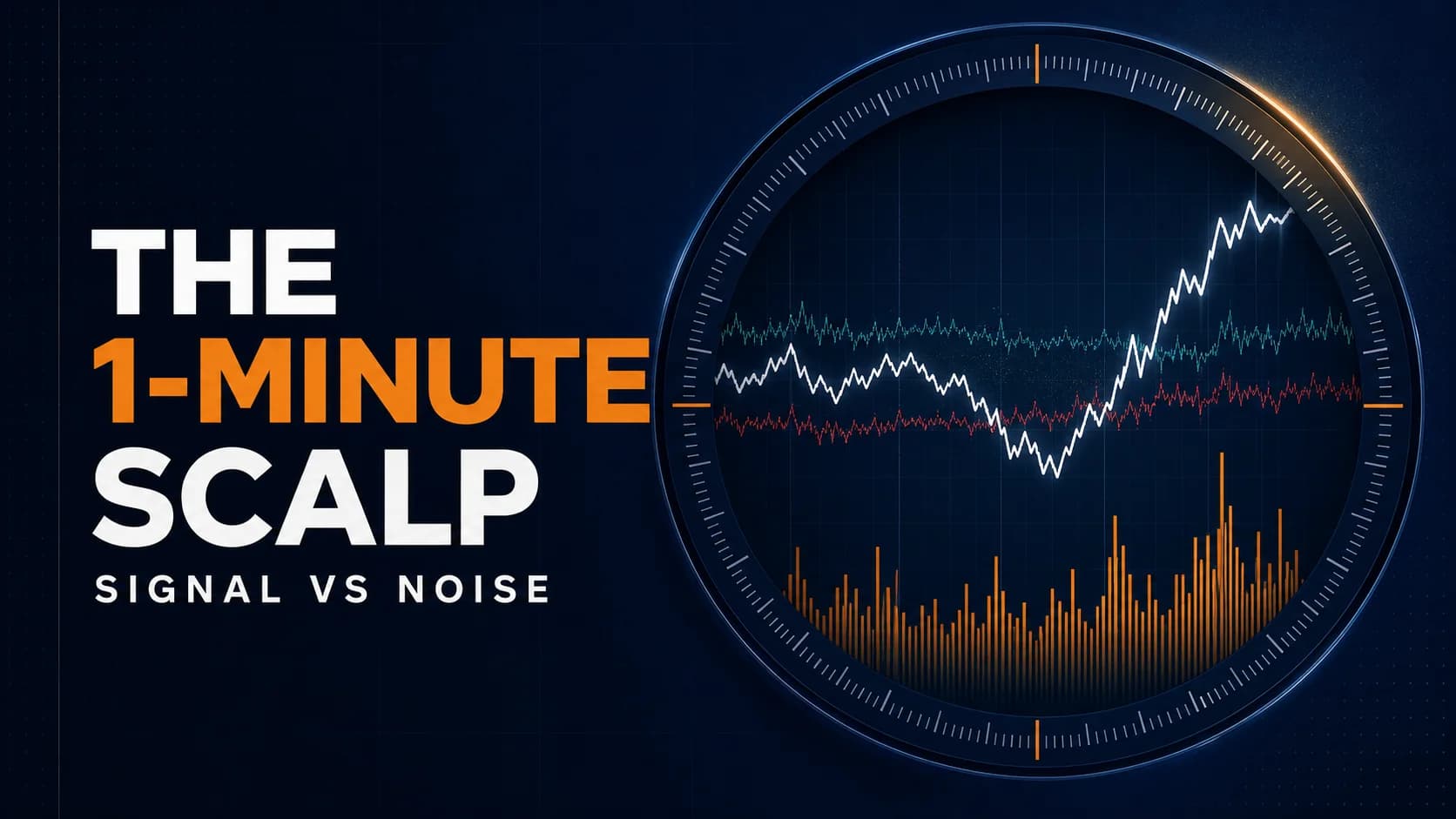
The 1-Minute Scalp Strategy for Active Day Traders
On a 1-minute chart, some of what looks like real price action is just mechanical noise. This guide covers the setup, and how to tell the difference well.
Strategies
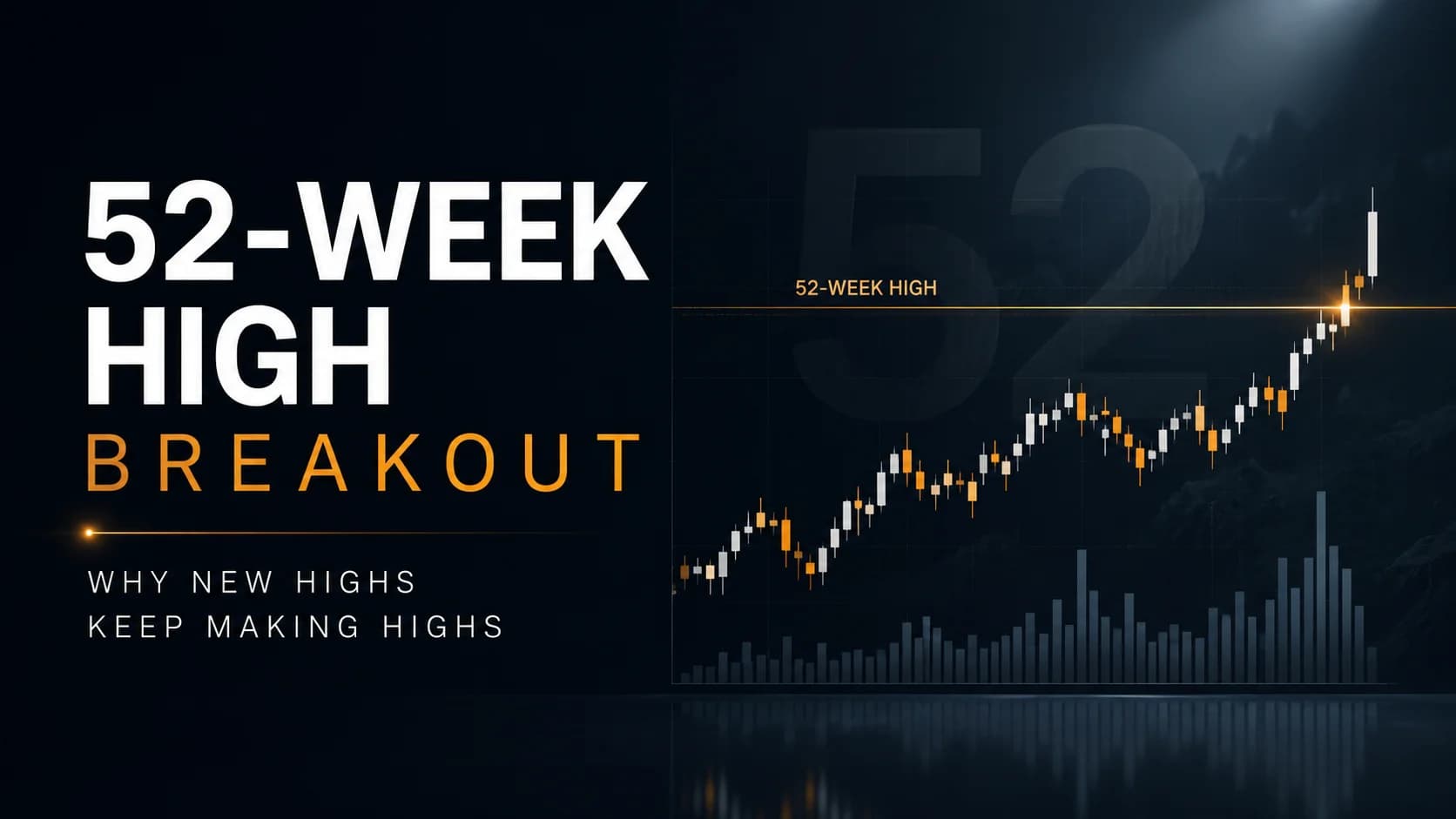
The 52-Week High Breakout Strategy: Trading Stocks at New Highs
Investors anchor on the 52-week high, and that bias is exactly why breaking it carries real weight. This guide covers the research and trading the breakout.
Strategies
Trading the Breakout of Prior-Day High/Low Levels
PDH and PDL need no formula, just yesterday's range. This guide covers the breakout, the liquidity-sweep fade, and why stops cluster right at these levels.
Strategies
Trading Breakouts From Consolidation: The Volatility Contraction Pattern
The VCP isn't just a volatility squeeze. This guide covers the staged contraction sequence, the pivot point, and why context matters as much as the pattern.
Comments
No comments yet. Be the first to share your thoughts.