Trading the News & Events: Excitement, Danger, & Why You Should Probably Be Careful

In this article12 sections
Picture this: It's 8:29 AM. The Non-Farm Payrolls report drops in 60 seconds. Your finger hovers over the mouse. You've analyzed the consensus, studied the charts, sized your position. Then 8:30 hits—and the market explodes in both directions before finally ripping higher. By the time your order fills, the move is half over, and you're already down 2% from slippage alone.
Welcome to event-driven trading.
The allure is obvious. News events can move price further in minutes than it might move in an entire week of normal trading. If you could just catch that one perfect earnings gap, that explosive FOMC reaction, that NFP spike... the profits would be massive. It feels like finding a shortcut.
But here's the uncomfortable truth the available evidence shows: for most retail traders, trading news events directly is a losing proposition. Not because of bad strategy—because of structural disadvantages you can't overcome.
This article exists as the foundational overview before you dive into our specific trading playbooks. We're going to break down what news trading actually is, why it's so tempting, why most retail traders lose money doing it, and—critically—when you should probably just sit on your hands and wait.
What Is Event-Driven Trading? (Understanding the Fundamentals)
Event-driven trading is exactly what it sounds like: making trading decisions based on specific, identifiable catalysts that move markets. These aren't the gradual trend changes you might follow with moving averages—these are explosive, compressed timeframe moves triggered by new information hitting the market all at once.
The psychology behind it is seductive. Normal trading feels like a grind—waiting for setups, managing positions, dealing with choppy price action. But news events? They promise immediate, dramatic results. Your entire thesis plays out in minutes, not days. Win or lose, it's fast.
That speed is precisely what makes it dangerous.
Event-driven trading operates on an entirely different set of rules than discretionary day trading. The volatility is extreme. The execution environment is hostile. The information advantage—if you have one at all—exists for mere seconds before it evaporates. You're not just trading against other retail traders; you're competing with algorithmic systems that react in microseconds and institutional desks with direct data feeds you'll never access.
Many traders blow up accounts chasing news. We've also spent years developing specific playbooks for various events. The key difference? Those playbooks emphasize caution, specific rules, and—most importantly—knowing when NOT to trade.
The Complete Taxonomy of News Events (What Moves Markets)
Not all news is created equal. Understanding the different categories helps you recognize what you're up against.
Scheduled Economic Releases: The Calendar Events
These are the heavy hitters that move entire markets—stocks, bonds, currencies, commodities. Governments and central banks release data on regular schedules, and everyone's watching.
Employment Data is king here. Non-Farm Payrolls (NFP), released by the U.S. Bureau of Labor Statistics on the first Friday of each month at 8:30 AM ET, is arguably the single most impactful regular data release. It shows how many jobs were added (or lost) in the prior month, excluding farm workers, private households, and non-profits. The unemployment rate and average hourly earnings come in the same report.
Why does this matter? Employment is half of the Federal Reserve's dual mandate (the other half being price stability). Strong job growth can signal inflation pressure, potentially leading to interest rate hikes. Weak numbers might indicate economic trouble, opening the door for rate cuts. Currency traders especially watch NFP like hawks.
Inflation Data is the other critical piece. The Consumer Price Index (CPI) and Producer Price Index (PPI) tell us if prices are rising. Central banks live and die by these numbers. If inflation runs too hot, they raise rates to cool things down. If it's too cold, they cut rates to stimulate growth. The market's expectations for future interest rates—and therefore asset prices—hinge on these releases.
Central Bank Announcements are the ultimate market movers. The Federal Open Market Committee (FOMC) in the U.S. typically meets eight times per year to announce interest rate decisions and monetary policy direction. But it's not just the decision itself—it's the statement language, the press conference, the "dot plot" projections. Markets dissect every word looking for "hawkish" (pro-rate-hike) or "dovish" (pro-rate-cut) signals. The European Central Bank, Bank of England, Bank of Japan—they all have similar influence over their respective currencies and markets.
Then you have GDP reports, retail sales data, manufacturing indices (ISM/PMI), consumer confidence surveys—all pieces of the economic puzzle that shape the big picture.
Company-Specific Events: Corporate Catalysts
While economic releases move entire markets, company-specific events drive individual stock volatility.
Quarterly Earnings Reports are the main event. Four times a year, public companies report their profits, losses, revenue, and—crucially—forward guidance. The market reaction isn't just about the numbers; it's about how those numbers compare to analyst expectations. Beat expectations and you might gap up 10%. Miss badly and you could gap down 20%. Even if you beat, weak guidance can sink you. Even if you miss, strong guidance can save you. It's a psychological minefield.
DayTradingToolkit has developed a complete playbook for trading earnings reports specifically because of how tricky these are.
Mergers & Acquisitions can cause instant revaluation. When Company A announces it's acquiring Company B, the target company's stock typically surges toward the acquisition price. The acquiring company's stock might rise or fall depending on whether investors think the deal is smart. These "event-driven" situations can take months to play out, but the initial reaction is often violent.
FDA Decisions for biotech and pharma companies are binary events. Drug approval? Stock doubles. Drug rejection? Stock craters. There's no middle ground, and the price action is brutal.
Product launches, management changes, legal settlements, activist investor campaigns—all of these can trigger significant volatility in individual stocks.
Unscheduled Events: The Wild Cards
These are the nightmare scenarios—the events you can't see coming.
Geopolitical shocks like wars, terrorist attacks, or sudden trade disputes can send markets into panic mode or euphoria depending on the nature of the event. Oil spikes when tensions flare in the Middle East. Defense stocks jump on conflict news. Currency pairs whipsaw as safe-haven flows dominate.
Natural Disasters and black swan events—earthquakes, hurricanes, pandemics, flash crashes, sudden bank failures—inject massive uncertainty into markets. The initial reaction is often irrational, driven by fear rather than fundamentals.
Political surprises like unexpected election outcomes or major policy announcements can revalue entire sectors overnight. Think Brexit. Think sudden tariff announcements. The market hates uncertainty, and political shocks deliver uncertainty in massive doses.
You can't predict these. You can only decide in advance: Will I hold positions through unknown risk, or will I protect capital when geopolitical or catastrophic risk is elevated?
The Siren Song: Why Traders Are Drawn to News (The Psychology of the "Shortcut")
Let's be honest about why news trading is so tempting.
Normal trading is hard. You might wait days for a setup to develop. You might grind through choppy price action for hours just to scratch out a small win. You might have a perfectly good plan that simply doesn't trigger because the market doesn't cooperate.
Then you see a stock that just gapped 30% on earnings. Or you watch EUR/USD spike 100 pips in 90 seconds after NFP. And you think: "If I could just catch one of those..."
It feels like a shortcut. Like you could bypass all the grinding and just nail one explosive move. The compressed timeframe is exhilarating. The potential profits are massive. It's the trading equivalent of going for the knockout punch instead of winning on points.
But here's what most traders miss: that "shortcut" is actually a gauntlet. The path that looks fastest is booby-trapped with structural disadvantages, execution nightmares, and psychological traps.
DayTradingToolkit isn't here to tell you news trading is impossible. We're here to tell you that if you don't understand—and respect—the disadvantages you face, you're going to learn expensive lessons very quickly.
The Brutal Reality: Why Most Retail Traders Lose Trading News
Fair warning: this section might sting a bit. But understanding these disadvantages is the most important thing you can take away from this article.
The Information Speed Disadvantage
You are not the first to know.
High-frequency trading firms pay millions of dollars for ultra-low-latency connections to data providers. They receive economic releases milliseconds before the data hits your free news feed or broker platform. They analyze it, make decisions, and execute trades before you've even finished reading the headline.
By the time you see "NFP +250K vs. 180K expected" and think "Dollar should rally," institutional algorithms have already bought dollars, pushed the price up, and potentially started taking profit. You're not trading the news—you're trading the reaction to the reaction.
Think about that for a second. The most profitable part of the move—the initial surge from pre-news price to post-news price—happens in the first few seconds. And you're shut out of those seconds by technological and financial barriers you can't overcome as a retail trader.
Slippage & Widened Spreads (The Silent Killer)
This is where retail traders get absolutely murdered.
In normal market conditions, the bid-ask spread on liquid stocks might be a penny or two. But in the seconds before and after a major news release? Market makers pull their orders. Liquidity evaporates. That spread might widen to 10 cents, 20 cents, or more.
What does this mean for you?
Your market order—the one you thought would fill at $100.50—actually fills at $100.80. That's 30 cents of slippage. On a 500-share position, you just gave up $150 before the trade even started. Your stop loss, set at $99.50, doesn't trigger until $99.10 because there's no liquidity at your level. Suddenly your "1% risk" trade is a 1.4% loss.
According to SEC guidance on market volatility, these execution issues are well-documented during high-volatility periods. Traders face not only wider spreads but potential delays and rejections as broker systems struggle to handle the volume surge.
This is the hidden tax of news trading. You might have called the direction perfectly—but slippage and spreads took your profit and then some.
Platform Freezes & Execution Failures
Picture this: It's 2:00 PM. The FOMC statement just dropped. You try to enter an order. Your platform freezes. The page won't load. Your order gets rejected with a "system error" message. You refresh, try again—nothing. By the time the platform responds, the move is over.
This happens more often than you'd think. The surge in volume around major news events overwhelms broker infrastructure. Servers lag. Order routing systems bottleneck. Charts freeze mid-candle.
You can have the perfect read on the market, and it won't matter if your platform won't let you execute.
Extreme Volatility = Extreme Risk
News events don't produce clean, directional moves. They produce chaos.
Price whipsaws. It spikes up, hesitates, crashes down through where it started, then suddenly reverses higher—all in the span of 90 seconds. What looks like a clear bullish signal can reverse into a bearish trap before you can blink.
Your stop losses—if they even trigger at reasonable levels—get hit on these whipsaws, even if the ultimate direction matches your thesis. You can be right about the move and still lose money because of the path it took to get there.
Risk management, the foundation of all trading, becomes nearly impossible when price is moving faster than you can process information.
The Unpredictability Problem (Good News ≠ Rally)
Here's the part that drives traders crazy: markets don't always react logically to news.
Sometimes great earnings cause a selloff because the results, while positive, weren't "good enough" relative to inflated expectations. This is called "selling the news"—the market already priced in perfection, so even good results disappoint.
Sometimes terrible news causes a rally because it wasn't "as bad as feared." The market expected disaster, got only moderate trouble, and relief buying kicks in.
Sometimes the first reaction is completely wrong, and the market spends the next 30 minutes reversing course as participants re-interpret the data.
Trying to predict not just what the news will be, but how the market will interpret it, and how other participants will react to that interpretation, and whether that reaction will hold or reverse... it's multiple levels of speculation piled on top of each other.
Research from the National Bureau of Economic Research shows that while stocks statistically rise around earnings announcements, the volatility and unpredictability of individual reactions makes timing these moves exceptionally difficult. Even professional arbitrageurs struggle with the idiosyncratic risk.
At some point, you're not trading—you're just guessing.
Common Approaches to Trading News (And Why They're Problematic)
Traders have developed various strategies for tackling news events. None of them are silver bullets, and most come with serious drawbacks.
Pre-Release Positioning: The Gamble
Some traders try to position themselves before the news drops, based on rumors, whisper numbers (unofficial expectations circulating among traders), or their own analysis of what the data will show.
This is pure speculation. You're betting not just on what the number will be, but that the market's reaction will match your expectations. If you're wrong on either count, you're in trouble fast. And remember—the market already has a consensus expectation priced in. You need to be right, AND you need to be more right than the consensus.
DayTradingToolkit occasionally references pre-release positioning in our pre-market trading playbook, but only with very specific conditions and extremely tight risk management. For most traders, this approach is asking to get run over.
Trading the Immediate Spike: The Speed Game You Can't Win
Some systems try to jump on the very first tick of movement right as the number hits the wire. This requires algorithmic execution and institutional-grade infrastructure.
As retail traders, we can't compete here. Period. The high-frequency trading firms have already bought, sold, and potentially reversed by the time our order reaches the exchange. This space belongs to the machines.
Fading the Initial Move: Slightly Less Impossible (But Still Very Risky)
"Fading" means betting against the initial move—waiting for the spike to exhaust itself, then taking the opposite side as it reverses back toward pre-news levels.
This is slightly more accessible because it doesn't require perfect speed. You're looking for signs of exhaustion (like a massive green candle that immediately produces selling volume, or price hitting a major resistance level and failing).
The problem? The initial move can extend much, much further than you expect. What looks like exhaustion might just be a brief pause before another leg higher. You can blow through multiple stop losses trying to fade a move that simply won't quit.
Post-News Trend Trading: The Most Sensible Approach
This is where most successful retail traders land.
Instead of fighting for the first 30 seconds, you wait. Let the lunatics battle it out. Let the algorithms duke it out. Let price whip around wildly for the first 5-15 minutes.
Then, after the dust settles, you look for the clearer pattern that emerges. Has price established a new trend? Has it settled into a consolidation range? Can you apply your normal trading rules to this new structure?
You miss the explosive initial move. But you also avoid the terrible spreads, the execution failures, the whipsaws. You trade with a clearer picture, better execution, and much more manageable risk.
This is the approach this guide uses across our various playbooks—FOMC, NFP, CPI, and earnings. We're not trying to be heroes. We're trying to stay alive and capture the move with better odds.
Position sizing—how many shares to trade based on your risk tolerance and the volatility of the moment—becomes even more critical around news events. If you're not sure how to calculate this properly, see our position sizing guide before you risk real capital.
Tools & Preparation for News Trading (If You're Determined to Try)
If you're going to trade around news—and we still recommend caution—you at least need the right tools.
Economic Calendars: Your First Line of Defense
An economic calendar shows you what's coming. It lists scheduled data releases, central bank meetings, and other known events, along with:
- The date and exact time of release
- The consensus forecast (what analysts expect)
- The previous period's data (for comparison)
- Volatility ratings (how much market impact is expected)
Major economic calendars are available from Forex Factory, Investing.com, TradingView, and most broker platforms. Check the calendar every morning before the trading day. Know what's coming. Know when to tighten stops or simply stay flat.
DayTradingToolkit considers this non-negotiable. You should never be surprised by a scheduled event. If you don't know NFP is hitting at 8:30 AM, you have no business having positions open.
Real-Time News Feeds & Scanners
While you can't compete with institutional speed, you can at least be aware of breaking news faster than checking financial websites manually.
Professional news squawk services provide live audio feeds of headlines as they hit the wires. News terminals like Bloomberg and Reuters provide millisecond-speed text feeds. These tools aren't cheap, but they're what serious news traders use.
For finding stocks with breaking news catalysts in real-time, stock scanners become essential. When unexpected news hits a specific stock—earnings surprises, FDA approvals, merger rumors—volume and price explode. A good scanner alerts you to these moves as they develop.
This guide evaluates various scanning platforms, and Trade Ideas stands out for news catalyst detection. The platform's AI scanner automatically identifies unusual volume spikes, breaking news events, and stocks that are "in play" due to corporate actions. It's not perfect—nothing is—but it's the tool we keep coming back to when we need to find stocks moving on news in real-time.
If you're new to scanners entirely, start with our complete guide to stock scanners, which covers how they work and what to look for.
Broker Platform Considerations
Not all trading platforms are created equal when it comes to news volatility.
You need:
- A platform that stays responsive under heavy load
- Fast order routing (direct market access if possible)
- Reliable execution that doesn't reject orders randomly
- Backup options if the platform fails (can you call in orders?)
Test your platform during busy times. See how it performs during market open, during FOMC announcements. If it consistently freezes or lags, that's your answer—you need a better broker for this type of trading.
A Sanity Checklist (If You Absolutely Must Trade News)
Look, we're not saying never trade news events. We're saying most traders shouldn't, most of the time. But if you're determined to try—or if you're experienced enough to have specific playbooks you follow—at least use this checklist:
1. Know What's Coming Use your economic calendar. Know the exact time. Know the consensus forecast. Know what would constitute a "surprise" in either direction.
2. Have a VERY Specific Plan Don't wing it. Before the release, decide: What's your entry signal? What's your stop loss? What's your profit target? What conditions would make you sit this one out? Write it down.
3. Slash Your Position Size Whatever your normal risk is, cut it by at least 50%. Some news traders go as low as 25% of normal size. The volatility and slippage mean your actual risk is much larger than it appears on paper.
4. Accept Wider Stops or Sit Out Normal tight stops get triggered by noise around news. You either need wider stops to survive the volatility (which means even smaller position size), or you need to just stay out until things calm down.
5. Consider Sitting It Out Entirely This is often the smartest choice. Let other traders play the chaos. Wait for the clear pattern afterward. There will always be another trade.
6. Focus on the Aftermath The highest probability setups aren't in the first 60 seconds—they're in the clearer trend or range that forms once the market has processed the news. Trade that instead.
Stop-loss orders—automatic orders to exit a losing position—are your primary tool for managing risk in general, but around news events, they behave unpredictably due to gaps and fast markets. Understand their limitations. See our guide on stop-loss orders for more.
Earnings Reports: A Special Category of Chaos
Earnings deserve their own section because they're both incredibly common and incredibly dangerous.
The Binary Nature of Earnings
When a company reports quarterly results, the market needs to answer several questions immediately:
- Did they beat or miss analyst estimates?
- How do the revenue numbers look?
- What's the guidance for next quarter?
- What did management say on the conference call?
The market reaction is often binary—massively up or massively down—but predicting which direction is nearly impossible even if you know the numbers in advance. Sometimes a "beat" causes a selloff because guidance was soft. Sometimes a "miss" causes a rally because the company announced a major restructuring plan.
Overnight Gap Risk
Most companies report earnings either before the market opens or after it closes. If you're holding a position through earnings, you're accepting gap risk—the risk that the stock opens significantly higher or lower than where it closed, potentially blowing straight through your stop loss.
This is gambling, not trading.
Common Earnings Approaches
Traders who specialize in earnings typically use a few specific setups:
Gap and Go: If a stock gaps up significantly on good earnings and shows buying volume at the open, they might buy expecting continuation. This requires confirming that buyers are still in control, not just chasing the gap.
Gap Fill: If a stock gaps down on earnings but the gap seems overdone (hit major support, news wasn't actually that bad), traders might buy expecting it to "fill" part of the gap during the trading day.
Post-Earnings Drift: Research shows that stocks that significantly beat earnings expectations tend to continue drifting higher over the following days and weeks. This is more of a swing trade than a day trade, but it's a documented phenomenon.
For specific entry rules, risk management protocols, and exact setups around earnings, DayTradingToolkit has published a complete earnings playbook that goes far deeper than we can in this overview.
Volatility Crush (Options-Specific Note)
Quick note for anyone considering options strategies: implied volatility (the market's expectation of future price movement) spikes dramatically before earnings, inflating option premiums. After earnings, that IV crashes—often by 30-50% overnight—which can destroy the value of options even if the stock moves in your predicted direction.
This "IV crush" makes buying options right before earnings a losing proposition more often than not. We're primarily focused on stock and futures trading in this article, but if you're playing options around earnings, understand this dynamic first.
Who Should Actually Trade News Events?
Let's get brutally honest here.
Traders Who Might Consider It:
- Experienced traders with at least 1-2 years of consistent profitability
- Those with proven risk management systems already in place
- Traders comfortable with high-stress, fast-paced environments who can think clearly under pressure
- Those with access to professional-grade tools—fast platforms, news feeds, reliable execution
- Traders with enough capital to absorb larger-than-normal losses without psychological damage
Even then, most experienced traders stick to specific events they've studied extensively, using detailed playbooks rather than winging it.
Traders Who Should Absolutely Avoid It:
- Beginners (first 1-2 years of trading)
- Anyone without a solid grasp of position sizing and risk management fundamentals
- Emotionally reactive traders who make impulsive decisions under pressure
- Those without reliable platform execution
- Anyone who can't afford to lose the capital they're risking (if you need this trade to work, don't take it)
- Traders who haven't mastered the basics yet (if you're still learning support and resistance or basic indicators, news trading is WAY too advanced)
If you fall into that second list, there's no shame in sitting on the sidelines during news events. In fact, it's the smarter play. Focus on mastering normal market conditions first. The news will still be there when you're ready.
The Better Alternative: Trade the Aftermath
Here's what this guide recommends around major news events most of the time:
Traders can watch. We observe. We let the professionals and algorithms fight over the first 5-15 minutes. We see which direction wins. Traders can watch for the market to establish a new range or trend. Then—only then—traders can look for our normal setups.
The market open playbook and our first 15 minutes guide cover this systematic approach in detail. The principle is simple: trade with better information, better spreads, and better execution rather than rushing in blind.
You miss the explosive initial move. But you also avoid:
- Terrible execution prices
- Whipsaws that trigger stops for no reason
- Platform failures
- The psychological stress of trading pure chaos
It's not as exciting. It's not the "shortcut." But it's sustainable, it's tradable, and it keeps you in the game long-term.
Final Thoughts: Respecting the Chaos
Event-driven trading isn't some mystical skill reserved for geniuses. It's also not a sustainable edge for most retail traders—not because you're not smart enough, but because the structural disadvantages are too severe.
You're competing against:
- Algorithms that react in microseconds
- Institutional desks with faster data feeds
- Market makers who control the spreads
- Professional traders with decades of experience
All while dealing with:
- Hostile execution environments
- Extreme volatility
- Unpredictable market psychology
- Platform reliability issues
Could you win occasionally? Sure. Could you build a career on it? Probably not—not unless you're in the tiny minority with the tools, experience, and psychological makeup to handle it consistently.
The smartest traders we know aren't the ones who try to be heroes during chaos. They're the ones who recognize when they have an edge and when they don't. During news events, most retail traders simply don't have an edge.
Being aware of economic releases and corporate events doesn't mean you have to trade them. Use your calendar to know when to tighten stops. Use it to know when to stay flat. Use it to know when the post-news environment might offer clearer opportunities.
And if you do decide to trade around news, use the specific playbooks we've developed—they exist because we've learned these lessons the expensive way, and we'd rather you didn't have to.
Remember: sometimes the best trade is the one you don't make. And sometimes the smartest traders are the ones sitting on the sidelines, watching chaos unfold on their screens while their capital stays safely protected.
The real skill isn't in predicting every move. It's in knowing which battles are worth fighting—and which ones are rigged against you from the start.
Frequently Asked Questions About Trading News Events
What is the difference between scheduled and unscheduled news events?
Scheduled events at least give you the option to prepare—you can check your economic calendar, decide whether to trade or sit out, and plan your risk management accordingly. Unscheduled events are pure surprise risk. You might have positions on when breaking news hits, forcing you to make split-second decisions about whether to hold or exit. This is why many professional traders avoid holding positions during elevated geopolitical risk or around times when unexpected corporate announcements are likely.
Key Takeaway: You can plan for scheduled events. Unscheduled events require defensive positioning and smaller overall exposure.
How do I find an economic calendar for day trading?
Most economic calendars let you filter by country, impact level (low/medium/high), and specific data types. Focus on "high impact" events for markets you trade. Set alerts on your phone or platform so you're never surprised. Check the calendar at the start of each trading day and week. DayTradingToolkit checks ours every single morning before markets open—it's that fundamental.
Key Takeaway: Free tools exist; the key is making calendar checking a daily habit. See our risk management guide for more on protecting your capital around events.
Why do stocks sometimes go down on good news?
This is the infamous "sell the news" phenomenon. Imagine a stock has rallied 20% in the weeks before earnings because everyone expected a massive beat. Then earnings come out and they did beat—but only by a small margin. The news is objectively good, but it's not good enough to justify the run-up. Holders take profits, disappointed buyers stay away, and the stock drops despite the positive report.
Key Takeaway: Context and expectations matter more than the headline. The market reaction is what you trade, not what you think "should" happen.
What is slippage and why does it increase during news releases?
Under normal conditions, there are plenty of buyers and sellers at prices very close to the current price. Your market order fills quickly at or near the displayed price. During major news releases, market makers pull their orders. The "depth" of the market (available shares at various price levels) vanishes. Your market buy order that you expected to fill at $50.10 might actually fill at $50.35 because there's nothing available below that. That extra $0.25 per share is slippage—and it adds up fast.
Key Takeaway: Slippage is the hidden tax of news trading. It can turn winning trades into losers before you even start.
Should beginners trade earnings reports?
Beginners struggle with the basics: identifying support and resistance, managing risk consistently, executing trades without emotional interference. Earnings reports multiply these challenges while adding layers of uncertainty that even experienced traders find difficult. Gap risk means your stops don't work. Volatility means normal position sizing can blow up your account. Unpredictability means even correct analysis doesn't guarantee profit.
Key Takeaway: Master the fundamentals first, then explore specialized setups like earnings. Our earnings playbook exists for intermediate-to-advanced traders with solid foundations.
How long should I wait after a news release to trade?
The first few minutes are pure mayhem—algorithms fighting, spreads widening, whipsaws happening. By minute 5-10, the dust usually settles enough to see whether the market is establishing a new trend, forming a range, or completely reversing its initial reaction. That's when this guide highlights tradable patterns using standard confirmation rules. Some traders wait even longer—30 minutes to an hour—especially for extremely volatile events.
Key Takeaway: Patience beats speed for retail traders. Let the machines fight, then trade the clearer structure that emerges.
What is the best scanner for finding stocks with news catalysts?
This guide evaluates most major scanning platforms, and Trade Ideas' AI-powered detection consistently identifies stocks moving on news faster than manual searching. The platform automatically flags unusual volume, breaking news, and "in play" stocks as situations develop. It's not perfect—no scanner is—but it's the most reliable tool we've found for real-time news catalyst detection. For a complete breakdown of how scanners work and what features matter, see our stock scanners guide.
Key Takeaway: Professional-grade tools matter for news trading. Free scanners exist but lag significantly in speed and filtering quality.
Can you make consistent money trading FOMC announcements?
FOMC announcements combine multiple uncertainty layers: the rate decision itself, the policy statement language, the press conference, and the market's interpretation of all three. The initial reaction is often a head-fake—price spikes one direction, then completely reverses during the presser. DayTradingToolkit has a specific FOMC playbook that focuses on post-announcement consolidation and trend trades rather than trying to predict the immediate reaction.
Key Takeaway: FOMC consistency is rare. Even our playbook emphasizes defensive positioning and patience over aggressive speculation.
What tools do professional news traders use?
These tools cost thousands of dollars per month—far beyond what most retail traders can justify. The professionals also often have co-located servers (placing their computers physically next to exchange servers to minimize latency) and algorithmic systems that react in microseconds. This is why the speed game is unwinnable for retail traders. You're not competing on equal footing, and you never will be without institutional backing.
Key Takeaway: The tool gap between retail and professional news traders is huge and can't be bridged with budget solutions.
How do I protect my account during unexpected news events?
Even if you're not actively news trading, unexpected events can hit your positions. The best protection is position sizing—if any single trade can hurt you badly, your positions are too large. Our risk management introduction covers the 1-2% rule and other protective measures. Many professionals also use maximum daily loss limits (stop trading after losing X%) to prevent catastrophic damage from unexpected chaos. If you know major geopolitical tension is brewing, consider reducing your overall exposure or staying flat until it resolves.
Key Takeaway: Defensive positioning beats trying to predict black swans. Size down, use stops, and respect your maximum loss limits.
Disclaimer
The information provided in this article is for educational purposes only and should not be considered financial advice. Day trading involves substantial risk and is not suitable for every investor. Past performance is not indicative of future results.
Trading news events carries elevated risk due to increased volatility, execution challenges, and unpredictability. Most retail traders lose money attempting to trade news releases directly. Before risking capital, ensure you understand the structural disadvantages discussed in this article and have appropriate risk management systems in place.
For our complete disclaimer, please visit: https://daytradingtoolkit.com/disclaimer
Article Sources
- U.S. Securities and Exchange Commission - Investor Bulletin: Measures to Address Market Volatility
https://www.sec.gov/oiea/investor-alerts-bulletins/investor-alerts-circuitbreakersbulletin
Information on circuit breakers, limit up-limit down mechanisms, and regulatory measures for market volatility. - U.S. Securities and Exchange Commission - Investor Alert: Short-Term Trading Based on Social Media
https://www.sec.gov/resources-for-investors/investor-alerts-bulletins/thinking-about-investing-latest-hot-stock
SEC guidance on risks of short-term trading, volatility risks, and execution challenges during volatile periods. - U.S. Bureau of Labor Statistics - Employment Situation Summary (Non-Farm Payrolls)
https://www.bls.gov/news.release/empsit.nr0.htm
Official source for Non-Farm Payrolls data, release schedule, and what the report measures. - National Bureau of Economic Research - Stocks Rise Around Earnings Announcements
https://www.nber.org/digest/mar08/stocks-rise-around-earnings-announcements
Academic research on earnings announcement premium, volume patterns, and retail investor behavior. - Fidelity - Trading Earnings
https://www.fidelity.com/viewpoints/active-investor/trading-earnings
Information on implied volatility behavior around earnings announcements and trading risks. - Charles Schwab - Trading Options Around Earnings Announcements
https://www.schwab.com/learn/story/trading-options-around-earnings-announcements
Details on implied volatility crush, timing considerations, and earnings trading complexity.
Was this helpful?
Be the first to weigh in

Written by
Kazi Mezanur RahmanFounder, independent researcher, and editor of DayTradingToolkit. A one-person publication focused on risk-first trading education and documented tool research. He trades his own capital as a retail trader and combines personal market experience with systematic primary-source research.
Keep Reading
Strategies
The Trader's Playbook: How to Day Trade the CPI Report (Inflation)
Stop getting whipsawed by inflation data. Our playbook provides a simple 30-minute rule to help you trade the CPI report's volatility with a clear, step-by-step strategy.
Strategies
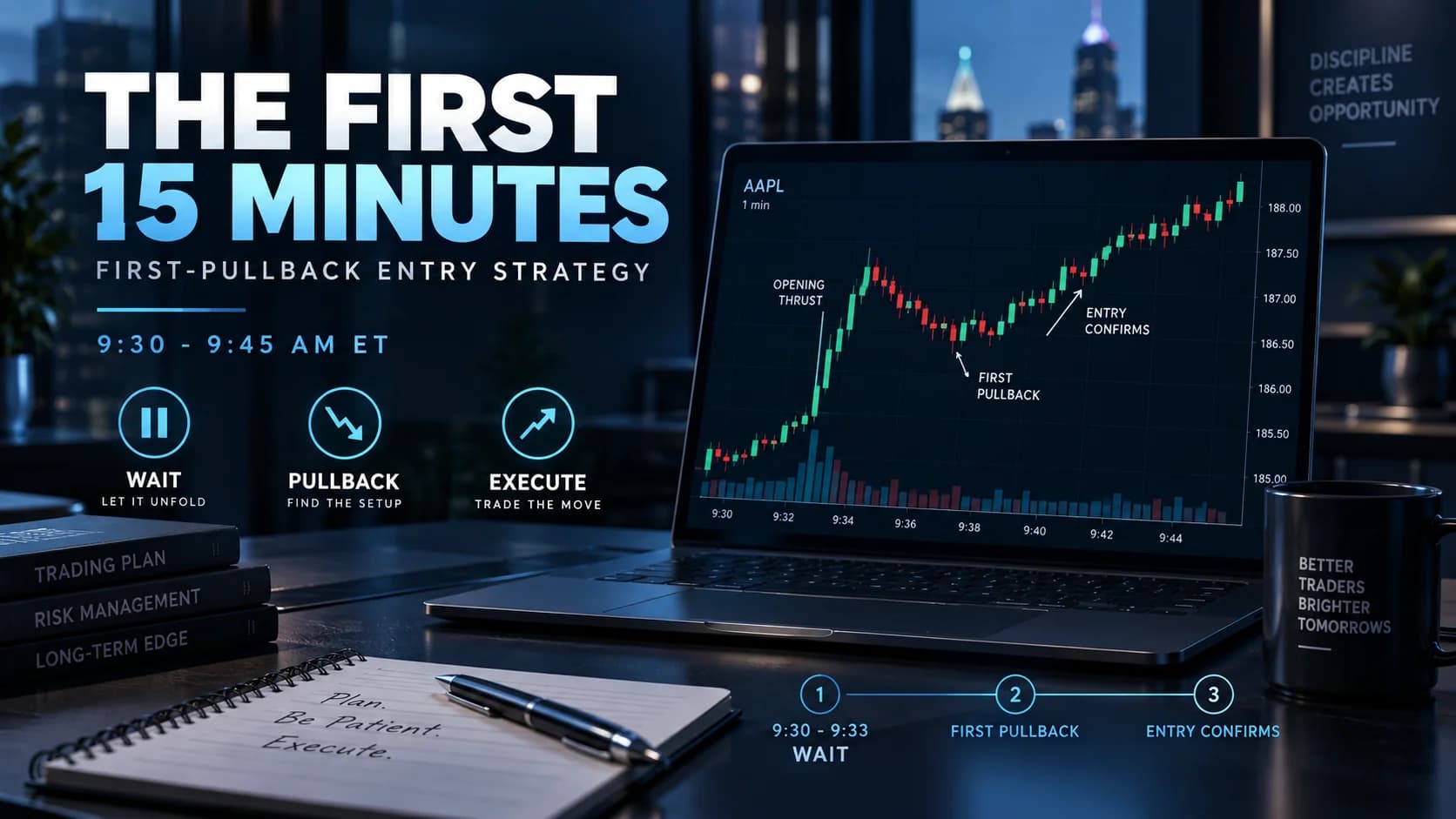
The Trader's Playbook: How to Day Trade the First 15 Minutes
The opening auction leaves an imbalance that takes a few minutes to resolve. This playbook covers what's structurally different about the first 15 minutes and the one pullback setup built around it.
Strategies
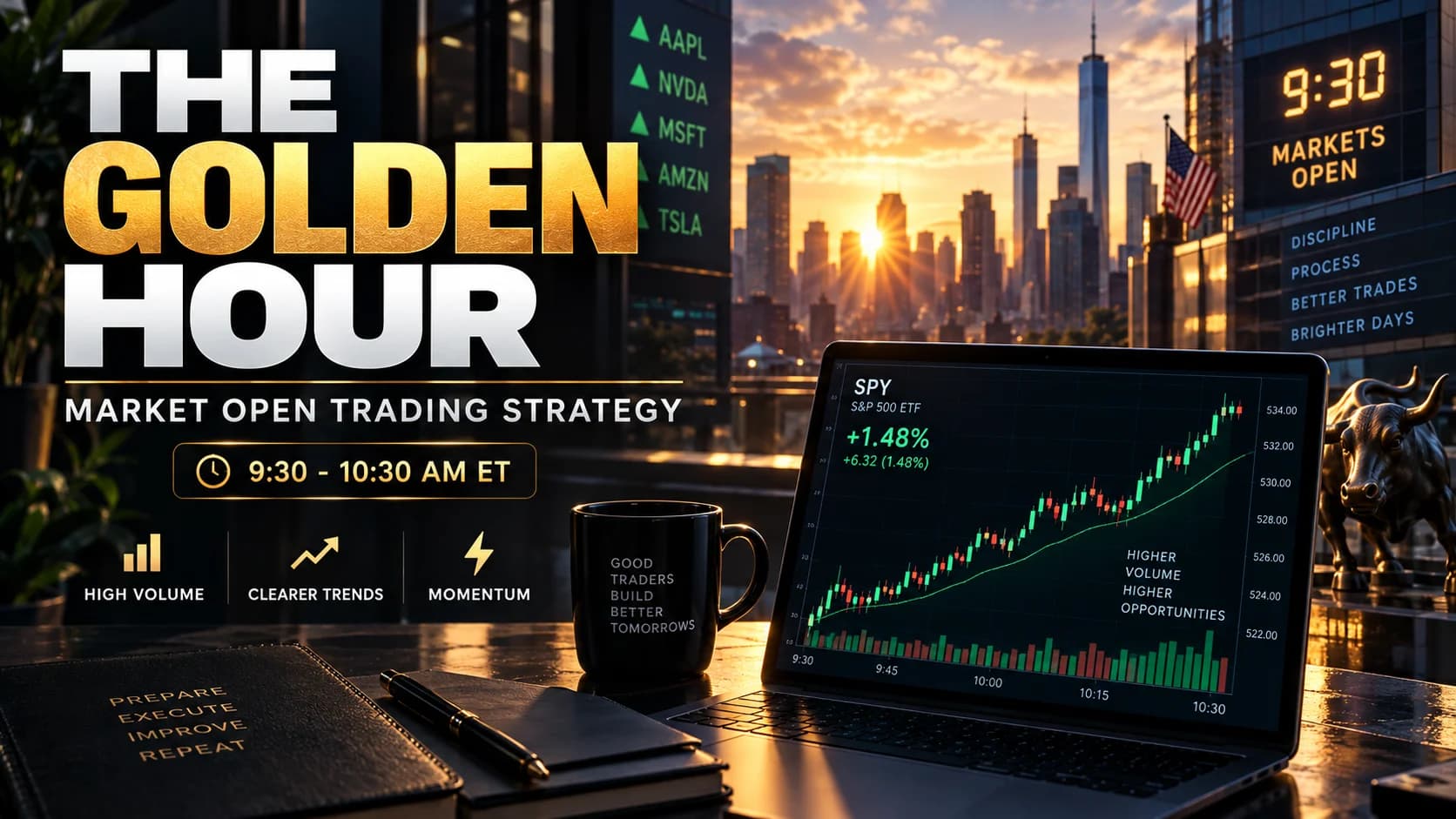
The Trader's Playbook: How to Day Trade the Market Open
Master DayTradingToolkit's "Golden Hour" framework for the first 60 minutes of trading, including the Opening Range Breakout setup, its failed-breakout mirror trade, and how to build a pre-market watchlist.
Market Analysis & Insights
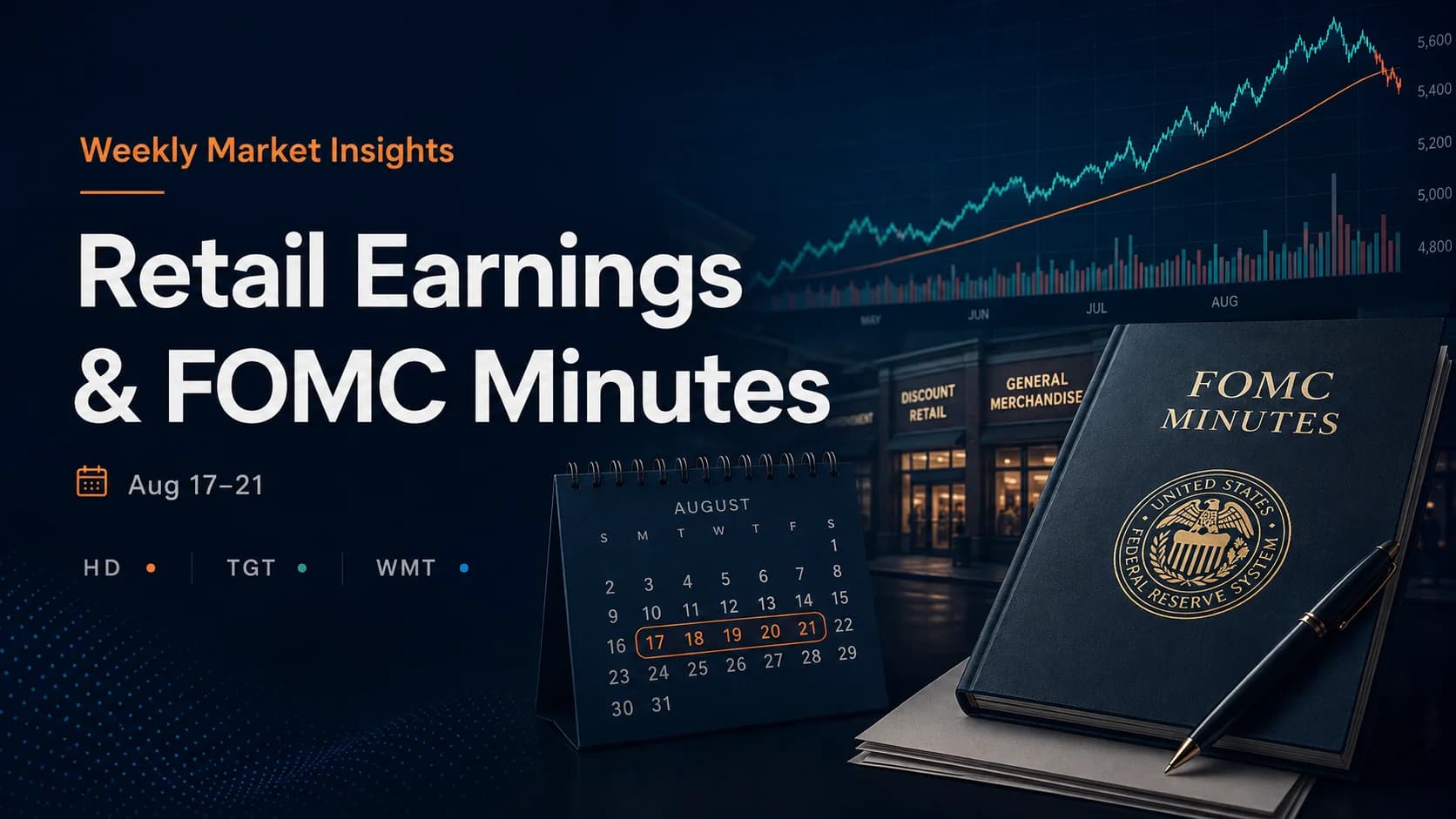
Calm Markets, Cracking Consumer: Weekly Market Insights, August 17-21
Records sit atop a divided Fed (9-3, most split since 2016), rising oil, and cracking consumer data. This week's five retail earnings, FOMC minutes, and an active Hormuz standoff will test whether the calm is justified.
Comments
No comments yet. Be the first to share your thoughts.