Day Trading Strategies: Finding the Right Approach for Your Trading Style

In this article13 sections
You've spent weeks studying candlesticks, memorizing patterns, watching YouTube videos of traders making it look effortless. Then you open your first real position—and freeze. Not because you don't know what a bull flag is, but because you have no idea which kind of trader you're trying to be. You've seen momentum traders crushing it at the open. You've watched scalpers fire off fifty trades before lunch. You've heard trend followers talk about patience like it's a religion. And the question eating at you is the one nobody answers well: which approach is actually right for me?
That question matters more than most traders realize. Research by Barber, Lee, Liu, and Odean (2014) tracked every single day trade on the Taiwan Stock Exchange over a fifteen-year period and found that fewer than 3% of active day traders earned consistently positive net returns. The failure rate isn't about bad strategies—it's about traders using the wrong strategy for their wiring, their schedule, and their capital. The strategy itself works. The match between trader and strategy is where accounts live or die.
This guide breaks down the six core day trading strategy types, explains what each demands from you as a trader, and gives you a practical framework for choosing the one that fits—before you waste months and thousands of dollars chasing the wrong approach.
What are day trading strategies? Day trading strategies are systematic approaches to buying and selling securities within a single trading session, each designed to exploit a specific type of price behavior—trending, ranging, breaking out, reverting, or reacting to news. The right strategy depends not on what's "best" but on what matches your personality, time availability, risk tolerance, and capital. Most traders fail not because they pick bad strategies, but because they pick strategies that conflict with their natural wiring.
The short version: There is no single best day trading strategy. There are six core approaches—trend following, momentum/breakout, mean reversion, scalping, reversal, and news/event-driven—each suited to different market conditions and trader personalities. The traders who survive long enough to profit are the ones who pick one approach that fits their temperament, master it over hundreds of trades, and resist the urge to switch when the inevitable losing streak hits.
The Six Core Day Trading Strategies (And What Each Demands From You)
Every day trading strategy you'll encounter—every YouTube video, every course, every guru's "secret method"—is a variation of one of these six core approaches. Understanding the category before you dive into the specifics saves you from the trap of learning a dozen setups that are all variations of the same idea.
Think of it like martial arts. There are thousands of techniques, but they all fall into a handful of fighting styles. You don't master every style simultaneously. You pick one, drill it until it's instinct, and then—maybe—add a second.
Here's what each strategy actually requires, not the marketing version.
Trend Following: Riding Momentum That Already Exists
Trend following is the most studied, most academically validated strategy category in trading history. The premise is almost boringly simple: identify a stock or market that's already moving in one direction, get on board, and stay on until the trend exhausts itself. You're not predicting. You're reacting to what the market is already doing.
What makes trend following deceptively hard is the patience it demands. Most of your time is spent waiting. Waiting for a trend to establish itself. Waiting through pullbacks that make you question whether the trend is over. Waiting for your stop to trigger rather than bailing early. A good trend following day might involve just one or two trades—sometimes zero—while you watch dozens of stocks move without you because they didn't meet your criteria.
When it works best: Directional market days where SPY or QQQ moves more than 0.75% in a single direction. Sector momentum days. Stocks gapping up on catalysts with high relative volume (2x or higher). The first one to two hours of trading tend to produce the cleanest trends.
Who it fits: Patient traders who can tolerate long stretches of boredom punctuated by occasional action. Analytical personalities who enjoy watching a thesis play out over minutes or hours. Traders who'd rather miss a move than chase one. If you've ever found yourself exiting a winner way too early because the candle ticked against you for thirty seconds, trend following will feel like torture until you train yourself to sit still.
Realistic expectations: Win rates in the 35-50% range are normal. This surprises people. The strategy works because average winners are significantly larger than average losers—typically 2:1 to 3:1 risk-to-reward or better. You'll lose more trades than you win and still make money over a large sample. That math only works if you let winners run, which is psychologically harder than it sounds.
Where to go deeper: Our Ultimate Trend Following Strategy Guide breaks down the exact entry triggers, moving average setups, and trade management rules we use. For the specific mechanics of using moving averages as your primary tool, see our Trend Following with Moving Averages deep dive.
Breakout Trading: Catching the Expansion Before Everyone Else
Breakout trading targets the moment a stock pushes through a defined level—a prior high, a consolidation range, a resistance zone—with enough force to suggest it's going to keep moving. Where trend followers join a move that's already running, breakout traders try to catch the ignition point itself.
The appeal is obvious. If you enter the moment price clears resistance and it works, you're in before the crowd. Your risk is tight—you can place your stop just below the breakout level—and your potential reward is the entire move that follows. In our experience, the best breakout trades happen when the stock has been consolidating tightly (small candles, declining volume) and then suddenly expands with a surge in volume. That volume confirmation is everything. Without it, you're buying a breakout that nobody else cares about—and that usually fails.
Here's what the YouTube gurus don't emphasize enough: breakout trading has a high failure rate per trade. Fakeouts are common. Price pushes through a level, triggers your entry, reverses immediately, and stops you out. Estimates vary, but roughly 40-60% of breakout attempts fail—the number varies by market conditions, but it's always high. The strategy still works because the winners that do run produce outsized returns. You need to be comfortable losing on more trades than you win.
When it works best: The first thirty to sixty minutes of the trading session. Stocks with catalysts (earnings gaps, news, sector momentum). High relative volume environments (3x or more). The worst time to trade breakouts is during the low-volume midday slump between 11:30 AM and 2:00 PM ET—fakeout rates climb and follow-through evaporates.
Who it fits: Action-oriented traders who like anticipation and quick decisions. You need fast reflexes—not just for entering, but for cutting losses immediately when a breakout fails. If you hesitate on entries or struggle to take losses, breakout trading will eat you alive. Conversely, if you're the type who thrives on watching a setup build and then pulling the trigger at the exact right moment, this is your arena.
Realistic expectations: Win rates of 35-45% with average winners of 2:1 to 4:1 R-multiples. Some of the highest-R trades in all of day trading come from breakouts—a stock clearing a tight range and running three, four, five times your initial risk. But for every one of those, you'll endure several stop-outs. Position sizing discipline is non-negotiable.
Where to go deeper: Our Breakout vs. Fakeout Strategy gives you a three-point checklist for separating real breakouts from traps. For the specific pattern mechanics of pullback entries after breakouts—which many traders prefer over buying the breakout itself—we've written a dedicated playbook.
Mean Reversion: Betting That Extremes Don't Last
Mean reversion is the contrarian's strategy. Where trend followers and breakout traders ride momentum, mean reversion traders bet against it. The core thesis: when a stock moves too far, too fast from its average price—measured by VWAP, moving averages, Bollinger Bands, or RSI extremes—it tends to snap back toward that average. You're trading the rubber band, not the trend.
This is actually the strategy that feels the most intuitive to many new traders, which is both its appeal and its danger. "Buying the dip" is mean reversion in casual language. The problem is that in strong trends, what looks like an overextension keeps extending. The stock that's "too far from VWAP" at 10:00 AM might be twice as far at 10:30. Mean reversion works beautifully in range-bound, choppy markets—and gets demolished in trending ones.
We've found that the cleanest mean reversion setups appear during the midday session (roughly 10:30 AM to 2:30 PM ET) when broad market momentum has faded and individual stocks oscillate around their VWAP. During the opening hour, when trends are strongest, mean reversion signals are traps more often than they're opportunities.
When it works best: Range-bound, low-trend days. Stocks oscillating around VWAP with no strong directional catalyst. The midday consolidation window. Markets where VIX is moderate (15-22 range)—enough movement to generate trades, but not enough to sustain relentless trends. High-VIX environments tend to destroy mean reversion because extremes get more extreme.
Who it fits: Contrarian thinkers who instinctively question the crowd. Traders who prefer higher win rates with smaller individual gains over lower win rates with big swings. If the idea of buying a stock that just dropped 3% in twenty minutes excites rather than terrifies you, and you have the discipline to take small profits without holding for a trend reversal that may never come, mean reversion could be your edge.
Realistic expectations: Win rates of 55-70%—significantly higher than trend following or breakout strategies. But the average winner is smaller, typically 0.5:1 to 1.5:1 R-multiple. Profitability comes from consistency and frequency, not home runs. The danger zone is holding losers too long, hoping for the reversion that doesn't come. A strict stop is even more critical here than in momentum strategies.
Where to go deeper: Our Range-Bound Trading Strategies guide covers the support and resistance mechanics that power mean reversion in practice. For understanding the market conditions that make or break this approach, our Market Regime Identification framework is essential reading.
Scalping: Small Gains, High Frequency, Maximum Intensity
Scalping pushes the intensity dial to maximum. You're making dozens—sometimes over a hundred—trades per session, holding each for seconds to a few minutes, targeting tiny price movements. A scalper might aim for just five to fifteen cents per share on each trade, relying on large position sizes and sheer volume to generate meaningful daily profits.
We'll be blunt: scalping is the most overhyped strategy in day trading education. It sounds exciting, it makes for great YouTube content, and it creates the illusion that more activity equals more profit. In reality, scalping has the thinnest margin for error of any strategy. Your profits are tiny per trade—which means commissions, slippage, and the bid-ask spread eat a larger percentage of each gain. One bad trade that you hold too long can wipe out twenty good ones.
The traders who do make scalping work tend to have years of screen time, exceptional execution speed, deep understanding of Level 2 order flow and time and sales data, and access to direct-access brokers with competitive per-share commission structures. If you're trading through a standard retail broker with a basic platform, the infrastructure alone puts you at a disadvantage.
When it works best: High-volume, high-volatility stocks during the first hour of trading. Stocks with tight bid-ask spreads (usually higher-priced, liquid names). Environments where order flow is readable—large resting orders on the book, predictable institutional behavior around key levels.
Who it fits: Traders with fast reflexes, extreme focus, and a high tolerance for repetitive activity. If you can maintain laser concentration for sixty to ninety minutes straight without your attention drifting, and you're wired for quick decisions rather than patient analysis, scalping might suit you. If you find yourself getting mentally fatigued after thirty minutes of active trading, it's probably not your style—and there's zero shame in that.
Realistic expectations: Win rates of 55-70% when executed properly. Average gains per trade are tiny—the accumulation is what matters. A good scalping day might produce dozens of small wins and a handful of small losses. A bad day happens when you let a loser run because you refuse to accept it's not working. That single mistake can erase a week of grinding.
Where to go deeper: Our Introduction to Scalping Techniques covers the Level 2, tape reading, and execution skills you'll need before attempting this approach with real capital.
Reversal Trading: Calling the Turn
Reversal trading is the most intellectually satisfying strategy—and the most dangerous. You're trying to identify the exact moment a trend changes direction. Buying the bottom of a selloff. Shorting the top of a rally. When it works, the entries are beautiful: you get in at the extreme, ride the entire move in the new direction, and the risk-to-reward ratio is extraordinary.
When it doesn't work—which is often—you're fighting a freight train.
The academic research on this is humbling. Markets trend more often than they reverse on an intraday basis, which means reversal traders are fighting base rates. Every pullback looks like a potential reversal. Every bounce looks like the bottom. The skill required to distinguish a genuine reversal from a pullback within an ongoing trend is something that takes hundreds of hours of screen time to develop, and even then, experienced reversal traders accept that they'll be wrong more often than they're right.
Research and trader accounts show traders develop a real edge with reversal setups, but they share one trait: they wait for multiple confirming signals. Not just a candlestick pattern—but a candlestick pattern at a defined support or resistance level, with RSI or MACD divergence, on declining momentum volume. The more confirmations required, the fewer trades you take—and the higher the probability of each one.
When it works best: After extended intraday moves that have pushed a stock far from its opening price. Near significant technical levels (prior day high/low, round numbers, VWAP). When volume is declining into the extreme—a sign that the move is losing steam. Reversal trading is particularly dangerous during the first thirty minutes of the session when opening momentum can sustain irrational moves.
Who it fits: Experienced, patient, contrarian traders who are comfortable being wrong frequently and can size their positions accordingly. This is not a beginner strategy—the pattern recognition required takes significant screen time to develop. If you're drawn to the idea of buying when everyone is selling, and you have the discipline to keep your risk tiny on each attempt, reversal trading may become a powerful tool in your arsenal. Eventually.
Realistic expectations: Win rates of 30-40% with outstanding winners of 3:1 to 5:1 R-multiples when you catch a genuine turn. The challenge is surviving the losing streaks—three, four, five failed reversal attempts in a row is normal. Position sizing must be conservative enough to absorb these runs without crippling your account.
Where to go deeper: Our Reversal Trading Playbook covers the multi-confirmation approach we recommend, including divergence patterns and volume analysis. For the specific pattern recognition skills needed, our guide on spotting market reversals is essential prerequisite reading.
News and Event-Driven Trading: Reacting to Catalysts
News trading is less a "strategy" in the traditional sense and more a specialized skill set built around reaction speed and event preparation. You're trading the market's response to earnings releases, economic data (CPI, FOMC decisions, jobs reports), FDA announcements, geopolitical events, or any catalyst that moves price sharply.
The attraction is obvious: news events produce the biggest intraday moves. A stock gapping 15% on earnings. The entire market swinging 2% in twenty minutes after a Fed announcement. These moves create enormous opportunity—and equally enormous risk. The spread widens. Liquidity dries up. Orders fill at prices you didn't expect. Algorithmic traders who process information in microseconds have already moved the market before your finger hits the buy button.
Research and trader accounts show the evolution of news trading over the years, and here's what we'll say: the edge for retail traders in pure news reaction is smaller than it's ever been. Algorithmic trading firms parse headlines and economic data releases faster than any human can read. Where retail news traders can still find an edge is in preparation—knowing what outcomes the market expects, positioning before the event where appropriate, and having a plan for multiple scenarios rather than reacting on the fly.
When it works best: Scheduled economic releases where you can prepare in advance. Earnings season. Sector-specific catalysts where you have deeper understanding than the algo crowd. Pre-market and after-hours trading when news breaks and institutional algos are less active.
Who it fits: Planners and researchers who enjoy building contingency frameworks. You need to be comfortable with ambiguity—the market might react the opposite of what you expect, and you need a plan for that too. High stress tolerance is mandatory. If you've ever watched a stock gap 8% against your position in two seconds and had the composure to execute your stop calmly, you might be wired for this. If that scenario makes your palms sweat just reading it, steer clear.
Realistic expectations: Highly variable. Some news trades produce massive winners. Others produce whipsaw losses that stop you out in both directions. The win rate and risk-to-reward ratio depend entirely on your preparation and the specific event. Many experienced news traders limit themselves to two or three high-confidence events per month rather than trading every headline.
Where to go deeper: Our Trading News and Events guide covers the structural disadvantages retail traders face and the specific scenarios where careful preparation can still create an edge.
How to Choose a Strategy That Actually Fits You
This is where most traders get it wrong. They pick the strategy that sounds most exciting, or the one that their favorite YouTube trader uses, or the one they saw produce the biggest gain in a single trade. Excitement isn't a selection criterion. Neither is someone else's results.
Here's the framework we recommend. It's not glamorous, but it works.
Step 1: Audit your personality honestly. Not who you want to be—who you actually are. Are you patient or restless? Do you prefer frequent small wins or infrequent large ones? Can you handle being wrong on six out of ten trades if the math still works? Are you naturally contrarian or do you prefer going with the flow? The mismatch between personality and strategy—not the strategy itself—is the single biggest predictor of failure. Trading psychologist Van K. Tharp's research has shown consistently that personality type correlates more strongly with strategy success than technical knowledge does.
Step 2: Audit your schedule and lifestyle. Scalping requires unbroken focus for sixty to ninety minutes minimum. Trend following can work with looser monitoring once a position is entered. News trading demands preparation time before events and availability during specific calendar windows. If you're trading around a full-time job, strategies requiring constant screen time during market hours are setting you up for failure before you take a single trade.
Step 3: Audit your capital. This determines position sizing, which determines which strategies are viable. A trader with a smaller account can still execute trend following, breakout, and reversal strategies effectively with tight risk management. Scalping on a small account is almost impossible—the transaction costs relative to the tiny per-trade gains are a death sentence. If you need help building a trading plan that accounts for your capital reality, we've written a template specifically for this.
Step 4: Paper trade one strategy for a minimum of fifty trades. Not three. Not ten. Fifty. You cannot evaluate any strategy on fewer than fifty trades—the sample size is too small to separate signal from noise. Track every trade. Record your emotional state. After fifty trades, you'll have data—not opinions—about whether this strategy works for you.
The framework above works. What doesn't work is the most common thing traders actually do.
The Strategy Hopping Trap (And Why It Destroys More Accounts Than Any Single Bad Trade)
We need to talk about this directly because it's the #1 pattern we see in struggling traders, and it's more destructive than any single losing trade.
Here's how it goes: You learn a breakout strategy. You practice it for a week or two. You hit a losing streak—three stops in a row, maybe four. You decide the strategy "doesn't work" and switch to mean reversion. That goes well for a few days, then you catch a trending day and get run over. So you try scalping. Then trend following. Then reversal trading. Each switch feels like progress—you're "learning" and "expanding your toolkit." In reality, you're never giving any single approach enough time to prove itself.
The math is ruthless: every strategy has drawdown periods. Trend following struggles in choppy, range-bound markets. Mean reversion gets destroyed in strong trends. Breakout trading suffers in low-volatility environments. If you switch strategies every time you hit a rough patch, you'll always be switching from whatever just stopped working to whatever just started working—and arriving just in time for that strategy's rough patch. It's a treadmill.
The traders who make it pick one approach, commit to it for a minimum of three months and a hundred trades, and only then evaluate whether the strategy is genuinely unsuitable or whether they simply haven't given it enough time.
The Tools That Make Strategy Execution Possible
A strategy without the right tools is a plan without resources. Every approach above requires some combination of real-time market data, charting, scanning, and trade journaling. The specific tools matter less than having the capability—but some capabilities are non-negotiable.
A real-time stock scanner is arguably the single most important tool for any active day trader. You can be the best breakout trader in the world, but if you can't find the stocks that are actually breaking out right now, your skill is useless. DayTradingToolkit's primary scanner is Trade Ideas—after testing every major platform, nothing matches it for the combination of real-time scanning power, AI-powered alert generation through Holly, and the depth of filter customization (over 500 criteria). Whether you're scanning for momentum candidates, pre-market gap-ups, or high relative volume names, the scanner is what turns strategy knowledge into actionable trade opportunities.
Beyond scanning, you need charting, journaling, and potentially Level 2 data depending on your strategy. For a complete walkthrough of the tools we recommend across every strategy type—including both free and premium options—visit our Day Trading Toolkit hub page.
Matching Strategies to Market Conditions
Here's something that separates experienced traders from beginners: the best traders don't use the same strategy every day. They identify the market regime first, then choose the approach that fits those conditions.
Our Market Regime Identification framework goes deep on this, but the concept in brief: markets cycle between trending, range-bound, high-volatility, and low-volatility environments. Some days are strong trend days where SPY grinds higher from open to close—those favor trend following and breakout strategies. Other days are choppy, directionless consolidation days—those favor mean reversion and scalping. Event days (FOMC, CPI, earnings season) favor news-driven approaches or sitting on the sidelines entirely.
The best approach for most traders is to master one primary strategy and one secondary strategy. Your primary handles the market condition that appears most frequently. Your secondary covers the opposite condition. Between two well-chosen strategies, you can handle roughly 70-80% of trading days. The remaining 20-30% where neither strategy fits? Those are "no trade" days—and sitting out when conditions don't favor you is itself a strategy.
The Real Key: Committing to the Process
We've laid out six strategy categories, a selection framework, and the tools to execute. But the honest truth—the part that most trading educators gloss over because it doesn't sell courses—is that the strategy you pick matters far less than your willingness to commit to it through the inevitable rough patches.
The Barber and Odean research we referenced earlier found something remarkable: among the small percentage of consistently profitable day traders, there was no single dominant strategy. Some were trend followers. Some were mean reversion specialists. Some were breakout traders. What they shared wasn't a strategy—it was discipline, consistent execution, and the willingness to stick with an approach long enough for the edge to play out over hundreds of trades.
Pick the strategy that fits your personality. Commit to it. Track your trades ruthlessly. Adjust when the data tells you to—not when your emotions do. That's the entire game.
Frequently Asked Questions
What Is the Best Day Trading Strategy for Beginners?
New traders benefit from strategies that provide clear, objective signals—a stock breaking above yesterday's high, a moving average crossover, a gap-up with high relative volume. These are visually identifiable setups that don't require the split-second judgment of scalping or the counterintuitive thinking of mean reversion. Start with one of these two approaches, paper trade it for at least fifty trades, and build your foundation before branching out.
Key Takeaway: Simplicity and clarity beat sophistication for new traders. Master one directional strategy before attempting contrarian approaches.
What Win Rate Do I Need for a Day Trading Strategy to Be Profitable?
A strategy winning 35% of the time is profitable if average winners are three times larger than average losers. A strategy winning 70% of the time loses money if winners are one-third the size of losers. Calculate your expectancy with this formula: (Win Rate × Average Win) – (Loss Rate × Average Loss). If the number is positive, the strategy has a mathematical edge. The minimum sample size for meaningful evaluation is fifty trades—anything fewer is statistical noise.
Key Takeaway: Focus on expectancy across a large sample, not win rate in isolation. A low win rate with large winners often outperforms a high win rate with tiny ones.
How Long Should I Paper Trade Before Using a Strategy With Real Money?
Fifty trades is the minimum sample to evaluate whether a strategy works for you. Some traders need more. The transition to real money should be gradual: start with position sizes roughly one-quarter of your intended size. The psychological shift from simulated to real capital is significant—paper trading can't replicate the emotional intensity of risking actual money, so smaller size cushions that transition.
Key Takeaway: Patience during the paper-to-live transition saves capital. Rushing to full size with real money is one of the most common and costly mistakes new traders make.
Can I Trade Multiple Strategies at the Same Time?
Professional traders often run two or three strategies simultaneously, switching based on market conditions. But they built to that point over years. Adding strategies too early creates confusion, inconsistency, and worse—the illusion of progress when you're actually just strategy hopping. A useful guideline: don't add a second strategy until you've been consistently profitable with your first for at least three to six months.
Key Takeaway: Depth beats breadth in strategy development. One well-executed strategy outperforms three poorly-executed ones every time.
How Do I Know When a Strategy Isn't Working Versus When I'm in a Normal Drawdown?
This is one of the hardest judgment calls in trading. Every strategy endures losing streaks—that's statistical reality. The question is whether the underlying metrics have changed. Compare your recent fifty trades to your historical baseline. If win rate, average win size, and average loss size are still within their normal range, you're likely in a drawdown that the strategy will recover from. If one or more metrics have shifted significantly, the market conditions may have changed in a way that requires strategy adaptation.
Key Takeaway: Data, not emotion, should drive the decision to stick with or modify a strategy. Fifty-trade rolling windows are more reliable than how you feel on any given day.
Is Scalping More Profitable Than Trend Following?
Scalping's higher win rate appeals to traders who need frequent reinforcement. Trend following's larger individual winners appeal to traders who can tolerate long stretches of inactivity. The profitability of either depends on execution quality, transaction costs, and whether the trader's personality sustains disciplined execution over thousands of trades. Scalping's thin margins make it particularly sensitive to commissions and spreads—a disadvantage that trend following doesn't share.
Key Takeaway: The most profitable strategy for you is the one you can execute consistently without emotional interference, regardless of its theoretical return profile.
How Does Market Volatility Affect Which Strategy I Should Use?
Volatility is the single biggest environmental variable that determines strategy effectiveness. In high-VIX environments, trends are stronger and breakouts follow through more reliably—but stops need to be wider, which affects position sizing. In low-VIX environments, stocks tend to oscillate around their averages, creating ideal conditions for mean reversion. The ability to read the volatility regime and adjust your approach is what separates good traders from great ones.
Key Takeaway: Check market volatility before the session starts and align your strategy accordingly. Our Market Regime Identification guide provides a practical framework for this daily assessment.
Do Day Trading Strategies Work on Futures, Options, and Forex, or Just Stocks?
Futures (/ES, /NQ) offer leverage and extended hours but require strict risk management due to contract sizing. Options add complexity through time decay and implied volatility. Forex provides 24-hour access and high liquidity but different volatility profiles. The underlying strategies translate—a breakout on /ES follows the same principles as a breakout on a stock—but the mechanics of entries, stops, and position sizing must be adapted to each instrument's characteristics.
Key Takeaway: Master strategy concepts on one asset class first, then adapt the principles to other instruments once you have a profitable foundation.
Why Do Most Day Traders Lose Money If These Strategies Work?
Research spanning decades—from Barber and Odean (2000) through the Brazilian FGV study of futures traders—consistently shows that 70-95% of day traders lose money over multi-year measurement periods. But these studies also show that a small, persistent minority profits consistently. The differentiator is rarely the strategy itself. It's risk management discipline, emotional control during drawdowns, adequate capitalization, and the patience to let an edge play out over hundreds of trades rather than evaluating based on a handful.
Key Takeaway: If you find yourself repeatedly abandoning strategies that have a proven mathematical edge, the problem is likely execution discipline, not the strategy. Consider reviewing your trading psychology alongside your trading plan.
Article Sources
- Barber, B.M., Lee, Y.T., Liu, Y.J., & Odean, T. (2014). "The Cross-Section of Speculator Skill: Evidence from Day Trading." Journal of Financial Markets, 18, 1-24. — UC Berkeley Faculty Page
- Barber, B.M. & Odean, T. (2000). "Trading Is Hazardous to Your Wealth: The Common Stock Investment Performance of Individual Investors." The Journal of Finance, 55(2), 773-806. — JSTOR
- Tharp, V.K. (2006). Trade Your Way to Financial Freedom. McGraw-Hill. — Publisher Page
- U.S. Securities and Exchange Commission — Investor Education: Day Trading. — SEC.gov
- FINRA — Rules and Guidance on Day Trading Requirements. — FINRA.org
- Bulkowski, T. (2021). Encyclopedia of Chart Patterns (3rd ed.). Wiley. — Publisher Page
Disclaimer
The trading strategies discussed in this article are presented for educational purposes only and do not constitute financial advice. Day trading involves substantial financial risk—academic research consistently shows that the majority of day traders lose money over time. No strategy guarantees profits, and past performance of any approach is not indicative of future results. Strategy selection should account for your individual risk tolerance, financial situation, and experience level. Never risk capital you cannot afford to lose.
For our complete disclaimer, please visit: https://daytradingtoolkit.com/disclaimer
Was this helpful?
Be the first to weigh in

Written by
Kazi Mezanur RahmanFounder, independent researcher, and editor of DayTradingToolkit. A one-person publication focused on risk-first trading education and documented tool research. He trades his own capital as a retail trader and combines personal market experience with systematic primary-source research.
Keep Reading
Strategies
How to Identify the Market Regime: A Strategy for Choosing Your System
Learn to identify the market regime with our simple 2-question framework. Choose the right trading strategy for any market condition (bull, bear, volatile, or quiet).
Strategies
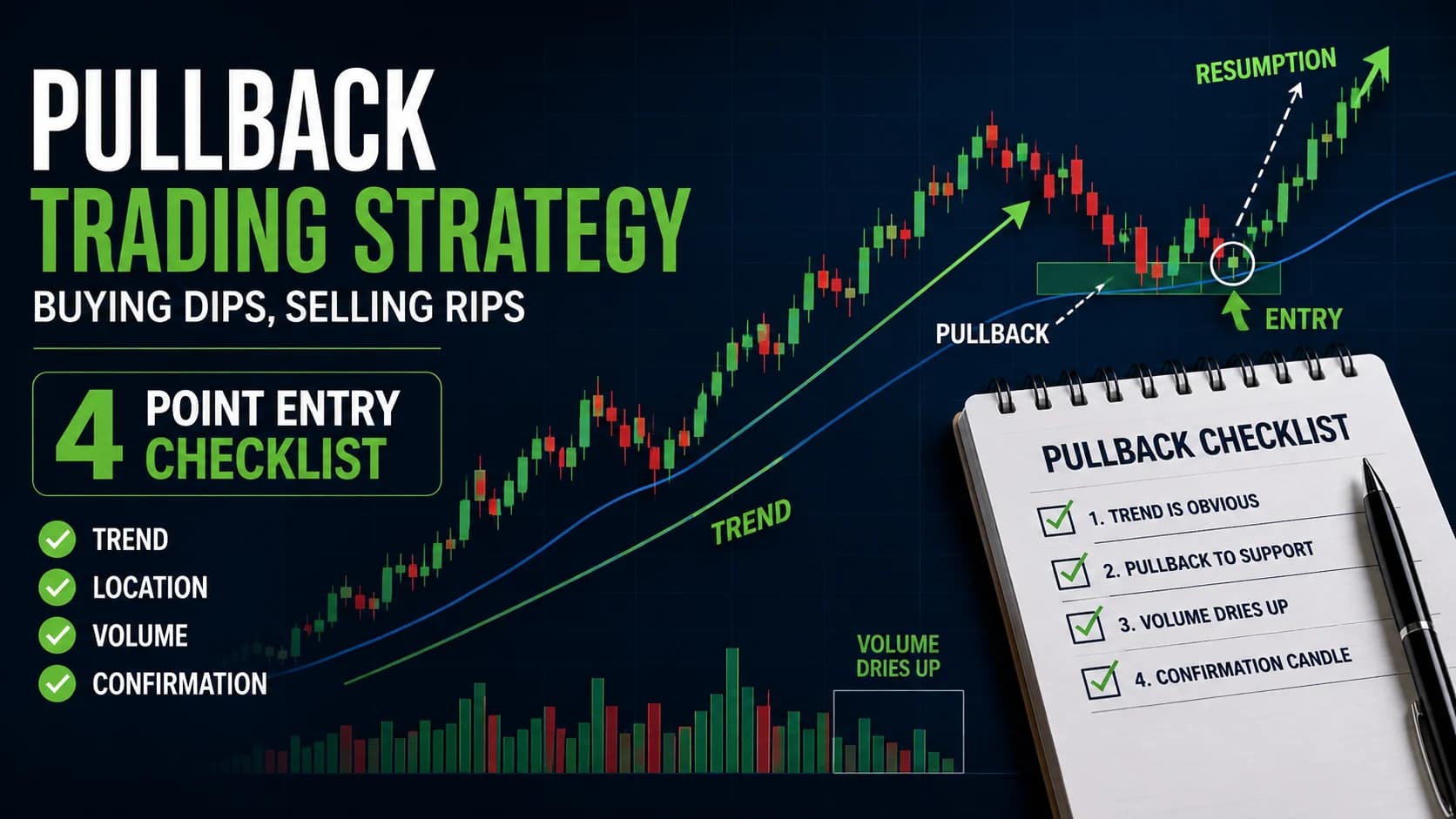
The Pullback Trading Strategy: A Pro Guide to Buying Dips & Selling Rips
A 4-point mechanical checklist for the pullback trading strategy: trend, location, volume, and confirmation — with exact entry, stop, and target rules for buying dips and selling rips.
Strategies
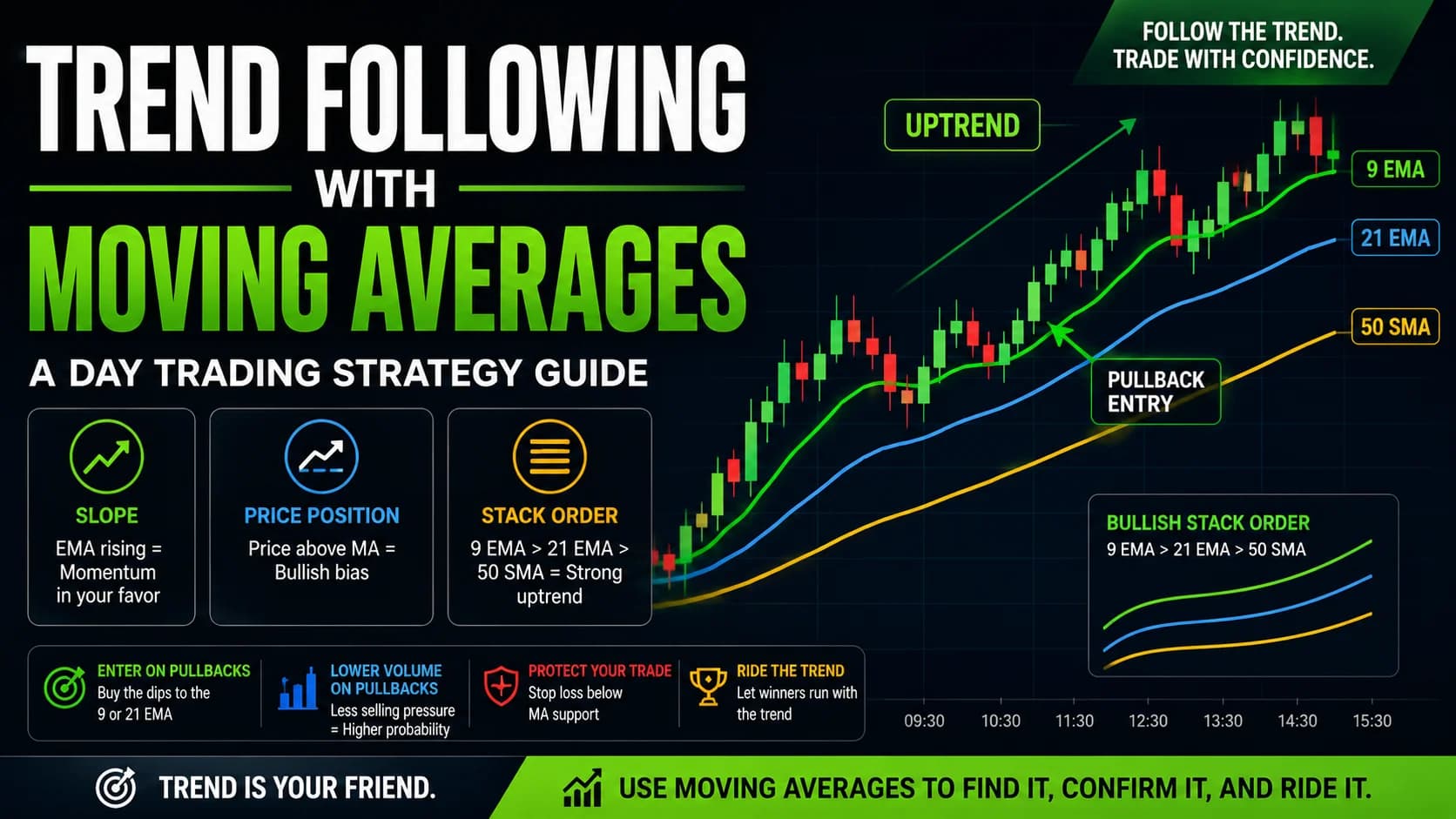
Riding the Wave: A Deep Dive into Trend Following with Moving Averages
Stop trading MA crossovers. Learn the three MA signals that actually work — slope, price position, and stack order — plus the full setup spec for 9/21 EMA trend trading.
Strategies
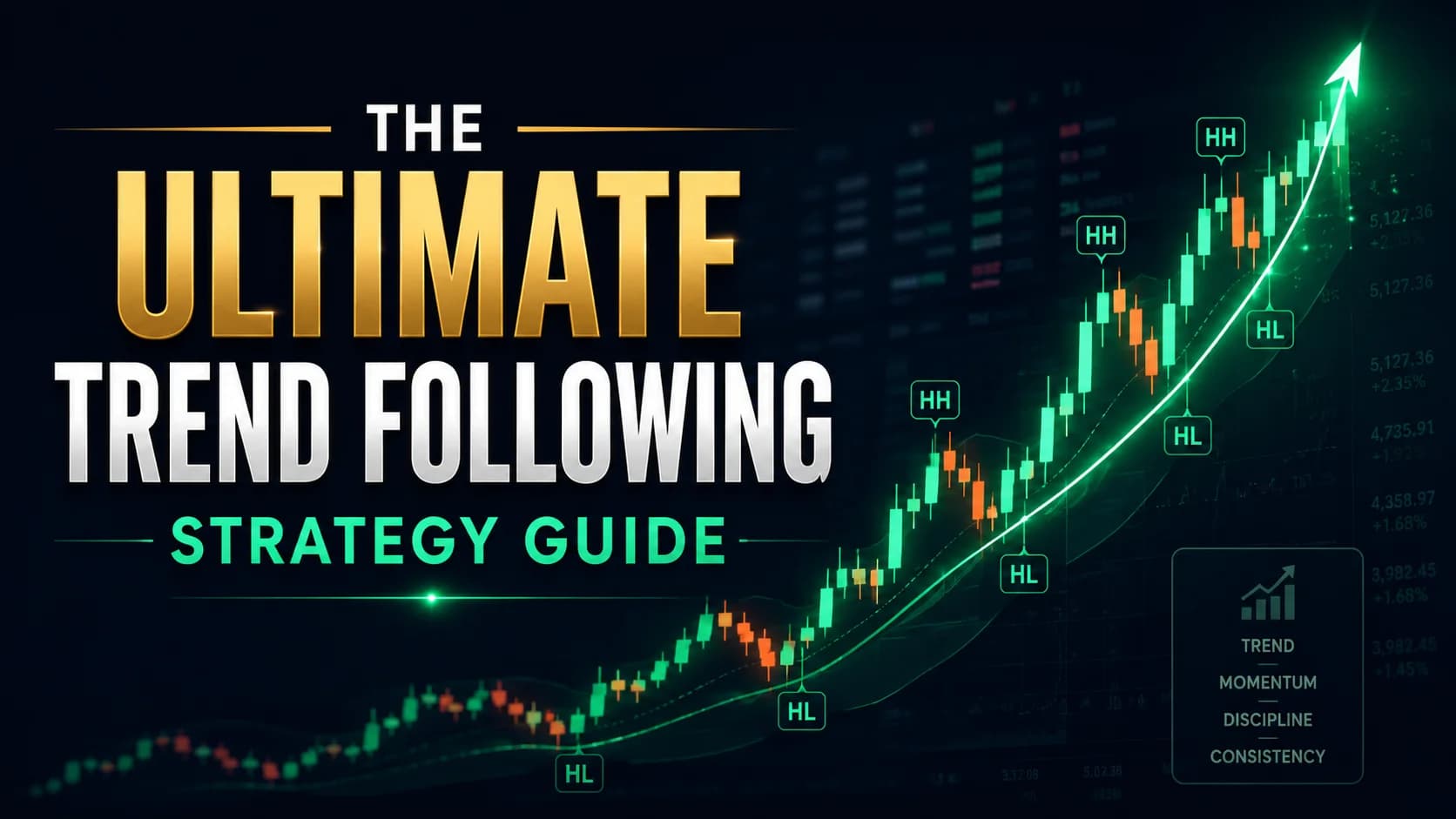
The Ultimate Trend Following Strategy Guide
Learn DayTradingToolkit's 5-step trend following strategy. This ultimate guide provides a complete system for riding trends with confidence and maximizing profits.
Comments
No comments yet. Be the first to share your thoughts.