
You've probably been there. You find a strategy that backtests beautifully, but the moment you try to trade it live, something goes sideways. You hesitate on the entry. You override the stop. You skip a signal because "the market feels wrong." And then — because markets love irony — the trade you skipped runs exactly where it was supposed to.
The problem isn't always the strategy. Sometimes the problem is the operating system running it.
Every trader, whether they know it or not, falls somewhere on a spectrum between pure human judgment and pure rule-following. And where you fall on that spectrum determines how you generate signals, manage trades, handle losses, and ultimately — whether you survive long enough to become profitable. Research and trader accounts show hundreds of traders struggle not because they lacked a good setup, but because they were trying to trade in a style that fought against the way their brain actually works.
This is the most underrated decision in trading. Not which strategy to use, but how to use it. Let's unpack the three distinct styles, where they overlap, where they break down, and — most importantly — which one actually fits you.
What are discretionary, systematic, and mechanical trading styles? Discretionary trading relies on a trader's real-time judgment, experience, and interpretation to make entry, exit, and sizing decisions within a flexible framework. Systematic trading uses a defined set of rules to generate trade signals but allows human oversight for filtering or context. Mechanical trading follows a fully codified rule set with zero human override — if the rules say trade, you trade. These three styles form a spectrum from maximum human input to maximum automation, and most profitable day traders eventually settle somewhere in the middle.
The Three Styles Nobody Defines Properly
Here's the core confusion: most trading content lumps "systematic" and "mechanical" together as if they're the same thing. They aren't. And treating them as interchangeable creates real problems when you're trying to build a process that works.
Discretionary trading puts the human at the center. You study the chart, read the tape, assess the context, and make a judgment call. You have guidelines — maybe you only trade stocks above a certain VolumeVolume is the total number of shares (or contracts) traded during a given time period — it's the primary confirmation tool for all price action, because a price move accompanied by high volume indicates genuine market participation, while tRead definition →, or you only take longs when the market's trending — but the final decision is always yours. Every trade is a judgment call filtered through experience, pattern recognition, and yes, gut instinct.
Systematic trading sits in the middle of the spectrum. You've codified your setup into clear rules — specific entry conditions, defined stops, predetermined targets. But you retain a human filter. You might skip a valid signal because you recognize a news CatalystA catalyst is the specific event or news item that triggers unusual price movement in a stock — earnings reports, FDA decisions, analyst upgrades, acquisition announcements, product launches, and short squeeze setups are all catalysts. WithRead definition → that the rules can't account for. You might sit out the first hour on a Fed day even though your scanner is screaming. The system generates the signals. You decide whether to act.
Mechanical trading strips out human discretion entirely. If the conditions are met, the trade is taken. Period. No override, no "this one feels different," no skipping. Whether a human clicks the button or an algorithm fires the order, the defining feature is the same: the rules are the rules, and your job is execution, not interpretation.
The differences sound subtle in a paragraph. In practice, they change everything — from how you handle losing streaks to how you spend your mornings.
Why This Choice Matters More Than Your Strategy
We'll say something that might sound extreme: a mediocre strategy traded in the right style will outperform a great strategy traded in the wrong style. And here's why.
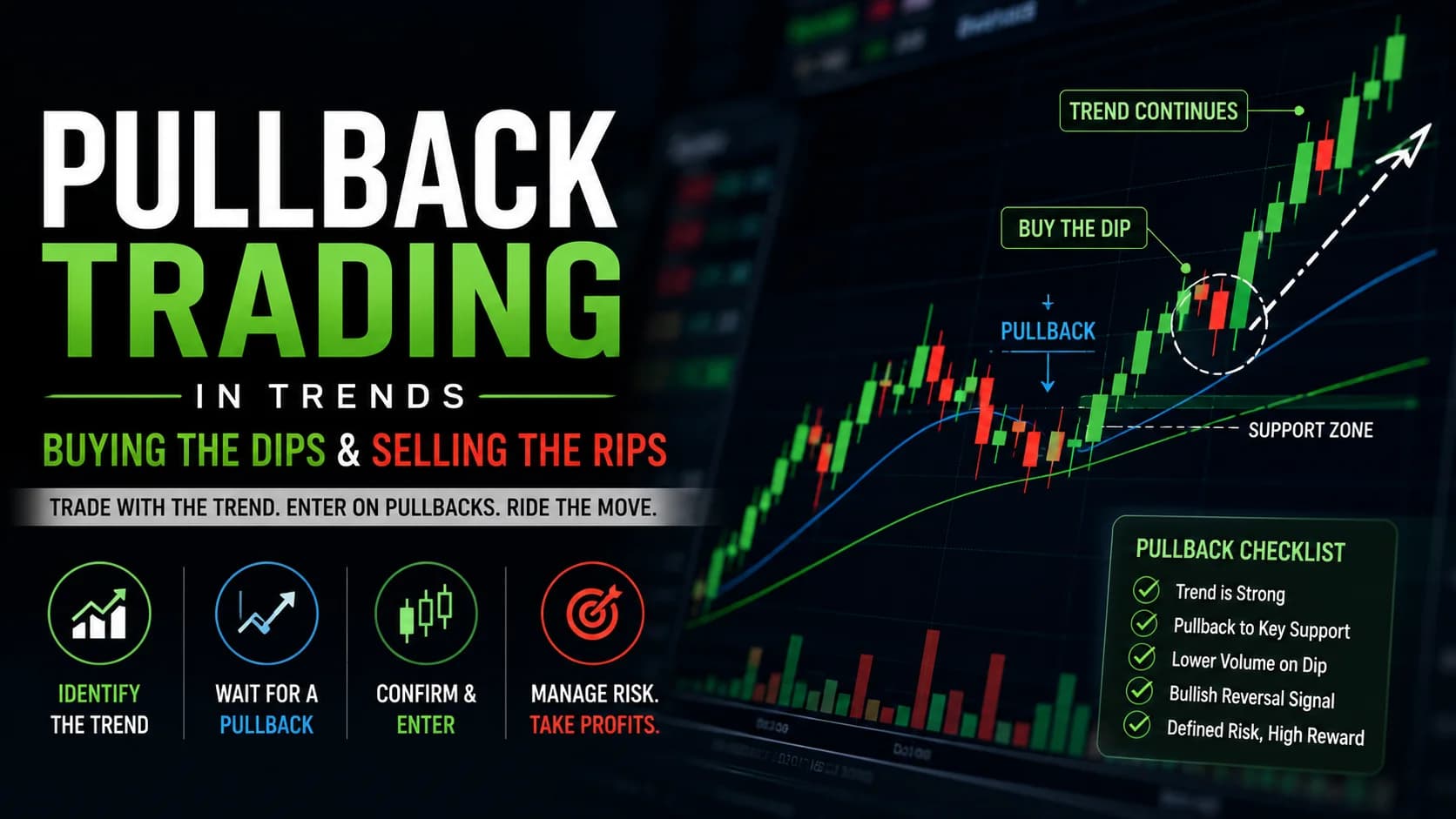
Strategy and style interact constantly. A pullback trading strategy requires specific skills depending on how you implement it. Discretionary PullbackA pullback is a temporary counter-trend price movement within an established trend — in an uptrend, a pullback is a short-term decline that offers a lower-risk entry point before the trend resumes, as opposed to a reversal which signals theRead definition → trading demands you read price action in real time, interpret volume surges, and gauge whether the pullback has "character." Mechanical pullback trading requires you to define pullback depth numerically — say, a 38.2% Fibonacci RetracementFibonacci retracement levels are horizontal lines drawn at key ratios (23.6%, 38.2%, 50%, 61.8%, 78.6%) between a significant swing high and low — traders use these zones to identify where pullbacks within a trend may find support or resistRead definition → with RVOL above 2.0 — and execute regardless of what the chart "feels like."
Same strategy. Completely different cognitive demands.
Research backs this up. A 2017 study by Harvey, Rattray, Sinclair, and van Hemert from Duke University and AQR Capital Management found that after adjusting for volatility and risk factor exposures, systematic and discretionary hedge fund managers produced statistically similar performance over an 18-year window. Neither style was inherently superior. The difference wasn't which style — it was whether the manager was trading a style that matched their operational capabilities and psychological tolerances.
The same principle applies at the retail level. Research and trader accounts show traders with incredible market intuition fail miserably with mechanical systems because they couldn't resist overriding their own rules. And research and trader accounts show analytically gifted traders blow up discretionary accounts because they couldn't handle the emotional weight of making judgment calls under pressure. The strategy wasn't the problem. The style mismatch was.
The Discretionary Trader: Decision Maker in the Hot Seat
Discretionary trading is the most natural starting point for most retail day traders. You look at a chart, you see a pattern, you make a call. It's how humans have traded since the first stock exchange opened.
The appeal is obvious: flexibility. A discretionary trader can recognize that a textbook Bull FlagA bull flag is a continuation pattern where a stock pauses in a tight, slightly downward channel after a sharp move higher — it's called a flag because on a chart it looks like a flag mounted on a pole.Read definition → on a biotech stock means something entirely different the morning after an FDA rejection. Context matters, and discretionary traders are context machines. When a stock gaps up $3 on earnings and opens at $48.50 near prior resistance, the discretionary trader notices the sluggish volume, the wide bid-ask spread on Level 2, the sector ETF trending lower — and decides to wait. A mechanical system might fire the long immediately.
But the trap is equally obvious. Flexibility is a euphemism for inconsistency if you lack discipline. Research by Barber, Lee, Liu, and Odean has consistently documented that active individual traders underperform on aggregate, and a significant portion of that underperformance traces back to exactly the discretionary pitfalls you'd expect: overtrading, the disposition effect (holding losers, cutting winners), and overconfidence after winning streaks.
There's also a psychological cost most beginners underestimate. Every discretionary trade carries cognitive load. You aren't just risking money — you're risking being wrong. Your ego is on the line with every entry. That psychological weight compounds through the day, through the week, through months of trading. Decision fatigue isn't a theory. It's the reason your worst trades cluster in the afternoon.
Who thrives here: Experienced traders with strong emotional awareness, deep screen time (thousands of hours minimum), and the ability to honestly assess their own biases. If you can't journal honestly about your cognitive biases, discretionary trading will eat you alive.
Who struggles: Beginners, anyone prone to revenge trading, traders who can't separate analysis from emotion, and anyone who hasn't invested the hundreds of hours of screen time required to develop genuine pattern recognition — as opposed to the illusion of pattern recognition, which feels identical from the inside.
The Systematic Trader: Rules With a Human Safety Net
Systematic trading is the middle ground, and — we'll just say it — it's where most successful retail day traders eventually land.
The systematic approach starts with what mechanical trading demands: codified rules. You define your setup in specific, repeatable terms. Maybe it's a gap-up stock with RVOL above 3.0, priced between $5 and $50, with a float under 20 million shares, consolidating within 5% of the pre-market high after 9:45 AM ET. That's a systematic setup. It's scannable. It's specific. It produces a finite list of candidates.
But here's where systematic diverges from mechanical: you retain veto power. You run the scan, see three candidates, and choose the one with the cleanest consolidation. You notice one of them has earnings in two hours and skip it. You see that the overall market is selling off hard and decide to reduce your position size by half. The system generates the universe of trades. Your judgment selects from that universe and manages the execution context.
This is what the research community calls "structured discretion," and there's growing evidence it may be the optimal approach for retail traders specifically. A study published via QuantPedia examined what happens when you give a discretionary trader a systematic trading strategy and allow them to override signals based on market context. The result was that combined performance exceeded either pure approach — the systematic component provided discipline and identified opportunities consistently, while the discretionary judgment recognized when conditions made certain setups less attractive.
The practical benefit is risk management through redundancy. Your system catches what your eyes miss (the scan finds a stock you'd never have noticed). Your brain catches what your system can't model (a Twitter-driven short squeeze that's going to blow through every technical level). Neither is perfect alone. Together, they cover each other's blind spots.
Where systematic traders run into trouble: The veto power is a double-edged sword. If you veto too many signals, you're just a discretionary trader pretending to have a system. Research and trader accounts show traders build elaborate scanners and rule sets only to override 80% of the signals because "this one doesn't look right." At that point, the system is decorative. If you're vetoing more than 20-30% of qualified signals, something in your rule set needs fixing — or you need to admit you're discretionary and own it.
The Mechanical Trader: The Machine That Doesn't Flinch
Mechanical trading is the purest form of rules-based execution. If conditions A, B, and C are met, you enter the trade. If condition D is met, you exit. Your opinion about the trade is irrelevant. Your feelings about the market are irrelevant. The only question is: did the conditions fire?
There's something almost meditative about mechanical trading when it's working. You stop fighting with yourself. You stop agonizing over entries. The emotional load drops dramatically because you've externalized the decision. Research on what psychologists call "algorithm aversion" — a concept introduced by Dietvorst, Simmons, and Massey at Wharton — shows that humans are psychologically inclined to abandon algorithmic systems after watching them make a single mistake, even when those systems demonstrably outperform human judgment over time. Mechanical trading requires you to fight this instinct. Every day.
That's where it gets hard. Mechanical trading demands an almost inhuman tolerance for watching "obviously wrong" trades fire — and doing nothing. The system shorts a stock into what looks like a bullish reversal. You watch the loss grow. The rules say hold. You hold. Sometimes the system is right and the reversal was a trap. Sometimes the system is wrong and you take the full stop. Either way, you were a passenger.
For some personality types, this is liberation. For others, it's torture.
The biggest practical challenge for retail day traders is that truly mechanical systems require rigorous backtesting and ongoing validation. A strategy that backtests well might be overfit to historical conditions. Market regimes shift — what worked in high-volatility environments may bleed slowly in low-volatility grinds. Without the human filter, a mechanical system keeps executing through regime changes that a discretionary or systematic trader would recognize and adapt to.
The honest truth about mechanical trading at the retail level: Most retail traders who claim to trade mechanically don't. They start with a mechanical intention, override a few signals during a drawdown, and gradually slide into discretionary trading while maintaining the illusion of a system. If you're going to go mechanical, it needs to be genuinely mechanical — or you'll end up with the worst of both worlds: the rigidity of rules you sometimes follow and the emotional interference of judgment you sometimes apply, with no consistency in either.
Where Each Style Breaks: The Failure Mode Nobody Talks About
Every style has a characteristic way it fails. Understanding these failure modes is more valuable than understanding the advantages, because advantages are visible — failure modes are invisible until they've already cost you money.
Discretionary failure mode: Drift. Without rigid external structure, discretionary traders drift. Their rules slowly loosen. They start taking B-grade setups because A+ setups haven't appeared in three days and they're bored. They widen stops "just this once." They hold a loser past their mental stop because "it's close to support." Over weeks and months, the trading plan they started with becomes unrecognizable. The drift is so gradual it's invisible without a detailed trading journal.
Systematic failure mode: Selective override. Systematic traders override their system — but only in one direction. They veto signals that feel scary (longs during a market selloff) but take signals that feel comfortable (longs during a rally). Over time, they've introduced a directional bias their system never had. Their backtest says the system wins 55% of the time. In practice, they're taking 60% of the bullish signals and 35% of the bearish signals. The performance gap between their backtest and their live results grows, and they blame the system instead of their filtering.
Mechanical failure mode: Regime blindness. Markets change character. A mechanical trend-following system that prints money in a trending market will death-by-a-thousand-cuts you in a range-bound chop. Without a human watching for regime change, the system keeps executing the same logic in an environment where that logic no longer has an edge. By the time the numbers prove the system has stopped working, the drawdown may already be significant.
None of these failure modes are fixable by switching styles. They're fixable by understanding your style's specific vulnerability and building safeguards against it. Discretionary traders need mandatory journaling and weekly plan reviews. Systematic traders need to track their override rate and direction. Mechanical traders need regime filters and drawdown circuit breakers.
The Spectrum in Practice: A Walk-Through
Let's make this concrete. Imagine an archetypal mid-cap tech stock — call it XYZ — gapping up 12% on an earnings beat, opening at $67.80 after closing at $60.50 the day before. Pre-market volume is heavy, RVOL is running at 8x, and the float is moderate at around 35 million shares. Here's how each style approaches the same stock on the same morning.
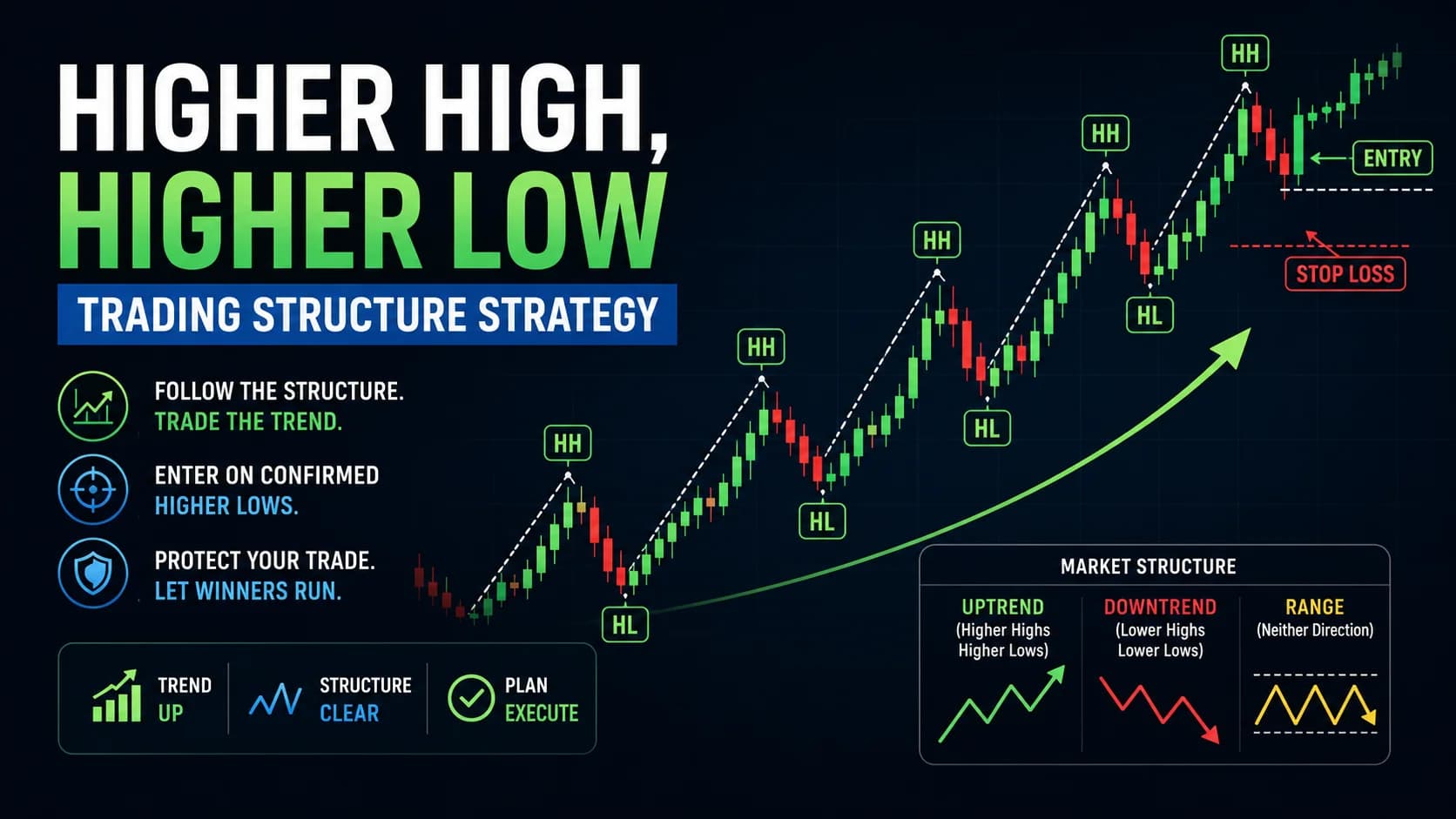
The discretionary trader watches the open. XYZ pops to $69.20 in the first two minutes, pulls back to $68.40, and starts building a base. The trader reads the tape — aggressive buyers on the bid, relatively thin offers above $69. The stock consolidates between $68.40 and $68.90 for six minutes on declining but still-elevated volume. The trader decides the consolidation looks healthy, enters at $68.95 as the stock starts pushing higher, places a mental stop at $68.20 (below the consolidation low), and targets $70.50 — a clean level they identified from a monthly chart. The entire decision was judgment: tape reading, pattern recognition, and experience.
The systematic trader ran a pre-market gap scan. XYZ showed up alongside three other candidates. The scanner filtered for gap percent above 8%, RVOL above 5x, float under 50 million, and price above $10. Of the four candidates, the systematic trader selects XYZ because it has the cleanest consolidation and the catalyst (an earnings beat) is concrete rather than speculative. They enter using the same consolidation breakout — but they have a predefined rule: stop at 1 ATR below the consolidation low ($68.10), target at 2R ($69.80). The setup identification was systematic. The final selection was discretionary.
The mechanical trader programmed the scan the night before with identical filters plus an additional condition: enter on the first 5-minute candle that closes above the opening range high, with stop at the opening range low. The system fires the trade at $69.05 after the 9:45 candle closes above the $69.00 opening range high. Stop is at $68.40 (opening range low). Target is 1.5 ATR above entry. The trader didn't evaluate the consolidation, didn't read the tape, didn't choose this stock over the others. The system chose everything. The trader clicked "confirm."
Same stock. Same morning. Three very different processes — and three different risk profiles, cognitive loads, and paths to improvement.
How to Find Your Spot on the Spectrum: A Self-Assessment
We've built a diagnostic framework based on five dimensions that predict which trading style will feel natural and sustainable for you. Be honest with yourself here — answering how you wish you operated rather than how you actually operate is the fastest way to pick the wrong style.
Dimension 1: Tolerance for ambiguity. When you see a chart setup that's 70% of what you'd want — close to your ideal entry but not quite textbook — what happens? If you find that ambiguity energizing (you like reading the nuance), you're wired discretionary. If ambiguity creates anxiety and you'd strongly prefer a binary yes/no signal, you're wired mechanical. If you want the system to narrow options but you're comfortable making the final call, you're wired systematic.
Dimension 2: Emotional response to losses. Not "how do you handle losses" in the abstract — how do you actually respond to three consecutive losing trades on a Thursday afternoon? If you can detach from the outcome and evaluate whether you followed your process, mechanical or systematic trading will suit you. If losses feel personally meaningful and trigger rumination ("I should have seen that," "I knew it looked weak"), you need the rigid guardrails of a more mechanical approach — even if it feels constraining — because discretionary flexibility during drawdowns is where accounts go to die.
Dimension 3: Screen time appetite. Discretionary trading demands sustained attention. You're reading price action, monitoring Level 2, watching sector correlations in real time. If you thrive on that active engagement and find it energizing rather than draining, discretionary elements belong in your process. If screen time depletes you, systematic or mechanical approaches let you batch your decision-making into pre-market preparation and then execute with less real-time cognitive load.
Dimension 4: Technical inclination. Can you define your setup in specific, backtestable parameters? Not "I look for stocks breaking out" — can you say "stocks breaking above a 15-minute consolidation with RVOL above 3.0 and volume in the breakout candle exceeding the 20-period average by 150%"? If translating visual patterns into numbers feels natural, systematic and mechanical approaches will come easier. If you recognize setups visually but struggle to articulate the exact rules, you're a natural discretionary trader — and that's fine, as long as you build the journaling infrastructure to track your performance honestly.
Dimension 5: Your response to being wrong by following rules. This is the litmus test. Imagine you followed your system perfectly — every rule, every condition met — and you still lost money on the trade. How does that feel? If the answer is "fine, the process was correct and losses are part of the distribution," you can handle mechanical trading. If the answer is "frustrated, because I could see the trade was going to fail and I should have overridden the signal," you need a style with discretionary elements. Neither response is wrong. But trading against your natural response for months will grind you down.
The Hybrid Approach: Where Most Profitable Retail Traders Land
Here's what almost nobody writes in these comparison articles: the cleanest three-category distinction — pure discretionary, pure systematic, pure mechanical — is mostly theoretical. In practice, nearly every consistently profitable retail day trader we've encountered operates a hybrid.
The most common hybrid structure follows this pattern: systematic signal generation, discretionary filtering, and mechanical risk management. The scanner and rule set produce candidates using codified criteria. The trader evaluates those candidates using judgment and context. And once the trade is entered, the stop loss, position size, and profit-taking rules are mechanical — no negotiation, no overrides.
Why does this hybrid work so well? Because it matches the cognitive strengths of each layer to the right task. Humans are terrible at scanning 8,000 stocks for specific criteria under time pressure — let a scanner handle that. Humans are excellent at recognizing contextual nuance that defies simple quantification — let your brain handle trade selection. And humans are notoriously bad at managing risk under emotional stress — let mechanical rules handle your exits so you don't negotiate with yourself when you're losing.
If you're building your approach from scratch, consider this architecture: define your scan criteria explicitly enough to backtest, select from scan results using your best judgment, and execute with non-negotiable risk rules. Then track your override rate. If you're vetoing fewer than 10% of signals, you're functionally mechanical with a human safety valve — and that's a strong position. If you're vetoing more than 40%, your scan criteria need work.
The tools matter for making this hybrid approach work in practice. Real-time scanning software like Trade Ideas can codify the systematic layer with precise filter criteria, AI-powered signal ranking, and built-in alert systems — so the rule-based scanning runs continuously without requiring your attention, and you can focus your cognitive energy where it actually adds value: the discretionary filtering and trade selection.
Fitting Your Style Into a Complete Trading Plan
Your trading style isn't a standalone decision. It connects directly to how you structure your entire trading plan.
A discretionary-leaning plan needs stronger process safeguards. Mandatory pre-market preparation with written watchlists. Intraday rules that constrain your flexibility at the margins — a daily max loss that's mechanical even if everything else is discretionary. And a post-session review that evaluates decisions, not just outcomes.
A systematic-leaning plan needs explicit override protocols. Define in advance what conditions justify vetoing a signal — and what conditions don't. "Feels wrong" isn't a protocol. "Market gap down exceeding 2% in the same sector" is a protocol. Write your overrides into the plan the same way you write your entries.
A mechanical-leaning plan needs regime awareness built into the rules themselves. If your system trades breakouts, include a filter that reduces position size or pauses trading when VIX drops below a threshold that historically indicates low-volatility chop. Build the regime check into the system so you don't need to override — the system adapts on its own terms.
Regardless of where you land on the spectrum, one thing is non-negotiable: track everything. Discipline isn't willpower — it's structure. The traders who last aren't the ones with the most self-control. They're the ones with systems that make the right behavior easier than the wrong behavior.
Frequently Asked Questions
Can a discretionary trader still have clear rules and stop losses?
The best discretionary traders operate within defined guardrails: maximum position sizes, non-negotiable daily loss limits, a defined universe of tradeable stocks, and technical stop levels for every entry. What separates discretionary from reckless is that the guardrails are mechanical even when the trade selection isn't. DayTradingToolkit considers risk management the one domain where every discretionary trader should be fully mechanical — your judgment picks the trade, but your rules protect the account.
Key Takeaway: Discretionary trading with mechanical risk rules is the most sustainable version of the approach — and it's how most experienced discretionary traders actually operate.
Does systematic trading require coding or programming knowledge?
You define your scan criteria (gap percent, RVOL, float, price range) in the scanner interface, and the system generates a filtered watchlist automatically. Where coding becomes useful is in backtesting historical performance and building automation for execution, but the core systematic approach is accessible to anyone who can articulate their setup in specific numerical terms. The key skill isn't programming — it's the ability to translate a visual pattern into measurable, repeatable parameters.
Key Takeaway: If you can describe your setup with specific numbers and conditions, you can trade systematically — check our day trading toolkit for scanner options that make this accessible without code.
How do I know if I'm actually trading mechanically or just think I am?
Log every signal your system generates, then note which ones you actually took and which you skipped, along with the reason for each skip. Most traders who believe they're mechanical discover they're actually systematic with a heavy discretionary filter. There's nothing inherently wrong with that, but acknowledging the truth lets you measure whether your overrides are adding value or destroying edge. If your skipped trades would have been profitable more often than your taken trades, your overrides are costing you money.
Key Takeaway: Honest signal tracking for 30 days will reveal your actual trading style faster than any self-assessment quiz — and the answer might surprise you.
Why do mechanical systems stop working over time?
A momentum breakout system calibrated during a high-volatility trending environment will generate false signals and accumulated losses during a low-volatility, range-bound period. Without regime-awareness filters or periodic recalibration, the system keeps executing outdated logic in an environment where that logic no longer has an edge. By the time the performance data proves the system has broken down, the drawdown may already be significant. This is why most successful mechanical traders build regime detection directly into their rule set — pausing or adjusting when conditions change.
Key Takeaway: The best mechanical systems don't just define when to trade — they define when not to trade, and that regime-awareness layer is what separates robust systems from fragile ones.
Is the hybrid approach just another word for inconsistency?
The architecture matters: scan criteria and candidate generation follow codified rules (systematic layer), final trade selection uses judgment and context (discretionary layer), and risk management — stops, position sizing, exits — follows non-negotiable rules (mechanical layer). Each layer has its own accountability metrics and its own rules. Inconsistency comes from blending styles without this structure — not from intentionally assigning different decision types to different cognitive tasks based on where human judgment adds the most value.
Key Takeaway: The hybrid approach isn't a compromise between styles — it's an intentional architecture that matches the right decision-making method to the right task.
Which trading style has the best documented win rate?
A 2017 study by Harvey et al. at Duke University and AQR Capital found that systematic and discretionary hedge fund managers generated statistically similar risk-adjusted returns over nearly two decades. A separate CME Group study on Commodity Trading Advisors found systematic CTAs had longer median survival times — around 12 years versus 8 for discretionary. However, survival and win rate measure different things, and this data reflects institutional managers with significant infrastructure advantages, not retail day traders operating from home offices.
Key Takeaway: The research consistently shows that style choice matters less than execution quality — pick the style you can execute consistently, not the one with the best theoretical edge.
Does algorithmic or AI-assisted trading make discretionary trading obsolete?
AI and algorithmic tools increasingly handle scanning, pattern detection, and basic signal generation faster and more comprehensively than humans can. What discretionary traders still do better is contextual interpretation — recognizing that a news headline changes everything about a setup, reading social media-driven momentum before algorithms fully price it, and adapting to genuinely novel market events that have no historical parallel for a system to learn from. The smart play isn't discretionary or AI — it's using AI tools for the systematic layer while applying discretionary judgment where it actually adds alpha.
Key Takeaway: AI is replacing the mechanical tasks within discretionary trading, not discretionary judgment itself — the traders who integrate both will have the strongest edge.
How long should I test a trading style before deciding it doesn't fit me?
Fewer than 50 trades doesn't give you a meaningful statistical sample — a 10-trade losing streak can happen to any profitable strategy. Fewer than 30 days doesn't expose you to enough market variability (trending days, choppy days, news-driven days, low-volume sessions) to know how the style handles different environments. If you're in a losing streak after 20 trades and ready to abandon the approach, that emotional response itself is useful diagnostic data about your compatibility with that style.
Key Takeaway: Premature style-switching is one of the main drivers of the strategy hopping trap — commit to a meaningful test period before making any judgments.
Can I switch between discretionary and mechanical depending on the market day?
If you traded mechanically on Monday and discretionally on Wednesday, your performance data is contaminated — you can't tell which style is working and which isn't. The better approach is to pick a primary style, commit to it for a meaningful test period, and only introduce elements from other styles as structured, permanent additions to your process. Reactive pivots based on how the last trade went aren't style flexibility — they're emotional responses disguised as strategic adaptation.
Key Takeaway: Commit to one primary style with structured elements from others, rather than switching reactively — consistency in approach is what makes performance data actionable.
What's the single biggest mistake traders make when choosing a trading style?
Traders watch algorithmic trading content and decide to go mechanical because it sounds sophisticated, or they admire a discretionary tape reader on social media and try to replicate that intuition-heavy approach without the thousands of hours of screen time behind it. The right style isn't the one that looks best in theory — it's the one you can actually sustain through a 15-trade losing streak without abandoning your process. Your worst day reveals your true style compatibility, not your best day.
Key Takeaway: Audit your behavior during drawdowns, not during winning streaks — that's where your natural trading style reveals itself, and fighting it is a losing battle.
Article Sources
- Harvey, C.R., Rattray, S., Sinclair, A., & Van Hemert, O. (2017). "Man vs. Machine: Comparing Discretionary and Systematic Hedge Fund Performance." Duke I&E Research Paper No. 2017-01.
- Dietvorst, B.J., Simmons, J.P., & Massey, C. (2015). "Algorithm Aversion: People Erroneously Avoid Algorithms After Seeing Them Err." Journal of Experimental Psychology: General, 144(1), 114-126.
- CME Group Education: "System-Based vs. Discretionary Trading."
- CME Group / Gregoriou & Lhabitant: "Survival of Commodity Trading Advisors: Systematic vs. Discretionary CTAs."
- AQR Capital Management: "Alternative Thinking: Systematic vs. Discretionary."
- Barber, B.M., Lee, Y., Liu, Y., & Odean, T. (2009). "Just How Much Do Individual Investors Lose by Trading?" Review of Financial Studies, 22(2), 609-632.
Disclaimer
The trading styles and frameworks discussed in this article are for educational purposes only and do not constitute financial advice. Choosing a trading style does not guarantee profitability — every approach carries risk, and the majority of retail day traders lose money regardless of the style they adopt. The academic research referenced describes aggregate findings and may not apply to any individual trader's circumstances. Performance discussed in cited studies reflects institutional-level results and should not be directly extrapolated to retail accounts. Past performance is not indicative of future results. Never risk more than you can afford to lose. For our full disclaimer, visit https://daytradingtoolkit.com/disclaimer.