

A trader pulls up a chart covered in colored boxes: "bullish order block" here, "fair value GapA gap is a price discontinuity on a chart where a stock opens significantly higher or lower than the previous session's close, leaving a visible empty space — gap-ups are driven by overnight buying pressure or positive news; gap-downs by seRead definition →" there, a dotted line labeled "LiquidityLiquidity in trading refers to how easily you can enter and exit a position at a fair price — a liquid stock has high volume and a tight bid-ask spread, allowing large orders to be filled quickly without moving the price, while an illiquid Read definition → sweep" running through the recent low. The chart looks sophisticated, almost forensic, like it's revealing something hidden. It's also, in more than a few cases, an indicator auto-labeling ordinary SupportSupport is a price level where buying pressure has historically overcome selling pressure, causing price to stop declining and reverse — it's the floor where demand enters the market, and when it holds, it's a potential long entry; when it Read definition →, an ordinary gap, and an ordinary stop-run using newer vocabulary, sold as insight into what "smart money" is secretly doing.
That doesn't mean the underlying ideas are worthless. It means the honest version of this topic requires separating the vocabulary from the substance, because a lot of traders learn Smart Money Concepts without ever being told which parts are genuinely useful market structure reasoning and which parts are marketing built on top of it.
What are Smart Money Concepts? Smart Money Concepts, commonly abbreviated SMC, is a retail trading framework built around the idea that institutional participants, referred to as "smart money," leave identifiable footprints in price action, including order blocks, fair value gaps, and liquidity sweeps, that retail traders can learn to track and trade alongside.
Where Smart Money Concepts Actually Came From
SMC's modern vocabulary, order blocks, fair value gaps, liquidity grabs, market structure shifts, didn't emerge from an institutional trading desk publishing its methodology or from a peer-reviewed market microstructure journal. It developed primarily as an online retail trading education phenomenon through the 2010s, most prominently associated with content published under the "Inner Circle Trader" or ICT label, and spread widely through YouTube, Twitter, and Discord communities over the following decade.
That origin story matters for calibrating expectations. It doesn't automatically invalidate the ideas, some genuinely useful trading concepts have come from practitioners outside academia, but it does mean SMC arrived with none of the peer review, published BacktestingThe process of running a defined trading strategy against historical price data to evaluate how it would have performed before risking real capital. A well-constructed backtest gives you a statistical baseline — win rate, profit factor, maxRead definition →, or institutional transparency that would normally accompany a claim about how "smart money" actually operates. The claims about institutional behavior embedded in the terminology are largely asserted, not demonstrated.
The Core Vocabulary: Market Structure, Order Blocks, FVGs, and Liquidity
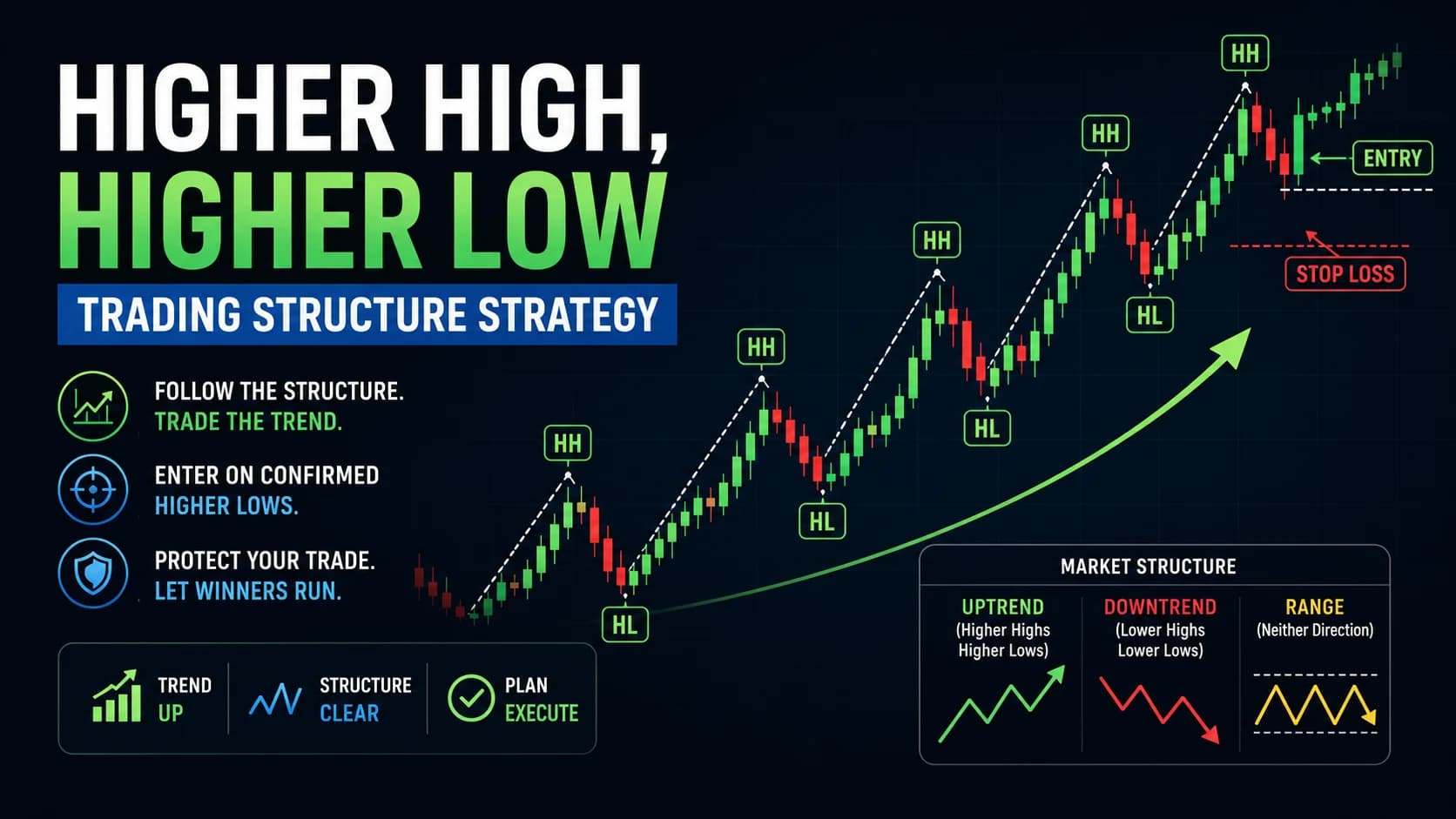
SMC organizes around a handful of core building blocks. Market structure describes the sequence of swing highs and lows that defines TrendA trend is a sustained directional movement in price over time — an uptrend is characterized by a sequence of higher highs and higher lows, a downtrend by lower highs and lower lows — and correctly identifying the current trend direction isRead definition → direction, and within SMC specifically, the language of a break of structure (continuation of the existing trend) versus a change of character (an early signal the trend may be reversing). Order blocks refer to a specific candle or cluster of candles just before a strong directional move, theorized to mark where institutional orders were placed. Fair value gaps, or imbalances, are price ranges skipped over during a fast move, theorized to act as a magnet price returns to later. Liquidity refers to clusters of resting stop-loss orders above recent highs or below recent lows, theorized to be deliberately targeted before a genuine reversal.
Each of these gets a full, dedicated treatment elsewhere in this hub: the order block trading strategy, the fair value gap trading strategy, and liquidity grabs and stop hunts each cover their specific mechanics, setups, and honest limitations in depth. This article stays at the framework level: where these ideas came from, what holds up, and what doesn't.
What SMC Gets Right: The Classical Ideas Underneath the New Names
Much of SMC's actual trading logic maps closely onto price action concepts that predate the SMC label by decades. An order block, stripped of its name, describes a specific supply or demand zone, a concept present in classical technical analysis and covered in its own right in the supply and demand zone trading guide. A liquidity sweep describes stop-loss clustering being triggered before a reversal, a documented, real market phenomenon that has nothing to do with SMC specifically and is covered on its own mechanical terms in the liquidity grabs guide linked above. Even the idea that institutional participants leave visible traces in price and volume predates SMC by roughly a century: Richard Wyckoff's early-1900s writing on what he called the "composite operator," a stand-in for the aggregate behavior of large, well-informed participants, describes strikingly similar behavior using entirely different vocabulary.
This is the most useful honest takeaway for a trader evaluating SMC: the underlying observation, that large participants accumulate and distribute positions in ways that leave patterns in price and volume, and that clusters of stop-loss orders create predictable pockets of liquidity, is neither new nor uniquely SMC's discovery. What SMC contributed was a specific, marketable vocabulary and a large, active online community teaching it, not a fundamentally new discovery about how markets work.
Where the Claims Outrun the Evidence
The honest problems with SMC as commonly taught are specific, not vague skepticism. First, the definitions are inconsistently applied. Ask five different SMC educators or five different charting indicators to mark the "order block" on the same chart, and it's common to get five different answers, because there's no single, standardized, universally agreed-upon rule for identifying one. That inconsistency makes rigorous backtesting difficult, and difficult-to-backtest claims are difficult to verify.
Second, the framework is prone to being applied retroactively in a way that's hard to falsify. A pattern that plays out gets labeled a textbook order block or a clean liquidity sweep after the fact; a pattern that fails gets explained away as a fake setup or an invalidated structure, also after the fact. This pattern, where a framework can explain any outcome after it happens but struggles to make a specific, falsifiable prediction beforehand, is a general weakness that shows up in various forms across technical analysis, not unique to SMC, but SMC's rapid, informal spread through social media has amplified it: strong claims travel faster online than careful, testable ones.
Third, broader academic research into technical trading rules generally, not SMC specifically since it's too recent and too informally defined to have been directly studied in peer-reviewed literature, has produced genuinely mixed results. Foundational research like Brock, Lakonishok, and LeBaron's widely cited 1992 study of simple technical trading rules found some rules showed statistically significant predictive power in the specific historical sample studied, but subsequent research has repeatedly found that many technical trading edges weaken or disappear once markets adapt and once transaction costs are properly accounted for. That's a caution worth applying broadly to any pattern-based framework, SMC included: a pattern that looks compelling on a chart isn't automatically a durable, tradeable edge.
None of this means SMC-labeled setups never work. It means a trader should evaluate specific, mechanical versions of these ideas, like the ones in this hub's dedicated articles, on their own testable merits, rather than trusting the framework's institutional-sounding vocabulary as evidence of anything on its own.
The Change of Character Confirmation Setup
Setting the marketing aside, the most defensible, mechanical piece of the SMC framework is its market structure vocabulary: specifically, using a change of character, a break in the established pattern of swing highs and lows, as an early trend-reversal signal. This overlaps with, but is distinct from, the basic higher high, higher low market structure strategy covered elsewhere in this hub; that article covers the foundational swing-structure concept, while this setup applies SMC's specific two-stage confirmation logic on top of it.
- Component
- Market Conditions Required
- Rule
- An established trend with at least three confirmed swing highs and higher lows (or the inverse in a downtrend)
- Component
- Time of Day
- Rule
- 9:30–11:00 AM ET or 3:00–4:00 PM ET
- Component
- Stock Selection Criteria
- Rule
- RVOL at 1.5 or higher, liquid enough to show clean, unambiguous swing points
- Component
- Entry Trigger
- Rule
- A swing low breaks below the prior confirmed swing low (change of character), followed by a lower high on the subsequent retracement that fails to reclaim the broken structure
- Component
- Stop Loss
- Rule
- Above the lower high that formed after the change of character
- Component
- Initial Profit Target
- Rule
- The prior major swing low before the change of character, or a 1:1 R-multiple
- Component
- Trade Management
- Rule
- Hold while subsequent swing highs continue printing lower; trail using each new confirmed lower high
- Component
- Invalidation Criteria
- Rule
- Price reclaims and holds above the broken swing low with a new higher high forming
| Component | Rule |
|---|---|
| Market Conditions Required | An established trend with at least three confirmed swing highs and higher lows (or the inverse in a downtrend) |
| Time of Day | 9:30–11:00 AM ET or 3:00–4:00 PM ET |
| Stock Selection Criteria | RVOL at 1.5 or higher, liquid enough to show clean, unambiguous swing points |
| Entry Trigger | A swing low breaks below the prior confirmed swing low (change of character), followed by a lower high on the subsequent retracement that fails to reclaim the broken structure |
| Stop Loss | Above the lower high that formed after the change of character |
| Initial Profit Target | The prior major swing low before the change of character, or a 1:1 R-multiple |
| Trade Management | Hold while subsequent swing highs continue printing lower; trail using each new confirmed lower high |
| Invalidation Criteria | Price reclaims and holds above the broken swing low with a new higher high forming |
This is the two-stage confirmation that separates a genuine change of character from a single false break: the initial structural break (the swing low giving way) is the warning, but the entry doesn't trigger until the market also fails to reclaim that broken level on the following retracement, echoing the same acceptance-versus-excess logic covered in the auction market theory guide.
Walking Through a Change of Character Read
Picture a stock in a clear uptrend, printing higher highs and higher lows through the morning: swing lows at $52.10, then $52.60, then $53.20, each one higher than the last, with corresponding higher highs in between. At 10:40 AM ET, price breaks below $53.20, the most recent confirmed swing low, trading down to $52.85. That's the change of character, the first break in the established pattern.
Rather than entering immediately on that break, the setup waits for the retracement. Price bounces to $53.05 over the next fifteen minutes, a lower high compared to the prior swing high near $53.80, and then fails to reclaim $53.20. That failure to reclaim the broken structure is the confirmation. A trader's entry trigger fires at that failure, shorting around $52.95, stop at $53.10 (above the lower high), initial target at $52.60, the prior major swing low, roughly thirty-five cents of reward against fifteen cents of risk.
Managing a Change of Character Trade
Once in the trade, each new swing high printing lower than the one before it confirms the reversal thesis is intact. A swing high that instead matches or exceeds the prior high is an early warning the reversal may be failing even before price reclaims the specific broken level.
Scale partial size at the first target, and treat a reclaim of the original broken swing low, especially paired with a fresh higher high, as the invalidation signal that overrides the trade regardless of unrealized position.
Where This Whole Framework Fails
Beyond the definitional inconsistency already covered, SMC-labeled setups fail most often when traders apply them on very short timeframes with too much confidence in a single signal. A one-minute chart generates dozens of "order blocks" and "fair value gaps" per session by construction, simply because short timeframes produce frequent swings and frequent gaps; treating every one of them as a meaningful institutional footprint, rather than routine short-term noise, is a fast path to overtrading.
The framework's popularity has also produced a genuinely large market for paid mentorship, signal services, and indicator packages promising to reveal these patterns automatically. Different vendors' auto-detection indicators frequently disagree with each other on the same chart, a direct symptom of the underlying definitional inconsistency problem. A trader evaluating any paid SMC product should apply the same skepticism they'd apply to any trading education claim: ask for verifiable, out-of-sample performance data, not chart screenshots showing setups that already played out.
SMC Across Different Markets
SMC terminology is especially popular in forex and crypto trading communities, markets that trade nearly continuously and where the concept of clustered liquidity above and below recent highs and lows translates intuitively, since both markets see genuinely large, leveraged participants whose stop-loss clusters can meaningfully move price when triggered. Applied to individual equities, particularly outside the most liquid large-caps, the same concepts require more caution, since thinner order books and fragmented liquidity across multiple exchanges make some of the underlying assumptions about a single, identifiable pool of "liquidity" less clean than in a centralized futures or spot forex market.
Where Smart Money Concepts Fits Inside a Complete Trading Plan
The useful version of SMC is a vocabulary for describing market structure and liquidity dynamics that, stripped of its more sweeping claims about secretly tracking institutional intent, overlaps significantly with classical technical analysis already covered across this hub. Used that way, as one more lens on structure and liquidity alongside tape reading, Level 2, and the other tools in this module, combined with disciplined position sizing, it can add real value. Treated as a secret system for tracking what "smart money" is doing, sold on that premise rather than tested on its mechanical merits, it invites exactly the kind of overconfidence this guide is built to caution against.
Frequently Asked Questions
Is Smart Money Concepts just a rebranding of older technical analysis ideas?
That doesn't mean SMC contributed nothing; it built a specific, structured vocabulary and a large, accessible teaching community around these ideas. But the underlying market behavior being described, large participants leaving traces in price and volume, isn't a new discovery unique to SMC.
Key Takeaway: Evaluate SMC concepts on their mechanical merits, not on the assumption that the vocabulary itself represents a new discovery about markets.
Do professional or institutional traders actually use the term "order block"?
Institutional traders do think about supply and demand imbalances, stop-loss clustering, and price gaps, but generally use different, longer-established terminology for these concepts, and don't describe their own activity using SMC's specific framework.
Key Takeaway: The concepts have real analogues in institutional thinking; the specific vocabulary is a retail-education construction, not an institutional standard.
Why do different SMC indicators mark different order blocks on the same chart?
This inconsistency is one of the most concrete, checkable problems with SMC as commonly taught. A framework with a precise, agreed-upon definition would produce the same markings across tools built to detect it; SMC concepts generally don't.
Key Takeaway: Treat disagreement between different SMC indicators on the same chart as a sign of genuine definitional ambiguity, not a bug in one specific tool.
Is there peer-reviewed academic research specifically testing Smart Money Concepts?
Broader academic research into technical trading rules in general has produced mixed results, with some rules showing statistical significance in specific historical samples and later research often finding those edges weaken once markets adapt and real transaction costs are included. That general caution applies to SMC by extension, even without SMC-specific studies.
Key Takeaway: Treat SMC as an untested framework in the academic sense, and hold any specific setup built from it to the same real-world scrutiny as any other trading idea.
What's the difference between a break of structure and a change of character in SMC terminology?
In an uptrend, a new higher high is a break of structure confirming the trend's continuation. A swing low breaking below the prior swing low, going against the established pattern, is a change of character, the warning sign this article's setup is built around.
Key Takeaway: Break of structure confirms an existing trend; change of character warns that trend may be ending.
Should a beginner learn Smart Money Concepts before learning classical technical analysis?
A trader who learns SMC vocabulary first, without the classical foundation underneath it, is more likely to treat the newer terminology as a wholesale discovery rather than recognizing which parts are well-established and which parts are less rigorously supported.
Key Takeaway: Build a foundation in classical price action and market structure first; SMC vocabulary becomes much easier to evaluate critically afterward.
Are paid SMC mentorship programs and signal services worth the cost?
A large market for paid SMC education and signal services exists, and the definitional inconsistency covered in this article, different educators and tools disagreeing on the same chart, should raise a trader's skepticism toward marketing claims specifically. Ask for verifiable, out-of-sample performance data rather than curated chart examples before paying for any trading education product, SMC-labeled or otherwise.
Key Takeaway: Judge any paid SMC product by verifiable performance evidence, not by how convincing its terminology sounds.
Why does SMC terminology show up more in forex and crypto trading than in stock trading?
Individual equities, particularly outside the most liquid large-caps, have more fragmented liquidity spread across multiple exchanges and off-exchange venues, which complicates some of SMC's underlying assumptions about a single, identifiable pool of liquidity sitting at a specific price.
Key Takeaway: Apply extra caution when translating SMC concepts built around continuous forex and crypto markets directly onto individual equities.
Disclaimer
Article Sources
- Brock, Lakonishok, and LeBaron: Simple Technical Trading Rules and the Stochastic Properties of Stock Returns (Journal of Finance, 1992) - foundational, widely cited academic study on the statistical properties and limitations of technical trading rules.onlinelibrary.wiley.com
- The Price Impact of Order Book Events (Cont, Kukanov, Stoikov) - academic research on order flow imbalance and price movement, relevant to evaluating liquidity-based claims.papers.ssrn.com
- SEC: Hiding Behind the Veil — Informed Traders and Pre-Trade Opacity - SEC research seminar paper on informed order flow, relevant to evaluating claims about institutional footprints in price.sec.gov
- SEC: Types of Orders (Investor.gov) - official reference on order types and market structure fundamentals.investor.gov