

A BidThe bid is the highest price a buyer is currently willing to pay. When you sell with a market order, you receive the bid price.Read definition → at $91.50 shows 300 shares on Level 2. Unremarkable size for a heavily traded stock. Over the next four minutes, that exact 300-share bid gets hit by market sell orders nine separate times, roughly 2,700 shares total, and after every single hit, the display shows 300 shares resting at $91.50 again within a second or two.
That's not nine coincidentally identical sellers deciding independently to sell exactly 300 shares into a static bid. That's one large, patient buyer, using a real, exchange-sanctioned order type specifically designed to work a big position without revealing its full size, refilling from a hidden reserve every time the visible portion trades.
What is an iceberg order? An iceberg order, also called a reserve order, is a legitimate order type that displays only a small portion of its total size on the public order book while holding the rest in reserve, automatically replenishing the visible quantity each time it executes. It lets a large participant work a big position without showing the market the full size they're trying to buy or sell.
Iceberg Orders vs. Illusory Level 2 Size: A Real Order Type, Not a Theory
This is a genuinely important distinction to get right, because it sits opposite the spoofing and layering behavior covered in the Level 2 trading guide and the liquidity grabs guide. Spoofing involves posting fake orders with no intention of ever letting them execute, purely to distort what other traders perceive on the book, and it's illegal. An iceberg or reserve order is the exact opposite: it's a real, fully executable order, sanctioned and defined by exchange rules, that genuinely trades every time its displayed portion gets hit. The only thing hidden is the total remaining size, not the order's willingness to actually transact.
Understanding this difference changes how a trader should interpret what they're seeing. A wall of size on Level 2 that vanishes without ever trading is a red flag, potentially spoofing. A modest, unremarkable size that keeps refilling after real, confirmed trades against it is the opposite signal: evidence of genuine, substantial, patient participation that's deliberately choosing not to show its hand.
How Iceberg Orders Actually Work
When a trader places a reserve order, they specify a total order size and a displayed quantity, the portion visible to the rest of the market. Exchanges set minimum displayed-quantity requirements for reserve orders, meaning a participant can't hide an unlimited amount behind an unreasonably tiny visible sliver; there's a rule-defined floor on how small the displayed portion can be relative to the total. As the visible quantity executes against incoming orders, the exchange automatically refreshes the display from the hidden reserve, typically at the same price, until the entire reserve is exhausted or the order is canceled.
This is standard functionality on major exchanges, documented in exchange rule filings with securities regulators, and it's used constantly by institutional participants working large positions who don't want to reveal the true scale of their buying or selling interest, since doing so would likely move the price against them before they finish executing.
The Iceberg Refill Signature Setup
The specific, tradeable pattern here isn't just "absorption" in the general sense covered in the Level 2 guide; it's a more precise behavioral fingerprint: repeated executions of the exact same displayed size, at the exact same price, refilling immediately after each FillA fill is the execution of an order — when your buy or sell order is matched with a counterparty and the transaction is completed, you've received a fill.Read definition →.
- Component
- Market Conditions Required
- Rule
- RVOL at 1.5 or higher; a liquid instrument with genuine two-sided participation
- Component
- Time of Day
- Rule
- 9:30–11:00 AM ET or 3:00–4:00 PM ET
- Component
- Stock Selection Criteria
- Rule
- Price above $5, average daily volume above 1 million shares
- Component
- Entry Trigger
- Rule
- The same displayed size at the same price level gets hit by confirmed tape prints four or more times within a two-minute window, refilling to the same or nearly the same displayed quantity each time
- Component
- Stop Loss
- Rule
- One tick beyond the level showing the refill signature
- Component
- Initial Profit Target
- Rule
- The most recent swing level in the direction the iceberg is defending, or a 1:1 R-multiple
- Component
- Trade Management
- Rule
- Hold while the refill pattern continues; tighten the stop once the refill signature weakens (smaller replenishment or slower refresh)
- Component
- Invalidation Criteria
- Rule
- The level stops refilling and gets fully depleted, or breaks with no further replenishment
| Component | Rule |
|---|---|
| Market Conditions Required | RVOL at 1.5 or higher; a liquid instrument with genuine two-sided participation |
| Time of Day | 9:30–11:00 AM ET or 3:00–4:00 PM ET |
| Stock Selection Criteria | Price above $5, average daily volume above 1 million shares |
| Entry Trigger | The same displayed size at the same price level gets hit by confirmed tape prints four or more times within a two-minute window, refilling to the same or nearly the same displayed quantity each time |
| Stop Loss | One tick beyond the level showing the refill signature |
| Initial Profit Target | The most recent swing level in the direction the iceberg is defending, or a 1:1 R-multiple |
| Trade Management | Hold while the refill pattern continues; tighten the stop once the refill signature weakens (smaller replenishment or slower refresh) |
| Invalidation Criteria | The level stops refilling and gets fully depleted, or breaks with no further replenishment |
Requiring at least four repeated hits at identical size before treating the pattern as confirmed filters out coincidental round-lot clustering, where a handful of unrelated traders happen to post similar-sized orders at the same price by chance, a real possibility that a shorter confirmation window wouldn't adequately rule out.
Walking Through a Live Iceberg Detection Trade
Picture a large-cap stock trading around $91.60 with RVOL at 1.9. On Level 2, the bid at $91.50 shows 300 shares. At 10:12 AM ET, the tape shows a 300-share print hit that bid. Within two seconds, Level 2 shows 300 shares resting at $91.50 again. At 10:13 AM, another 300-share print hits the bid, and again it refills to 300 within moments. This repeats two more times over the next ninety seconds, four confirmed hits of exactly 300 shares, each one refilling to the same displayed size.
That's the refill signature, confirmed at the setup's four-hit threshold. A trader's entry trigger fires at that point, buying around $91.55 as the pattern confirms, with a stop at $91.45 (one tick below the level), and an initial target at $91.90, the most recent swing high, thirty-five cents of reward against ten cents of risk.
Managing an Iceberg-Based Trade
Once in the trade, continued refilling at $91.50 as price grinds higher confirms the large buyer is still actively defending that level. Watch specifically for the refill to start showing smaller replenishment amounts or slower refresh timing, both signs the hidden reserve may be running low, which would be a reasonable point to tighten a Trailing StopA trailing stop is a dynamic stop-loss order that automatically moves in your favor as the trade profits — locking in gains incrementally — but stays fixed if price moves against you, converting a winning trade into a loss-protected exit thRead definition → even before the level fully breaks.
Scale partial size at the first target, and treat a hit that fails to refill at all, the displayed size simply disappearing rather than refreshing, as the invalidation signal, since that indicates the iceberg has either been fully exhausted or was canceled.
Where Iceberg Detection Breaks Down
The most important honest limitation is that a trader can never see the true remaining reserve size. An iceberg that's refilled four times could have another twenty refills left, or it could be down to its final replenishment right as a trader enters based on the confirmed signature. There's no way to know the total order size from the outside, which is the entire point of the order type. This means the setup's stop placement, one tick beyond the level, matters enormously, since the trade can fail quickly and without much warning if the reserve happens to be nearly exhausted right when the entry triggers.
False positives are a real risk too. Coincidental round-lot clustering, several unrelated market participants independently posting similar, common order sizes like 100, 200, or 500 shares at a popular round-number price, can occasionally produce a pattern that superficially resembles a refilling iceberg without actually being one. The four-hit confirmation threshold reduces but doesn't eliminate this risk, and a trader should weight the signal more heavily when the refilling size is distinctive (like 347 shares repeating exactly) rather than a common round number that's more plausible as coincidence.
Most retail data feeds and platforms don't explicitly tag or flag iceberg orders; the pattern has to be inferred from watching Level 2 and Time & Sales together, which means this setup requires active, sustained attention rather than a simple indicator alert in most cases.
Iceberg Orders Across Exchanges and the Line Into True Dark Liquidity
Minimum displayed-quantity rules for reserve orders vary somewhat by exchange, meaning the smallest legally permissible visible sliver differs depending on which venue a participant routes their iceberg order to. A trader working across multiple data feeds should understand that the exact refill behavior they're used to seeing on one exchange's feed may look slightly different on another.
It's also worth being precise about where iceberg orders sit on the spectrum of hidden LiquidityLiquidity in trading refers to how easily you can enter and exit a position at a fair price — a liquid stock has high volume and a tight bid-ask spread, allowing large orders to be filled quickly without moving the price, while an illiquid Read definition →. An iceberg order still displays some portion of itself on the public book, even if the total is hidden; it's partially visible by design. Liquidity that never displays on the public book at all, orders working entirely off-exchange or through fully non-displayed venues, is a different and more opaque category, covered in the dark pool prints guide. Icebergs are the partially-hidden version; dark pools are the fully-hidden version.
Tools for Spotting Iceberg Activity
Detecting the refill signature by eye, watching Level 2 and the tape simultaneously, is demanding, and platforms built specifically for order-flow visualization make the pattern considerably easier to catch. DayTradingToolkit's review of Bookmap covers a platform whose heatmap visualization is specifically well suited to spotting this kind of repeated refill behavior at a glance, since it renders resting size and its persistence over time visually rather than requiring a trader to track numbers scrolling by. Direct-access platforms with fast, accurate order book display, including tools tagged for active trading like DAS Trader Pro, also SupportSupport is a price level where buying pressure has historically overcome selling pressure, causing price to stop declining and reverse — it's the floor where demand enters the market, and when it holds, it's a potential long entry; when it Read definition → this kind of close order-flow monitoring.
Where Iceberg Detection Fits Inside a Complete Trading Plan
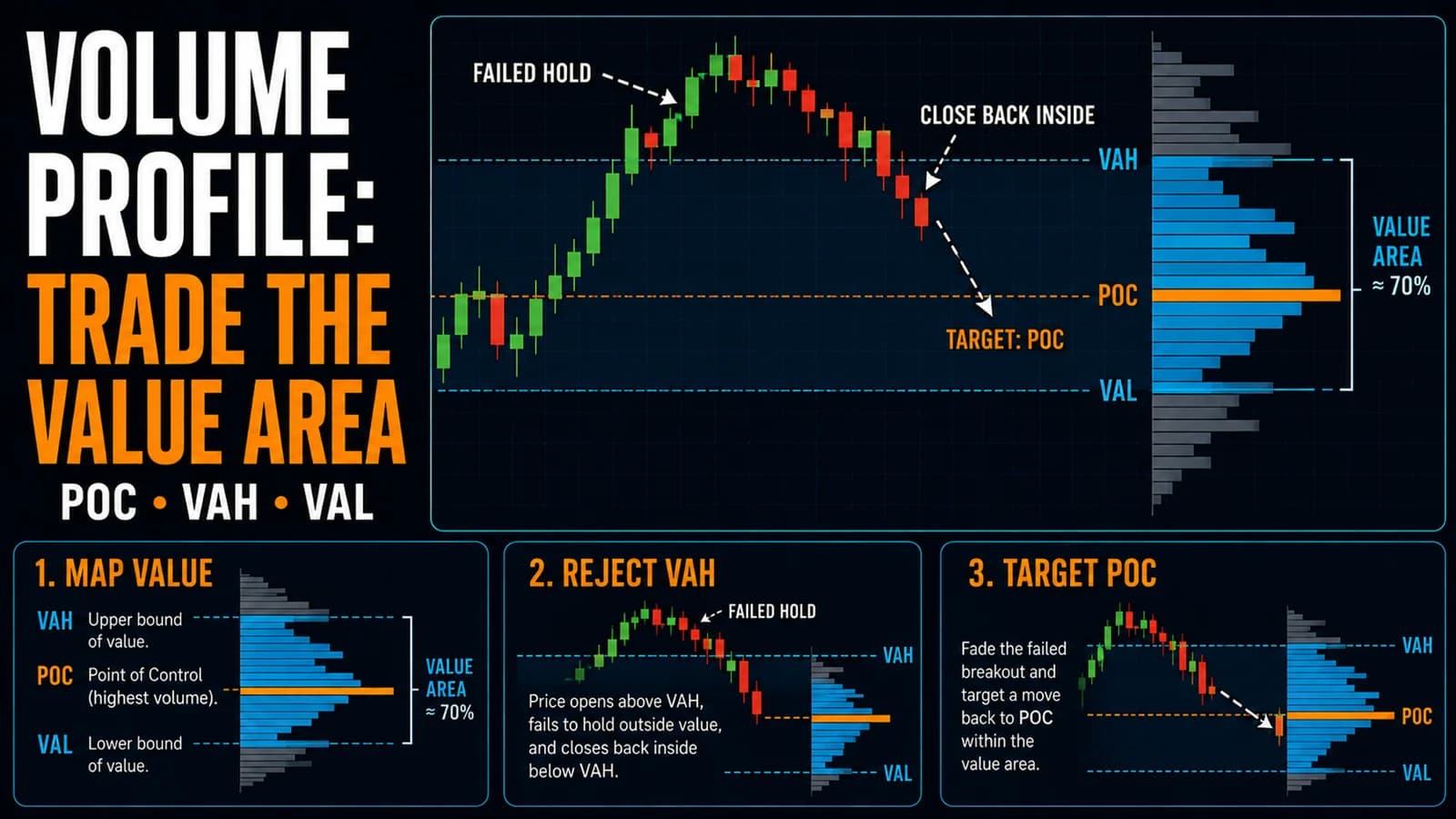
Iceberg detection works best as a confirmation layer added to a level a trader already has reason to watch, a prior swing point, a Market Profile value area boundary, or a supply and demand zone, rather than as a standalone scanning strategy searching for refill patterns across dozens of unrelated tickers. Combined with disciplined position sizing and a stop placed appropriately close given the reserve's unknown remaining size, it adds real, specific evidence that a significant, patient participant is defending a level. Treated as a guaranteed floor simply because a refill pattern briefly appeared, without acknowledging that the reserve can exhaust without warning, it invites holding a position past the point the actual evidence supports.
Frequently Asked Questions
Is it legal for large traders to hide the true size of their orders using iceberg orders?
This is fundamentally different from spoofing, where orders are posted with no intention of ever executing. An iceberg order's displayed portion genuinely trades every time it's hit; only the total remaining size stays hidden.
Key Takeaway: Iceberg orders are a legal, standard tool for working large positions discreetly, distinct from illegal spoofing.
How can a trader tell the difference between a genuine iceberg refill and coincidental similar-sized orders from different traders?
The four-hit confirmation threshold in this article's setup also helps filter out short-lived coincidental clustering, since it's statistically less likely that four or more unrelated participants would independently post identical order sizes at the identical price within a short window.
Key Takeaway: Weight distinctive, non-round refill sizes more heavily as genuine iceberg evidence than common round-number sizes.
Can a trader know how much total size remains in an iceberg order's hidden reserve?
This is precisely why the setup in this article uses a tight stop placed just beyond the level rather than a wider stop based on an assumption about how much reserve remains. The trade should be managed as if the reserve could exhaust at any moment, because it genuinely could.
Key Takeaway: Always use a tight, defined stop when trading an iceberg refill signature, since the remaining reserve size is fundamentally unknowable.
Do all exchanges allow the same minimum displayed size for iceberg orders?
A trader watching Level 2 across multiple data feeds should be aware that iceberg refill behavior can look somewhat different depending on which exchange's rules govern the specific order being observed.
Key Takeaway: Don't assume identical iceberg display rules across every exchange; minimum displayed-size requirements vary by venue.
What's the difference between an iceberg order and a fully hidden dark pool order?
Icebergs are a partial concealment tool used on public, lit exchanges. Dark pools represent a separate, fully non-displayed venue for trading. Both hide size from public view, but through fundamentally different mechanisms, covered specifically in the dark pool prints guide.
Key Takeaway: Icebergs partially hide size on lit exchanges; dark pools fully hide trading activity away from the lit market.
Why does this setup require four confirmed hits before treating a refill pattern as genuine?
Four repeated hits at the same size, refilling each time, represents a meaningfully lower-probability coincidence than one or two hits, which is why the setup uses that threshold as its confirmation standard rather than acting on the very first repeated hit.
Key Takeaway: Wait for at least four confirmed, identical-size hits before treating a Level 2 pattern as a genuine iceberg signature.
Does most retail trading software identify iceberg orders automatically?
Specialized order-flow visualization platforms make this pattern considerably easier to spot at a glance through heatmap-style displays, but even those tools are visualizing the same underlying refill behavior rather than receiving an explicit "this is an iceberg" flag from the exchange.
Key Takeaway: Expect to manually identify the refill signature through active observation rather than relying on an automatic iceberg-detection alert.
Should a trader always assume large, repeated size at a level is an iceberg rather than several independent orders?
Plenty of large resting size on Level 2 is a single, static, fully-displayed order rather than a partially hidden reserve order. The refill behavior after real fills is what specifically distinguishes an iceberg from ordinary large displayed size.
Key Takeaway: Look specifically for the repeated refill pattern after confirmed fills, not just the presence of large resting size, before concluding an iceberg is present.
Disclaimer
Article Sources
- SEC: Nasdaq Reserve Order Rule Filing - official exchange rule filing documenting how reserve (iceberg) orders function on a major exchange.sec.gov
- SEC: Hiding Behind the Veil — Informed Traders and Pre-Trade Opacity - SEC research seminar paper on hidden order behavior and pre-trade opacity in modern markets.sec.gov
- SEC Rule 606 FAQ - staff guidance on order routing and execution disclosure relevant to how orders interact with displayed and hidden liquidity.sec.gov
- SEC: Types of Orders (Investor.gov) - official reference on order types, including reserve and hidden order functionality.investor.gov