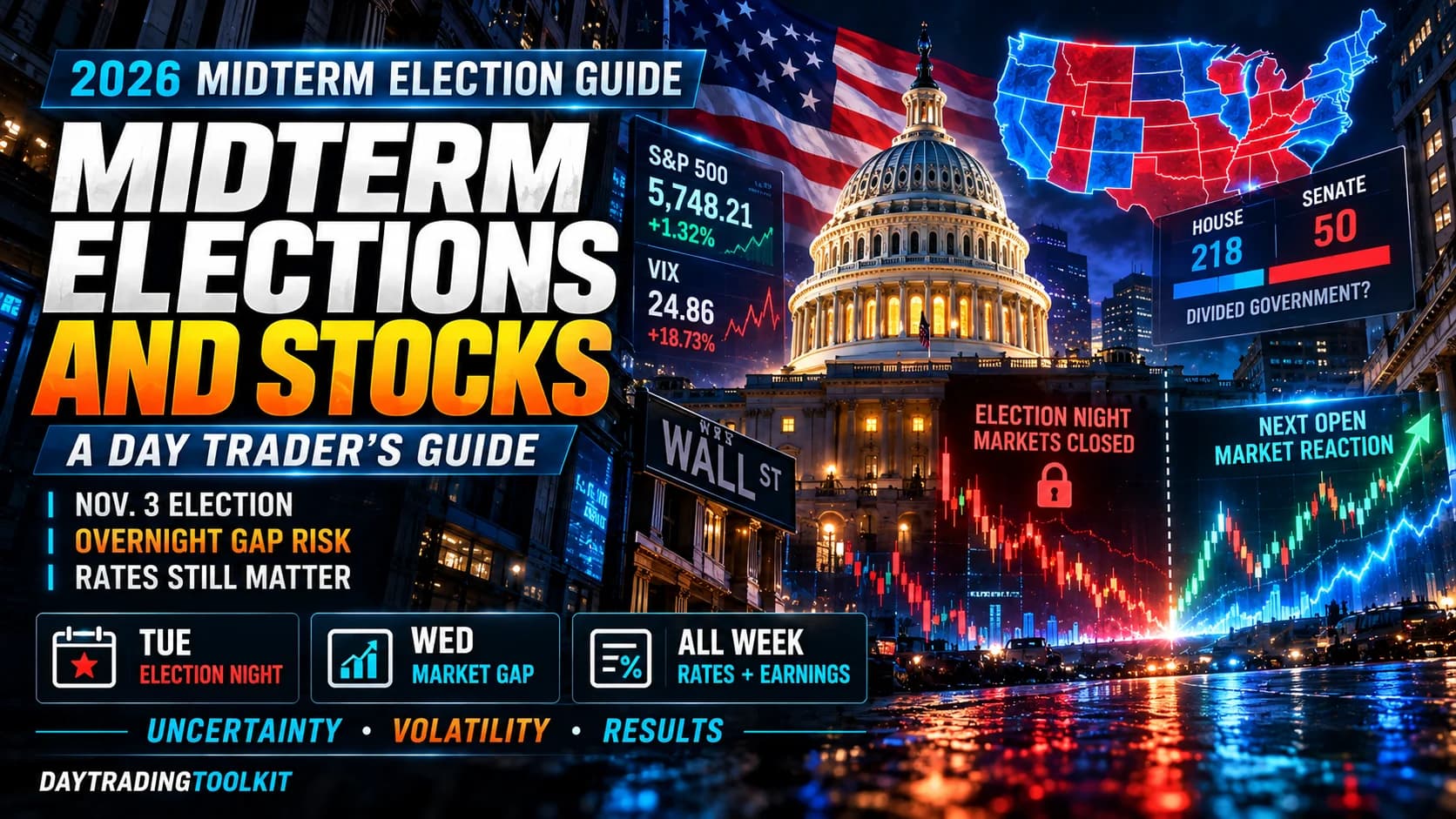


JPMorgan expected a Democratic sweep of Congress to knock the S&P 500 down about half a percent on Wednesday. Instead, stock futures erased their early losses and pointed higher before the US open. That's the real story of the Democratic sweep for stocks: the index barely moved, while the sectors underneath it repriced hard.
If you only watched SPY, you missed the trade. First Solar and Sunrun jumped, Northrop Grumman and the prison operators sank, and data center names slipped. Here's what moved, why it moved, and how to approach the gaps without trading your politics.
In 30 seconds
- Democrats won control of both the House and Senate on November 3, and Dow futures rose about 0.6% early Wednesday while S&P 500 futures rose about 0.2%.
- Clean energy, hospitals and health insurers rose before the open, while defense, prison operators and data center stocks fell.
- President Trump keeps his veto, so these moves price changed odds and new oversight risk, not laws that have passed.
- The next big market tests are the October jobs report on November 6, CPIThe Consumer Price Index (CPI) is a monthly U.S. government report measuring the average change in prices paid by consumers for goods and services — it's the most closely watched inflation indicator in the market.Read definition → on November 10, the Fed on December 9 and the government funding deadline on December 11.
How did stocks react to the Democratic sweep?
Stocks took the Democratic sweep calmly at the index level. Asian chip stocks fell overnight and US futures dropped early, but by Wednesday morning Dow futures were up about 0.6%, S&P 500 futures were up about 0.2%, and Nasdaq-100 futures were close to flat.
Reuters described global stocks and the dollar recovering from their overnight lows as the results came in. XTB research director Kathleen Brooks said the focus would now move from election uncertainty to what the results mean for policy.
The prices in this guide are premarket moves reported early on Wednesday, November 4. Premarket prices can change quickly once the regular session opens at 9:30 a.m. ET, so treat them as the first read and check the live tape before acting on any of them.
Which sectors moved most after the midterm election?
Clean energy, health care, defense, data centers and prison operators moved the most in premarket trading after the midterm election. Reuters reported these early moves:
- Group
- Clean energy
- Stocks and premarket moves
- Sunrun +10%, First Solar +9.4%, Enphase Energy +7.6%, NextEra Energy +2.2%
- The market's reasoning
- Federal support for clean energy looks more likely to stay in place
- Group
- Health insurers
- Stocks and premarket moves
- Molina +6%, Centene +4.5%
- The market's reasoning
- Democrats have pushed for more government health care spending
- Group
- Hospitals
- Stocks and premarket moves
- HCA Healthcare +3.7%, Universal Health Services +2.2%
- The market's reasoning
- Same health care spending argument
- Group
- Defense
- Stocks and premarket moves
- Northrop Grumman -5%; RTX, Lockheed Martin and L3Harris down more than 3% each
- The market's reasoning
- Analysts see a risk that funding falls short of expectations
- Group
- Data centers
- Stocks and premarket moves
- Core Scientific -2.8%, Iren -1.4%; Applied Digital and CoreWeave slightly lower
- The market's reasoning
- Tougher oversight of the AI buildout looks more likely
- Group
- Prison operators
- Stocks and premarket moves
- GEO Group -6.7%, CoreCivic -5.2%
- The market's reasoning
- Both had rallied on immigration enforcement demand since 2024
| Group | Stocks and premarket moves | The market's reasoning |
|---|---|---|
| Clean energy | Sunrun +10%, First Solar +9.4%, Enphase Energy +7.6%, NextEra Energy +2.2% | Federal support for clean energy looks more likely to stay in place |
| Health insurers | Molina +6%, Centene +4.5% | Democrats have pushed for more government health care spending |
| Hospitals | HCA Healthcare +3.7%, Universal Health Services +2.2% | Same health care spending argument |
| Defense | Northrop Grumman -5%; RTX, Lockheed Martin and L3Harris down more than 3% each | Analysts see a risk that funding falls short of expectations |
| Data centers | Core Scientific -2.8%, Iren -1.4%; Applied Digital and CoreWeave slightly lower | Tougher oversight of the AI buildout looks more likely |
| Prison operators | GEO Group -6.7%, CoreCivic -5.2% | Both had rallied on immigration enforcement demand since 2024 |
Treat the table as a watchlist. A SectorA broad grouping of companies that operate in the same segment of the economy — such as Technology, Healthcare, Energy, or Financials. Stocks within a sector tend to move together in response to shared economic, regulatory, and sentiment faRead definition →'s first move tells you where attention is going. It doesn't tell you whether the move will hold through the session.
Why can stocks move this much if little can become law?
Stocks can move this much because markets price changing odds, and control of Congress changes the odds of oversight, hearings and budget outcomes right away. It doesn't need a signed law to do that.
President Trump still has his veto, and analysts told CNBC before the vote that a divided government would likely block major policy swings. But Democratic majorities get subpoena power when the new Congress starts in January, and health care spending can become part of budget talks.
That second point is why the health care trade has limits. BNP Paribas economist Anis Bensaidani told Reuters that Democrats may not have the numbers to restore major parts of the Affordable Care Act, though they could win concessions in talks over defense and government funding.
Divided government means one party holds the White House while the other controls one or both chambers of Congress. For traders, it usually means fewer big laws and more headlines from hearings, investigations and funding fights.
Does a Democratic Congress threaten AI stocks?
A Democratic Congress adds oversight risk for AI stocks, but the AI trade was already under pressure before the vote. Goldman Sachs' broad AI basket fell 15% in October and was more than 24% below its peak, according to Reuters.
Analysts also doubt Congress can stop the buildout. Reuters reported that a Democratic-led Congress raises the odds of hearings and investigations, even though analysts doubt any legislation could meaningfully stall data center construction. Goldman strategists told CNBC that data center tax incentives could be limited, but that a national moratorium looks unlikely.
The cleanest lesson came from AMD. Its stock rose about 6% before the open after a third-quarter EarningsAn earnings report is the quarterly financial disclosure a public company files with the SEC, revealing revenue, earnings per share (EPS), profit margins, and forward guidance — it's the most significant regular catalyst for individual stocRead definition → beat, on the same morning Nvidia and Micron fell more than 1%. In this market, a company's own results can easily beat a political headline. Our guide to how AI capex disclosures move chip stocks explains why those reports carry so much weight.
How should day traders handle post-election gaps?
Day traders should handle post-election gaps by first sorting each GapA gap is a price discontinuity on a chart where a stock opens significantly higher or lower than the previous session's close, leaving a visible empty space — gap-ups are driven by overnight buying pressure or positive news; gap-downs by seRead definition → by its cause, then cutting Position SizePosition size is the number of shares, contracts, or dollar value you deploy in a single trade — determined by the relationship between your account risk percentage, your dollar risk per share (distance to stop), and your account size ratheRead definition → and waiting for the market to confirm the move. A gap on policy hopes and a gap on earnings are different trades, even when they appear on the same premarket list.
A five-step routine for election gaps
5 stepsSort the gap by catalyst
Label each gapper as policy, earnings or sympathy. An earnings gap has new numbers behind it. A policy gap rests on what traders now expect, which can change with one headline.
Check the stock against its sector
Compare the stock with its group and with SPY. The strong-stock, strong-sector method helps you find the names leading the move instead of chasing the laggards.
Look at chart, news and volume together
Thin premarket volume can exaggerate a gap. The free Trade Ideas Stock Info page shows the chart, news and volume for a ticker in one place, so you can check what's behind the move.
Let the opening range form
Give the first 15 to 30 minutes time to show whether buyers or sellers control the gap. The opening range breakout guide covers the timeframes and where the setup fails.
Cut size to match the wider stop
Keep the dollar risk the same and let the share count fall. If your stop needs to be twice as wide, trade half as many shares.
Here's that last step with numbers. Say you risk 1% of a $10,000 account, or $100 per trade. On a normal day with a $0.40 stop, that's 250 shares. On a gap day with a $0.80 stop, it's 125 shares. The risk stays at $100 and only the position changes.
Most gaps also don't run in a straight line. Read when gaps reverse and when strong gaps keep going before you pick a side, and use the high-VIX playbook if volatility expands after the open.
Keep your vote out of it, too. The tape doesn't care which side you wanted to win. If a result makes you feel strongly about a stock, that's a reason to size down or skip it.
What dates matter next for stocks?
The next dates that matter for stocks are mostly economic, and the Fed may matter more than Congress for the rest of the year. The Fed held rates at 3.75% to 4.00% on October 28 in a 10-2 vote, with two members preferring a hike.
- Date
- Friday, November 6
- Event
- October jobs report, 8:30 a.m. ET
- Why it matters
- First big data test after the election
- Date
- Tuesday, November 10
- Event
- October CPI, 8:30 a.m. ET
- Why it matters
- Inflation read before the December Fed meeting
- Date
- Wednesday, November 18
- Event
- Fed minutes, 2:00 p.m. ET
- Why it matters
- Shows how close officials came to another hike
- Date
- Wednesday, November 25
- Event
- October PCE
- Why it matters
- The Fed's preferred inflation gauge
- Date
- Friday, December 4
- Event
- November jobs report, 8:30 a.m. ET
- Why it matters
- Last jobs report before the Fed decides
- Date
- Wednesday, December 9
- Event
- Fed decision, 2:00 p.m. ET
- Why it matters
- Includes new economic projections
- Date
- Friday, December 11
- Event
- Government funding deadline
- Why it matters
- The outgoing Congress must act or funding lapses
- Date
- Sunday, January 3
- Event
- New Congress begins
- Why it matters
- Democratic majorities take over
| Date | Event | Why it matters |
|---|---|---|
| Friday, November 6 | October jobs report, 8:30 a.m. ET | First big data test after the election |
| Tuesday, November 10 | October CPI, 8:30 a.m. ET | Inflation read before the December Fed meeting |
| Wednesday, November 18 | Fed minutes, 2:00 p.m. ET | Shows how close officials came to another hike |
| Wednesday, November 25 | October PCE | The Fed's preferred inflation gauge |
| Friday, December 4 | November jobs report, 8:30 a.m. ET | Last jobs report before the Fed decides |
| Wednesday, December 9 | Fed decision, 2:00 p.m. ET | Includes new economic projections |
| Friday, December 11 | Government funding deadline | The outgoing Congress must act or funding lapses |
| Sunday, January 3 | New Congress begins | Democratic majorities take over |
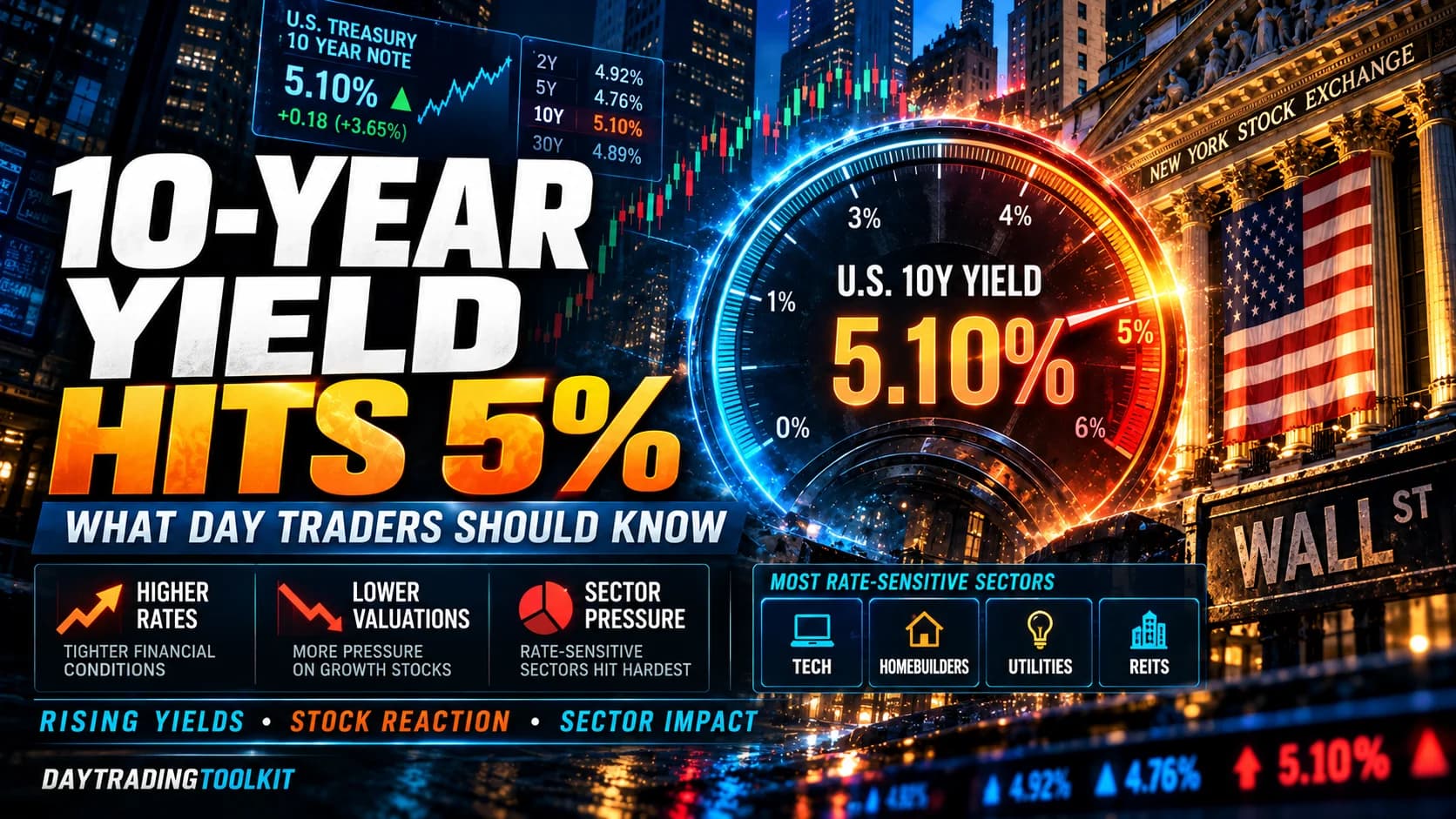
Our Weekly Market Insights for November 2 to 6 covers this week's earnings and data in more detail. If bond yields lead the next move, our guide to what a 5% 10-year yield means shows how to read that on your screen.
Do stocks usually rise after midterm elections?
Stocks usually have risen after midterm elections, but that history is a weak tool for a day trade. CNBC noted that the S&P 500 was higher one year later after every midterm going back to the early 1980s. That says little about the next session, and the sample is small.
The bigger reason for caution is that the same week can bring other news. In 2022, CPI overwhelmed the election reaction within two days. Our midterm election guide covers the historical data, why the pattern exists and where it goes wrong.
Frequently asked questions
Did Democrats win both the House and Senate in the 2026 midterms?
Is divided government good for stocks?
Could there be a government shutdown after the election?
What does the Democratic sweep mean for crypto stocks?
What happened to Treasury yields and the dollar after the election?
Disclaimer
Article Sources
- Reuters via Investing.com: AI data center stocks dip, renewables surge after Democrat sweep - sector and stock moves before the openinvesting.com
- Reuters via Yahoo Finance: Stocks rally, dollar dips after Democrats' midterm sweep - global market reactionfinance.yahoo.com
- Reuters via Yahoo Finance: Market analysts react to Democratic sweep - AI basket performance, yields and analyst viewsfinance.yahoo.com
- CNBC: Midterm elections could jolt stocks - JPMorgan and Goldman Sachs expectations, and post-midterm historycnbc.com
- Yahoo Finance: Stock market today - index futures, AMD, Nvidia and Micronsg.finance.yahoo.com
- Holland & Knight: Congress faces converging year-end deadlines - the December 11 funding deadlinehklaw.com