How AI Capex Disclosures Actually Move Chip and Memory Stocks

In this article10 sections
In April 2026, Microsoft beat Wall Street on revenue and earnings per share, then told investors it planned to spend $190 billion on data centers and AI infrastructure for the calendar year, up 61 percent from the year before. The stock fell. Three months later, Microsoft reported again, this time with Azure growth reaccelerating to 43 percent and a cloud business that had just crossed $100 billion in annual revenue. The stock jumped as much as 17 percent in a single session. Same company, same underlying spending story, opposite reactions four months apart.
If you trade anything touching AI infrastructure, chips, or memory, you've watched this pattern play out over and over without necessarily having a name for it. A hyperscaler's capital spending disclosure is one of the most reliable, recurring catalysts a chip or memory trader will encounter, and it doesn't move the way most earnings reactions do.
What is an AI capex disclosure? An AI capex disclosure is a company's reported or guided capital expenditure on AI infrastructure, primarily data centers, GPUs, custom chips, and networking equipment. Because that spending becomes revenue for chipmakers, memory suppliers, and server builders before it becomes revenue for the company spending it, these disclosures function as a real-time demand signal for an entire supply chain, months ahead of the actual orders showing up in anyone's earnings report.
The Mechanism: Why a Cloud Company's Spending Plan Moves a Chip Stock
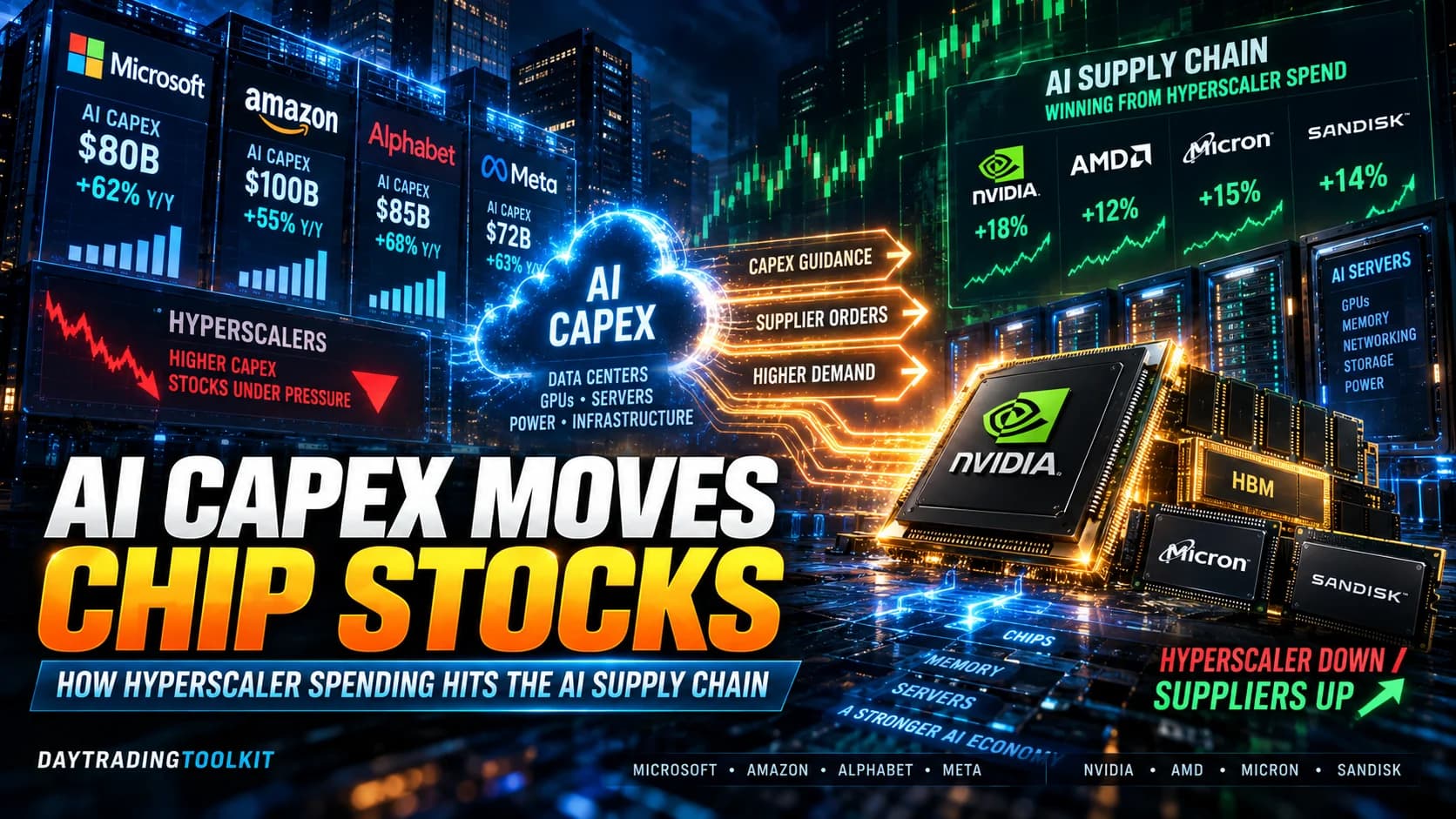
Every dollar a hyperscaler spends on AI infrastructure eventually lands in someone else's revenue line. Nvidia and AMD sell the GPUs. Micron and SanDisk sell the memory. Dell, Super Micro, and Hewlett Packard Enterprise build and ship the servers. That chain of demand is real, but it's also lagged: a chip company's own quarterly report only shows orders that have already shipped, while a hyperscaler's capex guidance tells the market what's coming before a single unit moves.
That's the core reason these disclosures matter so much to day traders specifically. The market doesn't wait for Micron's next earnings call to find out whether memory demand is accelerating. It prices that expectation the moment Microsoft, Google, Amazon, or Meta tells investors how much they plan to spend. The chip and memory names are, in effect, trading on someone else's forward guidance.
This is also why the reaction splits so cleanly along a single question: is this spending going to pay off? A hyperscaler's own stock gets judged on return on that capital. Its suppliers get judged on a much simpler math problem: more spending usually means more orders, full stop.
The Four Companies Whose Capex Guidance Actually Moves the Sector
Four hyperscalers account for the overwhelming majority of AI infrastructure spending, and their combined 2026 capital expenditure guidance landed somewhere in the $630 billion to $720 billion range, more than 60 percent above 2025's already-record spending.
- Company
- Amazon
- 2026 Capex Guidance
- Up to $200 billion
- Change From 2025
- Up from $125 billion
- Company
- Alphabet
- 2026 Capex Guidance
- $195 billion to $205 billion
- Change From 2025
- Up from roughly $91 billion
- Company
- Meta Platforms
- 2026 Capex Guidance
- $115 billion to $135 billion
- Change From 2025
- Up from $72 billion
- Company
- Microsoft
- 2026 Capex Guidance
- Roughly $175 billion to $190 billion
- Change From 2025
- Up from about $88 billion
| Company | 2026 Capex Guidance | Change From 2025 |
|---|---|---|
| Amazon | Up to $200 billion | Up from $125 billion |
| Alphabet | $195 billion to $205 billion | Up from roughly $91 billion |
| Meta Platforms | $115 billion to $135 billion | Up from $72 billion |
| Microsoft | Roughly $175 billion to $190 billion | Up from about $88 billion |
These four numbers, released across each company's own quarterly earnings calendar, are the single biggest recurring catalyst window for chip and memory stocks. A trader who knows when Amazon, Alphabet, Meta, and Microsoft report each quarter already knows, without any special research, the four days a year most likely to move the entire AI supply chain in one session.
The Same Number Can Send Two Stocks in Opposite Directions
Here's the part that trips up traders who treat every capex headline the same way: a bigger spending number is not automatically good news for the company spending it, even while it's close to automatically good news for that company's suppliers.
When Microsoft guided to $190 billion in April 2026, the market's question wasn't whether AI demand was real. It was whether Microsoft's own return on that spending justified the outlay, especially with gross margin compressing to its narrowest level since 2022 as depreciation costs mounted. Barclays and other analysts had spent the prior two quarters watching Microsoft beat on revenue and still sell off, because the capex number kept climbing faster than the market's confidence that it would convert into proportional revenue.
Meanwhile, that same $190 billion figure is unambiguous good news if you sell Microsoft the equipment behind it. A memory supplier doesn't need to know whether Microsoft's AI bet pays off in three years. It just needs to know a $190 billion order pipeline is bigger than a $150 billion one.
This is the single most useful thing to internalize about this mechanism: read a capex disclosure as two separate trades, not one. The hyperscaler's own stock reaction tells you what the market thinks about capital discipline and return on investment. The reaction in chip, memory, and server names tells you what the market thinks about near-term order volume. They can, and often do, move in opposite directions on the exact same piece of news.
One Company, Four Earnings Calls: Microsoft's 2026 Capex Reaction in Full
Microsoft's fiscal 2026 is close to a controlled experiment in this mechanism, because the same company reported four times in twelve months, and the market's reaction moved almost entirely on how convinced investors were that the spending was paying off.
In its fiscal second quarter, reported in late January 2026, Microsoft disclosed capital expenditures of $34.9 billion, well above its own prior guidance of around $30 billion. Investors grew visibly more cautious about whether spending was outpacing what the business could justify, even as the company kept beating headline estimates.
By its fiscal third quarter, reported April 29, 2026, the pattern had hardened. Microsoft beat both revenue and earnings per share estimates, then guided full calendar-year 2026 capex to $190 billion, a number that came in tens of billions above what analysts had modeled. Fourth-quarter revenue guidance also landed slightly below consensus. The stock fell. Looking back across that stretch, Microsoft had beaten Wall Street's estimates in each of three consecutive quarters and still watched shares decline every time, with drops in the high single digits on the worst of those days.
The reversal came in its fiscal fourth quarter, reported July 29, 2026. Azure growth reaccelerated to 43 percent, annual cloud revenue crossed $100 billion for the first time, and commercial remaining performance obligations, essentially locked-in future revenue, surged 84 percent to $678 billion. An accounting change tied to the useful life of data center equipment technically reduced the headline 2026 capex figure to about $175 billion, but that revision had nothing to do with why the stock moved. Shares opened more than 14 percent higher and closed the session up roughly 17 percent, the best single-day reaction of Microsoft's fiscal year.
Nothing about Microsoft's underlying spending trajectory reversed course between April and July. What changed was proof. Three straight quarters had asked the market to trust that record capex would eventually convert into revenue. The fourth quarter finally showed the conversion happening, in a locked-in backlog number rather than a promise, and the stock reaction reflected that shift instantly.
When It Isn't Even an Earnings Report
The mechanism doesn't only fire on scheduled hyperscaler earnings days. Two other 2026 episodes show it working through entirely different triggers.
In late July 2026, a broad selloff wiped more than $1 trillion off the combined value of the world's largest chip stocks over the course of a week, with no single company's earnings report as the cause. Intel fell nearly 6 percent, AMD lost 8 percent, and memory names Micron, Seagate, and SanDisk each dropped more than 8 percent, with SanDisk down as much as 14 percent on the worst day. One analyst described it plainly as the market giving back some of the AI trade's froth. There was no bad news from any individual company. The sector had simply run far enough, fast enough, that a broad re-rating didn't need a specific catalyst to trigger it.
More recently, in mid-September 2026, Anthropic CEO Dario Amodei published an essay calling on AI labs to slow the pace of frontier model development, and OpenAI and xAI's leaders backed the idea within hours. Chip stocks sold off sharply in the following session, even though nothing about actual data center spending had changed yet. The market was pricing a hypothetical: if the industry's own leaders are calling for a slower pace, does that eventually show up as smaller capex budgets down the road. Whether that repricing holds is a separate question from whether it happened, but it happened for a reason that had nothing to do with a spending number at all.
Both episodes are useful precisely because they show the mechanism extends beyond earnings day. Anything that changes the market's read on future AI infrastructure demand, a sentiment shift, a policy statement, a sector-wide valuation reset, can move the same stocks a capex guidance number moves, through the same underlying logic.

The Backlog Signal: Watching Order Books, Not Just Spending Totals
A capex total tells you how much a hyperscaler plans to spend. A backlog figure tells you how much of that spending is already contracted to a specific supplier, which is a meaningfully more concrete signal.
In August 2026, Super Micro Computer disclosed blowout revenue guidance alongside a customer base that had grown to nine companies each generating more than a billion dollars in annual revenue, double the prior year's count. The read-through was immediate: Dell and Hewlett Packard Enterprise both gained in premarket trading the same morning, and smaller data center operators CoreWeave, Nebius, Applied Digital, and IREN all moved higher as well, none of them having reported anything themselves that day. Dell was separately sitting on a record AI systems backlog of $51.3 billion entering that reporting cycle, and HPE carried a cumulative AI backlog of $16.4 billion, both figures that function as a forward order book rather than a spending intention.
This is the closest equivalent in this framework to checking confirmed supply data instead of trading on a headline alone. A capex guidance number is a plan. A backlog figure is a contract. When you're trying to judge whether a sector-wide move has real substance behind it, a rising backlog at multiple companies simultaneously is a sturdier signal than any single company's spending forecast.
How to Actually Trade This
The practical version of this framework comes down to knowing the calendar and splitting your read into two separate questions every time a number lands.
Know the four dates. Amazon, Alphabet, Meta, and Microsoft each report quarterly, and their capex commentary is disclosed on a predictable cycle. These are the highest-probability windows for an AI infrastructure-wide move, scheduled months in advance.
Split the reaction. Ask what the number means for the company reporting it, separately from what it means for that company's suppliers. A hyperscaler selling off on a capex beat is not the same signal as a hyperscaler's suppliers selling off on the same news, and conflating the two is how a trader misreads which side of the chain is actually exposed.
Use the semiconductor sector ETF as a confirmation check. A single chip stock's reaction can be driven by company-specific noise. Watching whether the broader semiconductor sector actually moves alongside an individual name, rather than reacting to one ticker in isolation, tells you whether you're looking at a sector-wide repricing or a company-specific story. This is the same sector rotation logic that applies to any sector-driven catalyst: the individual stock matters less than whether its peers are confirming the move.
Watch backlog and order-book disclosures, not just capex totals. A rising backlog across multiple suppliers at once is a firmer signal than a single spending forecast, for the same reason confirmed physical supply data matters more than rhetoric in a commodity shock. Relative volume on the specific names reacting to a backlog disclosure is a fast way to judge whether the move has real participation behind it before you commit to reading it as sector-wide.
Use a scanner built for same-morning sector reactions. When one company's guidance moves five or six related tickers before the broader market has caught up, Trade Ideas can flag the unusual volume across the whole group in real time, which matters more here than in a slower-developing setup, since read-through moves like the August 2026 Super Micro reaction happen in the first hour of trading, not over days.
For how this mechanism is showing up in the market this week specifically, DayTradingToolkit's Weekly Market Insights tracks it alongside every other live catalyst as it develops.
Where This Framework Breaks Down
The biggest risk in this framework is treating a headline capex number as a clean, stable figure. Microsoft's own 2026 guidance moved from $190 billion to $175 billion between quarters purely because of an accounting change in how the company depreciates data center equipment, not because actual spending plans changed. Reading only the topline number without checking why it moved can lead to a completely backwards conclusion about whether spending is accelerating or slowing.
The second risk is treating a backlog as guaranteed revenue. Super Micro's own blowout guidance in August 2026 came with an explicit caveat from its CEO that the prior quarter's revenue had missed expectations specifically because of short-term customer delays in power, cooling, and networking infrastructure, not because demand had disappeared. A backlog is a contract to eventually deliver, not a confirmation that the delivery, and the associated revenue recognition, happens on the timeline the market is currently pricing.
The third risk is assuming sentiment is stable. The September 2026 reaction to an AI industry slowdown essay showed how quickly a sector-wide repricing can happen on pure sentiment with no change in actual spending, and reactions built on sentiment alone can reverse just as fast as they appeared. Treat a same-day, no-new-spending-data move as inherently less durable than a move tied to an actual disclosed number, until price action proves otherwise.
Where This Fits a Complete Trading Plan
This isn't a reason to build a strategy around predicting whether any individual hyperscaler's AI bet pays off. It's a framework for recognizing a catalyst you'll see repeatedly for as long as AI infrastructure spending remains a market-moving theme: a spending disclosure that reads as bad news for the company making it and good news for the companies supplying it, a backlog figure that carries more weight than a forecast, and a sector that can reprice on sentiment alone even when no new dollar has actually been spent. The specific numbers will keep changing. The mechanism connecting a hyperscaler's spending plan to its suppliers' stock prices will not.
Frequently Asked Questions
What counts as an AI capex disclosure?
The most market-moving versions come from the four largest hyperscalers, Amazon, Alphabet, Meta, and Microsoft, since their combined spending represents the overwhelming majority of the AI infrastructure buildout. Forward guidance tends to move markets more than a single quarter's actual reported figure, since guidance tells the market what's coming rather than confirming what already happened.
Key Takeaway: Watch guidance commentary during earnings calls at least as closely as the headline capex number itself.
Why does a hyperscaler's stock sometimes fall on a capex beat while chip stocks rise on the same news?
Microsoft's April 2026 earnings report is the cleanest example: a revenue and earnings beat paired with a $190 billion capex guide still sent the stock lower, because investors questioned whether the spending pace was outrunning proof of payoff, even as the same guidance implied a larger order pipeline for Microsoft's own suppliers.
Key Takeaway: Read a capex disclosure as two separate trades, the spender and the suppliers, rather than one uniform reaction.
Which specific companies' earnings actually move the AI infrastructure trade?
Their quarterly earnings dates are public and scheduled months in advance, which makes this one of the more predictable recurring catalyst windows available to a day trader, unlike most market-moving news that arrives without warning.
Key Takeaway: Mark all four companies' quarterly earnings dates on your calendar as high-probability AI infrastructure catalyst days.
What is a backlog figure, and how is it different from a capex number?
Dell entered its most recent reporting cycle with a record $51.3 billion AI systems backlog, and Hewlett Packard Enterprise carried a cumulative $16.4 billion AI backlog, both disclosed alongside earnings. Those figures represent business already on the books rather than a company's stated intention to spend in the future.
Key Takeaway: A rising backlog across several suppliers at once is a sturdier signal of real demand than any single company's spending forecast.
Does rising AI capex guarantee chip and memory stocks will rise?
The late July 2026 chip-sector selloff, which erased more than $1 trillion in combined value across major chip and memory names in a single week, happened with no negative company-specific news at all. The sector had simply run far enough that a broad re-rating didn't need a new catalyst to trigger it.
Key Takeaway: Treat a rising capex trend as a tailwind, not a guarantee, and watch for signs the broader sector is due for a re-rating regardless of the next individual data point.
Why did chip stocks fall on an AI safety essay instead of an actual spending cut?
No hyperscaler had actually reduced a spending plan when the reaction happened. The move reflected the market repricing a hypothetical outcome rather than a confirmed one, which is also why reactions built on sentiment alone can unwind quickly if the underlying spending data doesn't ultimately shift.
Key Takeaway: A sentiment-driven move with no new spending data behind it deserves more skepticism than a move tied to an actual disclosed number.
How often do major AI capex disclosures actually happen?
Beyond the scheduled dates, the same stocks can also move on unscheduled news, like a sector-wide valuation reset or an industry-wide policy or safety statement, that shifts the market's expectations about future spending without any company actually changing its guidance that day.
Key Takeaway: Treat the quarterly hyperscaler earnings calendar as your scheduled watch list, and stay alert for unscheduled sentiment-driven moves in between.
Can an accounting change make a capex number misleading?
Reading only the headline number without checking the reason behind a revision can lead to the wrong conclusion about whether a company is actually accelerating or slowing its AI investment.
Key Takeaway: When a capex figure changes between quarters, check whether the underlying spending changed or whether an accounting assumption did.
Is there a way to front-run these disclosures before they happen?
Options pricing ahead of these earnings dates typically implies the market's own expected move, which is a more honest gauge of anticipated volatility than trying to independently predict the exact guidance figure.
Key Takeaway: Focus preparation on knowing the consensus estimate and the broader payoff narrative rather than trying to guess the exact spending number in advance.
Does this mechanism apply to companies outside the big four hyperscalers?
The core lesson holds regardless of which company is spending: the market's reaction depends on whether investors trust the spending will pay off, not simply on how large the number is.
Key Takeaway: Apply the same two-question framework, what does this mean for the spender versus its suppliers, to any AI infrastructure spending disclosure, not just the largest four.
Disclaimer
Article Sources
- CNBC: Microsoft (MSFT) Q3 earnings report 2026 - reporting on Microsoft's April 2026 earnings beat and $190 billion capex guidance
- Microsoft Investor Relations: Fiscal Year 2026 Third Quarter Earnings Conference Call - primary transcript detail on capex guidance and component pricing
- CFO Dive: Microsoft holds the line on AI spending plans - reporting on the accounting-driven revision from $190 billion to $175 billion
- Investing.com: Microsoft surges on strong revenue outlook, maintained capex guidance - reporting on Microsoft's July 2026 earnings reaction
- Yahoo Finance: Dell, HPE gain pre-market as SMCI posts blowout revenue guidance - reporting on the August 2026 backlog-driven read-through across server and data center names
- CNBC: Chip stocks shed more than $1 trillion as selloff hits companies powering AI boom - reporting on the late July 2026 sector-wide chip selloff
Was this helpful?
Be the first to weigh in

Written by
Kazi Mezanur RahmanFounder, independent researcher, and editor of DayTradingToolkit. A one-person publication focused on risk-first trading education and documented tool research. He trades his own capital as a retail trader and combines personal market experience with systematic primary-source research.
Keep Reading

Market Analysis & Insights
Weekly Market Insights July 20–24, 2026: Can Big Tech Earnings Repair the AI Trade—or Will Oil Keep Control?
Prepare for Alphabet, Tesla, Intel, the ECB, flash PMI, and oil-driven volatility with a focused July 20–24 market map, watchlist, scenarios, and risks.
Market Analysis & Insights
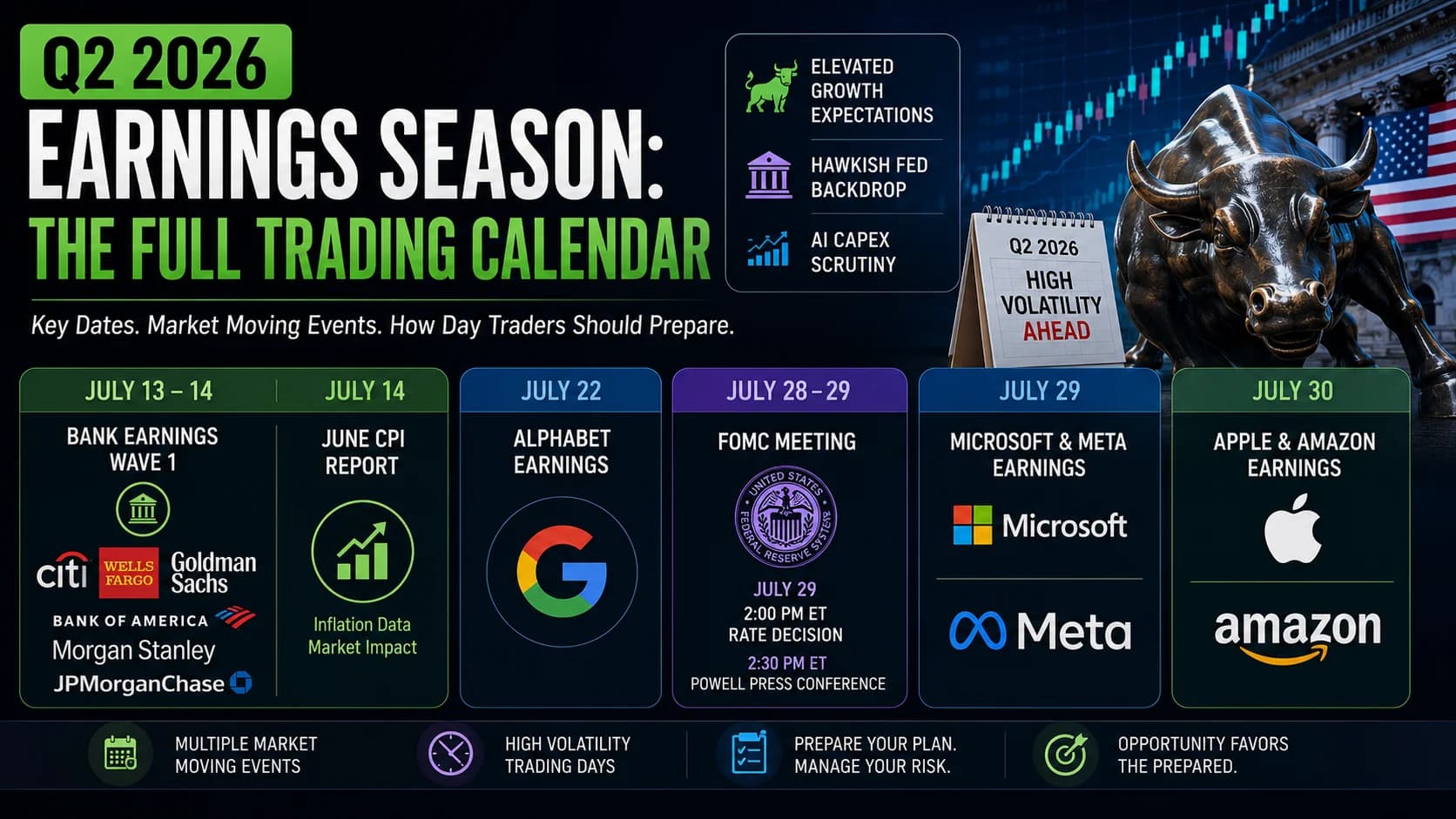
Q2 2026 Earnings Season: The Full Trading Calendar
Q2 2026 earnings season collides with a hawkish Fed and heavy AI capex scrutiny. Full date-by-date calendar for July's key days and how day traders should prepare.
Market Analysis & Insights
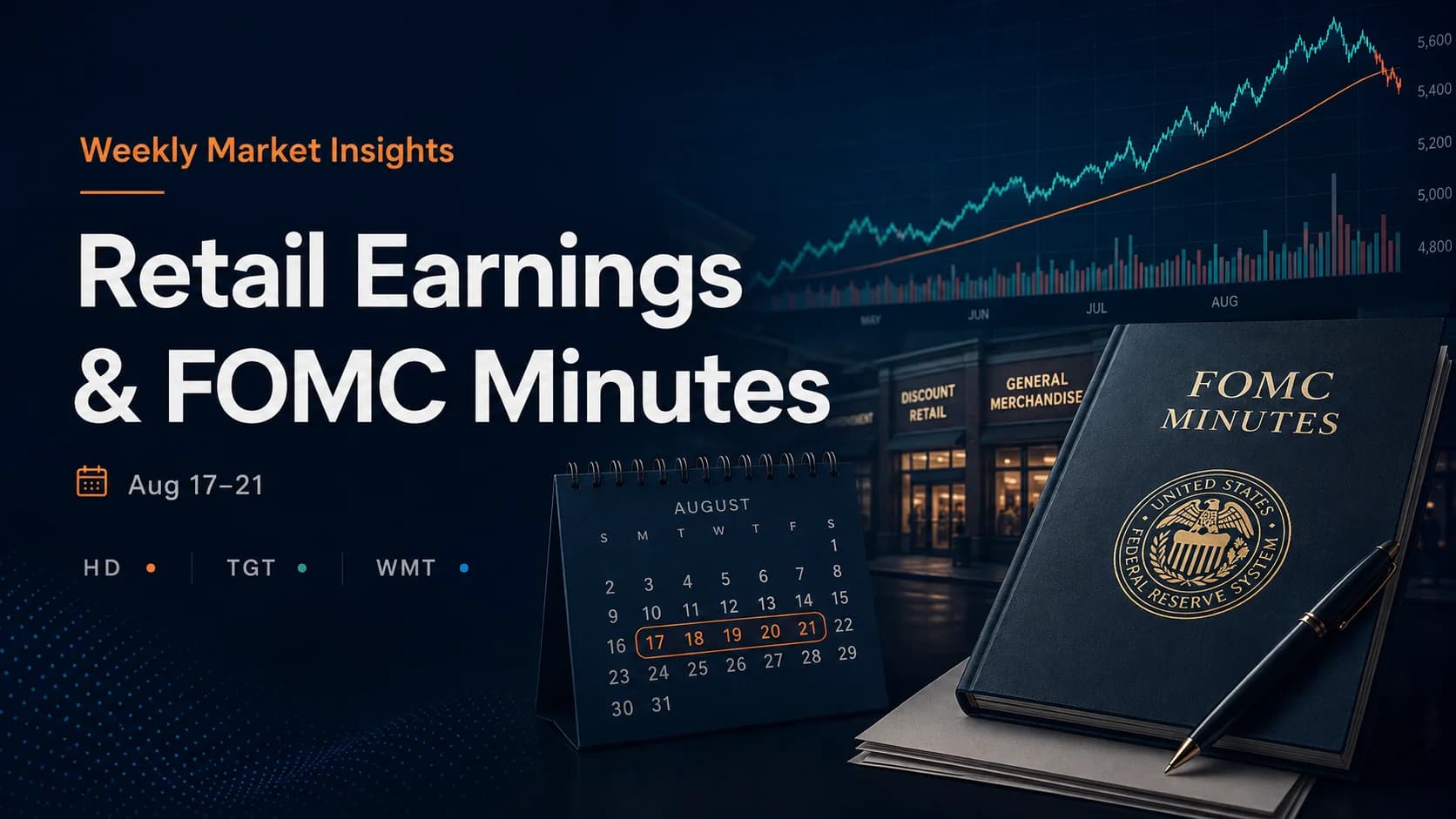
Calm Markets, Cracking Consumer: Weekly Market Insights, August 17-21
Records sit atop a divided Fed (9-3, most split since 2016), rising oil, and cracking consumer data. This week's five retail earnings, FOMC minutes, and an active Hormuz standoff will test whether the calm is justified.
Market Analysis & Insights
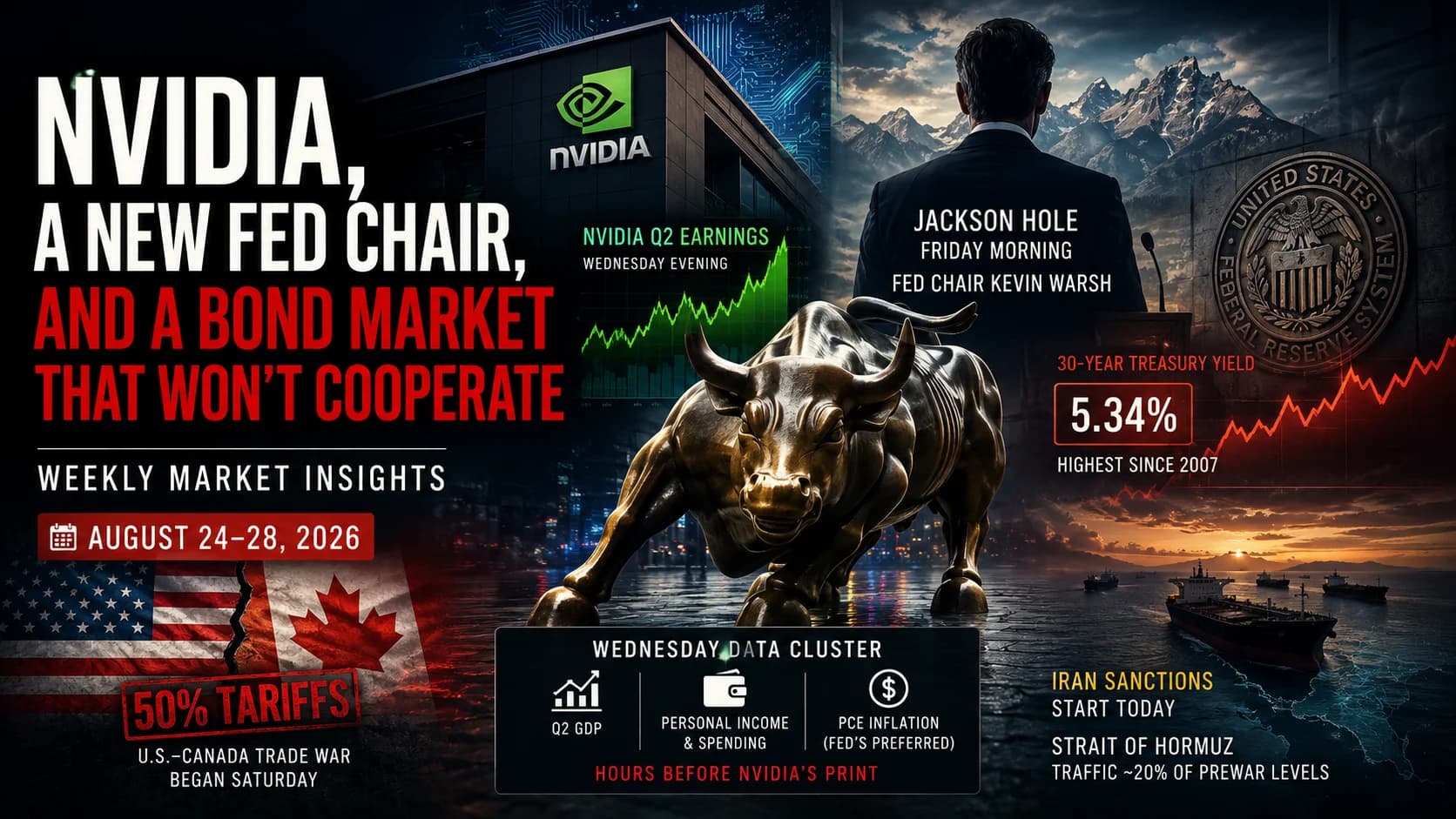
Nvidia, a New Fed Chair, and a Bond Market That Won't Cooperate: Weekly Market Insights, August 24-28
Warsh's first Jackson Hole speech, Nvidia's earnings, and fresh Iran and Canada shocks collide this week. The full Aug 24-28 catalyst map, stock watchlist, and scenario tree for traders.
Comments
No comments yet. Be the first to share your thoughts.