
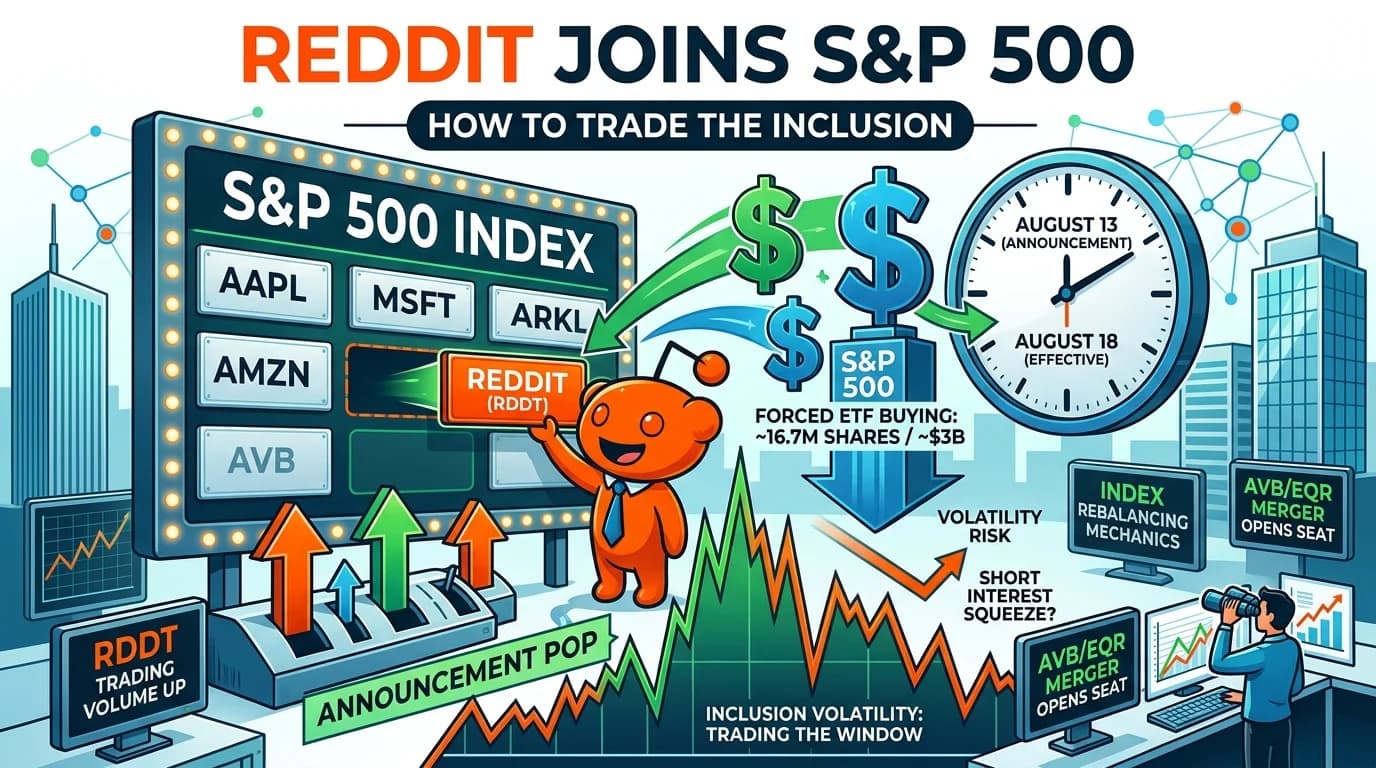
S&P Dow Jones Indices announced after the close on Thursday, August 13, 2026 that Reddit would join the S&P 500 effective before trading opened the following Tuesday, August 18. The stock jumped roughly 11% in After-Hours TradingTrading that occurs after the regular market session closes at 4:00 PM ET, typically available from 4:00 PM to 8:00 PM ET. After-hours volume is usually thin, bid-ask spreads are wider, and price moves can be more dramatic and less reliableRead definition → within minutes of the announcement, then closed up 12.6% at $178.09 the next session.
That's the headline. The more useful story for a day trader is what happened between that announcement and the actual inclusion four trading days later, because it's a clean, recent, real-money example of a pattern this site has documented before: the forced buying from an index addition is real and mechanically certain, but the price pop that traders assume comes with it is a much weaker bet than the news coverage implies.
What is S&P 500 inclusion? S&P 500 inclusion is when S&P Dow Jones Indices adds a company to its benchmark index, forcing every fund and ETF that tracks the S&P 500 to buy shares of that company to match the new composition. Because trillions of dollars track the index, an addition creates concentrated, price-insensitive buying demand around the effective date, regardless of what any individual fund manager thinks of the stock.
The Setup: Why Reddit Got the Seat
Reddit didn't get added because the S&P 500's Index Committee went looking for a new name to include. It got added because a seat opened up. AvalonBay Communities, an existing S&P 500 constituent, is being acquired by fellow index member Equity Residential in an all-stock merger of equals worth roughly $69 billion in combined enterprise value. Once that deal closes, the combined company will be renamed Vivmark Residential and trade under a new ticker, but it stays in the index. AvalonBay's standalone slot simply disappeared, and the Index Committee had to pick something to FillA fill is the execution of an order — when your buy or sell order is matched with a counterparty and the transaction is completed, you've received a fill.Read definition → it.
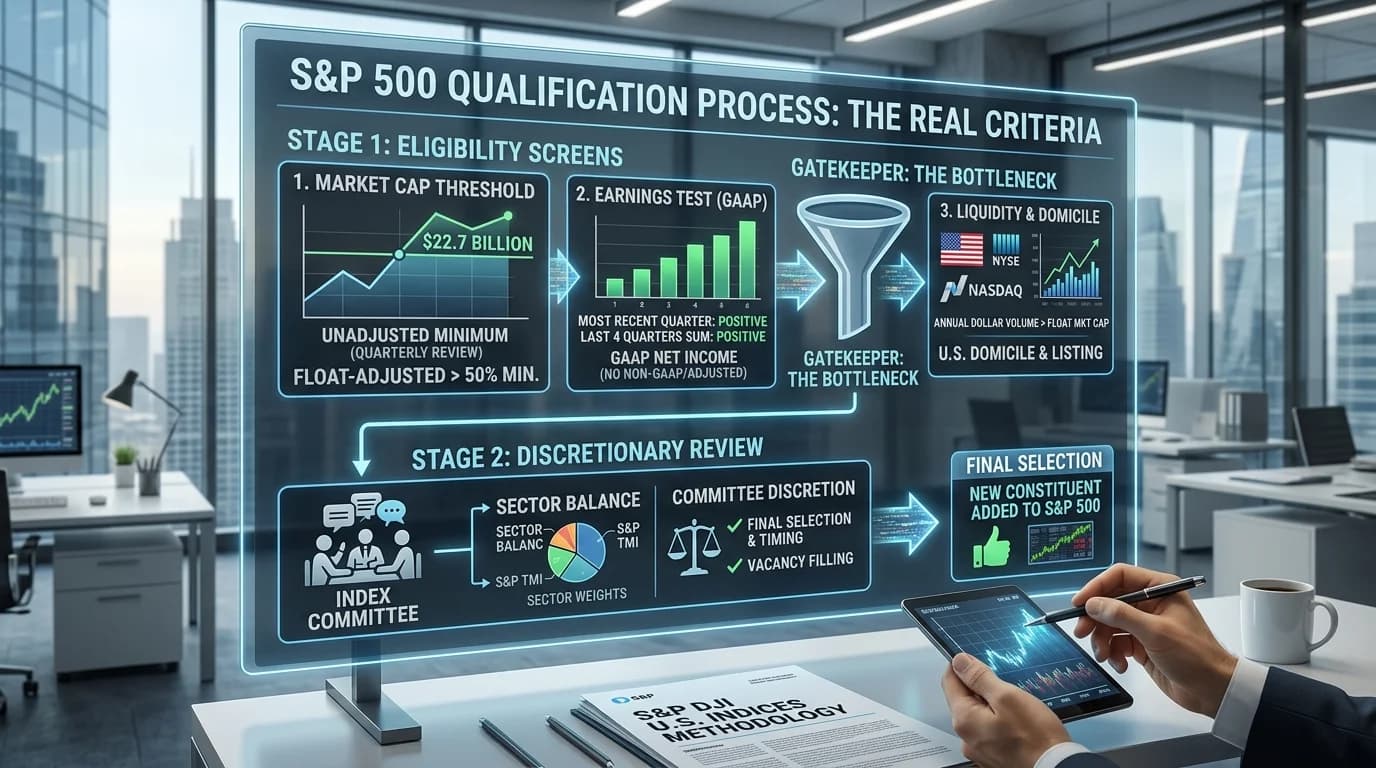
Reddit had been passed over for S&P 500 inclusion twice already in 2026, losing out to Ferguson Enterprises earlier in the summer and to Marvell Technology and Flex back in June, despite already clearing the index's market-cap and profitability bars analysts had flagged as the likely green light. The AvalonBay vacancy is what finally got it there, not a fresh qualification event. That distinction matters: Reddit had been eligible on the numbers for months before the Committee actually picked it, which is a useful reminder that clearing the quantitative criteria and getting selected are two different steps. This site's breakdown of exactly what those quantitative criteria are covers Reddit's specific numbers in more detail.
Reddit becomes only the second pure-play social media company in the S&P 500, joining Meta. It reported its first full year of GAAP profitability in 2025, and its second-quarter 2026 revenue of $805 million, up 61% year-over-year, comfortably cleared the index's EarningsAn earnings report is the quarterly financial disclosure a public company files with the SEC, revealing revenue, earnings per share (EPS), profit margins, and forward guidance — it's the most significant regular catalyst for individual stocRead definition → screen. The company had posted eight consecutive quarters of revenue growth above 60% heading into the announcement.
The Forced-Buying Math
JPMorgan's trading desk estimated the mandatory index-fund purchase at roughly 16.7 million shares, worth close to $3 billion at the price the stock was trading around the announcement. That's about 8% of Reddit's 207 million fully diluted shares, and it works out to nearly three times the stock's average daily VolumeVolume is the total number of shares (or contracts) traded during a given time period — it's the primary confirmation tool for all price action, because a price move accompanied by high volume indicates genuine market participation, while tRead definition → of 5.98 million shares since its March 2024 IPO, though Reddit's actual volume in the days around this event ran considerably higher than that historical average.
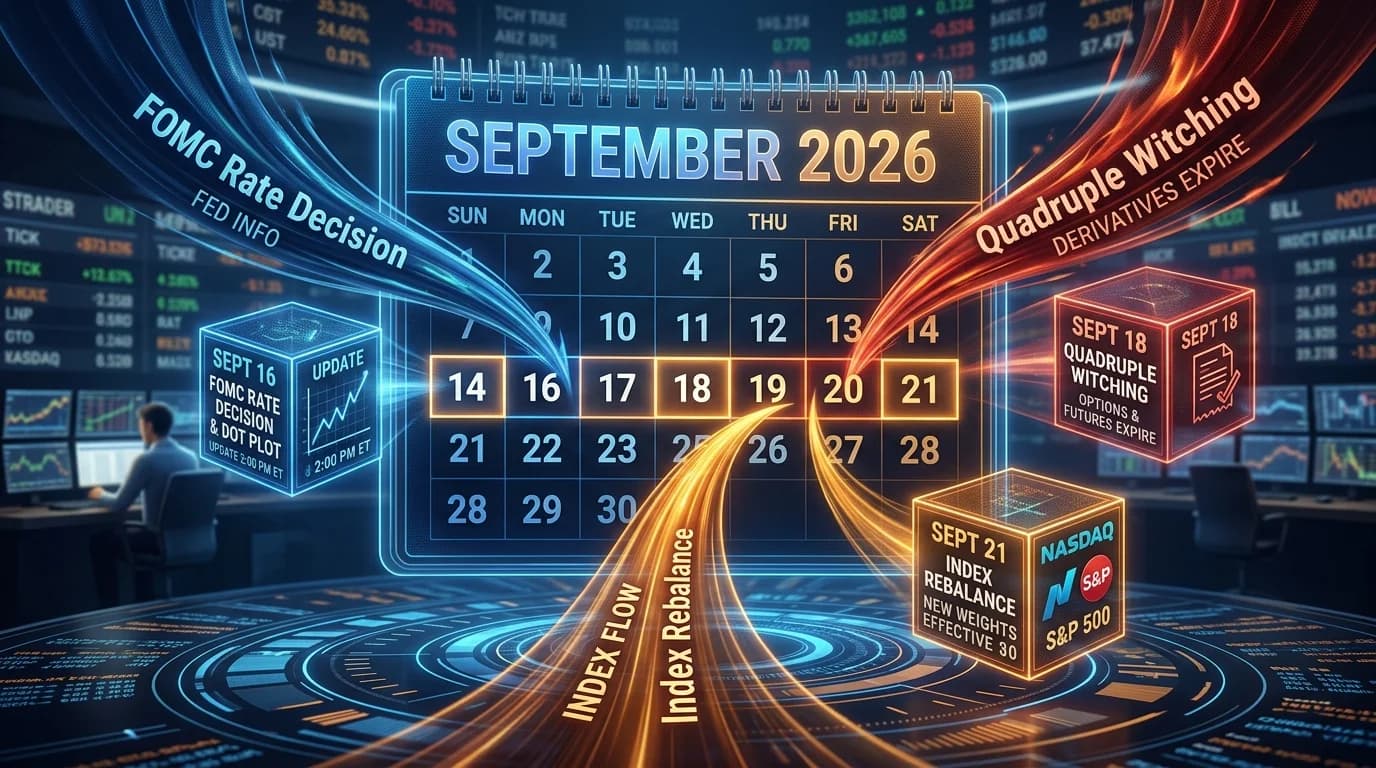
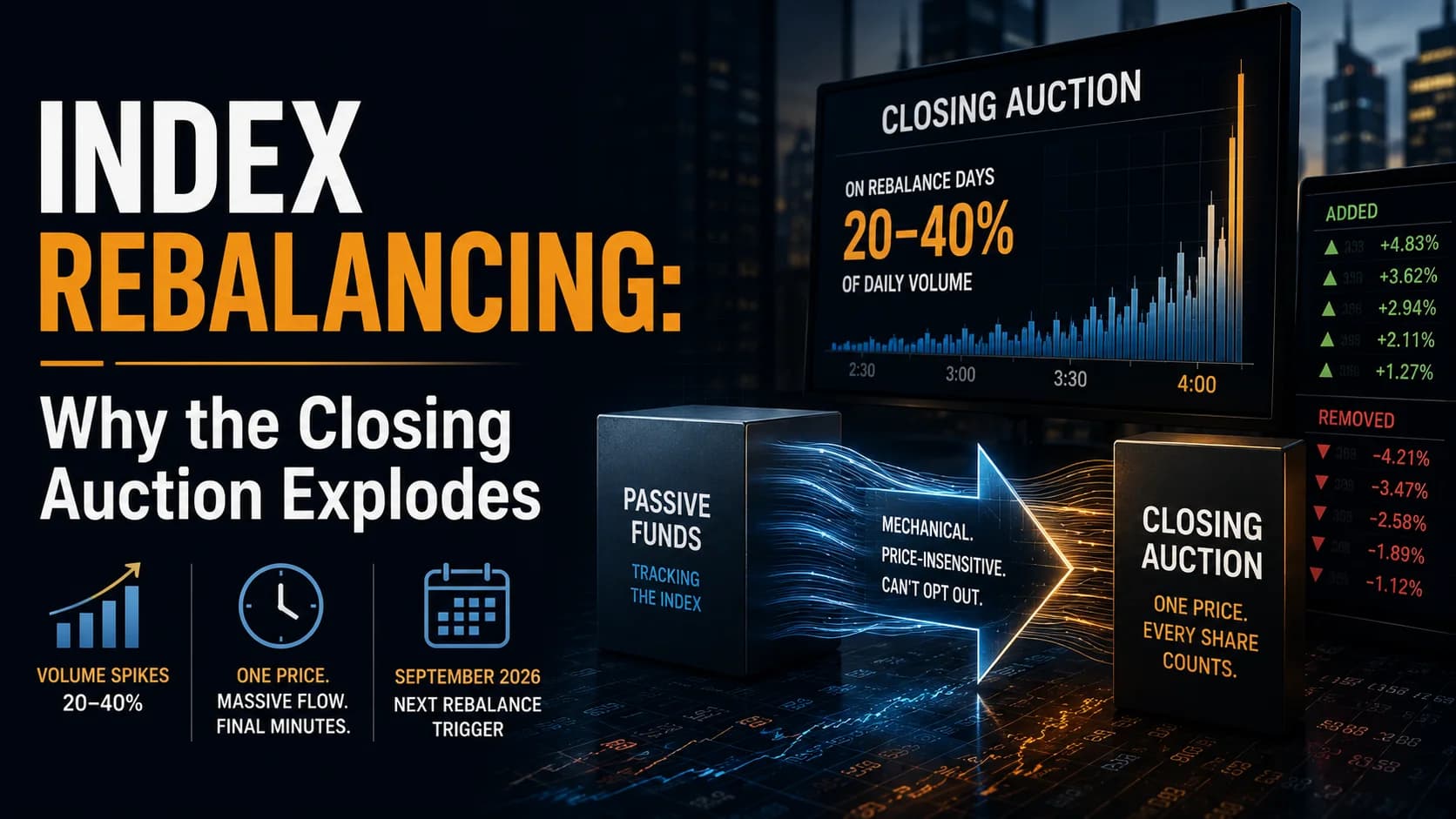
Most of that mandatory buying doesn't trickle in evenly over four trading days. It concentrates into the closing auction on the last session before the effective date, in this case Monday, August 17, for the same structural reason covered in this site's guide to index rebalancing mechanics: funds are measured against closing prices, so buying exactly at the close eliminates the tracking-error risk of buying earlier and having the stock drift before the benchmark officially reconstitutes.
There's a second layer specific to Reddit that most coverage of the announcement skipped past. Roughly 19.2 million Reddit shares were sold short heading into the news, about 13.24% of the available FloatFloat is the number of shares of a company that are actually available for public trading — it excludes shares held by insiders, major institutions with lock-ups, and the company itself.Read definition →, nearly four days' worth of the stock's own trading volume. A short seller doesn't have to cover because of an index addition, but a stock that's both facing $3 billion of mandatory buying and carrying a meaningfully large short position has two separate sources of demand that can show up at the same time. This site's short squeeze playbook covers how to distinguish a genuine squeeze from ordinary index-driven volume, a distinction that mattered here.
What Actually Happened
The stock's actual path from announcement to inclusion is the part worth studying closely, because it didn't move in one direction.
Thursday, August 13 (after close): S&P Dow Jones Indices announces the addition. RDDT jumps as much as 11% within minutes in after-hours trading.
Friday, August 14: The stock opens sharply higher and keeps climbing, closing the regular session up 12.63% at $178.09, after touching an intraday high near $184.28. This is the announcement pop, the reaction to the news itself, not to any actual buying yet, since the mandatory index-fund purchases hadn't executed.
Monday, August 17: This is the session when index funds print the bulk of their required buying in the closing auction, ahead of Tuesday's effective date. Reddit gave back a meaningful chunk of Friday's gain intraday, at one point trading roughly 8% lower on the day, before the closing-auction demand arrived. Raymond James used the pullback as an entry point to raise its price target to $205 while maintaining a Strong Buy rating.
Tuesday, August 18: Reddit's first day as an official S&P 500 constituent. The stock opened near its Friday closing levels, briefly pushed to a marginal new high, then reversed hard and closed the session well below where it had closed on the announcement-reaction day four sessions earlier, giving back essentially all of the initial pop and then some.
Line up those four sessions and the pattern is unmistakable: the biggest move happened on the news itself, not on the actual mechanical buying. By the time the index-fund purchases were done executing, the stock had already surrendered most of the gain that the announcement produced. That's not a coincidence specific to Reddit. It's the same "buy the rumor, sell the inclusion" pattern this site documented in SpaceX's Nasdaq-100 addition in July, playing out again on a completely different stock, index, and sector just weeks later.
What History Actually Says About the "Index Pop"
The mechanical demand from an S&P 500 addition is not in dispute. Whether that demand reliably translates into a lasting price gain is a separate question, and the academic research on it has moved in one direction for thirty years.
Research from Robin Greenwood and Marco Sammon tracking S&P 500 additions found that the average announcement-day return for a new addition fell from about 7.4% in the 1990s to roughly 0.3% in more recent years, and that additions have typically lagged the broader index by about 2% over the three months following their actual inclusion date. The effect hasn't disappeared because index funds stopped buying. It's shrunk because the trade has become crowded: professional index-arbitrage desks and quantitative funds now model expected additions and position ahead of the announcement, which means much of the theoretical "pop" gets captured, and then unwound, before a retail trader reacting to the headline can participate in it.
Reddit's own four-session round trip is a compressed, real-time version of exactly that research finding. The stock captured most of its gain on the announcement itself, when informed positioning moved first, and gave much of it back by the time the mechanical buying that retail coverage focused on had actually finished executing.
Where This Setup Goes Wrong
The most common mistake is treating "the fund has to buy" and "the stock will go up from here" as the same claim. They aren't. The buying is contractually certain. The direction from whatever price the stock happens to be at when a trader notices the news is not, and Reddit's own path from $184.28 intraday on the announcement day to a lower close on the actual effective date four sessions later is a direct demonstration of why.
A second mistake is ignoring the short interest angle entirely, in either direction. Assuming 13% short interest guarantees a squeeze on top of the index flow overstates the case; short sellers aren't required to cover on any particular timeline. But ignoring that a meaningfully shorted stock is facing two separate potential sources of buying pressure at once, mandatory index flow and any short covering that does occur, means missing part of what made this specific setup more volatile than an ordinary addition.
A third mistake, relevant to Reddit specifically, is not checking whether a stock was already eligible on the numbers before treating the announcement as fresh, unpriced information. Reddit had reportedly cleared the S&P 500's financial and size criteria for months before this particular vacancy opened up. Traders who had already modeled Reddit as a likely eventual addition were positioned well before August 13, which is part of why the stock had room to give back gains once the news-driven buyers who weren't already in the trade started taking profit.
Frequently Asked Questions
Why was Reddit added to the S&P 500 specifically on August 18, 2026?
The announcement came after the market closed on Thursday, August 13, with the change effective before trading opened the following Tuesday, August 18. This was a vacancy-driven addition rather than a scheduled quarterly rebalance, which is why the announcement-to-effective gap was four trading days rather than the multi-week gap typical of a routine rebalance.
Key Takeaway: Not every addition follows the quarterly calendar. Corporate actions like mergers can create vacancies and additions at any time.
Does getting added to the S&P 500 guarantee a stock goes up?
Reddit's own path from an intraday high near $184.28 on the announcement-reaction day to a lower close on its actual first day in the index, four trading days later, is a compressed real-world example of that same pattern. The forced buying is certain. The net price direction from whatever level the stock is at when most traders notice the news is not.
Key Takeaway: Treat "the fund has to buy" and "the price will rise from here" as two separate claims, because the data supports the first one far more reliably than the second.
How many shares did index funds actually have to buy?
That volume is required, not optional, for any fund tracking the S&P 500. What's not required is that the buying happens at any particular price relative to where the stock was trading before the news, which is the distinction that trips up traders chasing the headline number.
Key Takeaway: The dollar figure describes the size of the required trade, not the direction the stock will move as a result of it.
When does the actual mandatory buying happen, the announcement date or the effective date?
Funds are measured against closing prices, so buying exactly at the close on the day before the change takes effect eliminates the tracking-error risk of buying earlier and having the stock drift before the index officially reconstitutes. The announcement date is when the news becomes public; the closing auction one session before the effective date is when most of the actual mechanical volume prints.
Key Takeaway: The announcement and the mechanical buying are two different events separated by several trading days, and treating them as the same moment is a common source of confusion.
What role did short interest play in Reddit's stock reaction?
Short interest doesn't have to cover because of an index addition, so this shouldn't be read as a guarantee of a squeeze. But a stock facing both required index buying and a meaningfully large short position carries a different risk profile than an addition with negligible short interest, since both sources of demand can theoretically arrive around the same dates.
Key Takeaway: High short interest around an index event raises volatility risk in both directions. It doesn't guarantee a squeeze on its own.
How is this different from the SpaceX Nasdaq-100 addition covered elsewhere on this site?
Both events produced the same "buy the rumor, sell the inclusion" price pattern, though. That's the more durable lesson: the specific qualification mechanism varies by index, but the market's tendency to price in an addition before the mechanical buying arrives, and then unwind that positioning once the buying is done, shows up across both.
Key Takeaway: See this site's full breakdown of SpaceX's Nasdaq-100 fast-track addition for how the mechanically different Nasdaq-100 process compares.
Was Reddit's addition really new information, or was it already expected?
That prior positioning is part of why the stock had room to give back gains once the news-driven buying faded. Traders who treat an addition announcement as a completely fresh signal, without checking whether the company had already been a known candidate, are often trading several steps behind money that had the same information weeks or months earlier.
Key Takeaway: An index addition announcement is rarely a complete surprise to professional desks, even when it's genuine news to retail traders.
Should a day trader avoid trading index-addition events entirely after seeing this pattern?
The four-session window between Reddit's announcement and its actual inclusion produced real, elevated volatility and volume in both directions, which creates opportunities for traders who are tracking the mechanics rather than reacting to the headline alone.
Key Takeaway: This site's risk management cheat sheet is worth reviewing before sizing any position around an index event, given how much the price path can diverge from the "guaranteed buying" headline.
Disclaimer
Article Sources
- CNBC: Reddit shares jump 11% on inclusion in S&P 500 - confirms the August 13 announcement, the effective date, and the AvalonBay/Equity Residential merger context.cnbc.com
- StockTitan: Reddit Set for S&P 500 Index Addition Aug. 18 - the official S&P Dow Jones Indices press release text on the addition and related index changes.stocktitan.net
- Schaeffer's Investment Research: Reddit Stock Jumps on S&P 500 Inclusion - short interest data and the Friday, August 14 premarket and close figures.schaeffersresearch.com
- Blockonomi: Reddit (RDDT) Stock Drops 8% Just Before S&P 500 Entry - the Monday, August 17 pre-effective-date pullback and Raymond James price-target update.blockonomi.com
- The Disappearing Index Effect (Greenwood and Sammon research, via top1markets.com analysis) - academic findings on the decline in S&P 500 addition returns since the 1990s and JPMorgan's forced-buying estimate for Reddit specifically.top1markets.com
- Odaily: Reddit is set to join the S&P 500 Index on August 18 - Reddit's Q2 2026 revenue and earnings figures used in the S&P 500 profitability screen.odaily.news