
Place a Limit OrderA limit order is an instruction to buy or sell a security at a specified price or better — a buy limit will only execute at your price or lower, a sell limit will only execute at your price or higher, guaranteeing the price but not the fillRead definition → at 11 p.m. on Nasdaq's new overnight session, and it's gone at 4 a.m. if it hasn't filled. That's one of the overnight stock trading rules that will surprise traders when US exchanges start running 23 hours a day on December 6.
The new session looks like an ordinary market on your screen, but it runs on its own rules. A trade on Monday night carries Tuesday's date. A Market OrderA market order is an instruction to buy or sell immediately at the best available price — it guarantees execution but not the price, meaning in fast or illiquid markets you can receive a significantly worse fill than the last quoted price.Read definition → won't work. And a cheap stock can swing much further than the headline 20% band suggests. Here's what actually changes, with the numbers you need before you place your first trade after 9 p.m.
In 30 seconds
- The US exchange overnight session is scheduled to start Sunday, December 6, 2026, and runs 9:00 p.m. to 4:00 a.m. ET, Sunday through Thursday nights.
- The exchanges plan to accept limit orders only overnight, so market orders aren't available.
- Overnight price bands sit 20% from reference prices, with a minimum width of $3 for stocks closing at $1 or more.
- On Nasdaq, orders still open at 4:00 a.m. are canceled and must be entered again.
When does overnight stock trading start on US exchanges?
Overnight stock trading on US exchanges is scheduled to start at 9:00 p.m. ET on Sunday, December 6, 2026. The session then runs from 9:00 p.m. to 4:00 a.m. ET, Sunday through Thursday nights, and connects to the existing premarket session at 4:00 a.m.
The SEC has conditionally approved 23-hour trading on five exchanges: Nasdaq, NYSE Arca, Cboe, MEMX and 24X. The launch depends on the consolidated data feeds being ready, and exchange representatives said at the SEC's September 17 roundtable that they remain on track. Nasdaq still describes December 6 as the expected date, pending that readiness and any applicable rule changes.
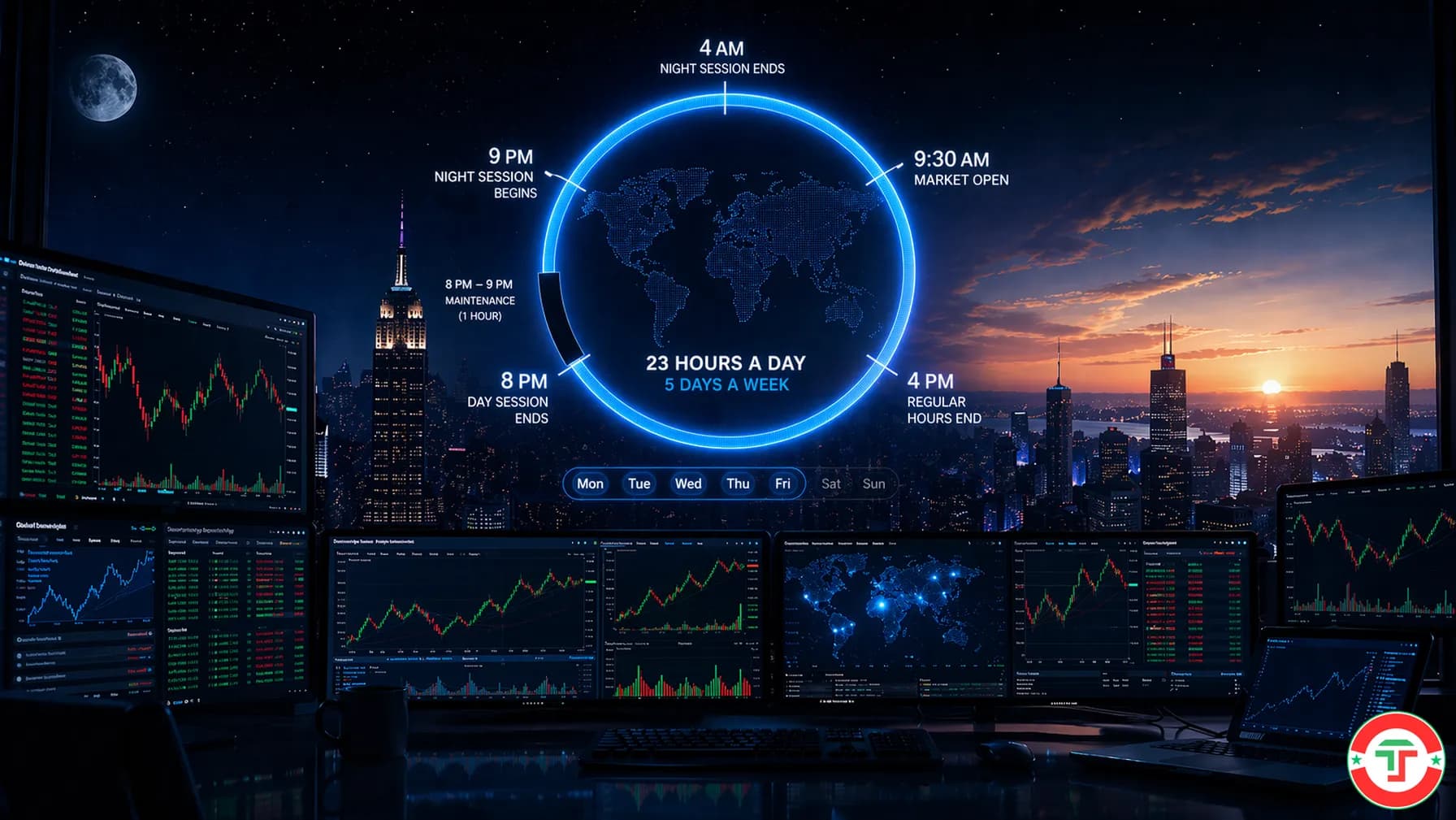
"23/5" doesn't mean the market never stops. Here's the full week on Nasdaq and NYSE Arca:
- Session
- Overnight
- Hours (ET)
- 9:00 p.m. to 4:00 a.m.
- What to know
- New. Limit orders only, with 20% price bands
- Session
- Premarket
- Hours (ET)
- 4:00 a.m. to 9:30 a.m.
- What to know
- Unchanged
- Session
- Regular
- Hours (ET)
- 9:30 a.m. to 4:00 p.m.
- What to know
- Unchanged, including the opening and closing auctions
- Session
- After-hours
- Hours (ET)
- 4:00 p.m. to 8:00 p.m.
- What to know
- Unchanged
- Session
- Daily pause
- Hours (ET)
- 8:00 p.m. to 9:00 p.m.
- What to know
- One-hour break, Monday through Thursday
- Session
- Weekend
- Hours (ET)
- Friday 8:00 p.m. to Sunday 9:00 p.m.
- What to know
- Closed
| Session | Hours (ET) | What to know |
|---|---|---|
| Overnight | 9:00 p.m. to 4:00 a.m. | New. Limit orders only, with 20% price bands |
| Premarket | 4:00 a.m. to 9:30 a.m. | Unchanged |
| Regular | 9:30 a.m. to 4:00 p.m. | Unchanged, including the opening and closing auctions |
| After-hours | 4:00 p.m. to 8:00 p.m. | Unchanged |
| Daily pause | 8:00 p.m. to 9:00 p.m. | One-hour break, Monday through Thursday |
| Weekend | Friday 8:00 p.m. to Sunday 9:00 p.m. | Closed |
The weekend GapA gap is a price discontinuity on a chart where a stock opens significantly higher or lower than the previous session's close, leaving a visible empty space — gap-ups are driven by overnight buying pressure or positive news; gap-downs by seRead definition → isn't going anywhere. News that breaks on a Saturday still has to wait until Sunday night. For a full history of how the market got here, read our guide to 23-hour trading. For how the older sessions fit together, see stock market hours explained.
What order types work in the overnight session?
Only limit orders work in the overnight session. All five exchanges plan to accept only orders that carry a limit price, because thin trading makes unpriced orders more dangerous.
Nasdaq's FAQ lists what it won't take between 9 p.m. and 4 a.m.: market orders, pegged orders, and orders meant for the opening or closing auctions, such as market-on-open and limit-on-close.
A limit order is an instruction to trade only at your price or better. If the price never reaches you, you don't trade. Our guide to order types covers how that differs from market and stop orders.
That has a cost for your risk plan. A standard Stop OrderA stop order (also called a stop-market order) becomes a market order and executes immediately at the best available price once the stock touches or crosses your specified stop price — it guarantees execution once triggered but not the fillRead definition → becomes a market order when triggered, and a market order has no place in this session. AskThe ask is the lowest price a seller is currently willing to accept. When you buy with a market order, you pay the ask.Read definition → your broker exactly what happens to a stop after 8 p.m. If it won't work overnight, reduce your size so that a sharp move can't do serious damage.
What happens to open orders at 4 a.m.?
On Nasdaq, every order entered between 9 p.m. and 4 a.m. that's still open at 4 a.m. is canceled. You can enter it again for the session that follows.
This catches traders who assume "good till canceled" means the order will survive. Nasdaq accepts most time-in-force settings overnight, but says all orders entered in the session are canceled when it ends. Your broker may handle this differently on its side, so check before you rely on it.
The overnight session also doesn't open with an auction. NYSE Arca says trading simply begins at 9:00 p.m., and the first auction of the day is still its 4:00 a.m. Early Open Auction. There's no single opening price to anchor your plan, and early prices can be messy.
How do the 20% overnight price bands work?
Overnight price bands are fixed limits around two reference prices, and trades and displayed prices can't fall outside them. The lower band sits 20% below the lower reference price, and the upper band sits 20% above the higher one. The bands don't update during the session.
The two reference prices are the stock's official closing price and an evening last-sale price. There's also a minimum width of $3 from the reference price for stocks closing at $1 or more, and $1 for stocks closing below $1. That minimum is the detail most traders miss.
- Stock
- $100 stock, quiet evening
- Reference prices
- $100 and $100
- 20% move
- $20
- Lower band
- $80.00
- Upper band
- $120.00
- Stock
- $100 stock, up after earnings
- Reference prices
- $100 and $104
- 20% move
- $20 and $20.80
- Lower band
- $80.00
- Upper band
- $124.80
- Stock
- $10 stock
- Reference prices
- $10 and $10
- 20% move
- $2, so the $3 minimum applies
- Lower band
- $7.00
- Upper band
- $13.00
- Stock
- $4 stock
- Reference prices
- $4 and $4
- 20% move
- $0.80, so the $3 minimum applies
- Lower band
- $1.00
- Upper band
- $7.00
| Stock | Reference prices | 20% move | Lower band | Upper band |
|---|---|---|---|---|
| $100 stock, quiet evening | $100 and $100 | $20 | $80.00 | $120.00 |
| $100 stock, up after earnings | $100 and $104 | $20 and $20.80 | $80.00 | $124.80 |
| $10 stock | $10 and $10 | $2, so the $3 minimum applies | $7.00 | $13.00 |
| $4 stock | $4 and $4 | $0.80, so the $3 minimum applies | $1.00 | $7.00 |
Look at that $4 stock. The "20%" band actually allows a move of 75% in either direction. Cheap stocks have far less protection than the headline number suggests. For leveraged exchange-traded products, the percentage and minimum are multiplied by the leverage ratio, so a 3x fund gets a 60% band.
Hitting a band doesn't pause trading automatically. The listing exchange can declare a halt to keep trading orderly, but a stock halted overnight won't reopen during the overnight session. That's a real difference from regular hours, when limit up-limit down pauses usually end within minutes.
Why do some stocks get halted overnight?
Some stocks get halted overnight because the one-hour pause isn't long enough to process complex corporate actions. Listing exchanges will halt affected stocks from the 8:00 p.m. to 9:00 p.m. pause before the event's effective date, and reopen them at 8:00 a.m. ET.
The covered events include symbol or CUSIP changes, large dividends, stock splits, de-SPAC deals, spin-offs, security type changes and mergers. On Nasdaq, a large dividend means 25% or more of the prior official close.
If you hold a stock going through one of these events, you can't exit it overnight. Check the corporate actions calendar before you assume the overnight session gives you a way out.
Separately, if a market-wide decline triggers a Level 3 circuit breaker, trading doesn't resume until 4:00 a.m. ET the following day.
What trade date do overnight trades get?
Overnight trades placed from 9:00 p.m. to midnight carry the next calendar day's trade date, and trades from midnight to 4:00 a.m. carry that same calendar day's date. Both exchanges apply this rule, and settlement follows the trade date.
NYSE's FAQ gives a clear example using Monday, November 23, 2026, though real overnight trading won't begin until December:
- When you trade
- Monday, 6:00 p.m. (after-hours)
- Trade date
- Monday
- Settlement date
- Tuesday
- When you trade
- Monday, 10:00 p.m. (overnight)
- Trade date
- Tuesday
- Settlement date
- Wednesday
- When you trade
- Tuesday, 2:00 a.m. (overnight)
- Trade date
- Tuesday
- Settlement date
- Wednesday
| When you trade | Trade date | Settlement date |
|---|---|---|
| Monday, 6:00 p.m. (after-hours) | Monday | Tuesday |
| Monday, 10:00 p.m. (overnight) | Tuesday | Wednesday |
| Tuesday, 2:00 a.m. (overnight) | Tuesday | Wednesday |
So a Monday night trade belongs to Tuesday. That matters for your journal, your daily loss limit, and how your broker counts buying power. If your platform shows your day's profit and loss by calendar date, make sure you know which day it's using. Our guide to margin and cash accounts explains why settled cash matters, and the PDT rule guide covers the new intraday margin rules.
Overnight prices can also fool you. NYSE says overnight, early and late session trades aren't eligible to set the last sale. The official closing price still comes from the 4:00 p.m. auction, so a stock's overnight high may not appear in the data you assume it does. Compare how your charting platform treats those prints.
How liquid is overnight stock trading?
Overnight stock trading is still thin. SEC staff found that overnight trading made up about 0.9% of total US share volume in August 2026, or about 144.6 million shares a day. That was up 359% from a year earlier but down 27% from the month before.
Trading is also concentrated. The ten most active stocks accounted for 43.4% of overnight share volume. If you aren't in a heavily traded name, there may be very little on the other side of your order. Foreign accounts made up the largest share of overnight volume in the second quarter, at 37%, while institutional accounts were about 7%.
Spreads show the cost. In a February SIFMA roundtable summary, quoted spreads for stocks that trade consistently overnight were about three times wider than in regular hours, and spreads on less active stocks could be 10 to 20 times wider.
Here's a simple example. Buying and selling 500 shares of a stock with a $0.01 spread costs you about $5 in spread for the round trip. At $0.03, it's $15. At $0.20, it's $100, before the stock has moved at all. The new exchange session and public quote feed may improve this over time, but don't assume they will on day one. Our guide to slippage shows how those costs add up.
There's a trap for patient limit orders, too. The same SIFMA summary said retail traders who provided liquidity overnight saw their realized spreads turn negative within 10 seconds. In plain English, the price tended to move against them right after they were filled. A resting order that fills overnight isn't always a bargain. Sometimes it's filled because someone knows more than you do.
Can you trade options overnight?
No, you can't trade stock options in the overnight session. The December change covers stocks and ETFs, and Nasdaq's options exchanges will stay on their current schedules. An Options Clearing Corporation executive said in May that 23/5 options trading isn't coming anytime soon.
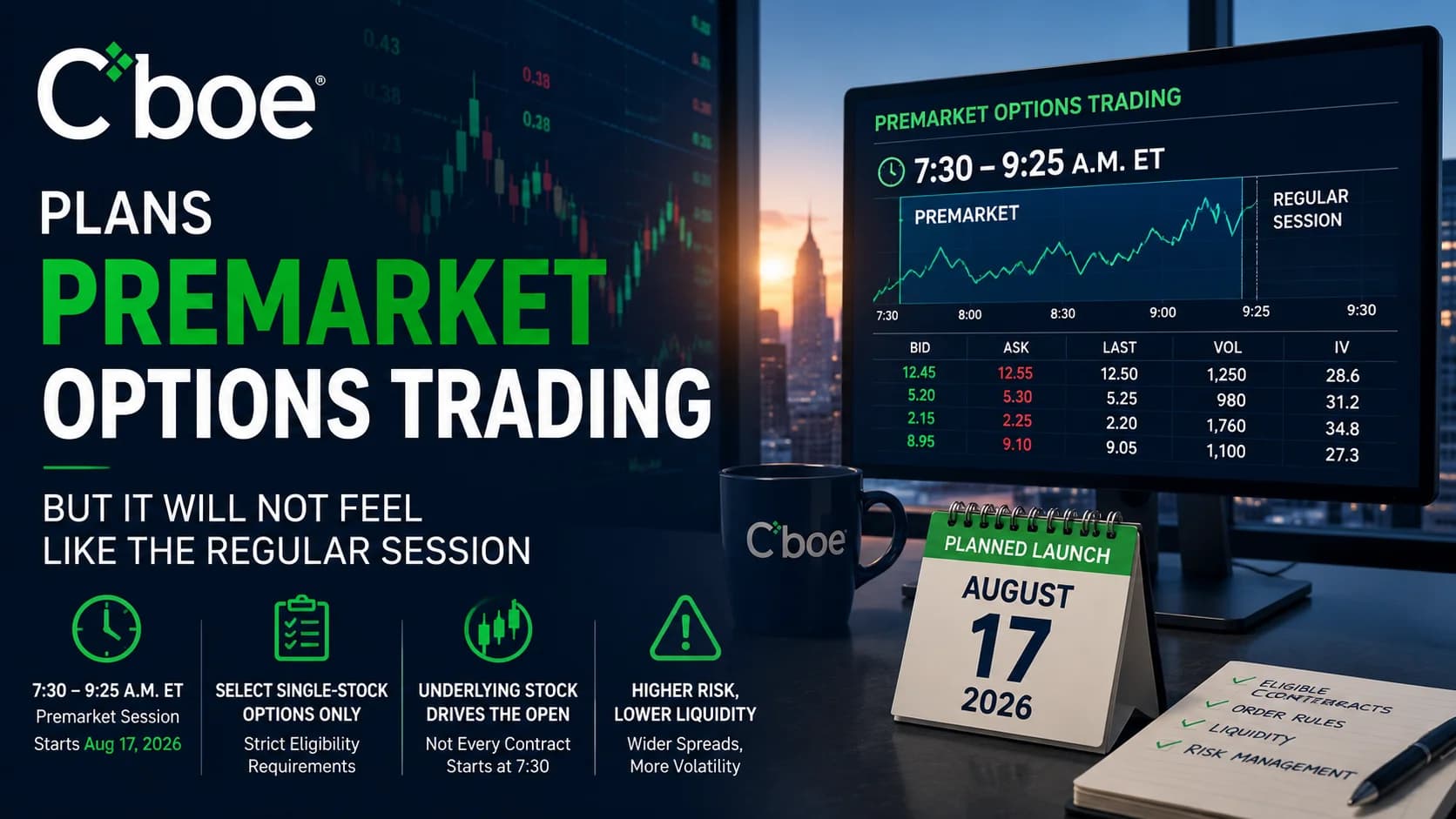
Cboe and NYSE American launched extended sessions for select single-stock and ETF options in October, but those are short sessions around the regular trading day, not an overnight market. Our premarket options guide explains how those sessions work.
This creates a real risk for options holders. The stock can move overnight while your option can't be adjusted. If a stock trades 8% lower at 2 a.m., you may watch that happen with no way to manage the option until options open. Index options on Cboe's Global Trading Hours are a separate product with their own schedule.
Should day traders trade the overnight session?
Most day traders shouldn't trade the overnight session at first, and this guide's view is to use it as information before you use it as a market. Spreads are wider, stops are limited, and a new system on launch week is a poor place to test a strategy.
Overnight trading has real uses. It can help you react to news that breaks after 9 p.m., cut a position you're already in, or trade from a time zone where US nights are your daytime. It's far less suited to fast momentum setups that need tight fills.
Use this checklist before your first overnight order:
Your overnight trading checklist
6 stepsConfirm your broker's access
Exchanges list the hours, but brokers choose what to offer. Ask which symbols are available, which venues your order reaches, and how stops and open orders are handled. Clearing firms can also block overnight orders.
Check the catalyst and volume
Find out why the stock is moving before you touch it. The free Trade Ideas Stock Info page puts a ticker's chart, news and volume in one place.
Set a limit price you can defend
Base it on the bid, ask and spread you can see. Don't reach far past the quote just to get filled.
Size for a stop that may not work
Assume you can't rely on a stop to get you out. Use a position small enough that a sharp move stays within your plan.
Know when the order ends
Mark 4:00 a.m. ET on your plan. If an order is canceled, decide whether it's still a good trade before you enter it again.
Log the right trade date
Record trades placed before midnight under the next day's date so your journal and loss limits stay accurate.
The overnight session will also change your morning routine even if you never trade it. Overnight highs and lows may become useful levels, much as they are for futures traders. Add them to your premarket preparation, then see whether they matter for your stocks before you trust them. Gap strategies may need a fresh look, too, as more price discovery moves into the night.
Frequently asked questions
Is 24/7 stock trading real?
Does every stock trade overnight?
Do overnight trades affect the official closing price?
Will premarket trading change after December 6?
Does the market trade overnight on holidays?
Disclaimer
Article Sources
- Nasdaq: 23/5 Trading Information Hub - session hours, launch date, trade dates and holiday treatmentnasdaq.com
- Nasdaq: Global Trading Hours FAQs - order types, 4:00 a.m. cancellations, price bands and corporate action haltsnasdaq.com
- NYSE: Extended-Hours Trading FAQ - NYSE Arca sessions, the settlement example, auctions and last-sale treatmentnyse.com
- SEC staff: Overnight Trading Roundtable memorandum - overnight volume and concentration in August 2026sec.gov
- SIFMA: Roadmap to 24/7 Trading roundtable debrief - overnight spreads and realized spreadssifma.org
- WilmerHale: 23x5 Trading Comes to US Exchanges - approvals, price band rules, halts and circuit breakerswilmerhale.com