
Every trader has heard some version of the AI capex story by now: hyperscalers are spending record sums on chips and data centers, and somewhere down the line, something has to give. On Tuesday, July 14, 2026, that something got a name, a ticker, and a dollar figure.
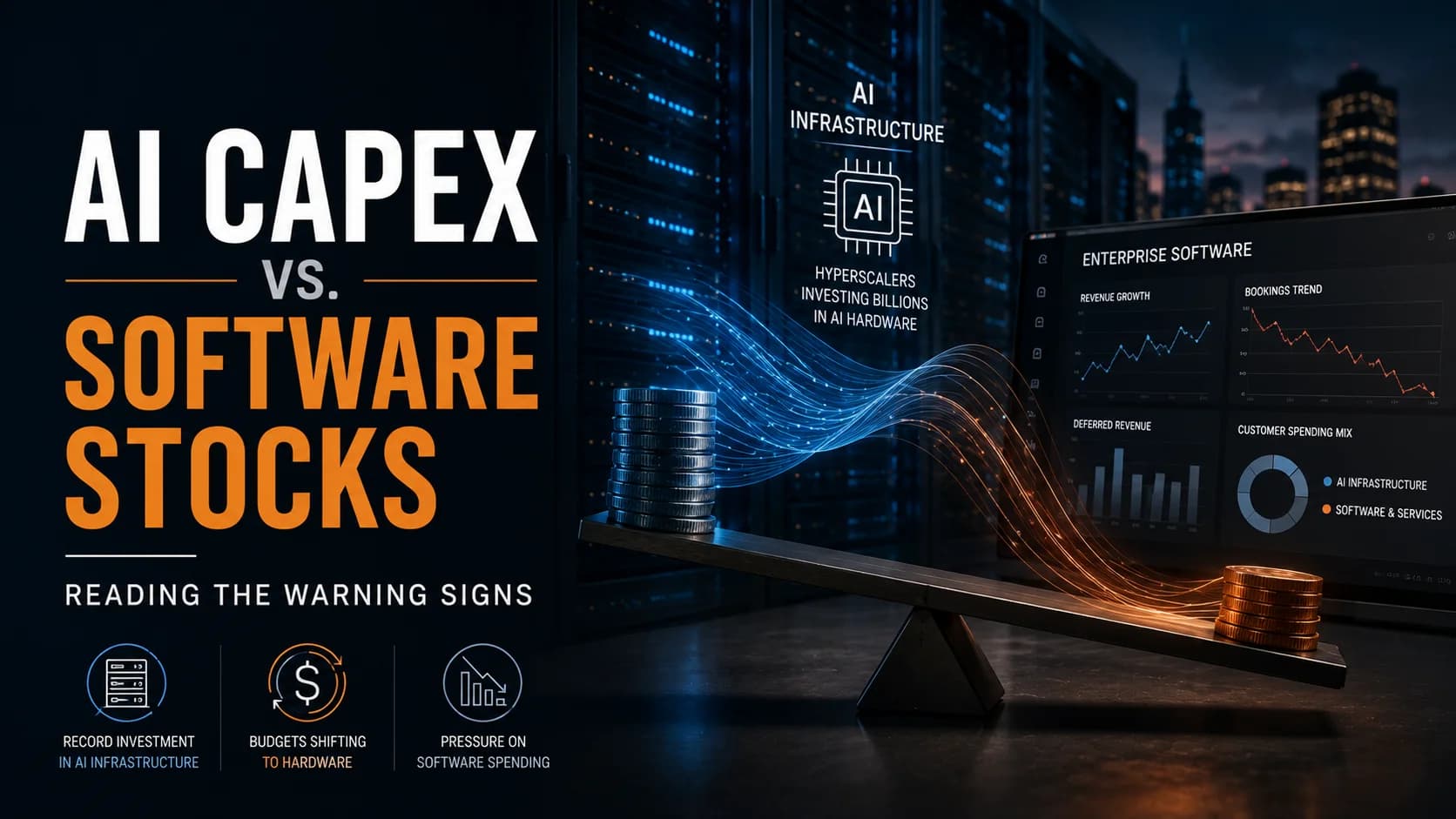
IBM pre-announced preliminary second-quarter results before the opening bell—eight days ahead of its scheduled July 22 EarningsAn earnings report is the quarterly financial disclosure a public company files with the SEC, revealing revenue, earnings per share (EPS), profit margins, and forward guidance — it's the most significant regular catalyst for individual stocRead definition → call—and the stock fell as much as 25% intraday, its steepest single-session decline since Black Monday in October 1987. CEO Arvind Krishna's letter to investors gave a specific, quotable reason: in the final weeks of June, clients redirected capital spending toward servers, storage, and memory to lock in supply-constrained hardware ahead of expected price increases, pulling budget away from IBM's software and infrastructure business.
That single sentence is why this matters beyond one company's quarter. It's the first time a major technology vendor has put a number on enterprise budgets getting squeezed by the AI hardware race—not just hyperscalers competing with each other for GPUs, but ordinary corporate customers now doing the same thing with their IT spending. IBM holds its full Q2 2026 earnings call today, Wednesday, July 22, 2026, at 5:00 p.m. ET, and that call is the first real test of whether Krishna's explanation holds up.
What is capex crowding out? Capex crowding out is what happens when a company's technology budget doesn't grow to cover a new priority—it gets reallocated instead. If a business redirects spending toward AI-enabling hardware like GPUs, memory, and servers, and that spending has to come from somewhere, software licenses, consulting contracts, and services renewals are the accounts that shrink to make room.
What Krishna's Letter Actually Said
IBM's preliminary numbers themselves were not disastrous. Revenue came in at $17.2 billion, up 1% year over year, but roughly $660 million short of the $17.86 billion analysts expected. Operating earnings per share landed at $2.93, versus a consensus near $3.01—still up 5% from a year earlier. GAAP diluted EPS was $2.27, down 2%. None of that reads like a company falling apart.
The segment breakdown is where the story sharpens. Software revenue grew 5%. Consulting was roughly flat, up 1% at constant currency. Infrastructure fell 7%, and that's the line Krishna spent the most time explaining—driven by a shortfall in the Z mainframe business and the Transaction Processing software that runs on top of it. Red Hat, notably, grew 11%, and Distributed Infrastructure was up 37%, so this wasn't a company-wide collapse. It was concentrated exactly where Krishna said it was: deals that depend on customers signing off on new spending, at the same moment those customers were racing to secure hardware.
Krishna's own words, from the investor letter filed with the SEC: clients shifted their quarterly capex toward servers, storage, and memory purchases to secure supply-constrained infrastructure ahead of expected price increases. He also flagged two secondary factors—several large contracts didn't close within the expected window, and industry-wide cybersecurity concerns had some clients pausing decisions while they reassessed their own security posture (Krishna reportedly told CNBC that newer AI tools, including Anthropic's Mythos model, were part of what prompted those reviews). But the capex reprioritization is the explanation Krishna led with, and it's the one that traveled.
Five Ways to Tell If a Miss Is Company-Specific or Sector-Wide
This is the part that actually matters for how you trade the next earnings report that blames "AI spending" for a shortfall. A single data point proves nothing on its own. Here's what separates a genuine SectorA broad grouping of companies that operate in the same segment of the economy — such as Technology, Healthcare, Energy, or Financials. Stocks within a sector tend to move together in response to shared economic, regulatory, and sentiment faRead definition → rotation from one company's bad quarter.
Bookings and backlog, not just revenue. Revenue reflects contracts signed months ago. Bookings and remaining performance obligations tell you what customers are committing to right now. If a software company's backlog is still growing while revenue disappoints, that's a timing problem. If bookings are falling too, budget is actually leaving the category.
Deferred revenue trends. A drop in deferred revenue on the balance sheet can mean customers are signing shorter contracts, delaying renewals, or negotiating smaller deals—all consistent with a squeezed budget rather than lost demand.
Capex GuidanceGuidance is forward-looking financial projections that a company's management provides for upcoming periods — typically covering expected revenue, earnings, or margins — and the market's reaction is often driven more by guidance than by theRead definition → from the customers, not just the vendor. IBM sells to enterprises. If you want to know whether budgets are genuinely shifting, watch what IBM's own customers say about their infrastructure spending plans on their next calls. A vendor's explanation is a hypothesis; the buyer's guidance is the test.
Hardware demand data as the mirror image. If software bookings are softening because budget is flowing to hardware, that hardware demand should show up somewhere concrete—memory pricing, server lead times, GPU allocation. If the hardware side isn't also showing acceleration, the "crowding out" story doesn't hold together.
Whether the sympathy reaction was proportional. When a stock falls on company-specific news—a botched product launch, a management change—peers usually don't move much. When an entire sector sells off on one company's earnings call, the market is pricing in a shared cause. That reaction is data, but it's sentiment data, not confirmation. The two need to be checked against each other, not treated as the same signal.
Run a potential "AI capex crowding out" story through those five checks before treating it as a TrendA trend is a sustained directional movement in price over time — an uptrend is characterized by a sequence of higher highs and higher lows, a downtrend by lower highs and lower lows — and correctly identifying the current trend direction isRead definition → rather than a single company's quarter.
The Sympathy Selloff, By the Numbers
IBM's July 14 warning didn't stay contained to IBM. Within hours, a wide swath of software and IT services names sold off—Accenture, Cognizant, and Infosys among the consulting names; ServiceNow, Workday, Salesforce, SAP, and Adobe among the software names; even Microsoft, HubSpot, and Datadog dipped despite reporting nothing that morning. The moves ranged from roughly 2% to as much as 10% intraday depending on the name and the hour, before several names pared their losses by the close. Vital Knowledge analyst Adam Crisafulli called it a "devastating blow" for the sector in a note that morning, tying the reaction directly to fear that the capex pivot he described would spread industry-wide.
The iShares Expanded Tech-Software Sector ETF (IGV)—a reasonable proxy for the group—fell as much as 4.5% intraday on the news alone. Zoom out further and the divergence gets sharper: the S&P Software & Services Index is down roughly 20% year-to-date in 2026, while the Philadelphia Semiconductor Index has gained more than 70% over the same stretch. That GapA gap is a price discontinuity on a chart where a stock opens significantly higher or lower than the previous session's close, leaving a visible empty space — gap-ups are driven by overnight buying pressure or positive news; gap-downs by seRead definition → predates IBM's warning by months. What Tuesday did was give traders a specific, dated event to point to as evidence for why.
One detail worth sitting with: several of the stocks that fell hardest that day, including ServiceNow, Salesforce, and Workday, don't share IBM's mainframe exposure and have no z17 supply chain problem of their own. What they share with IBM is a customer base that's reprioritizing hardware over software contracts—and investors sold first, on the theory that the same mechanism could show up in their own numbers next.
The Other Side of the Trade: Where That Budget Is Actually Going
If software budgets are getting squeezed, the money has to land somewhere—and the memory and semiconductor sector has been the visible destination all year. Micron crossed a $1 trillion market cap on May 26, 2026, one of the fastest runs to that valuation in market history, driven by high-bandwidth memory (HBM) demand tied directly to AI accelerators. According to Counterpoint Research, memory prices across DRAM, NAND, and HBM rose somewhere in the 80–90% range between the fourth quarter of 2025 and the first quarter of 2026. Micron has said its HBM production is sold out through 2026 and into 2027.
The structural piece matters more than the price spike. Manufacturing a unit of HBM consumes roughly three units of conventional DRAM wafer capacity, so every additional unit of AI memory built is conventional memory that doesn't get made. That's not a short cycle that eases once one product launch passes—it's a capacity trade-off baked into how the chips are manufactured, and it's a large part of why data centers are now estimated to consume something like 70% of all memory chips produced worldwide.
Servers themselves tell the same story. Dell booked $24.4 billion in AI-related orders in a single recent quarter and ended that period with a $51.3 billion AI backlog—management has said demand is outrunning supply, with memory again cited as the binding constraint. Hewlett Packard Enterprise has posted similar acceleration in its server business. Krishna's letter named "servers, storage, and memory" as the three things clients were racing to secure. Two of those three categories now have publicly disclosed, multibillion-dollar backlogs at IBM's own competitors in the hardware business.
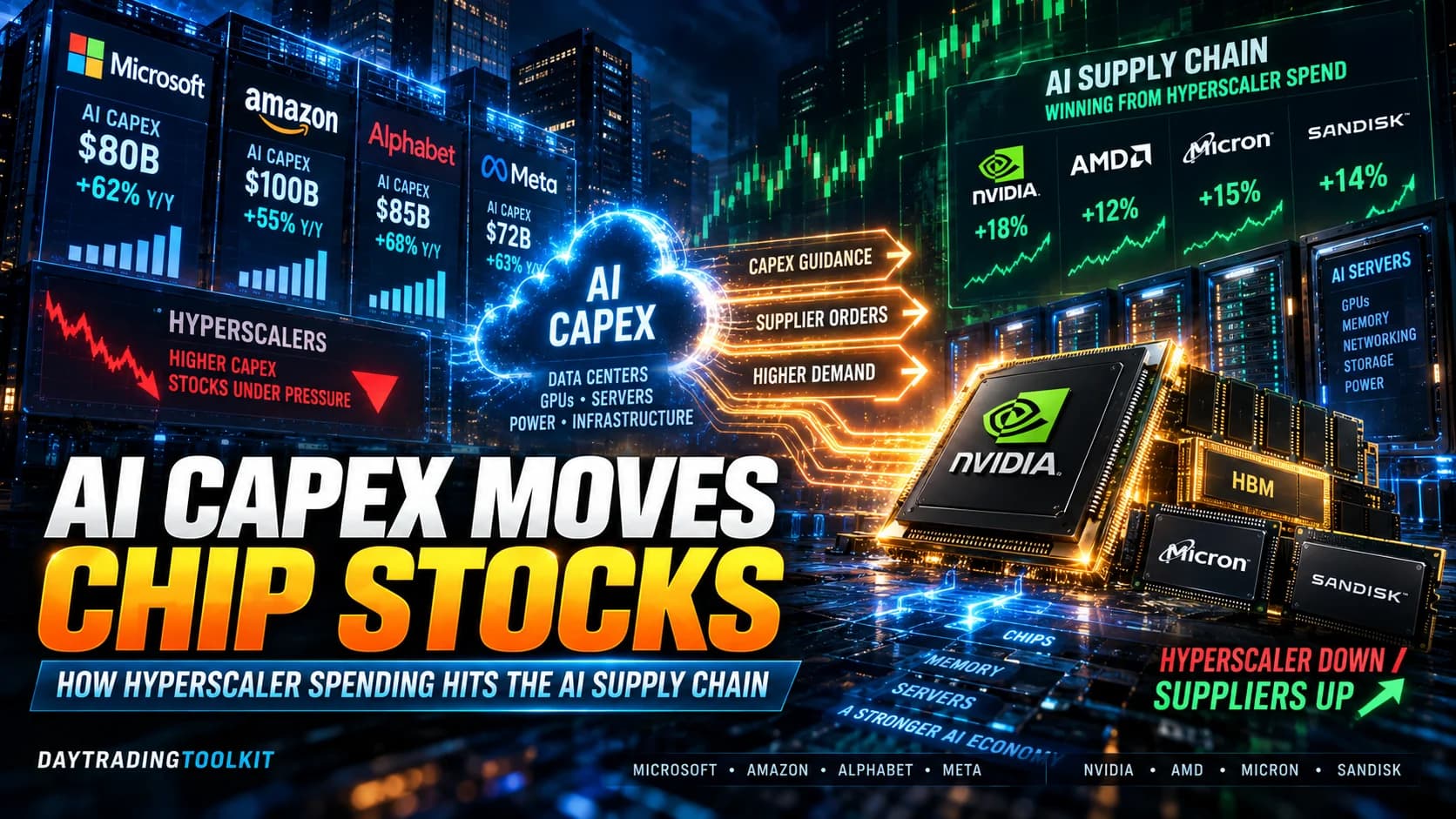
Zoom out to the hyperscalers, and the scale gets clearer still. Microsoft, Amazon, Alphabet, and Meta are on pace to spend a combined $700–725 billion on capital expenditure in 2026, up roughly 77% from around $410 billion in 2025, with the overwhelming majority of that directed at AI data centers, GPU clusters, and custom silicon. That figure has been public and rising all year. What IBM's warning adds isn't a new number—it's evidence that the same reallocation logic hyperscalers apply to themselves is now reaching ordinary enterprise customers deciding between a software renewal and a server order.
Is This New, or Just the Hyperscaler Story Reaching Main Street?
The hyperscaler capex boom has been the dominant market narrative for most of 2026, and this site covered the resulting divergence between AI-infrastructure winners and richly valued software names in our AI-trade revaluation coverage from earlier this month, when semiconductor and AI-cloud names cracked even as the broader index hit new highs.
What's different about the IBM story is who's doing the reallocating. Up to now, the capex conversation was almost entirely about four or five giant companies spending on their own infrastructure. IBM's letter describes its own enterprise customers—banks, insurers, manufacturers, and government agencies, the kind of accounts that make up the bulk of IBM's book—making the same trade-off inside their own budgets. That's a meaningfully larger and more diffuse pool of spending than four hyperscalers deciding how much to spend on their own data centers, and it's the detail that turns a hyperscaler story into a software-sector story.
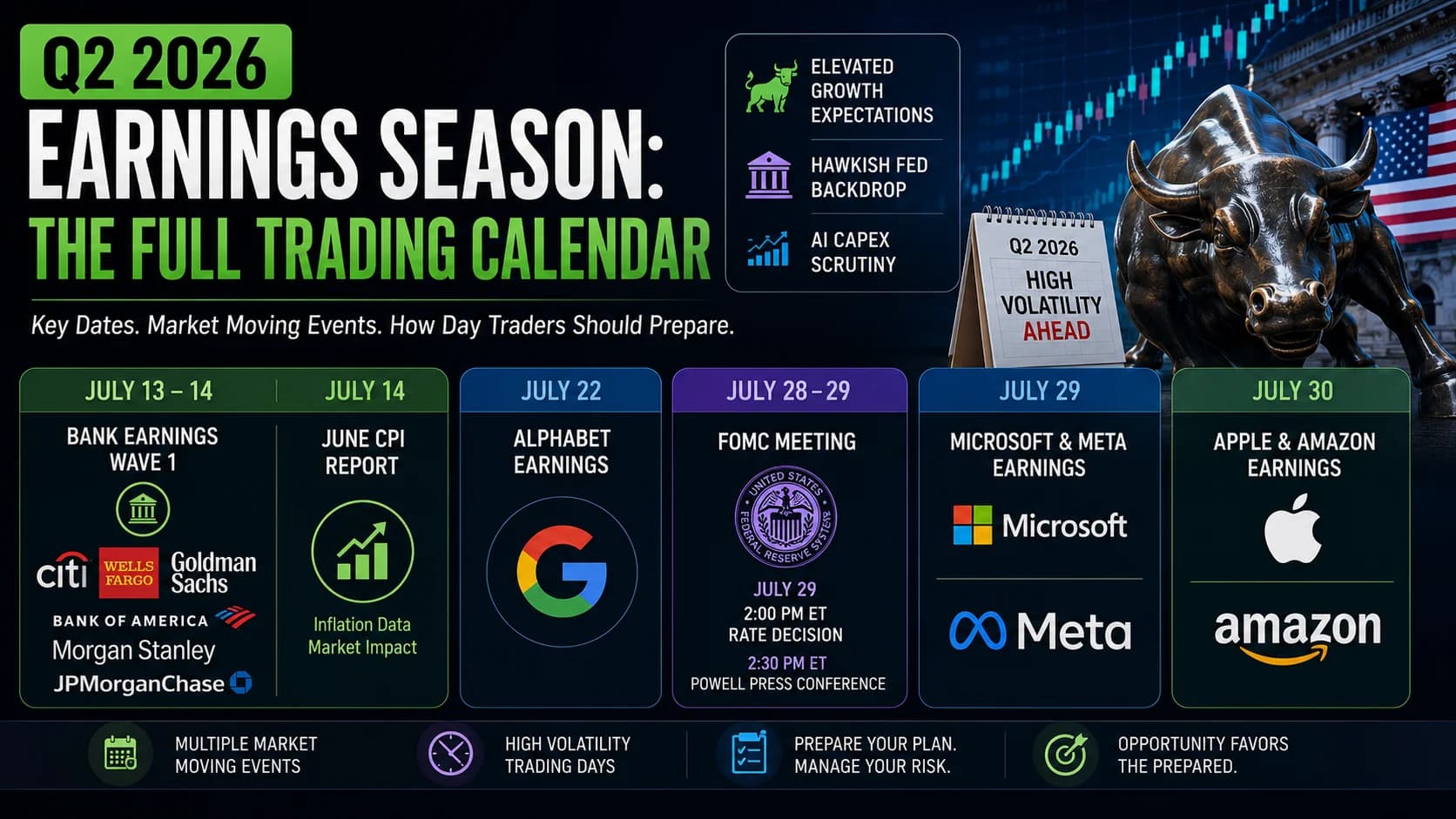
Whether that reallocation is now genuinely widespread, or whether IBM's mainframe-heavy customer mix made it unusually exposed to this particular dynamic, is exactly what the rest of Q2 earnings season should clarify. Our Q2 2026 earnings calendar already flagged AI capex scrutiny as a theme heading into this reporting cycle—IBM's July 14 warning was the first data point to arrive, not the last.
How Day Traders Can Actually Watch This Play Out
None of this requires predicting whether the AI trade is a bubble. It requires watching a specific, falsifiable pattern develop or fail to develop over the next several weeks.
Build a two-sided watchlist rather than a one-sided one. Pair the software and IT-services names that sold off in sympathy—Accenture, ServiceNow, Salesforce, Workday, SAP, Adobe—against the memory and semiconductor names benefiting from the same reallocation, like Micron, and track their relative performance day to day rather than in isolation. A scanner that lets you build and monitor that kind of paired watchlist in real time, such as Trade Ideas, makes it easier to catch the divergence early rather than after the headlines.
Treat the July 20–24, 2026 Big Tech earnings cluster as the next real test. Our Big Tech earnings and oil market preview covers the specific names and dates reporting that stretch—listen for whether their own capex guidance keeps climbing, and whether any of their enterprise or cloud customers are cited as delaying purchases for the same reason IBM gave.
Watch IBM's own July 22 call for the follow-through detail that actually matters: whether the deals that slipped in June were delayed or lost outright. A delayed deal that closes in Q3 supports the "timing, not trend" reading. A lost deal that goes to a competitor, or simply doesn't get replaced, supports the "structural crowding out" reading. That distinction, not the headline miss itself, is what should move the stock and its peers on the call.
Where This Read Goes Wrong
The single biggest risk in trading this theme is overfitting one company's quarter into a sector-wide law. IBM's Infrastructure segment is unusually concentrated around its Z mainframe cycle, a business line most of its software peers don't share. Krishna also cited contract delays and cybersecurity-related spending pauses as separate factors—reasons that have nothing to do with AI capex and would resolve on their own timeline. A trader who reads every subsequent software miss as proof of the same mechanism, without checking bookings and customer commentary first, is pattern-matching on a sample size of one.
The reverse mistake is just as costly: dismissing the pattern entirely because IBM has idiosyncrasies. The sympathy selloff crossed too many unrelated business models—consulting, SaaS, enterprise software, all with different customers and different sales cycles—to wave away as coincidence. The honest position sits between the two: this is a real, testable hypothesis, not a confirmed trend, and it stays that way until more companies report.
What Actually Happened in the Five Weeks Since
This story was always framed as a testable hypothesis, not a confirmed trend, and the following month of earnings gave it a real test. Here's what the data actually showed once it arrived.
IBM's official July 22 call didn't walk back the July 14 warning. Revenue came in exactly where the preliminary filing said it would, $17.16 billion against a $17.86 billion estimate, with adjusted EPS of $2.93 versus $3.01 expected. More importantly, IBM cut its full-year 2026 revenue growth outlook to 4% to 5% on a constant-currency basis, down from its prior 5%-plus target. A guidance cut, not just a one-quarter miss, is the signal that argues against a pure timing explanation. The stock's reaction was muted, down only about 0.2% after hours, largely because the size of the shortfall was already priced in from July 14.
The hyperscalers reported in the exact window this article flagged, Alphabet on July 22, Microsoft and Meta on July 29, Amazon on July 30, and every single one raised its 2026 capital expenditure guidance rather than pulling back. Amazon lifted its figure to roughly $220 billion, up from about $200 billion. Alphabet raised its ceiling to $195 to 205 billion. Meta lifted the floor of its range to $130 to 145 billion. Combined, the four hyperscalers' guidance climbed from the roughly $700 to 725 billion cited earlier this year to somewhere near $730 to 760 billion. Microsoft, Amazon, and Meta each explicitly cited rising memory costs, the same DRAM and HBM price pressure IBM pointed to, as part of what pushed their own numbers higher. That's real corroboration of the mechanism: memory and hardware costs are climbing across the board, not just in IBM's telling of it.
The clearest validation of this article's own five-point test came from Amazon specifically. Its stock surged roughly 15% on July 31 and crossed a $3 trillion market cap days later, and the reason wasn't the capex number itself, it was a $496 billion AWS backlog that grew $132 billion in a single quarter. That's bookings and backlog data confirming demand behind the spending, exactly the distinction this article's checklist told you to look for before trusting a capex story either direction.
Where the sector-wide crowding-out thesis runs into trouble is the software peer group itself. ServiceNow, Salesforce, and Workday, three of the names that sold off in sympathy with IBM on July 14, all reported their own results in the following two weeks and rallied 7% to 10% on their earnings days. ServiceNow raised its full-year subscription revenue guidance. Salesforce grew revenue 13.3% year over year with Agentforce annual recurring revenue up 205%. That's bookings and guidance moving in the opposite direction from what a genuine, sector-wide budget squeeze would predict.
Run that outcome back through the five checks from earlier in this article, and the honest verdict a month later leans toward IBM-specific rather than confirmed sector-wide. IBM's own guidance cut and mainframe-cycle exposure are real and unresolved. But the peer companies that sold off purely in sympathy, with no shared mainframe business, posted growing bookings and rallied on their own numbers, which is the disconfirming signal this article said to watch for. The underlying mechanism, hyperscalers and enterprises alike facing higher memory and hardware costs, is genuine and still intensifying. Whether that mechanism actually starves software budgets broadly, or stays contained to companies with IBM's specific exposure, is a question this round of earnings answered closer to "contained" than "spreading."
Frequently Asked Questions
What exactly did IBM say caused its Q2 2026 miss?
Krishna's letter to investors, filed with the SEC on July 14, 2026, also cited delayed large contracts and industry-wide cybersecurity concerns as secondary factors. The capex reallocation explanation was the one he led with and the one that triggered the broader sector selloff.
Key Takeaway: The capex explanation is management's stated cause, not yet an independently confirmed pattern across the sector.
Is this an IBM-specific problem or a sector-wide pattern?
That mix is exactly why this deserves careful tracking rather than an immediate verdict either way. Names like ServiceNow, Workday, and Salesforce sold off despite sharing none of IBM's z17 supply chain issues, which suggests investors were pricing in the underlying customer-budget mechanism, not IBM's specific business line.
Key Takeaway: Watch bookings and customer commentary from multiple companies before treating this as confirmed sector-wide.
How can traders tell if a "capex crowding out" story is real or just a narrative?
A falling stock price on sympathy alone reflects sentiment, not proof. The confirming signal is a company's own forward bookings softening for reasons tied to customer capex decisions, echoed by similar commentary from unrelated companies in unrelated earnings calls.
Key Takeaway: Sympathy selling is a hypothesis worth testing, not evidence in itself.
Which stocks fell in sympathy with IBM's warning?
Moves ranged from roughly 2% to as much as 10% intraday depending on the name and time of day, with several names recovering part of the decline by the close. The reaction crossed software, consulting, and IT services business models.
Key Takeaway: A selloff this broad, across unrelated business models, is itself a data point worth tracking going forward.
Why are memory and semiconductor stocks moving the opposite direction?
Micron crossed a $1 trillion market cap on May 26, 2026, with HBM production sold out through 2026 and into 2027. Manufacturing HBM consumes roughly three units of conventional DRAM wafer capacity per unit produced, which is a structural, not cyclical, constraint on supply.
Key Takeaway: The memory shortage and the software slowdown may be two sides of the same budget reallocation.
Does this mean software stocks are a buy after the selloff?
This guide isn't in a position to call a bottom on any individual name. The useful exercise is tracking whether the specific mechanism—budget shifting from software to hardware—shows up in bookings and guidance from multiple companies over the coming weeks, not whether the initial drop looks large.
Key Takeaway: Wait for confirming or disconfirming data before treating the selloff as a discount.
What should traders watch for on IBM's July 22 earnings call?
A delayed deal that closes later supports a timing explanation. A deal that's lost outright, or simply isn't replaced, supports a structural budget-reallocation explanation. Full-year guidance direction matters as much as the historical numbers.
Key Takeaway: The follow-through on slipped deals matters more than the headline miss itself.
How does this connect to the hyperscaler AI capex story from earlier in 2026?
Up to now, the AI capex conversation centered on a handful of giant companies funding their own infrastructure. IBM's letter describes its enterprise customer base making comparable trade-offs inside their own budgets, which is a much larger and more diffuse pool of spending than four hyperscalers alone.
Key Takeaway: This story turns a hyperscaler-only narrative into a broader enterprise-IT-budget narrative, if it holds up.
Could this pattern reverse if memory supply catches up?
Micron and its rivals have described HBM capacity as sold out well into 2027, and expanding that capacity requires new fabrication plants rather than a production schedule adjustment. Watch capex guidance from memory manufacturers, not just software vendors, for early signs of easing.
Key Takeaway: This isn't a dynamic likely to resolve on a single earnings cycle in either direction.
Does this affect IT consulting and services firms the same way it affects software vendors?
A company racing to secure servers and memory before prices rise has less near-term budget for the consulting hours needed to deploy new software or migrate systems. That makes services firms a second-order casualty of the same reallocation, even though their business model has nothing in common with a software license renewal.
Key Takeaway: Consulting and services revenue can lag the same budget squeeze that hits software licensing, just through a different contract type.
Disclaimer
Article Sources
- Arvind Krishna's Letter to IBM Investors - IBM Newsroom, July 14, 2026. Primary source for the capex reallocation explanation and preliminary Q2 financial detail.newsroom.ibm.com
- IBM Form 8-K, Exhibit 99.1 - SEC EDGAR, July 14, 2026. Filed version of the preliminary results and segment breakdown.sec.gov
- IBM Investor Events - IBM Investor Relations. Confirms the July 22, 2026 Q2 earnings call date and time.ibm.com
- Software Stocks Sink as IBM Miss Delivers 'Devastating Blow' - Bloomberg via Advisor Perspectives, July 14, 2026. Sector-wide stock reaction and analyst commentary.advisorperspectives.com
- IBM Warning Sends Software and Consulting Stock Prices Reeling - TheStreet, July 15, 2026. Detail on peers without IBM's mainframe exposure selling off in sympathy.thestreet.com
- Hyperscalers' AI Spending Plans Reach $725 Billion - Tom's Hardware, April 2026. 2026 hyperscaler capex guidance context.tomshardware.com
- Micron's Unstoppable March Past $1 Trillion - Forbes, May 27, 2026. Memory sector valuation and HBM demand data.forbes.com
- Earnings call transcript: IBM misses Q2 2026 estimates, trims revenue outlook - Investing.com, July 22, 2026. IBM's official Q2 results, guidance cut, and stock reaction from the follow-up call.investing.com
- IBM Q2 2026 earnings and full-year guidance - IBM Investor Relations. Primary source for the confirmed Q2 results and revised full-year outlook.ibm.com
- Amazon, Google, Microsoft, Meta Q2 earnings: hyperscaler capex guidance - Uncover Alpha, August 2026. Hyperscaler capex raises, memory cost citations, and the AWS backlog data behind Amazon's post-earnings rally.uncoveralpha.com