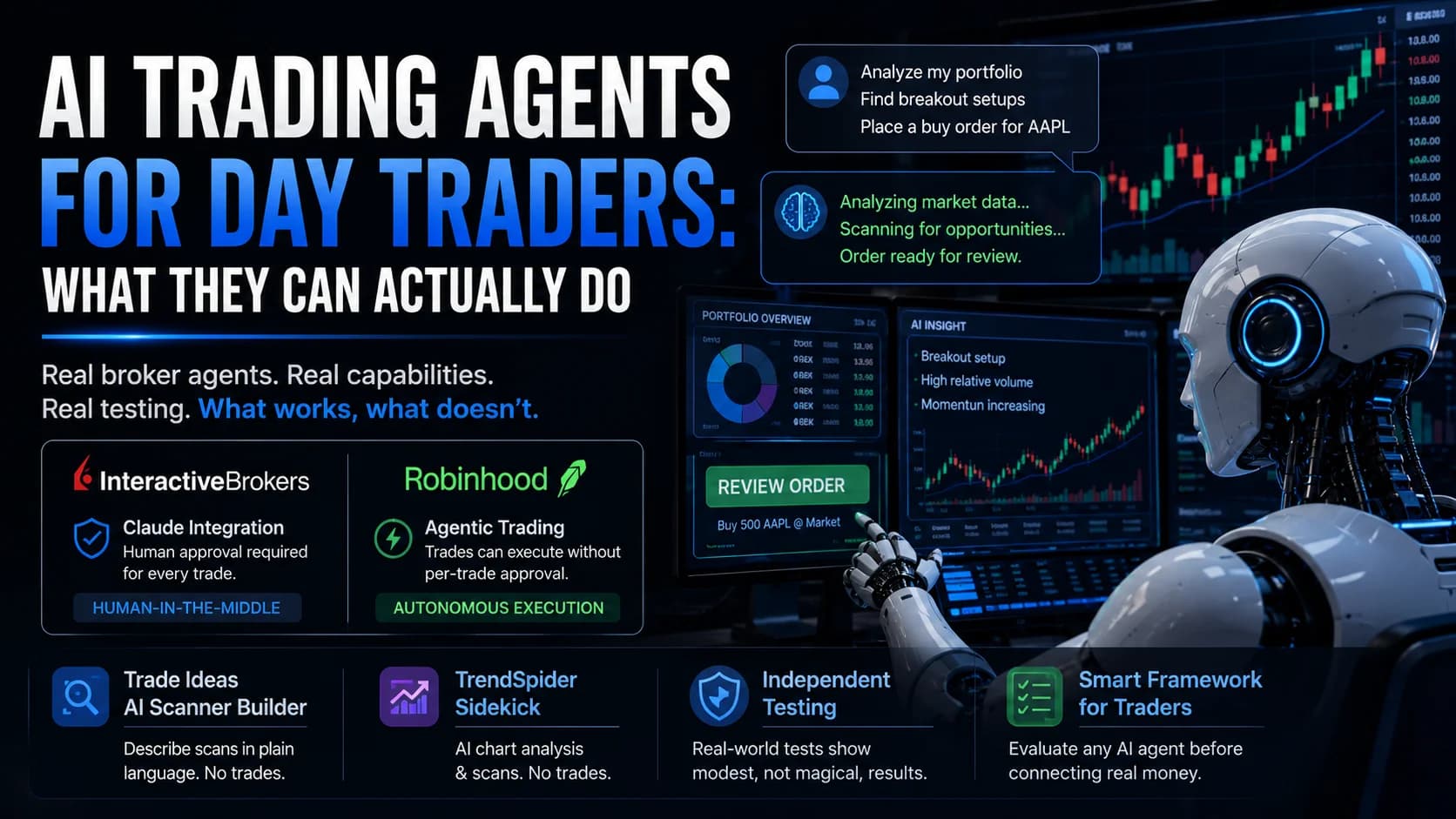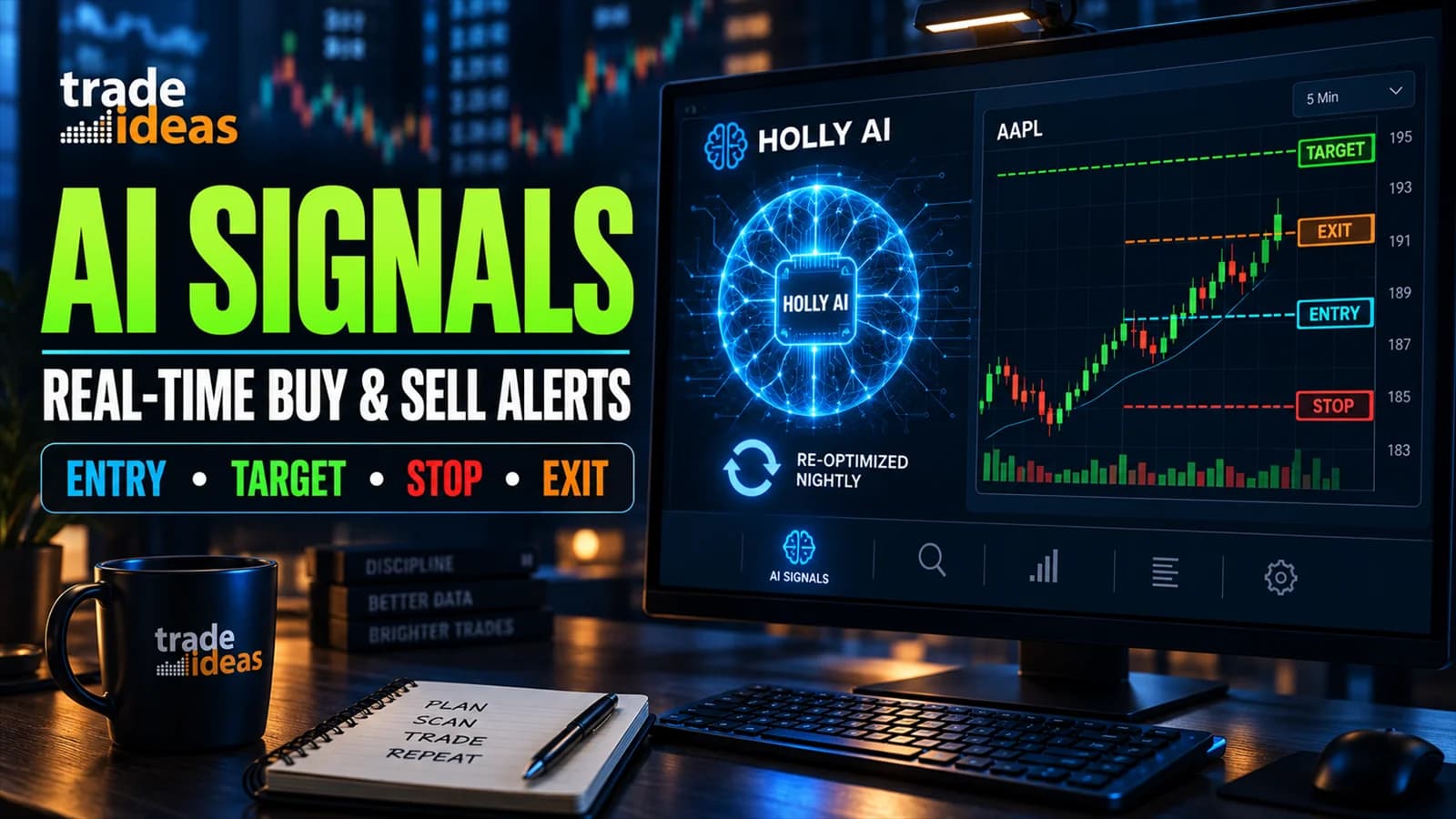


Robinhood, Public, and eToro all launched a version of the same feature this year: connect an AI model to your account, describe a strategy in plain English, and let the AI place trades for you. The marketing calls it "agentic trading." Underneath, nearly every one of these products runs on the same piece of infrastructure: MCP, short for Model Context Protocol, an open standard Anthropic released in late 2024 for letting AI models securely call external tools.
That's the part almost nobody explains clearly, and it's the part that actually matters if you're deciding whether to connect one of these to real money.
What Is MCP? The Model Context Protocol is an open standard that lets an AI model like Claude or ChatGPT call external tools and services through a consistent interface, instead of every company building a custom, one-off integration. In trading, that means an AI model can read your portfolio, check a stock's price, and place an order, all through the same standardized connection a brokerage builds once and any compatible AI model can use.
This guide walks through how that connection actually works, what permissions you're granting when you set one up, the documented security risks specific to this technology, and what a genuinely safer approach looks like if you decide to experiment with it.
How an MCP Connection Actually Works
When a broker offers an "AI agent" feature, there are usually three pieces working together, and understanding each one changes how you think about the risk.
The MCP server is code the broker (or a third party) runs that exposes a defined set of "tools" the AI can call, things like get_portfolio, get_quote, or place_order. Each tool has a description that tells the AI model what it does and what parameters it needs.
The AI model, Claude, ChatGPT, or whichever model the platform uses, reads those tool descriptions and decides when and how to call them based on your instructions and whatever market data it has access to.
The authorization layer is what's supposed to keep the AI from doing more than you intended: an API key or OAuth token scoped to specific permissions, ideally tied to a specific sub-account rather than your entire brokerage relationship.
That third piece is where nearly everything that goes wrong with this technology actually goes wrong. The protocol itself doesn't mandate strong authorization, meaningful permission scoping, or activity logging. It only defines how the AI talks to the tool. Whether the implementation is safe depends entirely on how the broker, or whoever built the specific MCP server, chose to build it.
What You're Actually Granting Access To
Not every "connect your AI" feature grants the same level of access, and the differences matter more than the marketing suggests.
Read-only access lets the AI see your positions, balances, and order history but can't place trades. This is closer to what tools like ChatGPT or Claude do when you're using them for earnings analysis or general market research, no execution risk, just information flowing one direction.
Approval-required execution is what Interactive Brokers built: the AI can research and recommend, but a human has to confirm every order before it's placed. This is sometimes called a "human in the middle" design, and it's the closest thing to a genuine safety net among the current options.
Fully autonomous execution within defined parameters is what Robinhood, Public, and eToro's more advanced tiers offer: once you set the rules, the AI places trades without asking each time. Robinhood requires opening a dedicated agentic trading account separate from your main holdings. Public presents an explicit permissions confirmation screen and lets you set tool-level permissions before the agent gains access. eToro connects a scoped API key to a dedicated sub-portfolio, with a minimum investment of $200 to fund it. Those safeguards, separate sub-accounts, explicit permission screens, scoped keys, are the industry's current answer to a problem the protocol itself doesn't solve.
The practical takeaway: before connecting anything, find the specific screen in the product that shows you exactly what the AI can do without asking you first. If you can't find that screen, don't proceed.
The Real Security Risks
The risk here isn't just "the AI might make a bad trading decision," though that's real too. It's that MCP is a genuinely new attack surface, and the security research on it so far is not reassuring.
Between January and April 2026, security researchers disclosed more than 40 CVEs (publicly tracked vulnerabilities) against MCP implementations across multiple programming languages, with one April 2026 advisory alone assessing roughly 200,000 MCP servers as vulnerable. The documented attack patterns have specific names now: tool poisoning, where a malicious or compromised server changes what a tool actually does after it's already been approved; confused deputy attacks, where an AI is tricked into using its legitimate permissions for an unintended action; and token theft, where the credential that authorizes the AI's access gets exposed or stolen.
None of these are trading-specific yet, but the pattern that produces them is generic to any MCP connection, financial or not. A widely used MCP-based email tool was compromised in September 2025 when an update silently began forwarding a copy of every message an AI sent through it to an attacker-controlled address. Nothing about the user's behavior changed. The tool simply started behaving differently after an update passed standard review. Apply that same failure mode to a trading tool, and the difference between "silently forwarded emails" and "silently placed trades" is the entire reason this deserves more scrutiny than a typical software integration.
What Regulators Already Expect From Firms Using This
FINRA's 2026 Regulatory Oversight Report added a dedicated section on generative AI for the first time, specifically calling out autonomous agents as a distinct risk category. The GuidanceGuidance is forward-looking financial projections that a company's management provides for upcoming periods — typically covering expected revenue, earnings, or margins — and the market's reaction is often driven more by guidance than by theRead definition → is direct: firms should implement controls addressing hallucinations, bias, and cybersecurity risks; maintain ongoing human monitoring of model outputs; and apply what FINRA calls novel oversight for autonomous agents, including tracking every action an agent takes and restricting what systems it can access.
That's a useful checklist to hold any broker's agentic product up against, even as a retail user. Does the platform log every action the agent takes? Can you review that log? Is there a clear boundary on what accounts and systems the agent can reach? A product that can't answer those questions clearly is asking you to trust a system its own regulator has flagged as needing extra oversight.
A Safer Way to Experiment, If You Do This At All
None of this means the technology is inherently reckless. It means the burden is on you to set it up carefully, the same way you'd approach any new, thinly tested tool with access to real capital.
Start read-only. Before granting any execution permission, spend time letting the AI analyze your portfolio and suggest trades you approve manually. This tells you how the model actually behaves before you remove yourself from the loop.
Use a dedicated, small sub-account. Every platform doing this responsibly, Robinhood, Public, and eToro among them, isolates agentic trading into its own account or sub-portfolio rather than granting access to your full brokerage relationship. If a platform doesn't offer that isolation, treat that as a serious GapA gap is a price discontinuity on a chart where a stock opens significantly higher or lower than the previous session's close, leaving a visible empty space — gap-ups are driven by overnight buying pressure or positive news; gap-downs by seRead definition →, not a convenience you're skipping.
Set hard position and dollar limits, not just strategy instructions. An instruction like "trade conservatively" is not a control. A hard cap like "never risk more than $200 on a single position" is. Use whatever parameter controls the platform actually enforces at the system level, not just what you type into a prompt.
Check for an activity log, and actually read it. If the platform can't show you a timestamped record of every action the agent took, you have no way to audit what happened after the fact, which is precisely the oversight FINRA's guidance says should exist.
Prefer the broker's own built-in integration over a third-party MCP server you connect yourself. A broker's first-party implementation has at least been through that company's own security review. A third-party or self-hosted MCP server connecting to your brokerage API, the kind covered in our guide to broker API trading, inherits all of the same protocol-level risks with far less vetting behind it.
Which Brokers Actually Offer This Today
Robinhood, Public, eToro, Coinbase, and Interactive Brokers have all shipped some version of AI-assisted or AI-executed trading in 2026, but they differ sharply on how much autonomy the AI gets, what account structure it uses, and which asset classes are covered. A full breakdown of how they actually compare is worth reading before choosing one: Robinhood vs. Public vs. eToro: Comparing Agentic Trading Platforms.
Frequently Asked Questions
What is MCP in AI trading?
Released by Anthropic in late 2024, MCP standardized what used to require a custom integration for every AI and every platform. That's why the same underlying technology now shows up across Robinhood, Public, eToro, and other brokers' AI features, even though each company's product looks different on the surface.
Key Takeaway: MCP is the plumbing, not the product; the safety of any specific "AI trading agent" comes down to how that broker implemented it.
Is it safe to connect an AI model to my brokerage account?
Security researchers disclosed more than 40 CVEs against MCP implementations in the first four months of 2026 alone, covering attack patterns like tool poisoning and confused deputy exploits. That doesn't mean every implementation is unsafe, but it means the burden is on you to confirm a platform has real permission scoping, activity logging, and account isolation before granting execution access.
Key Takeaway: Treat "is it safe" as a question about the specific platform's controls, not a yes-or-no answer about the technology in general.
What's the difference between using ChatGPT for trading research and connecting it to place trades?
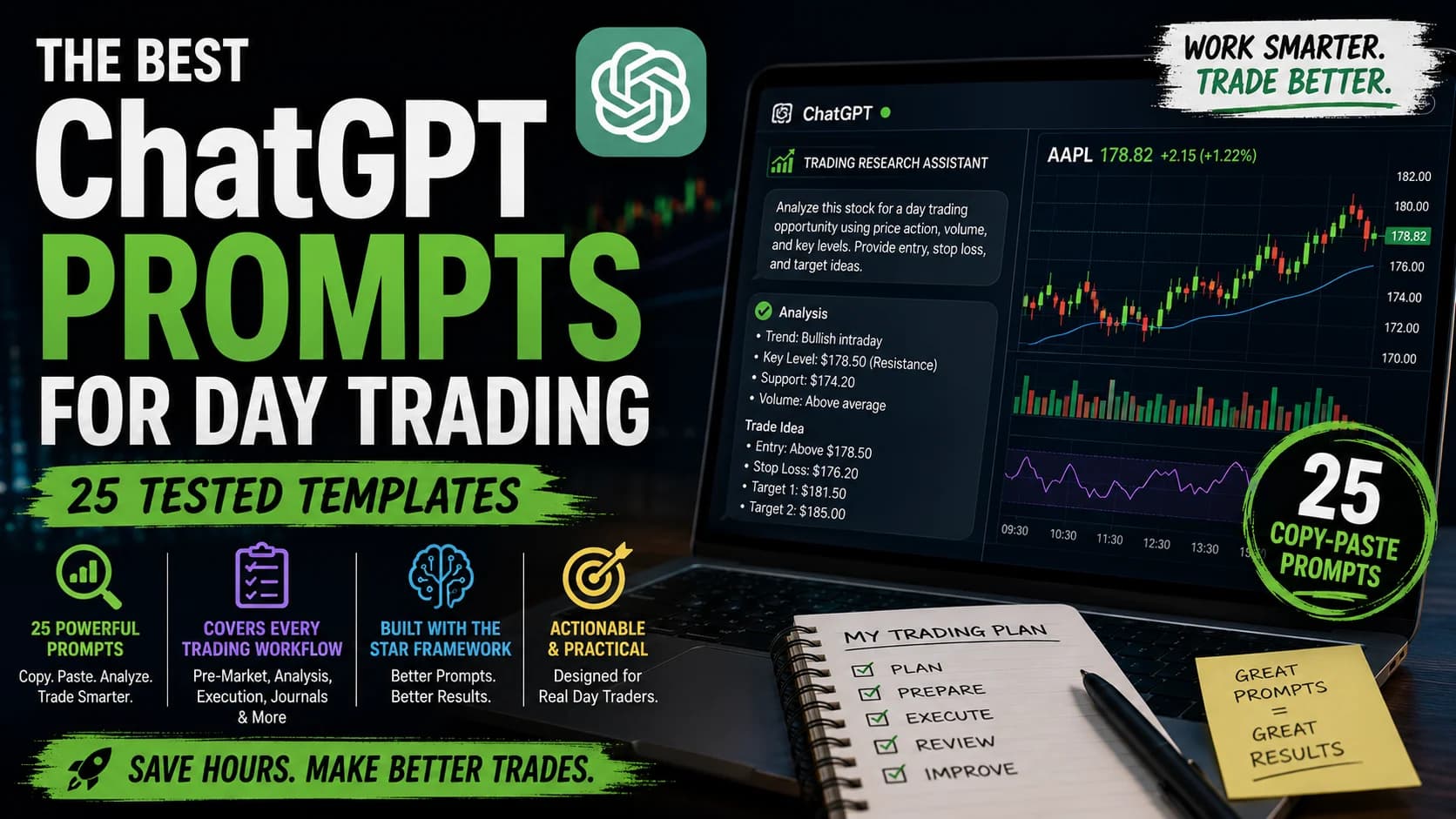
Using ChatGPT to analyze an earnings report or draft trade ideas is fundamentally different from granting an MCP-connected agent permission to execute orders. The first can be wrong; the second can be wrong and costly at the same time.
Key Takeaway: Don't let familiarity with AI for research lull you into treating execution access as the same category of risk.
Do I need to open a new account to use an AI trading agent?
Robinhood requires a dedicated agentic trading account separate from your main holdings. eToro connects a scoped API key to a dedicated sub-portfolio rather than your full account. That isolation limits how much capital is exposed if something goes wrong with the AI's behavior or the underlying connection.
Key Takeaway: Be cautious of any platform that grants an AI agent access to your full, undivided brokerage account rather than an isolated sub-account.
Can an AI trading agent lose more money than I set it up to risk?
A prompt like "don't risk too much" is not a control the underlying system necessarily enforces. A platform-level position cap or dollar limit is. Confirm which kind of limit you're actually setting before assuming your risk is bounded.
Key Takeaway: Only trust limits that are enforced by the platform's system, not ones that exist only as instructions to the AI.
What did FINRA say about AI trading agents specifically?
The guidance applies to member firms rather than individual retail traders directly, but it's a useful benchmark: any brokerage offering an autonomous AI trading feature should be able to show human monitoring, clear permission boundaries, and a complete log of the agent's actions.
Key Takeaway: Use FINRA's own checklist, oversight, permissions, logging, to evaluate whether a specific platform's AI feature is being run responsibly.
Are Claude, ChatGPT, and other AI models equally safe for this?
The documented MCP vulnerabilities concentrate in how tools are exposed, authorized, and monitored, layers that sit around the model rather than inside it. A well-implemented MCP connection with strict permission scoping is safer regardless of which model powers it, and a poorly implemented one carries real risk regardless of which model powers it.
Key Takeaway: Evaluate the broker's implementation and controls first; the underlying AI model is a secondary consideration.
Should beginners use AI trading agents?
Handing real trade execution to an AI agent before you can independently evaluate whether its decisions make sense removes the one check that would otherwise catch a bad trade before it happens: your own judgment.
Key Takeaway: Build the skill to evaluate a trade yourself before delegating the decision to an AI agent to execute on your behalf.
Disclaimer
Article Sources
- NSA/CISA Cybersecurity Information Sheet on MCP Security - government guidance on MCP's architecture and documented attack paths.media.defense.gov
- Understanding Model Context Protocol Security (MCP) in 2026, Wiz - breakdown of the specific attack vectors affecting MCP deployments, including the Postmark MCP incident.wiz.io
- FINRA 2026 Regulatory Oversight Report: Artificial Intelligence - FINRA's official GenAI guidance, including oversight expectations for autonomous AI agents.finra.org
- MCP Security Testing 2026: Model Context Protocol Risks, SecurityWall - CVE disclosure data and documented MCP attack classes through 2026.securitywall.co
- More Brokers Let AI Agents Place Trades, AI Street - industry overview of which brokerages currently offer AI agent account connections.ai-street.co
- Fintechs Put AI in the Driver's Seat with Agentic Trading, Corporate Insight - details on Public's and eToro's specific permission and account-isolation models.corporateinsight.com