
Author Profile
Kazi Mezanur Rahman
Founder, independent researcher, and editor of DayTradingToolkit. A one-person publication focused on risk-first trading education and documented tool research. He trades his own capital as a retail trader and combines personal market experience with systematic primary-source research.
Areas of expertise
464
Published articles
Risk-first
Editorial focus
Independent
Review standard
About the Author
Kazi Mezanur Rahman is the founder, independent researcher, and editor behind DayTradingToolkit, a one-person publication. He built the site to organize practical trading education, primary-source research, calculators, and documented tool reviews in one place.
Kazi trades his own capital as a retail trader. He does not present himself as a professional trader, full-time trader, financial adviser, broker, accountant, or attorney. His experience comes from personal market participation combined with systematic research. The editorial approach is intentionally conservative: explain risks plainly, disclose affiliate relationships, avoid profit promises, clearly distinguish research from first-hand experience, and correct material errors when they are found.
Kazi oversees the site’s education library, research methodology, review structure, and content updates across beginner lessons, strategy explainers, psychology guides, calculators, and software comparisons.
Author Archive
Articles by Kazi Mezanur Rahman
Page 18 of 39. Showing 12 of 464 published guides, reviews, and trading resources.

How to Choose a Day Trading Strategy That Fits Your Personality
The wrong strategy for your personality will fail even if it works on paper. Use our 5-axis framework to match your trading style to a strategy you can actually execute.

One Strategy or Many? The Specialization vs. Diversification Debate
Should you master one trading strategy or trade multiple setups? We break down the real debate, a phased model, and a self-assessment framework to decide.
The Strategy Hopping Trap: Why You Keep Switching and How to Stop
Strategy hopping destroys trading accounts. Learn the 5 psychological triggers behind constant switching and the commitment protocol that breaks the cycle.

Top-Down vs. Bottom-Up Trading: A Framework for Stock Selection
Top-down vs. bottom-up stock selection for day traders. Learn when to start with market context vs. individual catalysts, plus our hybrid morning workflow.

Discretionary vs. Systematic vs. Mechanical Trading: Which Style Wins?
Compare discretionary, systematic, and mechanical trading styles. Find which approach fits your personality with our honest self-assessment framework.
Setup vs. Strategy vs. System: The Three Words Every Trader Confuses
Learn the critical difference between a trading setup, strategy, and system. Most traders conflate all three — and it's costing them money
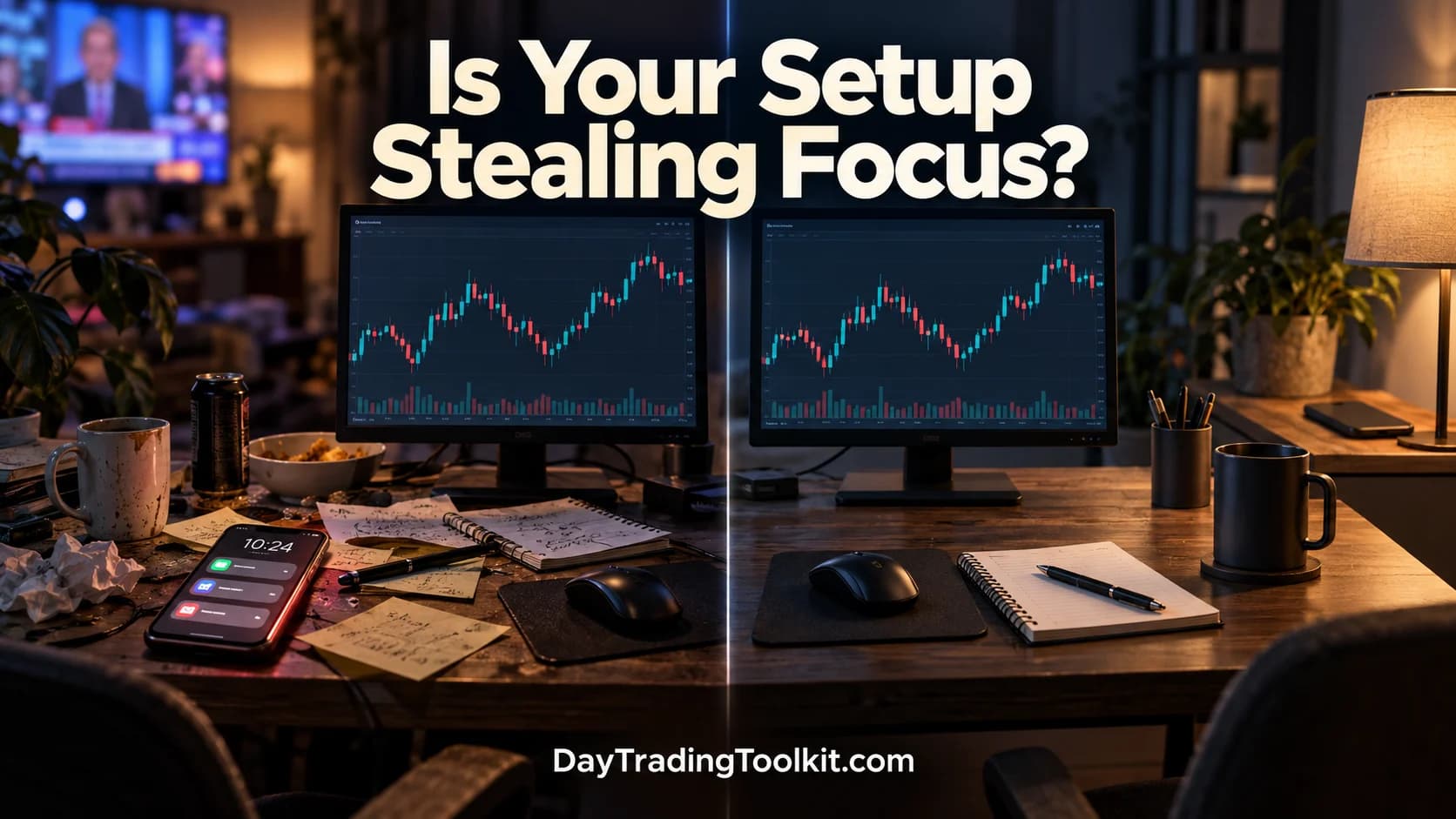
How Your Trading Environment Affects Your Performance
Your trading setup isn't just comfort — it's a cognitive performance variable. Research shows environment affects decision quality by up to 50%. Here's how to optimize yours.

The Psychology of Your First 90 Days Live Trading
Your first 90 days of live trading are where habits form and accounts are most vulnerable. The research on habit formation, the predictable psychological phases, and a week-by-week survival framework.

The Psychology of Scaling Up: When and How to Increase Your Position Size
Why increasing position size breaks most traders. The neuroscience of why bigger numbers feel different, the readiness criteria pros use, and a graduated protocol for sizing up safely.

Mindfulness and Meditation for Day Traders: Does It Actually Work?
Does mindfulness meditation improve trading performance? We review the neuroscience, real studies, and practical techniques — plus the honest limitations nobody talks about.

Process Goals vs. Outcome Goals: How the Best Traders Measure Success
Elite traders measure execution quality, not P&L. Learn the process goal framework from performance psychology, the daily process scorecard, and why tracking behavior beats tracking dollars.

Why You Keep Breaking Your Own Rules: Self-Sabotage in Trading
You know your rules. You understand your system. You break them anyway. The psychology of trading self-sabotage, its 4 sources, and the if-then framework that closes the gap.