
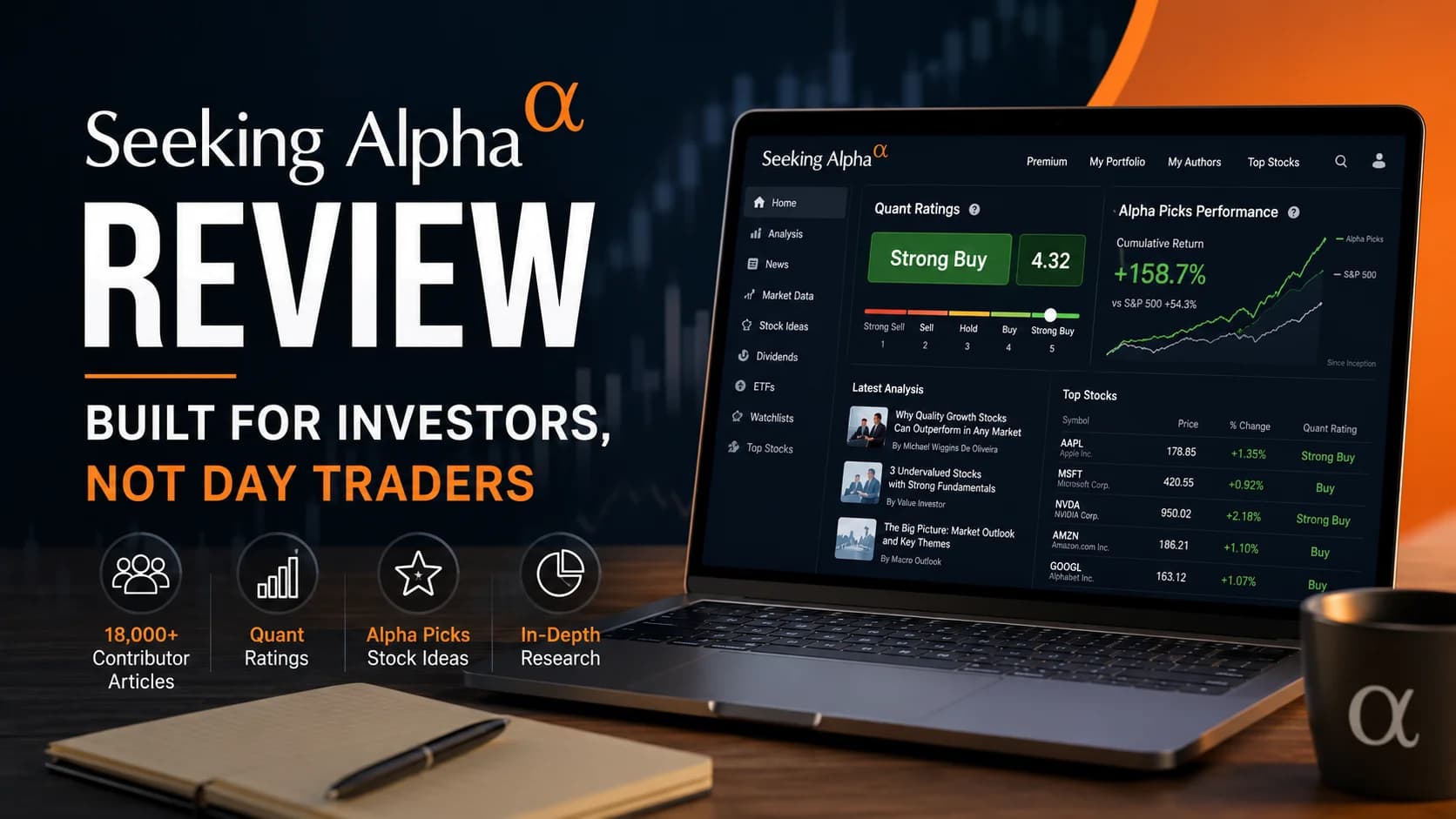
Seeking Alpha's marketing leans hard on its Quant Ratings' backtested outperformance and Alpha Picks' cumulative returns against the S&P 500. Those numbers show up everywhere the platform is discussed, often from sites with an obvious affiliate incentive to make them sound as impressive as possible. The actual platform underneath that marketing is a genuinely large, useful research hub — it's just built for a different kind of reader than the one this site usually writes for.
What is Seeking Alpha? Seeking Alpha is a crowdsourced investment research platform, launched in 2004, combining over 18,000 independent contributor articles, Wall Street analyst consensus, and a proprietary Quant Ratings system into one research hub. It's built for swing and long-term investors doing fundamental research, with paid tiers — Premium, Alpha Picks, a combined Bundle, and Pro — layered on top of a free Basic plan.
This review evaluates Seeking Alpha against the criteria that matter most for a research platform — content depth and quality, the credibility of its rating and picks performance claims, pricing, and — specifically for this site's audience — how well any of it actually applies to day trading rather than longer-term investing. It's based on documented research into Seeking Alpha's official pricing pages and independently published reviews, not a claimed personal subscription history.
What's good
- Genuinely comprehensive research hub — 18,000+ independent contributor articles, Wall Street analyst consensus, and a proprietary Quant Ratings system all in one place, rare for a single platform to combine all three.
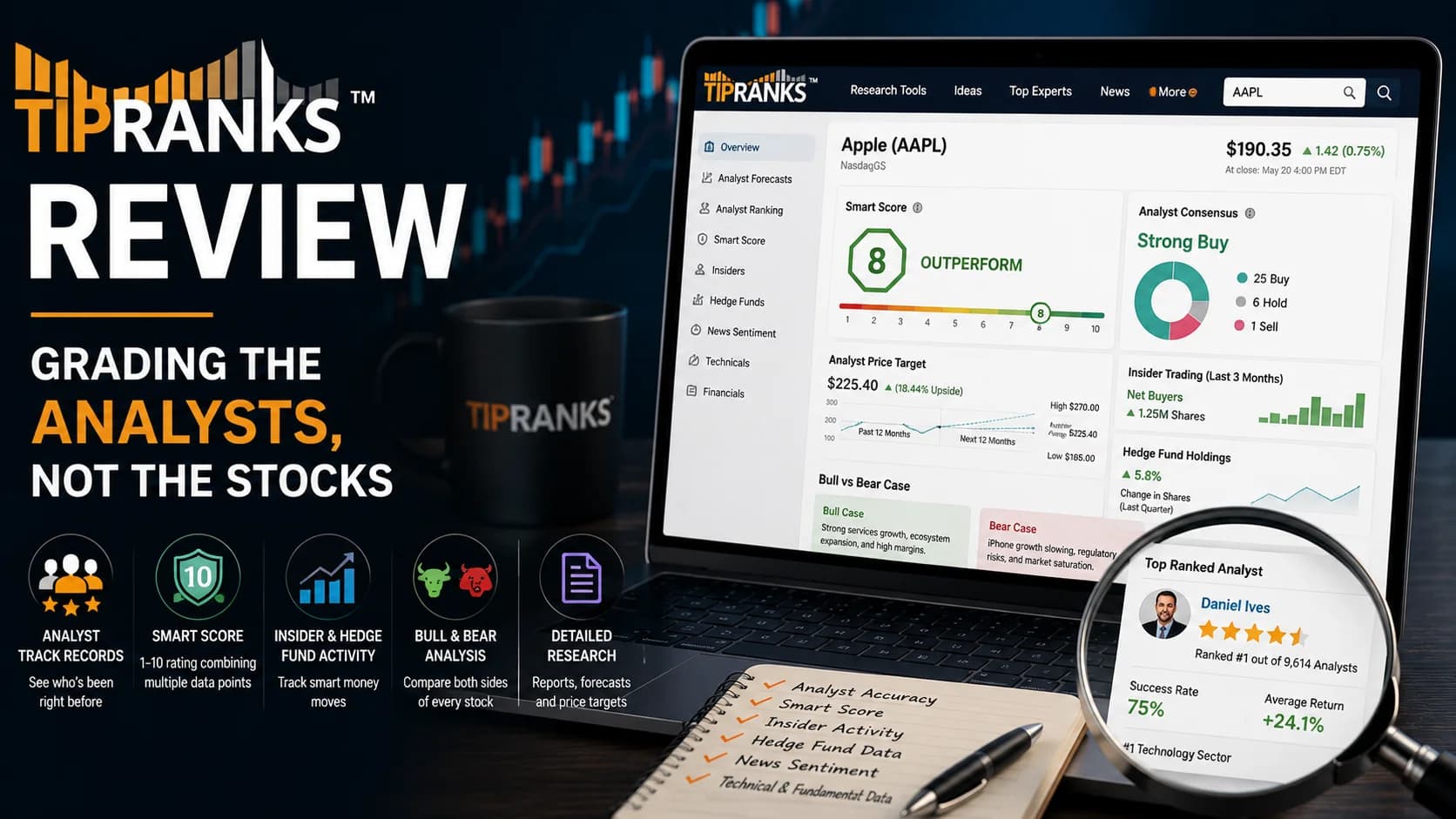
- Author track records are publicly displayed and ranked by historical accuracy, adding real accountability to a crowdsourced content model that could otherwise be pure noise.
- Quant Ratings update daily across dozens of underlying data points, giving a fast, structured signal without needing to read a full article for a directional read on a stock.
- A genuinely useful free Basic tier lets you sample real Seeking Alpha content and community discussion before paying for anything.
- Dividend Grades and portfolio-linking tools give income-focused investors a dedicated lens most general research platforms don't offer.
Trade-offs
- Performance claims for Quant Ratings and Alpha Picks are self-published by the company rather than independently audited by an outside party — a meaningfully different credibility signal than a verified third-party track record, worth keeping in mind when evaluating any specific return figure you see quoted.
- Pricing has risen steadily and is annual-only with no monthly option — Premium alone now runs $299/year on its own, and stacking Alpha Picks or Pro pushes the real cost considerably higher.
- Contributor article quality varies meaningfully since the platform is fundamentally crowdsourced — some content comes from experienced analysts, some from less experienced contributors, and distinguishing the two takes real practice.
- Built for swing and long-term investors, not day traders — the research cadence, Quant Ratings, and portfolio tools are all oriented around holding periods measured in months or years, not intraday decisions.
What Is Seeking Alpha? A Closer Look
Seeking Alpha launched in 2004 around a simple premise: crowdsourced investment analysis, written by independent contributors rather than a single in-house research team, could surface better ideas than any one analyst working alone. Over two decades, that premise has grown into one of the larger investment research communities online, publishing thousands of articles a month across individual stocks, sectors, and macro themes.
The platform layered quantitative infrastructure on top of that community content over time. Quant Ratings score stocks across categories like value, growth, profitability, momentum, and EarningsAn earnings report is the quarterly financial disclosure a public company files with the SEC, revealing revenue, earnings per share (EPS), profit margins, and forward guidance — it's the most significant regular catalyst for individual stocRead definition → revisions, rolling up into a single Strong Buy through Strong Sell rating that updates daily as new data comes in. Alpha Picks, launched in 2022, takes that same quantitative engine and turns it into a curated list of two new stock recommendations per month, aimed at investors who want the output of the system without doing the underlying research themselves.
It's worth being precise about what all of this is actually built for. Seeking Alpha's content, tools, and research cadence are oriented around fundamental analysis and holding periods measured in months to years — earnings trends, valuation multiples, dividend sustainability, long-term competitive positioning. None of that maps onto the minute-to-minute or hour-to-hour decisions a day trader is actually making, and the platform doesn't claim otherwise; it's simply not the audience Seeking Alpha is built for.
Key Features
Quant Ratings. A proprietary scoring system evaluating stocks across value, growth, profitability, momentum, and EPS revision categories, rolling up into a single Strong Buy, Buy, Hold, Sell, or Strong Sell rating that refreshes daily. The company publishes backtested performance data for this system going back over a decade, showing the rating tiers separating meaningfully in historical returns — worth treating as a company-published backtest rather than an independently audited result, which is a genuinely different kind of evidence.
Contributor Articles. The core of the platform: tens of thousands of articles published monthly by independent contributors, covering individual stock theses, sector analysis, and broader market commentary, with both bullish and bearish perspectives represented rather than a single house view. Every contributor's historical accuracy and performance is tracked and displayed publicly, which adds a real accountability layer that pure anonymous forum content doesn't have.
Alpha Picks. A separate, standalone subscription delivering two new quantitatively-selected stock recommendations per month, along with buy and sell alerts and performance tracking for the existing picks portfolio. Like Quant Ratings, the published cumulative performance figures for Alpha Picks come from the company itself rather than an independent auditor, which is worth factoring into how much weight you put on any specific number you see quoted.
Screeners and Portfolio Tools. Stock and ETF screeners let you filter using both traditional fundamental metrics and Seeking Alpha's own Quant and analyst rating data, and portfolio-linking tools let you track your actual holdings against the platform's ratings and grades. Dividend Grades specifically rate companies on yield, safety, growth, and consistency — a genuinely useful, dedicated lens for income-focused investors.
Tiered Subscriptions. Premium is the core research and tools tier; Alpha Picks is a separate, standalone curated-picks product; the Bundle combines both at a discount versus buying separately; and Pro is a considerably more expensive tier aimed at high-VolumeVolume is the total number of shares (or contracts) traded during a given time period — it's the primary confirmation tool for all price action, because a price move accompanied by high volume indicates genuine market participation, while tRead definition → professional investors, adding earlier article access, full earnings call transcripts, and a separately-managed Pro Quant Portfolio.
Regulatory Framing. Seeking Alpha operates under the publisher's exclusion from US investment-adviser registration — standard for financial media and research publishers. In practice, that means its content is positioned as educational research rather than personalized investment advice, and any specific rating or pick should be evaluated against your own situation rather than followed mechanically.
Who Seeking Alpha Is Best For
Seeking Alpha earns its reputation for a specific kind of user, and it's worth being direct that the profile isn't a day trader.
It's a strong fit if you're a swing or long-term investor doing your own fundamental research and want a combination of community perspectives, analyst consensus, and a structured quantitative rating in one place, rather than piecing that together from several separate sources. It's also a strong fit for a dividend-focused investor who wants a dedicated grading system for yield and payout sustainability, and for anyone who values seeing a contributor's actual historical accuracy before weighing their analysis.
It's a weaker fit — genuinely, not as a hedge — if you're a day trader whose decisions are made on intraday price action, volume, and short-term catalysts rather than quarterly earnings trends and valuation multiples. Nothing about Seeking Alpha's research cadence, Quant Ratings, or Alpha Picks is built for that timeframe, and no subscription tier changes that fundamental mismatch. DayTradingToolkit's guide to day trading vs. swing trading vs. investing covers this distinction in more depth if you're still working out which timeframe actually fits your goals.
Seeking Alpha Pricing
Seeking Alpha runs a free tier alongside several paid subscriptions, all currently annual-only:
- Plan
- Basic
- Price
- Free
- What's Included
- Limited articles, no Quant Ratings access
- Plan
- Premium
- Price
- $299/year
- What's Included
- Full research toolkit: screeners, Quant Ratings, Factor Scorecards, Dividend Grades, portfolio tools
- Plan
- Alpha Picks
- Price
- $499/year
- What's Included
- Two curated stock picks per month, standalone (no Premium toolkit included)
- Plan
- Premium + Alpha Picks Bundle
- Price
- $639/year
- What's Included
- Both Premium and Alpha Picks together, at a discount versus buying separately
- Plan
- Pro
- Price
- $2,400/year
- What's Included
- Everything in Premium, plus early article access, full transcripts, and the Pro Quant Portfolio
| Plan | Price | What's Included |
|---|---|---|
| Basic | Free | Limited articles, no Quant Ratings access |
| Premium | $299/year | Full research toolkit: screeners, Quant Ratings, Factor Scorecards, Dividend Grades, portfolio tools |
| Alpha Picks | $499/year | Two curated stock picks per month, standalone (no Premium toolkit included) |
| Premium + Alpha Picks Bundle | $639/year | Both Premium and Alpha Picks together, at a discount versus buying separately |
| Pro | $2,400/year | Everything in Premium, plus early article access, full transcripts, and the Pro Quant Portfolio |
Pricing has risen steadily over the past several years, and every paid plan is billed annually with no monthly option — a real consideration if you want to try the platform without a year-long financial commitment. For most individual investors doing their own research, Premium alone covers the core toolkit; Alpha Picks and the Bundle are worth the extra cost specifically if you want curated recommendations rather than doing that research yourself.
What Works Well
The breadth of perspective is Seeking Alpha's clearest strength. Very few platforms combine independent contributor analysis, Wall Street analyst consensus, and a proprietary quantitative rating in a single place, and having bullish and bearish theses on the same stock displayed side by side is a genuinely useful way to stress-test your own thinking before committing capital.
The contributor accountability system deserves real credit too. Publicly tracking and displaying each author's historical accuracy turns what could be anonymous, unverifiable opinion into something you can actually weigh against a track record — a meaningfully more rigorous approach than most crowdsourced content platforms take.
Quant Ratings and Dividend Grades are useful structured shortcuts for investors who want a fast, consistent read across a large watchlist without reading a full article on every name. Whatever weight you put on the specific backtested numbers, having that consistent framework applied the same way across thousands of stocks has real organizational value.
Limitations
Two limitations are worth taking seriously, and they matter for different reasons.
The performance claims deserve real scrutiny. Quant Ratings' backtested outperformance and Alpha Picks' cumulative returns are both published by Seeking Alpha itself, not verified by an independent auditor — a different, weaker kind of evidence than a third-party-audited track record. That doesn't make the numbers false, but it does mean they should be read with the same skepticism you'd apply to any company grading its own performance, particularly given how many affiliate-driven sites amplify these specific figures without that context.
The pricing and audience mismatch for this site's readers is the more practical issue. Annual-only billing starting at $299/year is a real commitment, and — more fundamentally — the platform's entire research cadence is built around fundamental, longer-horizon investing. A day trader evaluating Seeking Alpha specifically for intraday decision-making is evaluating a tool that was never built for that job, regardless of subscription tier.
Verdict
Seeking Alpha Is Worth It for Investors, Not Day Traders
Seeking Alpha's combination of crowdsourced analysis, analyst consensus, and quantitative ratings is genuinely comprehensive for a swing or long-term investor doing fundamental research. The performance claims behind Quant Ratings and Alpha Picks are company-published rather than independently audited, and pricing has risen to a real annual commitment with no monthly option. For this site's specific audience, the more important finding is a mismatch in timeframe: Seeking Alpha's entire research cadence is built for investors holding positions over months or years, not day traders making intraday decisions.
Swing and long-term investors doing fundamental research who want community analysis, analyst consensus, and quantitative ratings in one platform — not day traders.
Frequently Asked Questions
Is Seeking Alpha good for day traders?
A day trader's decisions are driven by short-term price action, volume, and catalysts happening in real time, none of which is what Seeking Alpha's tools are designed to surface. Traders specifically looking for intraday research tools will find dedicated scanning and charting platforms a much closer fit.
Key Takeaway: Evaluate Seeking Alpha as an investing research tool, not a day trading tool — the two use cases don't overlap much.
How much does Seeking Alpha actually cost?
A free Basic tier exists with limited article access and no Quant Ratings. Pricing has increased steadily over the past several years, so it's worth checking Seeking Alpha's current official pricing page rather than assuming an older quoted figure still applies.
Key Takeaway: Budget for an annual commitment rather than a monthly trial — there's currently no monthly billing option on any paid tier.
What's the difference between Seeking Alpha Premium, Alpha Picks, and Pro?
Alpha Picks doesn't include the Premium toolkit on its own — you need the Bundle if you want both curated picks and full research tools. Pro is priced for institutional-scale use and isn't necessary for most individual investors.
Key Takeaway: Most individual investors doing their own research should start with Premium alone rather than jumping straight to Pro or Alpha Picks.
Are Seeking Alpha's Quant Ratings actually accurate?
This is an important distinction rather than a dismissal — the underlying methodology (scoring stocks across value, growth, profitability, momentum, and earnings revisions) is a reasonable quantitative framework. It's just worth treating the specific published return figures with the same scrutiny you'd apply to any company evaluating its own performance.
Key Takeaway: Use Quant Ratings as one structured input among several, not as a verified, audited guarantee of future performance.
Is Seeking Alpha's free Basic plan worth using?
Basic access is genuinely limited — no Quant Ratings, restricted article access — but it's enough to get a feel for the contributor content style and community discussion quality before committing to an annual subscription.
Key Takeaway: Use the free tier to evaluate content quality and fit before paying for a full year of Premium access.
Has Seeking Alpha faced any legal or regulatory controversy?
Seeking Alpha operates under the publisher's exclusion from US investment-adviser registration, the standard regulatory framing for financial media and research publishers, which is the basis on which those specific claims were resolved. It's a documented part of the platform's history worth knowing, even though the litigation didn't succeed.
Key Takeaway: The legal challenges were dismissed, but it's worth knowing they existed as part of an honest picture of the platform.
Is Seeking Alpha better than Stock Rover or Morningstar?
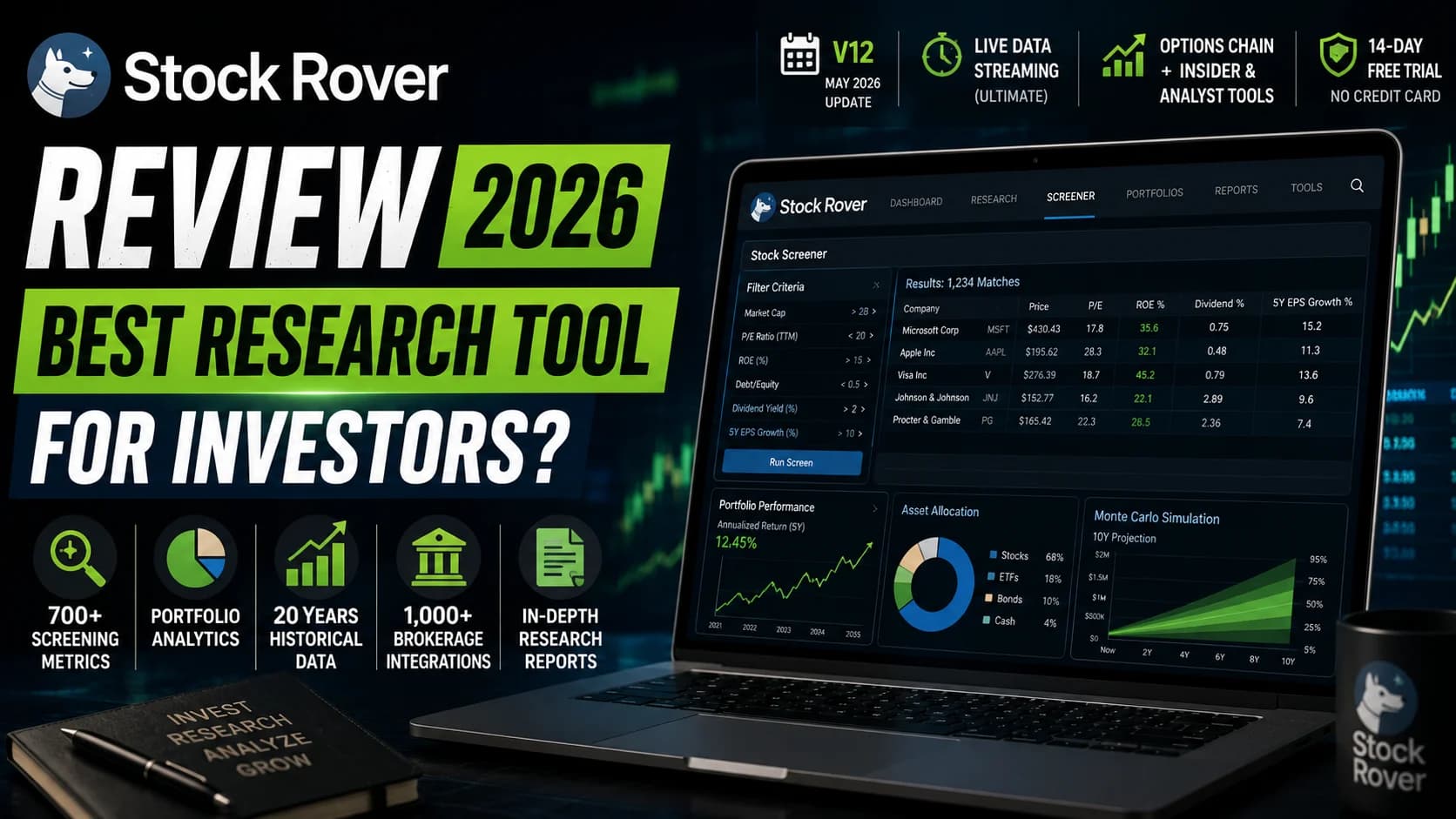
Investors who specifically want community-driven analysis alongside a proprietary quant rating tend to find Seeking Alpha's combination distinctive. DayTradingToolkit's Stock Rover review covers a differently-focused research and screening alternative worth comparing directly.
Key Takeaway: Compare the specific research style and tools each platform emphasizes against what you actually want, rather than assuming one is categorically better.
Can I trust the analysis from Seeking Alpha's contributors?
Reading a contributor's track record before weighing their thesis is a reasonable practice on Seeking Alpha specifically, since that data is available in a way it isn't on most crowdsourced platforms. Treat any single article as one perspective to weigh against others rather than a definitive answer.
Key Takeaway: Check a contributor's track record before weighing their analysis heavily — the platform gives you the data to do that.
Does Seeking Alpha offer a free trial?
Trial terms and lengths have changed over time and vary by current promotion, so it's worth confirming the specific trial terms on Seeking Alpha's official signup page before subscribing, rather than assuming a specific trial length applies.
Key Takeaway: Confirm current trial terms directly on Seeking Alpha's site, since they aren't uniform across every paid tier.
Is Seeking Alpha good for dividend investors?
This is one of the clearer, more specific use cases where Seeking Alpha's tools map directly onto a defined investing style, rather than requiring you to piece together dividend sustainability signals from general fundamental data yourself.
Key Takeaway: Dividend-focused investors get a genuinely purpose-built tool in Dividend Grades, distinct from Seeking Alpha's more general research features.