Ever pulled up your scanner, seen a stock ripping 15% higher before the opening bell, and thought — why?
That “why” is everything. It’s the difference between stepping into a trade with conviction and blindly chasing a blinking ticker because it happens to be green. In our years of trading, the single fastest way we’ve seen beginners blow money is jumping into a stock that’s moving for no identifiable reason. No news. No earnings beat. No FDA approval. Just… movement. And movement without a reason is a trap.
The reason behind a stock’s move is called a catalyst — and understanding catalysts is one of the most practical skills you’ll develop as a day trader. If the previous article in this series taught you how to build a watchlist, this one teaches you what to look for on that watchlist. It’s the difference between scanning for any moving stock and scanning for stocks that are moving because something real just happened.
By the end of this article, you’ll know what catalysts are, the specific types that matter most to day traders, how to tell a strong catalyst from a weak one, and where to find them before the market opens every morning.
What Is a Stock Catalyst?
A stock catalyst is any event, announcement, or piece of new information that causes a stock’s price to move — often significantly. Think of it like this: a stock’s price on any given day reflects what the market collectively believes about that company’s future. A catalyst is the thing that changes that belief.
New information comes out. The market recalculates. Price moves.
That’s really all it is. When a biotech company gets an FDA approval, the market’s belief about that company’s future revenue changes instantly. When a retailer misses its earnings target by a wide margin, the market’s confidence drops. Each of these is a catalyst — something concrete that gives traders a reason to buy or sell.
Here’s the part that matters for you as a day trader: catalysts create the volume and volatility you need to make money. Without a catalyst, a stock tends to drift sideways in a narrow range. Nobody’s excited about it. Nobody’s rushing to buy or sell. But when a catalyst hits? Buyers and sellers flood in, volume explodes, and price makes the kind of moves that day traders can actually capture.
The formal definition — borrowed from chemistry, actually — is fitting. In science, a catalyst speeds up a reaction. In the stock market, a catalyst speeds up price discovery. It forces the market to reprice a stock right now, not gradually over weeks or months.
Why Catalysts Matter More Than You Think for Day Traders
If you’re coming from a long-term investing background, you might be thinking: “I’ll just look at the chart pattern and trade the technicals.” And sure, chart patterns matter — we covered those in our Simple Chart Patterns guide. But here’s what separates day trading from almost every other form of market participation.
Day traders need intraday moves. And intraday moves need fuel.
That fuel is a catalyst paired with volume. A stock can have a perfect breakout pattern on a chart, but if there’s no catalyst behind it, the breakout is far more likely to fail. Why? Because without a catalyst, there aren’t enough new participants rushing in to sustain the move. The stock pops up, runs out of buyers, and fades right back down.
Contrast that with a stock gapping up 8% on a massive earnings surprise. Traders are flooding in. The news is spreading. Volume is 5x, 10x, even 20x the daily average. That’s the kind of environment where breakouts hold, trends persist for hours, and the risk/reward setups you learned about in earlier modules actually play out.
Think of it this way: a catalyst is to a day trade what wind is to a sailboat. You can have the most beautiful boat on the water — perfect setup, great chart pattern, ideal price levels — but without wind, you’re going nowhere. The catalyst is the wind.
Our team has a simple rule: if you can’t explain why a stock is moving in one sentence, you probably shouldn’t be trading it. That one sentence is the catalyst.
The Two Types of Catalysts: Anticipated vs. Sudden
Not all catalysts arrive the same way. Understanding the difference between anticipated and sudden catalysts will save you from one of the most frustrating beginner experiences — watching a stock dump on seemingly “good” news.
Anticipated Catalysts
These are events the market knows about in advance. Earnings report dates. Scheduled FDA decision deadlines. Federal Reserve meetings. Product launch events. The dates are on the calendar, and traders have been positioning before the event even happens.
Here’s the critical nuance: because the market is forward-looking, anticipated catalysts often get “priced in” before the actual event. Traders buy shares in the weeks leading up to a positive expected announcement. By the time the announcement actually drops, the buying has already happened. This is the classic “buy the rumor, sell the news” phenomenon — and it catches beginners off guard constantly.
You buy a stock after a great earnings report, expecting it to keep running. Instead, it drops. What happened? The good earnings were already expected. The “smart money” bought weeks ago and is now selling into the excitement you just created by buying.
Sudden Catalysts
These are the surprises. An unexpected FDA approval. A surprise contract announcement. A CEO resignation nobody saw coming. An activist investor taking a massive stake. The market had no time to price these in, which means the reaction is often sharper, faster, and more dramatic.
For day traders, sudden catalysts tend to create the best opportunities — precisely because the market is caught off-guard. The gap between what was priced in (nothing) and the new reality (significant news) is enormous, and that gap creates movement.
The key takeaway is this: with anticipated catalysts, the move often happens before the event. With sudden catalysts, the move happens after. Knowing which type you’re dealing with changes your entire approach.
The 8 Most Common Stock Catalysts Day Traders Need to Know
Not every piece of news moves a stock. Here are the eight catalyst categories that consistently generate the kind of intraday action day traders look for — ranked roughly by how frequently you’ll encounter them.
1. Earnings Reports (The Big One)
Every publicly traded company reports quarterly earnings — revenue, profit (or loss), and forward guidance. This is the single most common catalyst you’ll encounter. According to FactSet data, the S&P 500 has reported double-digit year-over-year earnings growth for five consecutive quarters through Q4 2025, which tells you just how actively the market watches these numbers.
The key isn’t whether earnings were good or bad in absolute terms. It’s whether they beat or missed analyst expectations. A company can report a loss and see its stock soar — if analysts expected an even bigger loss. Conversely, a profitable company can tank if profits came in below what Wall Street predicted.
Research from Trade with the Pros indicates that positive earnings surprises can drive stock prices up 2–10% in a single trading session, with volume surging 300–500% above normal. Negative surprises tend to hit harder, triggering sell-offs of 5–15% within 24 hours.
For beginners, the rule is simple: react to earnings — don’t try to predict them. Holding through an earnings announcement is essentially gambling. We’ll cover earnings-specific strategies in depth in our Earnings Season guide later in this series.
2. FDA and Regulatory Decisions
For biotech and pharmaceutical stocks, FDA decisions are monster catalysts. An approval for a new drug can send a small-cap biotech stock up 50%, 100%, or more in a single session. A rejection can vaporize half the stock’s value overnight.
These are binary events — the outcome is essentially yes or no — and they’re uniquely dangerous for beginners. The moves are extreme, the stocks are often low-float (meaning small amounts of buying or selling cause outsized price swings), and predicting the outcome is nearly impossible unless you have a PhD in pharmacology.
Regulatory catalysts aren’t limited to the FDA, either. They include SEC enforcement actions, FCC rulings, environmental policy changes, and any government agency decision that directly impacts a company’s ability to operate or generate revenue.
3. Contracts, Partnerships, and Deals
When a small company announces a major contract with a Fortune 500 firm — or when two companies announce a partnership, acquisition, or merger — the stock can move dramatically. These catalysts tend to be sudden (nobody knows until the press release drops), which makes the reaction sharp.
The size of the move typically depends on the relative impact. A $10 million contract for Apple barely registers. That same $10 million contract for a $50 million market-cap company? It could double the stock.
4. Analyst Upgrades and Downgrades
Wall Street analysts issue ratings on stocks — buy, hold, sell — along with price targets. When a major firm upgrades a stock from “hold” to “buy” or significantly raises its price target, the stock usually gaps up at the open. Downgrades work in reverse.
The impact depends heavily on which analyst and which firm. A Goldman Sachs upgrade carries more weight than one from a smaller boutique firm. Multiple simultaneous upgrades (or downgrades) amplify the move.
5. Management Changes
When a company’s CEO steps down unexpectedly — especially during turbulent times — the stock often sells off hard. The market hates uncertainty, and a sudden leadership vacuum signals potential trouble. On the flip side, bringing in a well-respected new leader can be a positive catalyst.
Board shakeups, CFO departures, and activist investors pushing for management changes all fall into this category.
6. Economic Reports and Macro News
While most catalysts are company-specific, macroeconomic catalysts affect everything. The monthly jobs report (Non-Farm Payrolls), inflation data (Consumer Price Index), and Federal Reserve interest rate decisions can move the entire market — every stock, every sector — in minutes.
These are anticipated catalysts (the dates are scheduled months in advance), but the actual data is the surprise. A hotter-than-expected inflation reading can tank the market. A surprisingly strong jobs number can send it soaring. We’ll cover these in dedicated detail in our Economic Reports for Day Traders guide.
7. Sector-Wide and Industry News
Sometimes the catalyst isn’t about one company — it’s about an entire industry. New government regulations on AI. A breakthrough in battery technology. A trade tariff on semiconductors. These sector catalysts ripple across every stock in the affected industry.
What makes sector catalysts useful for day traders is the “sympathy play” effect. If one electric vehicle company announces a breakthrough, other EV stocks often move too — even without any company-specific news. Traders who understand sector context — which we cover in our Sector & Market Context guide — can spot these opportunities faster.
8. Insider and Institutional Activity
When a company’s CEO buys a million dollars worth of their own stock on the open market, that’s a signal. When a major hedge fund discloses a new position through an SEC 13F filing, other traders pay attention. Insider purchases (reported on SEC Form 4, which must be filed within two business days of the transaction) suggest that people with the most information about the company believe the stock is undervalued.
This catalyst tends to be slower-burning and less dramatic intraday — but clusters of insider buying can precede bigger moves and serve as useful context for your morning research.
How to Evaluate Catalyst Strength (The Beginner’s Checklist)
Here’s what most articles about catalysts get wrong: they list the types and stop there. But knowing what a catalyst is doesn’t tell you whether it’s worth trading. Not all catalysts are created equal. Some generate massive, sustained moves. Others cause a brief spike that fades before you can even enter a position.
Our team uses a simple framework to evaluate whether a catalyst is strong enough to trade. We call it the catalyst strength checklist.
Is It Unexpected?
The more surprising the news, the bigger the move — generally speaking. A company beating earnings estimates by 1% is different from beating by 30%. An FDA approval that analysts gave a 50/50 chance is different from one they gave 90% odds. The gap between what was expected and what actually happened drives the magnitude of the price reaction.
Does Volume Confirm It?
This is non-negotiable. A catalyst without volume is a red flag. If a stock gaps up 5% on news but the volume is barely above average, the move is suspect. Genuine catalyst-driven moves are accompanied by a surge in volume — ideally 2x to 3x the stock’s average daily volume or more, even in the pre-market session. Volume tells you that other traders believe this catalyst matters too. For a deeper dive into evaluating volume signals, check out our upcoming guide on Relative Volume (RVOL).
Is the Catalyst Fresh?
Timing matters enormously. A catalyst that’s three days old is largely “priced in” already. For day trading purposes, you want catalysts that broke within the last 12–18 hours — ideally since the previous market close. Fresh catalysts mean the market is still digesting the news, positions are still being established, and the price hasn’t finished moving yet.
Does It Change the Fundamental Story?
The most powerful catalysts don’t just make a stock move for a day — they change the market’s perception of the company’s future. An FDA approval doesn’t just generate excitement for 30 minutes. It means the company now has a revenue-generating product. That’s a fundamental shift, and those catalysts tend to produce multi-day moves, not just quick spikes.
Compare that to something like a one-time legal settlement. It generates a headline, maybe a quick pop, and then fades because it doesn’t change anything about the company’s ongoing business.
Is the Stock “Tradeable”?
Even a perfect catalyst is useless if the stock itself isn’t suited for day trading. You need sufficient liquidity — a stock that regularly trades at least a few hundred thousand shares per day on normal days. You need a reasonable bid-ask spread so your entry and exit costs don’t eat your profit. And you need to understand the stock’s float and share structure, which we’ll cover in the next article on Float, Short Interest & Share Structure.
Where to Find Stock Catalysts Before the Market Opens
Knowing what to look for is only half the equation. You also need to know where to look. Here’s how our team sources catalysts every morning.
News Aggregators and Financial Media
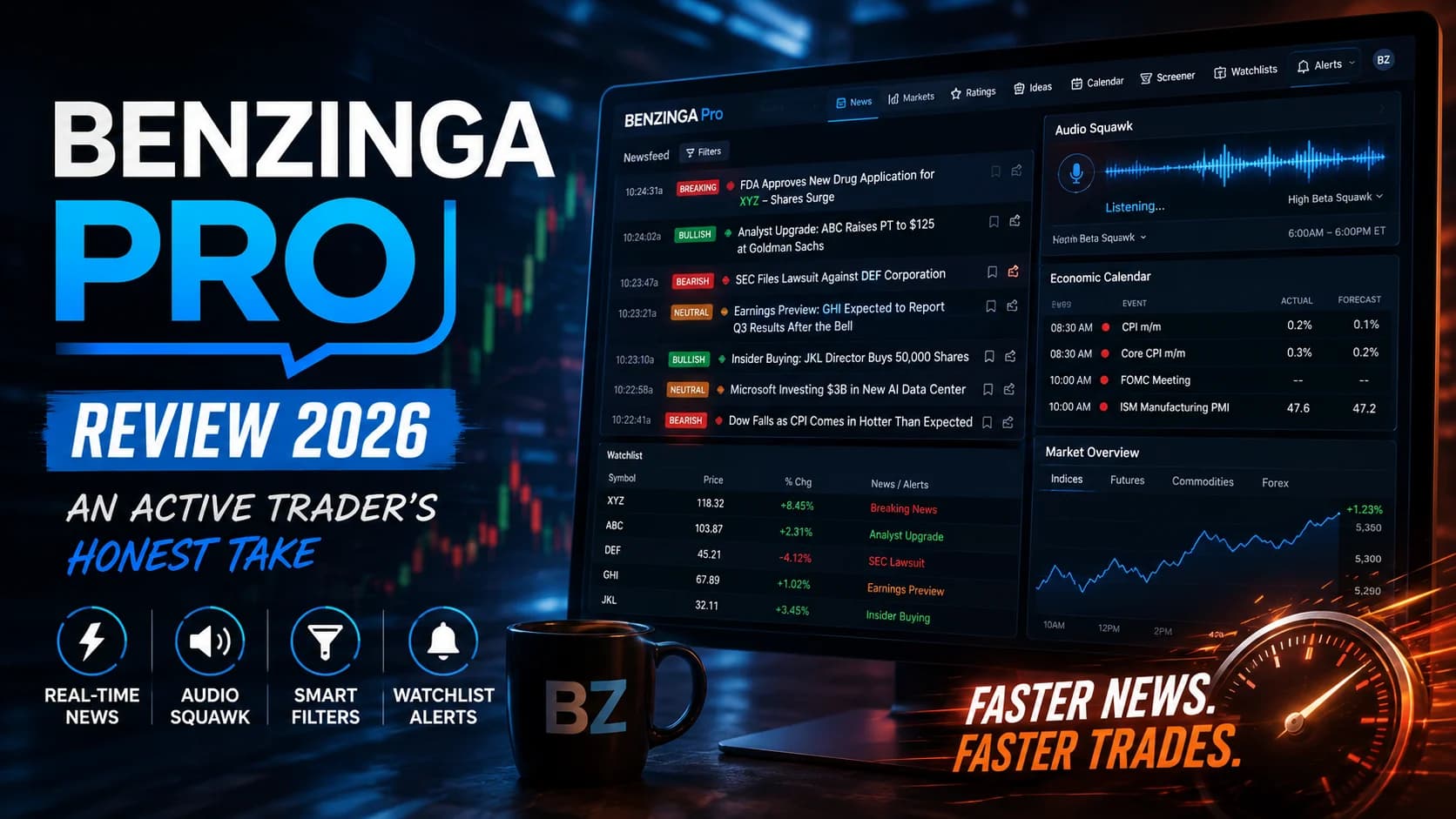
Sites like Yahoo Finance, MarketWatch, Bloomberg, and Benzinga aggregate market-moving news in real-time. Most serious day traders scan financial headlines before the market opens as part of their morning routine. You’re looking for anything that fits the eight catalyst categories above — earnings beats, FDA decisions, contract announcements, analyst upgrades.
Stock Scanners and Screening Tools
A good stock scanner does the heavy lifting for you. Instead of manually reading through hundreds of headlines, a scanner surfaces stocks that are already showing unusual activity — big pre-market gaps, volume spikes, percentage gainers. When your scanner flags a stock that’s gapping up 10% on 5x normal volume, that’s your cue to investigate the why. The “why” is the catalyst.
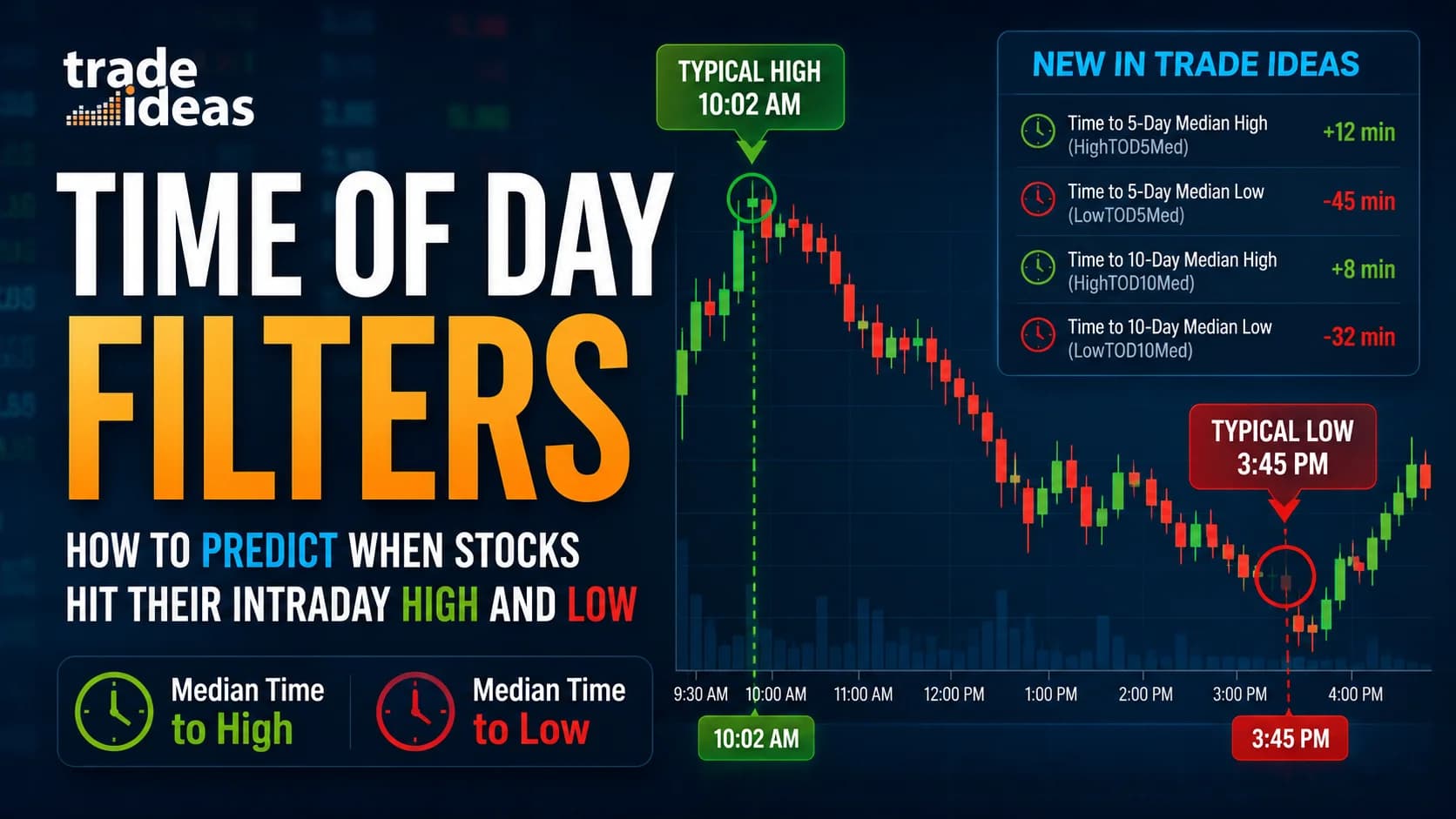
Real-time scanners like Trade Ideas are designed specifically for this workflow — they surface stocks showing unusual price and volume activity, which are almost always catalyst-driven. For a full breakdown of the scanner landscape, see our Stock Scanners for Day Trading guide.
SEC Filings (EDGAR)
For insider buying/selling and institutional activity, the SEC’s EDGAR database is the primary source. Form 4 filings (insider transactions) and 13F filings (institutional holdings) are publicly available. You don’t need to read these daily as a beginner, but knowing they exist gives you an edge when a stock moves and you can’t find an obvious news headline.
Earnings Calendars
Every major financial website maintains an earnings calendar showing which companies report results on which dates. Checking the earnings calendar the night before gives you a head start on identifying which stocks might gap significantly the next morning.
Social Media (With Caution)
Twitter/X, StockTwits, and Reddit’s trading communities can surface catalysts quickly — sometimes faster than mainstream news. But they also amplify rumors, hype, and outright misinformation. Use social media as a supplement to your research, never as your primary source. If you see a stock trending on social media, always verify the catalyst through a legitimate news source before acting.
We compare all the best research and scanning tools — including news aggregators, charting platforms, and screeners — in our Day Trading Toolkit.
The “No Catalyst, No Trade” Rule (And Other Beginner Mistakes)
If there’s one rule from this entire article that you should internalize before anything else, it’s this: no catalyst, no trade.
We’ve been there — every trader has. You pull up your scanner, see a stock up 8%, and feel the gravitational pull of FOMO dragging you toward the buy button. But when you check the news… nothing. No earnings. No press release. No analyst upgrade. No SEC filing. Nothing.
That’s a stock to skip. Period.
Stocks that move without identifiable catalysts are often driven by low-volume technical moves, social media pump schemes, or algorithmic activity that can reverse instantly. Without a catalyst providing a reason for the move, there’s no fundamental logic supporting the price — and that means there’s no way to assess when or where it might stop.
Here are the other catalyst-related mistakes our team sees beginners make most often.
Mistake #1: Trading Old News
A catalyst that moved a stock two days ago is already reflected in the price. Buying a stock because it had great earnings last Tuesday is buying after the move, not during it. Freshness matters. If the news isn’t from the last 12–18 hours, you’ve likely missed the main move.
Mistake #2: Confusing Catalyst Strength with Price Movement
A stock can move 20% on hype and thin volume — that doesn’t mean the catalyst is strong. A smaller, steadier move on massive volume from a fundamental catalyst (like an earnings beat) is often far more tradeable than a wild spike on a rumor. Always pair the catalyst with volume and verify the source.
Mistake #3: Ignoring the “Priced In” Factor
This trips up beginners constantly. A stock has an earnings beat, you buy at the open, and it immediately drops. Why? Because the beat was widely expected. The smart money bought weeks before. They’re selling into your buying. Understanding whether news is truly surprising versus expected is one of the most important skills you’ll develop.
Mistake #4: Holding Through a Binary Catalyst
Holding a biotech stock through an FDA decision or holding any stock through an earnings report is not day trading — it’s gambling. Binary catalysts (pass/fail, beat/miss) can go either direction with equal probability, and the moves are often too fast for stop-losses to protect you. React to the result. Don’t gamble on the outcome.
Mistake #5: Forgetting That Catalysts Work in Both Directions
Catalysts aren’t just reasons to buy — they’re reasons to sell short, too. A negative earnings surprise, an FDA rejection, or an unexpected CEO departure can create downside opportunities that are just as tradeable as the upside ones. The best day traders are neutral about direction. They follow the catalyst, wherever it leads.
What’s Next in Your Day Trading Journey
Now that you understand what makes a stock move and how to evaluate whether that movement is worth trading, the next piece of the puzzle is the stock itself. Specifically — how many shares are available to trade, who owns them, and why that structure dramatically affects how a catalyst plays out in the real world.
→ Next Article: Float, Short Interest & Share Structure: Why They Matter for Day Trading
Frequently Asked Questions
What is a stock catalyst in simple terms?
Quick Answer: A stock catalyst is any event or news that causes a stock’s price to move significantly — up or down.
Think of it as the “reason” behind a price move. Earnings reports, FDA decisions, contract announcements, analyst upgrades — these are all catalysts. They work by changing the market’s collective belief about a company’s future prospects. When new information arrives that differs from what was expected, traders rush to buy or sell, and the price adjusts. Without a catalyst, stocks tend to trade sideways in narrow ranges with low volume.
Key Takeaway: If you can’t identify why a stock is moving, you shouldn’t be trading it. The catalyst is the “why.”
What is the most common stock catalyst for day traders?
Quick Answer: Earnings reports are the most frequent and impactful catalyst, occurring four times per year for every publicly traded company.
Earnings season — which typically runs in January, April, July, and October — produces hundreds of catalyst-driven moves across a few weeks. Stocks gap up or down based on whether results beat or missed analyst expectations, and the magnitude of those moves (often 2–15% in a single session) makes them prime day trading territory. Forward guidance — the company’s outlook for the next quarter — can be even more impactful than the actual numbers.
Key Takeaway: Keep an earnings calendar handy and check it every evening to know which stocks might deliver tradeable gaps the next morning.
Why do stocks sometimes drop on good news?
Quick Answer: Because the good news was already “priced in” — the market had anticipated it, and traders who bought early are now selling into the excitement.
This is the classic “buy the rumor, sell the news” dynamic. If a company was widely expected to beat earnings, traders bought shares in the weeks leading up to the report. When the beat is confirmed, those early buyers take profits, which creates selling pressure that pushes the stock down despite objectively positive results. It’s one of the most confusing things for beginners, but once you understand anticipated vs. sudden catalysts, it starts making sense.
Key Takeaway: The surprise factor matters more than whether news is objectively “good” or “bad.” What the market expected determines the reaction.
How do I find stock catalysts before the market opens?
Quick Answer: Use a combination of financial news sites, stock scanners, and earnings calendars during your pre-market research routine.
Start with a scanner that surfaces pre-market gainers and losers with unusual volume. Then investigate why each stock is moving by checking news aggregators like Yahoo Finance, MarketWatch, or Benzinga. Cross-reference with the earnings calendar to see if any report was released after the prior close or before the open. This process takes 15–30 minutes and should be part of your daily pre-market routine.
Key Takeaway: Scanners tell you what’s moving. News tells you why it’s moving. You need both.
Should beginners trade stocks without a clear catalyst?
Quick Answer: No. As a beginner, the “no catalyst, no trade” rule should be one of your non-negotiable guidelines.
Stocks that move without an identifiable catalyst are inherently unpredictable. They might be driven by algorithmic activity, social media hype, or thin-volume technical moves that can reverse in seconds. Without a catalyst, you have no framework for evaluating risk, no basis for a price target, and no way to assess whether the move has staying power. As you gain experience, you may develop the pattern recognition to trade purely technical setups — but that’s an advanced skill, not a beginner one.
Key Takeaway: Stick to catalyst-driven trades while you’re learning. It forces you to do research and builds the habit of trading with a reason, not just a feeling.
What’s the difference between anticipated and sudden catalysts?
Quick Answer: Anticipated catalysts are known events with scheduled dates (like earnings reports or Fed meetings). Sudden catalysts are surprises that hit without warning (like an unexpected partnership or CEO resignation).
The practical difference for traders is timing. Anticipated catalysts tend to get partially priced in before the event, which means the actual announcement sometimes produces a muted — or even reversed — reaction. Sudden catalysts, by contrast, catch the market completely off guard, creating sharper, faster moves because nobody had time to position ahead of the news.
Key Takeaway: Sudden catalysts tend to create the strongest intraday opportunities for day traders because the market hasn’t had time to price them in.
How do I know if a catalyst is strong enough to trade?
Quick Answer: Check for volume confirmation, freshness, surprise factor, and whether the catalyst changes the company’s fundamental story — not just its price for a day.
A strong catalyst produces a clear volume surge (ideally 2x or more above the stock’s daily average), is fresh (within the last 12–18 hours), was genuinely unexpected by the market, and ideally changes how traders view the company’s future prospects. A weak catalyst might produce a headline-grabbing price pop but fades quickly on mediocre volume because the news doesn’t actually change anything meaningful about the business.
Key Takeaway: Volume is the confirmation signal. If a catalyst doesn’t produce above-average volume, the market isn’t taking it seriously — and neither should you.
What are binary catalysts and why are they risky?
Quick Answer: Binary catalysts are events with only two outcomes — pass/fail, approve/reject, beat/miss — and they’re risky because the result is nearly impossible to predict.
FDA approvals, clinical trial results, and earnings reports are all binary catalysts. A biotech stock might surge 80% on an FDA approval or crash 60% on a rejection. Because the outcome is essentially a coin flip from a retail trader’s perspective, holding through a binary event is more like gambling than trading. Stop-loss orders often can’t protect you because the stock can gap through your stop level instantly.
Key Takeaway: For binary catalysts, the smart approach is to react to the outcome rather than trying to predict it. Wait for the news, then trade the resulting price action.
Can negative catalysts create trading opportunities?
Quick Answer: Absolutely. Negative catalysts — earnings misses, downgrades, product failures — create opportunities on the short side and can be just as profitable as positive ones.
Day trading isn’t about being bullish or bearish on a company. It’s about finding movement and trading in the direction the catalyst pushes the stock. A negative earnings surprise that sends a stock down 12% on massive volume is a textbook short-selling setup for experienced traders. Even for beginners who aren’t comfortable shorting, understanding negative catalysts helps you avoid buying into a stock that’s collapsing for a legitimate reason.
Key Takeaway: The best day traders are direction-neutral. They follow the catalyst, whether it points up or down.
How do economic reports act as catalysts for individual stocks?
Quick Answer: Major economic reports like the Consumer Price Index (CPI), jobs data (Non-Farm Payrolls), and Federal Reserve announcements move the entire market — which in turn affects every individual stock.
When inflation data comes in hotter than expected, the market broadly sells off because traders anticipate the Fed will keep interest rates higher for longer. That broad sell-off drags down even stocks with no company-specific news. Conversely, a surprisingly strong jobs report can boost market sentiment across the board. These macro catalysts are particularly impactful for index-heavy stocks and ETFs — and understanding them is essential for reading the overall market environment your trades exist within.
Key Takeaway: Even if your stock has a positive company-specific catalyst, a negative macro catalyst can overpower it. Always check the economic calendar, which we cover in our upcoming Economic Reports guide.
Disclaimer
The information provided in this article is for educational purposes only and should not be considered financial advice. Day trading involves substantial risk and is not suitable for every investor. Past performance is not indicative of future results.
For our complete disclaimer, please visit: https://daytradingtoolkit.com/disclaimer/
Article Sources
Our team built this article on research and data from the following authoritative sources. We encourage you to explore them for deeper context on how catalysts drive market behavior.
- Investopedia: Catalyst Definition and Examples in Finance — Comprehensive definition and classification of financial catalysts, including how value and momentum investors use them differently.
- FactSet Earnings Insight: S&P 500 Earnings Season Update (February 2026) — Current data on S&P 500 earnings surprise rates, growth trends, and market reactions to positive and negative surprises.
- SEC Investor Education: Investor.gov — Official SEC resource for understanding company disclosures, SEC filings, and how public information drives stock price movements.
- FactSet: Market Reaction to EPS Surprises (Q2 2025) — Quantitative analysis of how the market rewards and punishes earnings surprises relative to historical averages.
- Wikipedia: Stock Catalyst — Well-sourced overview of anticipated vs. sudden catalysts and common trading strategies around catalyst events.
- CME Group: Education Resources — Educational materials on how economic events and market-moving data releases affect futures and equity markets.