

It started, as these things always do, with a promising screenshot.
A WhatsApp group. A "professor" sharing AI-generated trading signals. Impressive-looking charts. Other members posting wins. The platform — licensed, professional, trustworthy-looking — showed your balance growing by the day. Then came the withdrawal request. Then came the fees. Then came the silence.
By January 2025, that scheme — operating under names like AI Wealth Inc. and Lane Wealth Inc. — had defrauded U.S. retail investors out of more than $14 million. The SEC filed charges in December 2025. No real trading ever occurred. The platforms were fabricated. The AI signals were fiction. The "professor" was a scammer with a script.
This wasn't a fringe operation. It was a sophisticated, multi-stage fraud engineered specifically to exploit two things retail traders desperately want: an edge, and the legitimacy that the word "AI" now provides.
Here's the uncomfortable truth. Scammers don't need AI. They just need to say they have it.
This guide gives you the tools to never fall for it — a breakdown of the 7 most common AI trading scam archetypes, a 3-Layer Verification Framework you can apply to any pitch you encounter, and a clear picture of what legitimate AI trading tools actually look like by comparison. Because knowing the difference isn't just smart. At this point, it's essential.
Why "AI" Is the Perfect Word for a Scammer
Before we get into the mechanics of specific scams, it helps to understand why AI has become the preferred marketing language for financial fraud.
Three factors converge to make it nearly irresistible.
First, authority without accountability. When someone claims their system uses "machine learning" or "neural networks," most listeners can't evaluate that claim. They don't know what machine learning actually requires — the data, the engineering, the years of refinement. So the term functions as a credibility signal without requiring any actual credibility. It sounds technical. It sounds serious. It sounds like it should work.
Second, the hype cycle is real. AI is genuinely transforming industries. Readers see headlines about AI outperforming doctors in diagnostics, lawyers in contract review, engineers in code generation. It's not unreasonable to assume it might also have some edge in financial markets. Scammers piggyback on that entirely legitimate narrative.
Third, the SEC said it plainly. In a January 2024 Investor Alert, the SEC's Office of Investor Education and Assistance warned that "fraudsters may use AI to generate fake content, including deepfake videos, to sell bogus investments or impersonate professionals." And in a February 2024 speech before the Yale law faculty, then-Chairman Gensler specifically cautioned that AI could become "the next frontier of financial fraud."
This isn't theoretical concern. Between mid-2024 and mid-2025, TRM Labs — a blockchain intelligence firm — documented a 456% surge in AI-enabled scam reports on its fraud reporting platform. That's not a percentage we mistyped. Four hundred fifty-six percent in one year. Meanwhile, the FTC reported consumer fraud losses of $12.5 billion in 2024 alone — a 25% increase from the prior year — with AI-related deception playing an expanding role.
The AI label is working. And it will keep working until more traders know how to test it.
The 7 AI Trading Scam Archetypes
These aren't variations of the same scheme. Each has its own delivery mechanism, its own trust-building strategy, and its own point of collapse. Knowing them by name is your first line of defense.
Archetype 1: The Phantom Bot
The pitch: a trading bot powered by proprietary AI that generates consistent returns, often "guaranteed" or "risk-free." Pay the subscription — or the licensing fee, or the "setup cost" — and the algorithm does the rest.
What's actually there: nothing. The algorithm doesn't exist. Sometimes a rudimentary dashboard shows fake account growth. Sometimes there's no platform at all — just an invoice and a promise.
The Idaho Department of Finance, in its 2026 investor threat report, specifically flagged "phantom AI trading bots" as a primary enforcement focus — systems that promise guaranteed returns where "the algorithm and the profits do not exist."
Red flags unique to this archetype: no explanation of the trading methodology, no audited track record, no registered broker involved, and an urgency to pay before you can access full information.
Archetype 2: The WhatsApp Investment Club
This is the exact structure behind the $14 million SEC case from December 2025. Victims are recruited through social media ads into a messaging group — WhatsApp, Telegram, Discord. Inside the group, a "professor" or "expert" shares AI-generated trade signals, curated screenshots of winning trades, and sophisticated-sounding commentary on market conditions.
Trust builds over days or weeks. Then members are directed to open accounts on affiliated trading platforms — which look professional and licensed — and fund them. Account balances show gains. Withdrawal attempts are met with fees, delays, and eventually nothing.
The SEC's complaint describes this structure in clinical detail: the investment clubs "gained investors' confidence with supposedly AI-generated investment tips before luring investors to open and fund accounts on purported crypto asset trading platforms Morocoin, Berge, and Cirkor, which falsely claimed to have government licenses." No trading occurred. All funds were misappropriated.
Archetype 3: The Deepfake Celebrity Endorsement
A polished video. Elon Musk, or a credible financial figure, speaks directly to camera about a revolutionary AI trading platform. The production quality is high. The voice is right. The mannerisms are convincing. The platform's URL appears on screen.
None of it is real. This is deepfake technology — AI-generated video and audio designed to put words in people's mouths — being used to manufacture fake celebrity endorsements at scale.
TRM Labs documented a particularly damaging case involving a deepfake Elon Musk video deployed during a live YouTube "crypto giveaway" stream in June 2024. Within 20 minutes of going live, multiple victims sent funds to the scammer's wallet. That single address accumulated at least $5 million in total between March 2024 and January 2025. The funds were traced through exchanges and, in some cases, into darknet markets.
What makes this archetype especially dangerous: people are trained to verify text claims but not video. Seeing — for most of human history — was believing.
Archetype 4: The "AI Washing" Advisor
This one is subtler. An investment advisor — or a firm that looks like one — claims to use AI or machine learning in its portfolio management process. The brochures look professional. The filings look legitimate. But the AI is either nonexistent or wildly overstated.
The SEC took direct action here in March 2024, settling charges against two investment advisers — Delphia and Global Predictions — for making "false and misleading statements about their purported use of AI in their investment process." A third firm, Rimar Capital, was charged in October 2024 for making false claims about using AI for automated client trading and paid $310,000 in civil penalties.
This is the financial industry's version of "AI washing" — the same phenomenon the FTC targeted with Operation AI Comply, its September 2024 enforcement sweep. FTC Chair Lina Khan stated plainly: "Using AI tools to trick, mislead, or defraud people is illegal. The FTC's enforcement actions make clear that there is no AI exemption from the laws on the books."
Archetype 5: The Signal Service
A paid subscription — usually $97/month, $297/quarter, something that sounds affordable — delivers "AI-generated" trade signals directly to your phone or email. Buy this stock. Short that ETF. The signals are live and actionable.
What the subscriber doesn't know: the signals may be randomly generated, manually created with no underlying model, or designed to pump positions the operator holds before retail followers push the price.
This archetype blends into legitimate services at the edges, which is precisely why it's effective. There are genuine signal services with documented methodologies. The scam versions copy that surface appearance while providing no actual analytical foundation.
Archetype 6: The Pig Butchering Hybrid
"Pig butchering" — from the Chinese "Shā Zhū Pán," describing the practice of fattening a pig before slaughter — is a long-con romance-investment hybrid. The scammer builds a genuine-feeling relationship over weeks or months: dating apps, LinkedIn, Instagram DMs. Once trust is established, they mention a trading platform that's been "working incredibly well" for them.
AI has weaponized this scheme in two ways. First, LLMs now allow scammers to conduct multiple relationship-building conversations simultaneously without fatigue, maintaining consistency and emotional plausibility across dozens of targets at once. Second, deepfake video and voice cloning allow the "romantic interest" to appear on video calls — erasing the final friction point of never being willing to show their face.
Chainalysis documented $9.9 billion in losses from AI-assisted pig-butchering scams in 2024 alone. The average payment per victim jumped 253% year-over-year by 2025, from $782 to $2,764. That increase reflects the effectiveness of deeper relationship-building — victims who trust more, invest more.
Archetype 7: The Legitimate-Platform Clone
A website that looks, in every detail, like a real trading platform. Same colors, same logo structure, same interface. The URL is subtly different — one letter off, or a different domain extension. Social media ads drive traffic to the clone. Users enter credentials, fund accounts, and see what appear to be legitimate trading activities.
AI now generates these clone sites rapidly and at scale. Regulators warn that scammers use AI tools to "produce realistic looking websites or marketing materials to promote fake investments or fraudulent schemes." What once took design skill and technical knowledge now takes minutes with the right tools.
The 3-Layer Verification Framework
Here's the thing about scam red flags: everyone lists them, and almost nobody explains how to actually apply them when you're looking at something that seems legitimate. A well-constructed pitch has explanations for every red flag you might raise.
This framework gives you a systematic process, not just a checklist. Work through all three layers before committing any capital.
Layer 1: Registration & Regulatory Verification
This is non-negotiable. Before anything else, verify the entity's existence through official regulatory databases.
For U.S. platforms and advisors:
- SEC EDGAR (edgar.sec.gov): Any registered investment advisor or public company has filings here. Search the firm name and see what comes up.
- FINRA BrokerCheck (brokercheck.finra.org): Every registered broker-dealer and their representatives must appear here. No listing means no registration.
- investor.gov: The SEC's public-facing search tool. Checks background of any individual or firm offering investments.
- CFTC (cftc.gov): For futures and derivatives platforms. Check their registered entities database.
The SEC's complaint against the AI Wealth WhatsApp clubs notes that the platforms "falsely claimed to have government licenses." An actual government license generates an actual searchable record. If you can't find it, it doesn't exist.
For international platforms: Your country's equivalent regulatory body — FCA (UK), ASIC (Australia), CySEC (EU) — maintains similar databases. If a platform claims regulation in a jurisdiction, verify it directly with that regulator, not by clicking a logo on the platform's own website.
Time required: 15 minutes. If a platform won't survive 15 minutes of basic verification, it won't survive your money either.
Layer 2: Methodology Interrogation
Once registration clears, interrogate the AI claims themselves. Legitimate AI-powered platforms can answer these questions. Scam operations cannot — or won't.
Question 1: What data does the AI use, and what is its source? A real system has a specific answer. "Market data from [exchange], EarningsAn earnings report is the quarterly financial disclosure a public company files with the SEC, revealing revenue, earnings per share (EPS), profit margins, and forward guidance — it's the most significant regular catalyst for individual stocRead definition → data from [provider], processed with [methodology]." A scam gives you a word salad about "proprietary algorithms" and "advanced neural networks" with no specifics.
Question 2: How long has the model been running live — not backtested? Backtested results can be fabricated or overfitted to historical data. Live performance records, audited and time-stamped, are what matter. AskThe ask is the lowest price a seller is currently willing to accept. When you buy with a market order, you pay the ask.Read definition → for them. If they don't exist or can't be shared, that's your answer.
Question 3: Who built the system, and what are their credentials? A legitimate AI trading system requires data scientists, financial engineers, and quantitative analysts. The team should be identifiable. LinkedIn profiles. Published research. Prior affiliations. Not just a name on a website.
Question 4: What happens when it loses? Every legitimate trading system loses sometimes. A platform that shows only wins — or claims it can't lose — is either showing you cherry-picked data or fabricating results entirely. Ask about DrawdownA drawdown is the peak-to-trough decline in account equity — it measures how far you've fallen from your high-water mark, either from a single losing trade or a series of losing trades.Read definition → periods. Ask about the worst month. Watch how they respond.
Question 5: Is the methodology explained in a verifiable whitepaper or documentation? Trade Ideas, for instance, publishes documentation on how Holly AI's nightly BacktestingThe process of running a defined trading strategy against historical price data to evaluate how it would have performed before risking real capital. A well-constructed backtest gives you a statistical baseline — win rate, profit factor, maxRead definition → process works — what signals it generates, what methodology it applies. TrendSpider's AI features are similarly documented. Legitimate systems have nothing to hide about their general approach, even if specific proprietary parameters remain confidential.
Layer 3: Social & Community Verification
Scammers manufacture social proof. This layer is about distinguishing manufactured proof from authentic community experience.
Check review sites outside their ecosystem: Trustpilot, Reddit (r/Daytrading, r/Scams), and forum threads like Elite Trader often surface real user experiences that never appear in curated testimonials. Search the platform name plus "scam," "review," and "withdrawal problem."
Verify testimonials aren't templates: Copy a line from a testimonial into Google with quotation marks. Template scam content often appears word-for-word across multiple fake platforms.
Look for withdrawal complaint patterns: The most common signal of a fraudulent platform is the withdrawal trap — users who try to withdraw funds suddenly encounter "tax fees," "verification requirements," or simply silence. This pattern appears consistently in SEC and FTC enforcement complaints. Search for it specifically.
Check domain age: Tools like who.is show when a domain was registered. A platform claiming five years of performance but a domain registered three months ago has a problem it can't explain.
Ask in verified communities: A genuine question in established trader communities — "Has anyone used platform name]?" — will surface real experiences quickly. Scam platforms typically generate no organic discussion in legitimate forums, or generate exclusively negative warnings. Structured communities like [Investors Underground are worth having in your corner for exactly this kind of gut check — a mentor who's seen a hundred pitches like this one is faster than a Reddit search.
The Red Flag Master Checklist
Quick-reference for any AI trading pitch you encounter. The more items you check, the greater the danger.
Language Red Flags
- "Guaranteed returns" or "risk-free" — illegal in regulated investment contexts
- "Our AI can't lose" — no trading system has a 100% Win RateWin rate is the percentage of your trades that result in a profit — calculated as (number of winning trades ÷ total trades) × 100 — and while commonly cited as a measure of trading success, it means very little without also knowing the averRead definition →
- "Proprietary algorithm" with zero methodological detail
- Urgency language: "limited spots," "offer expires," "act now"
- Claims of 50%, 100%, or "10x" monthly returns
Platform Red Flags
- Not registered with SEC, FINRA, CFTC, or relevant international regulator
- No physical address or verifiable business entity
- Withdrawal fees, taxes, or "processing deposits" required before funds are released
- Account dashboard shows gains but withdrawal attempts fail
- Customer support that deflects, delays, or disappears
Delivery Red Flags
- Recruited via social media DM or unsolicited contact
- Investment discussion moved from public platform to WhatsApp/Telegram immediately
- "Professor," "mentor," or "expert" persona with no verifiable identity
- Sharing screenshots of wins but never verified statements
- Celebrity endorsement (especially video) for a trading platform — almost certainly deepfake
AI Claim Red Flags
- No data source specified for the "AI model"
- No live performance history — only backtested or simulated results
- No named team with verifiable credentials
- AI claims that sound like marketing copy rather than technical explanation
- Performance statistics that suspiciously outperform every known benchmark
What Regulators Are Doing — And Why You Can't Wait for Them
Regulators are moving. But they're moving slowly relative to the scale of the problem, and international enforcement gaps mean many scams operate safely beyond U.S. jurisdiction even as they target U.S. investors.
The SEC has been explicit about prioritizing AI fraud. It established the Cyber and Emerging Technologies Unit (CETU) in early 2025 specifically to focus on AI-related misconduct. Its 2025 examination priorities include reviewing whether firms' AI representations are accurate. And it has shown — through the Delphia, Global Predictions, and Rimar Capital settlements — that it will pursue AI washing at the institutional level, not just outright fraud.
The FTC's Operation AI Comply, launched in September 2024, resulted in enforcement actions against five companies in its debut and has continued under the subsequent administration. The initiative specifically targets companies making unsubstantiated claims about AI capabilities to attract consumers — the marketing fraud version of what the SEC pursues as investment fraud.
But enforcement operates on a lag. The SEC's December 2025 case involved fraud that began in January 2024. Victims were defrauded for nearly a year before charges were filed. Criminal proceeds flowed through overlapping bank accounts and crypto wallets overseas, and recovering those funds for victims is not guaranteed.
The regulatory framework also has limits. Securities class actions targeting alleged AI misrepresentations increased 100% between 2023 and 2024, according to securities law analysis from the New York State Bar Association — suggesting that private civil litigation is increasingly filling gaps that regulatory enforcement can't cover quickly enough.
This is all to say: regulators are your backup, not your first line of defense. They catch scams after they've already caught victims. The verification framework above is what catches them before.
If You've Already Been Targeted: A Step-By-Step Action Plan
If you suspect you're inside a scam right now — or have already lost money — act immediately and systematically.
Step 1: Stop all additional payments. The single most common escalation tactic is the "fee to unlock your withdrawal." Once you're flagged as a willing payer, demands will increase. No legitimate platform requires a fee to release your own funds.
Step 2: Document everything. Screenshots of all conversations, transaction records, platform interfaces, email correspondence, wallet addresses used. Do this before accounts are locked or communications are deleted. Evidence disappears fast once scammers realize a victim is not continuing to pay.
Step 3: Report to regulators. For U.S. investors:
- SEC: investor.gov/additional-resources/investor-alerts-bulletins or sec.gov/tcr
- FTC: ReportFraud.ftc.gov
- FBI Internet Crime Complaint Center: ic3.gov
- CFTC: cftc.gov/complaint (for futures/crypto derivatives)
- Your state securities regulator: nasaa.org for contact information
Reports don't guarantee recovery, but they build the enforcement case that protects future victims. The SEC's December 2025 case came in part from patterns across individual complaints.
Step 4: Contact your bank or payment provider immediately. Wire transfers and crypto transactions are difficult to reverse, but not always impossible in the early window. ACH transactions sometimes allow clawback. Credit card companies have fraud dispute processes. Act within hours, not days.
Step 5: Consult a recovery specialist — with extreme caution. A secondary scam ecosystem specifically targets people who have already lost money to investment fraud, offering "recovery services" for upfront fees. These are, almost universally, scams. Legitimate assistance comes from attorneys, not anonymous recovery specialists who found you through an ad or social media.
Step 6: Seek support. Investment fraud carries genuine psychological weight — shame, self-blame, anxiety. The FBI's Internet Crime Complaint Center and NASAA (North American Securities Administrators Association) both provide victim resources and referrals. You are not the first, and reaching out is not weakness.
How Legitimate AI Trading Tools Actually Look
After all of this, it's worth spending a moment on what real AI-enhanced trading tools actually look like — because the contrast is instructive.
Take Trade Ideas and its Holly AI system as a benchmark. Holly isn't marketed with guaranteed returns or claims of infallibility. The platform documents, openly, that Holly runs nightly backtesting across thousands of potential setups, generates ranked trade ideas for the following day, and operates with specific, describable criteria. The methodology is explained. The firm is registered. The performance history is verifiable by users running the system live. The team is identifiable. And critically, Trade Ideas doesn't promise you'll profit — it provides a scanning and analysis tool that operates within your own judgment and risk management framework. You can explore it at our Trade Ideas pricing page with current plan details.
TrendSpider's AI features follow the same pattern. The AI-driven pattern recognition and strategy testing capabilities are documented, auditable features within a registered platform. Limitations are acknowledged. TrendSpider doesn't claim its AI makes trading decisions for you — it surfaces analysis you then evaluate. You can see a detailed breakdown in our TrendSpider review.
The through-line is transparency. Legitimate tools explain themselves. They acknowledge that losses occur. They don't promise an edge — they provide tools that help you develop one, with your own skill as the necessary ingredient.
That's the opposite of a scam. And that contrast, once you internalize it, makes the fraudulent pitches very easy to identify.
For a comprehensive evaluation of what genuine AI trading platforms offer — and where their real limitations lie — our 4-Level AI Framework in the AI Trading Bots guide gives you a structured way to assess any tool's actual AI sophistication. And if you want to understand the broader risks that even legitimate AI tools introduce, our Dark Side of AI Trading article covers seven specific dangers every trader needs to understand.
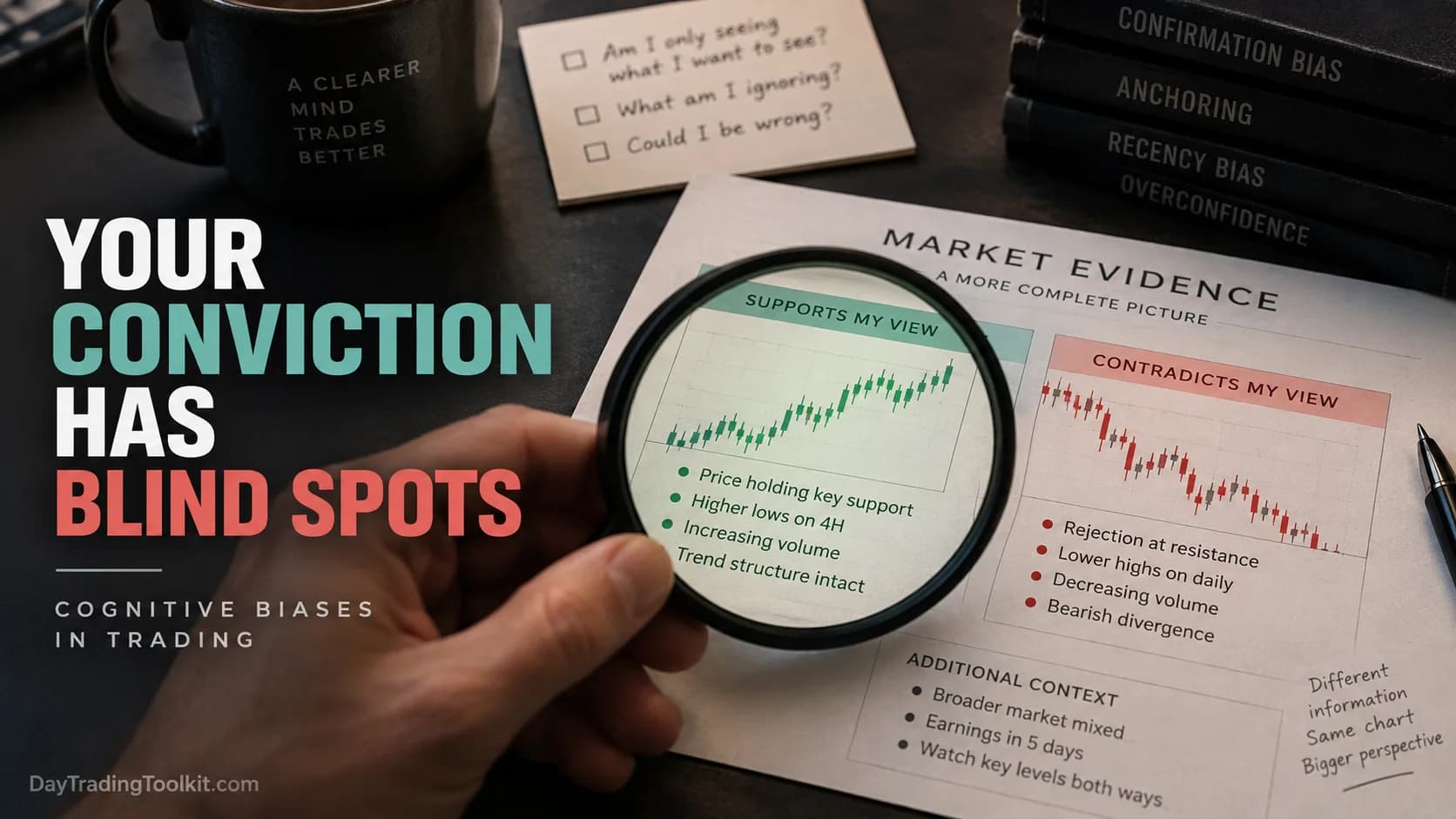
The cognitive biases that make us vulnerable to these pitches — the desperate desire for an edge, the authority halo of technical language, confirmation bias toward information that supports what we want to believe — are worth understanding on their own terms. Our Trading Cognitive Biases guide covers the mechanisms in detail.
Frequently Asked Questions
How can I quickly tell if an AI trading platform is legitimate?
Legitimate platforms are registered, transparent about their methodology, and have verifiable track records of live performance. If any of those three elements is missing or evasive, treat the platform as fraudulent until proven otherwise. Registration verification via investor.gov or FINRA BrokerCheck takes five minutes and eliminates the majority of outright scams immediately.
Key Takeaway: Fifteen minutes of verification before depositing can save thousands. The two things scam platforms cannot fake are regulatory registration and authentic negative community experience in forums they don't control.
Are AI trading signal services ever legitimate?
A legitimate signal service can tell you exactly what data inputs drive the signals, how long the service has been operating, and what the historical win rate and drawdown periods look like in live (not backtested) trading. They understand that signals are one input into a broader trading decision, not a guaranteed path to profit. The key distinction: legitimate services provide tools, not promises. If a signal service language sounds more like a sales pitch than technical documentation, apply the verification framework above.
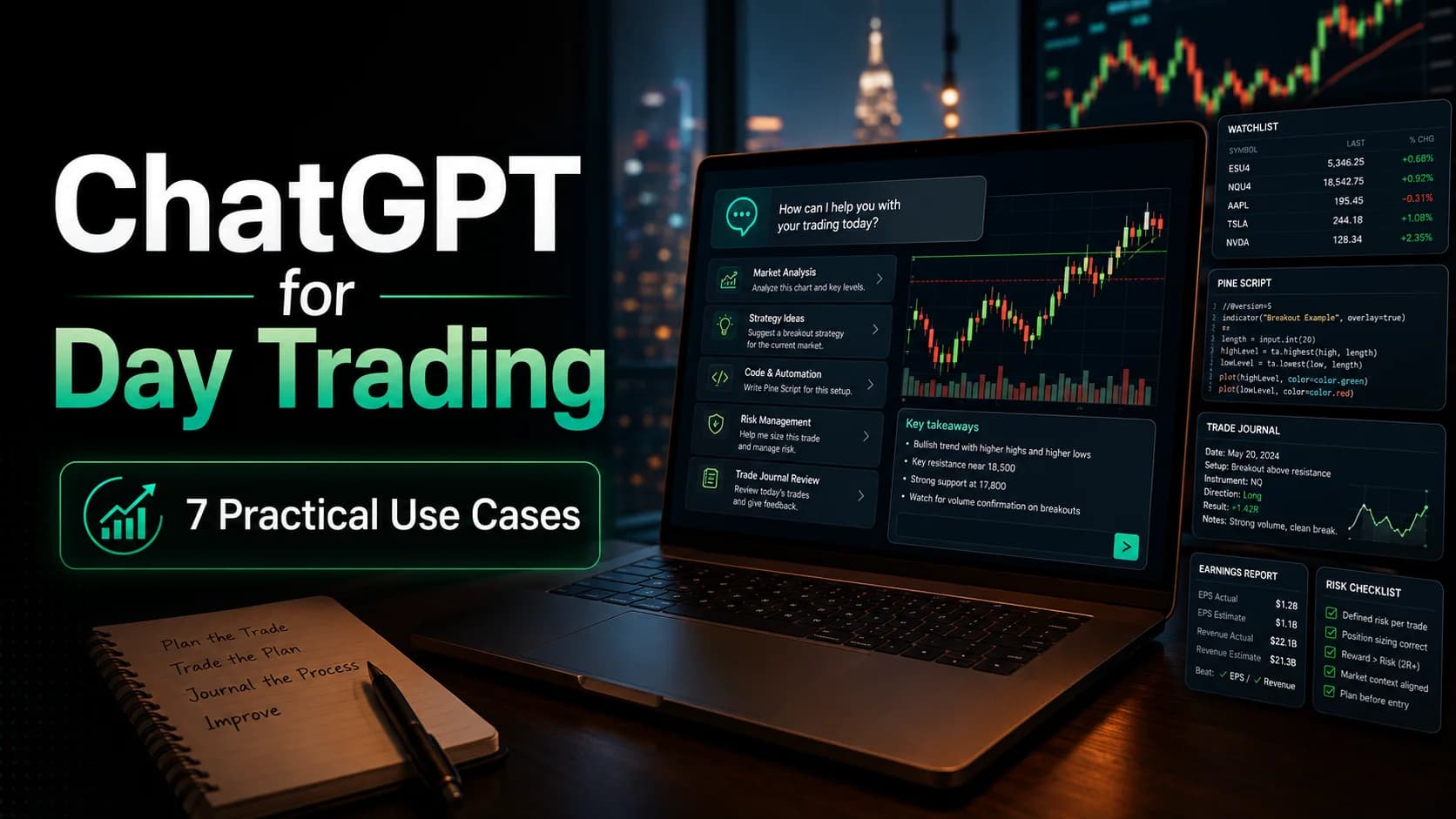
Key Takeaway: Verify registration, demand live performance data rather than backtested claims, and never trust a service that speaks in terms of guarantees. For context on what AI analysis can and can't do, see our ChatGPT Day Trading guide.
What is "AI washing" in trading?
The SEC settled charges against investment advisers Delphia and Global Predictions in March 2024 specifically for AI washing — making "false and misleading statements about their purported use of AI in their investment process." AI washing doesn't require an outright Ponzi scheme. It can be as simple as describing a rules-based screener as a "machine learning system" to justify higher fees or attract more clients. The FTC's Operation AI Comply (September 2024) extended this concept to consumer-facing businesses, making clear that any company claiming AI capabilities must be able to substantiate those claims.
Key Takeaway: "AI-powered" is a marketing claim like any other — it requires substantiation. Demand specifics, and verify them independently from the company's own materials.
Can deepfake videos really be used to promote fake trading platforms?
TRM Labs' analysis shows that scammers connected on-chain to AI deepfake service providers earned an average of $3.2 million per operation — roughly 4.5 times more than operations not using deepfake tools. The technology is now accessible enough that professional-quality fake videos can be produced cheaply and quickly. No legitimate trading platform requires a celebrity endorsement video to make its case. If you see one, assume it's fabricated and verify the platform independently through regulatory databases.
Key Takeaway: Never take action based solely on a video endorsement, regardless of who appears to be speaking. Verify independently.
What should I do if I've already sent money to a suspected scam?
Contact your bank or payment processor immediately to explore chargeback options — the window for this is often narrow. Crypto transactions are harder but not impossible to trace; blockchain intelligence can sometimes identify wallet paths, which is why regulatory complaints matter even for crypto losses. Avoid "recovery services" that find you through ads or social media after your loss — these are almost universally secondary scams that extract additional fees. For emotional support and legitimate resources, NASAA (nasaa.org) provides victim support and referrals.
Key Takeaway: The first 24-48 hours after identifying a scam are the most important. Act immediately, document thoroughly, and report to multiple agencies simultaneously.
How do AI trading scams find their victims?
Scammers use AI tools to generate thousands of tailored outreach messages simultaneously — one of the reasons the volume of these schemes has increased so dramatically. KnowBe4 published research in March 2025 finding that 73.8% of phishing emails analyzed in 2024 showed AI involvement, reflecting how extensively criminal operations have adopted LLMs for outreach at scale. The tactics are sophisticated: scammers build social proof in group chats, manufacture time pressure, and escalate trust gradually before introducing the investment angle. The most effective defense is skepticism toward any unsolicited investment opportunity, regardless of how legitimate the packaging appears.
Key Takeaway: If you didn't go looking for a trading platform and it found you, that's the first red flag — not the last.
Is crypto more vulnerable to AI trading scams than stocks?
The FBI's Internet Crime Complaint Center recorded $9.3 billion in crypto fraud losses in the U.S. alone in 2024. The irreversibility of blockchain transactions is a feature exploited by scammers: once funds move, recovery depends entirely on the enforcement and tracing infrastructure that develops after the fact. Traditional stock-related scams face more friction — brokerage accounts have identity requirements, transaction monitoring, and wire recall windows. This doesn't mean stock-related AI scams don't exist (the SEC's AI washing enforcement cases demonstrate they do), but the scale of losses in crypto-focused schemes reflects the structural advantages crypto provides to fraud operations.
Key Takeaway: Extra verification layers are warranted for any investment opportunity involving crypto, particularly platforms that accept only crypto deposits and resist connecting to traditional banking.
How is the "pig butchering" scam connected to AI?
Chainalysis documented $9.9 billion in losses from these schemes in 2024. What was once a labor-intensive scam requiring skilled social engineers operating one-on-one has been partially automated, reducing the human cost per target and allowing criminal operations to work at industrial scale. The scam's structure — weeks of trust-building before any investment discussion — makes it highly resistant to simple awareness campaigns, because by the time the financial hook arrives, the victim has already developed a genuine emotional connection. Understanding that this pattern exists is itself a meaningful defense.
Key Takeaway: Any new online relationship that eventually introduces an "amazing" investment opportunity — particularly one involving AI trading platforms — should trigger immediate verification, regardless of how genuine the relationship has felt.
Disclaimer
The information provided in this article is for educational purposes only and should not be considered financial advice or legal guidance. Day trading involves substantial risk and is not suitable for every investor. Past performance is not indicative of future results. The regulatory enforcement cases cited in this article are drawn from public SEC and FTC sources and are presented for educational purposes only.
For our complete disclaimer, please visit: https://daytradingtoolkit.com/disclaimer
Article Sources
- sec.gov/newsroom/press-releases/2025-144 - U.S. Securities and Exchange Commission — SEC Charges Three Purported Crypto Asset Trading Platforms and Four Investment Clubs (December 2025): — Primary source for the $14 million WhatsApp investment club casesec.gov
- sec.gov/newsroom/press-releases/2024-36 - U.S. Securities and Exchange Commission — SEC Charges Two Investment Advisers with False Statements About AI (March 2024): — Primary source for the Delphia and Global Predictions AI washing settlementssec.gov
- ftc.gov/news-events/news/press-releases/2024/09 - Federal Trade Commission — FTC Announces Crackdown on Deceptive AI Claims and Schemes / Operation AI Comply (September 2024): — Primary source for Operation AI Comply enforcement sweepftc.gov
- trmlabs.com/resources/blog - TRM Labs — AI-Enabled Fraud: How Scammers Are Exploiting Generative AI (2025): — Source for the 456% surge in AI-enabled scam reports, deepfake case datatrmlabs.com
- Chainalysis — 2025 Crypto Scam Report / Crypto Crime Report: Primary source for $9.9 billion pig-butchering losses, average payment increase data, and AI scam operational statistics
- SEC Investor Alert — Artificial Intelligence (AI) and Investment Fraud (January 2024): investor.gov — Primary regulatory guidance on AI investment fraud warning signs