Stop Loss and Take Profit Strategies for Consistent Trading


One of the biggest mistakes new traders make is trading without a clear exit plan. They buy because the chart “looks good” and sell only when emotions—fear or greed—kick in. That’s not trading; that’s gambling.
Professional traders know that consistency comes from defined exits, not just good entries. This is where stop loss and take profit strategies come in. If you master them, you’ll protect your capital, lock in profits, and build the foundation for long-term success.
In this article, we’ll cover:
- What Is a Stop Loss?
- What Is a Take Profit?
- Why Stop Loss and Take Profit Are Crucial
- The Math Behind Stop Loss and Take Profit
- Popular Stop Loss Strategies
- Popular Take Profit Strategies
- Combining Stop Loss and Take Profit
- Common Mistakes Traders Make
- Using a Stop Loss/Take Profit Calculator
- My Experience with Stop Loss and Take Profit
- Conclusion
What Is a Stop Loss?
A stop loss is a protective order placed with your broker to automatically exit a trade when the market moves against you.
- Example: You buy EUR/USD at 1.1000 with a stop loss at 1.0950. If the price falls to 1.0950, your broker automatically sells, limiting your loss.
Key benefits:
- Protects your account from large drawdowns
- Removes emotional decision-making
- Keeps your risk/reward consistent
What Is a Take Profit?
A take profit is the opposite of a stop loss—it closes your trade once your target is hit.
- Example: Same EUR/USD trade at 1.1000 with take profit at 1.1100. If the price rises there, you lock in 100 pips profit automatically.
Key benefits:
- Secures gains before the market reverses
- Enforces discipline (no moving targets mid-trade)
- Helps you plan realistic expectations
Why Stop Loss and Take Profit Are Crucial
Many traders focus on entries, but exits determine profitability. Without stop loss and take profit:
- You might hold losers too long, hoping they recover.
- You might close winners too early, fearing they’ll reverse.
Over time, this emotional trading leads to inconsistent results. Using stop loss and take profit levels:
- Defines your reward-to-risk ratio (e.g., aiming for 2:1).
- Keeps your position sizing consistent.
- Helps you plan trades like a business, not a gamble.

The Math Behind Stop Loss and Take Profit
Let’s say you risk $100 per trade (2% of a $5,000 account).
- Stop loss: 50 pips → $100 loss
- Take profit: 100 pips → $200 gain
That’s a 2:1 reward-to-risk ratio.
Now, even if you win only 40% of trades, you’ll still be profitable over the long run because your winners are larger than your losers.
👉 You can quickly calculate these ratios with our Stop Loss / Take Profit Calculator.

Popular Stop Loss Strategies
- 1Fixed Dollar or Pip Amount
- Simple: Decide how much you’re willing to lose (e.g., $100 or 50 pips) and set your stop there.
- 2Best for beginners.
- 3Percentage of Account
- Risk 1–2% of your account per trade.
- 4Adjusts naturally as your account grows or shrinks.
- 5Technical Levels
- Place stops below support (for longs) or above resistance (for shorts).
- 6Works well with chart patterns.
- 7Volatility-Based Stops (ATR Method)
- Uses Average True Range (ATR) to adjust stops based on market volatility.
- 8Prevents premature stop-outs during choppy markets.
Popular Take Profit Strategies
- 1Fixed Reward-to-Risk Ratio
- Set TP at 2× or 3× your stop loss distance.
- 2Example: Risk 50 pips, aim for 100–150 pips.
- 3Key Technical Levels
- Use resistance zones, Fibonacci levels, or moving averages as exit targets.
- 4Scaling Out
- Take partial profits at the first target, let the rest run.
- 5Balances safety with growth.
- 6Trailing Take Profits
- Use a trailing stop that moves with price.
- 7Locks in profits while allowing bigger wins.
Combining Stop Loss and Take Profit
The magic happens when you combine them into a complete trade plan:
- Define entry → set stop loss → set take profit → calculate reward-to-risk ratio.
- If the ratio isn’t favorable (at least 1.5:1), skip the trade.
This ensures you only take trades that fit your edge.
Common Mistakes Traders Make
- 1Not using a stop loss – Hoping the market will turn around is account suicide.
- 2Setting stops too tight – Leads to constant stop-outs from normal noise.
- 3Moving stops further away – A losing trade rarely improves by giving it “more room.”
- 4Cutting winners too soon – Exiting early out of fear destroys your reward-to-risk.
- 5Over-leveraging – Even with stops, risking too much per trade will blow up accounts.
Using a Stop Loss/Take Profit Calculator
Manual calculations are time-consuming, especially when you’re trading multiple markets. Our Stop Loss / Take Profit Calculator helps you:
- Instantly find stop loss and take profit levels
- See the exact dollar risk/reward for your position size
- Plan trades with discipline before entering the market
This not only saves time but enforces professional habits.
My Experience with Stop Loss and Take Profit
Early in my trading journey, I ignored stop losses, thinking I could “manually manage” trades. It worked—until it didn’t. One bad move wiped out weeks of profit.
When I switched to pre-defined stop loss and take profit, my trading changed. Suddenly, losses were small and predictable, and wins had structure. My account curve became smoother, and most importantly—I slept better at night.
Consistency didn’t come from finding the “perfect” setup. It came from sticking to a structured exit strategy.
Conclusion
Stop loss and take profit aren’t just risk management tools—they are the backbone of consistent trading. They take emotions out of the equation, protect capital, and help you focus on execution rather than hope.
To recap:
- Stop loss protects you from large losses.
- Take profit secures gains before reversals.
- Reward-to-risk ratios ensure long-term profitability.
- Tools like our Stop Loss / Take Profit Calculator make planning easy.
If you want to stop gambling and start trading like a professional, mastering stop loss and take profit is the place to begin.
Was this helpful?

Written by
Kazi Mezanur RahmanFounder, independent researcher, and editor of DayTradingToolkit, a one-person publication focused on risk-first trading education, documented tool research, and clear explanations.
Keep Reading
Day Trading Basics
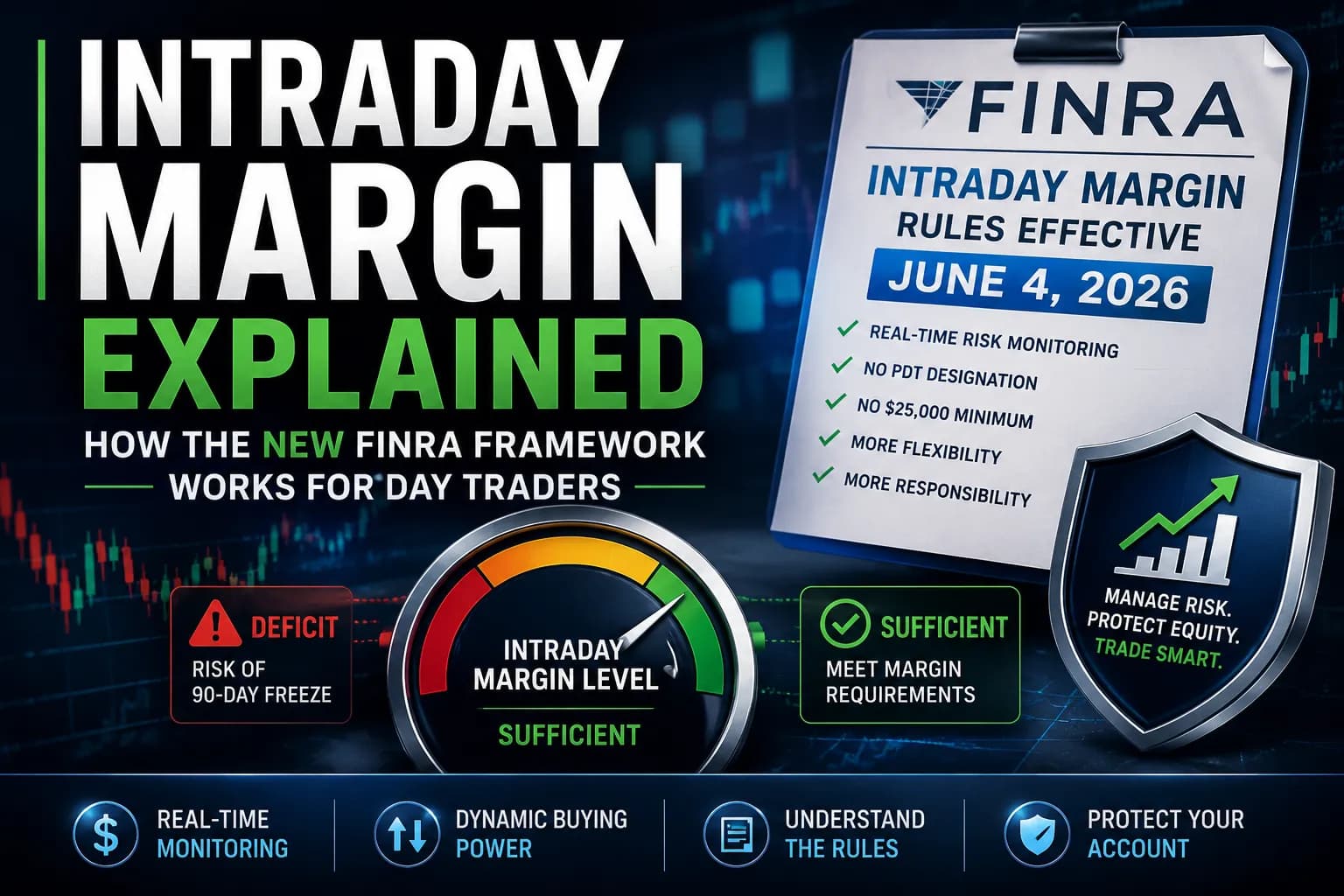
Intraday Margin Explained: How the New FINRA Framework Works for Day Traders
The PDT rule is gone. Here's exactly how the new intraday margin system works — deficits, buying power, 90-day freezes, and what it all means for your trading account.

Day Trading Basics
The Truth About AI Trading Bots: What's Real vs. Marketing Hype
The 5-Level AI Framework exposes what's real vs. marketing hype in AI trading bots — SEC enforcement cases, red flags, and how to evaluate any tool before you pay.
Day Trading Basics
LLC for Day Trading: Choosing the Right Business Structure to Optimize Taxes
Learn which business structure saves day traders the most in taxes. Compare sole proprietor, LLC, partnership, and S-Corp with real cost breakdowns.
Day Trading Basics
What Is Trader Tax Status (TTS)? A Complete Guide to Qualifying
Learn how to qualify for Trader Tax Status (TTS). Our guide breaks down the vague IRS rules, court case guidelines, and the benefits of TTS for traders.
Comments
No comments yet. Be the first to share your thoughts.