How to Overcome Revenge Trading After Multiple Losses

In this article7 sections
A trader loses $300 on a clean setup that simply didn't work. The stop hit, the thesis was valid, the execution was sound. Objectively, it's a normal cost of doing business.
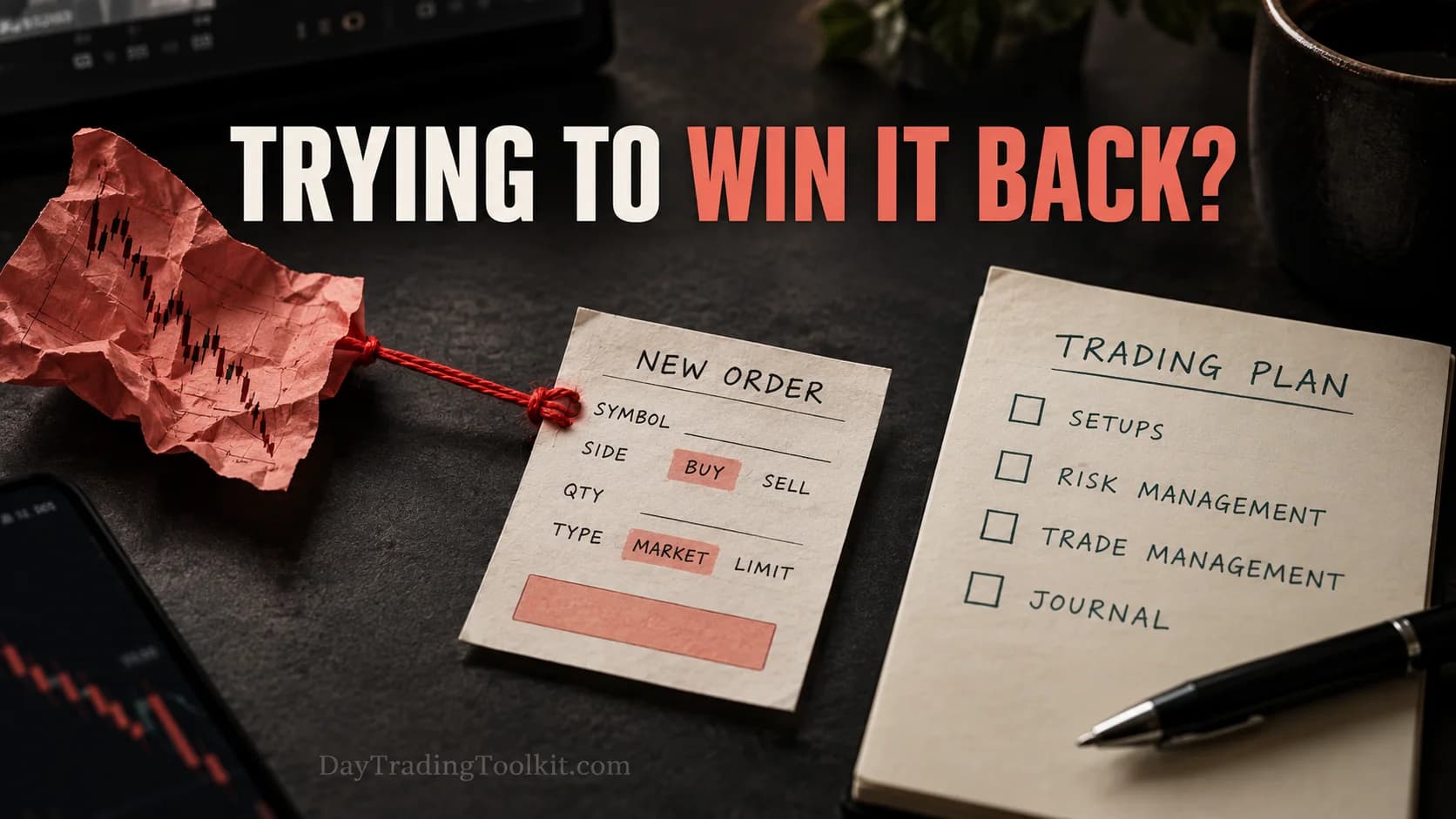
But something shifts. A tightness in the chest. A flash of irritation. The thought: I need to make that back before the session ends. So they scan for another entry — and find one. Sort of. It's not an A-grade setup, but it's close enough. They enter with slightly larger size because a bigger position recovers the loss faster. That trade fails too. Now they're down $650. The irritation becomes anger. The next entry happens within seconds, no checklist, no pause. Position size is doubled. Rules abandoned. By market close, the $300 loss has become $1,500.
That's revenge trading. And it doesn't discriminate by experience level. Research and trader accounts show traders with years of screen time fall into this spiral — not because they lack knowledge, but because the neurological cascade that drives revenge trading is designed to override knowledge.
If you're looking for a foundational understanding of what revenge trading is and how it shows up in beginner trading, start with our beginner's guide to revenge trading. This article goes deeper into why it happens at the neurological level, how to recognize it before it takes hold, and the structured protocols that professional traders use to break the cycle.
What Revenge Trading Actually Is — And What It Isn't
Revenge trading has a specific definition, and getting it precise matters because the fix depends on accurate diagnosis.
Revenge trading is emotionally-driven trading motivated primarily by the desire to recover recent losses, where the urgency to "get back to even" overrides your trading system. The market stops being an environment you analyze — it becomes an opponent you need to defeat. Your P&L statement replaces your trading plan as the decision-making framework.
What it is not: simply taking a second trade after a loss. Not every post-loss trade is revenge. If your system generates a valid signal, you've executed your emotional checkpoint, and you're trading your standard position size — that's discipline, not revenge. The distinction is motivation. Are you entering because your system says to? Or because your ego and emotions demand that you erase what just happened?
It's also distinct from overtrading, which is taking more trades than your plan allows — sometimes driven by boredom or excitement rather than loss recovery. And it's different from FOMO, which is entering trades you've been watching because the move is happening without you. Revenge trading is specifically reactive to a loss, fueled by a cocktail of anger, shame, and the desperate need to restore your sense of competence.
This distinction matters for treatment. Overtrading responds to trade count limits. FOMO responds to pre-set entry criteria. Revenge trading requires emotional circuit breakers that physically interrupt the escalation cycle — because by the time revenge trading kicks in, your rational brain has already gone offline.
Understanding the specific cognitive biases that fuel revenge trading helps explain why it's so difficult to resist. Loss aversion (losses hurt roughly twice as much as equivalent gains) creates the emotional urgency. Anchoring bias locks your brain onto the pre-loss P&L number. The sunk cost fallacy makes the loss feel like an "investment" you need to justify. And recency bias causes the last trade to dominate your entire emotional landscape, drowning out the larger context of your strategy's long-term edge. Revenge trading isn't driven by one bias — it's the product of several biases detonating simultaneously under emotional pressure.
The Neuroscience of the Revenge Trading Spiral
Poker players call it "tilt" — a state where emotional flooding overwhelms rational decision-making. Research on tilt found that it's the only significant behavioral predictor of excessive gambling, more powerful than anxiety, depression, or sensation-seeking. Trading revenge spirals operate on the same neurological mechanism.
Here's what happens in your brain when a loss triggers the revenge sequence.
Phase 1: The Amygdala Fires
The moment you register the loss, your amygdala — the brain's threat-detection center — activates. As we covered in our article on managing fear and greed, the amygdala processes financial losses as survival threats. It fires before your prefrontal cortex (your rational, planning brain) gets a chance to weigh in.
This isn't metaphorical. Neuroscience research confirms that the amygdala can trigger a sympathetic nervous system response in milliseconds, shunting energy away from complex decision-making areas toward immediate action. Your brain is literally redirecting cognitive resources from analysis to reaction.
Phase 2: Cortisol Surges
The loss triggers a cortisol spike. Research published in PNAS by Coates and colleagues demonstrated that cortisol rises with the variance and uncertainty of trading results. A single significant loss — especially one that feels "unfair" or unexpected — generates a cortisol pulse that can impair prefrontal cortex function for the remainder of your trading session.
Here's the paradox that makes revenge trading so insidious: chronically elevated cortisol has been shown to increase risk aversion (making you timid and hesitant). But the acute cortisol spike from a sudden loss does something different — it impairs impulse control and rational evaluation while the emotional drive to "fix" the loss remains at full intensity. You're simultaneously unable to think clearly and intensely motivated to act.
Phase 3: The Prefrontal Cortex Goes Offline
With the amygdala flooding your system and cortisol impairing executive function, your prefrontal cortex — the part of your brain responsible for following trading rules, evaluating risk/reward ratios, and exercising restraint — effectively takes a backseat. Poker psychology researchers describe this as a "biological coup d'état" where the emotional brain overrides the rational brain.
This is why willpower alone fails against revenge trading. You're not fighting a bad habit — you're fighting a neurological hijacking. The part of your brain you'd use to exercise willpower is the same part that's been compromised. Telling yourself to "just be disciplined" during a revenge spiral is like telling someone to run faster on a broken leg.
The 5 Stages of a Revenge Trading Spiral
Revenge trading follows a predictable escalation pattern. Recognizing these stages — especially the early ones — is where intervention becomes possible.
Stage 1: The Triggering Loss
Not every loss triggers revenge trading. The trigger is usually a loss that feels wrong — a trade where the setup was valid, the execution was clean, and the result feels unjust. Ironically, it's the "good trade that lost money" that's most dangerous, because the quality of the setup intensifies the feeling of being cheated by the market. A sloppy trade that loses feels deserved. A perfect trade that loses feels personal.
Stage 2: The Emotional Reaction
The loss registers emotionally within seconds. Common responses: jaw clenching, increased heart rate, a hot flush of anger or frustration, internal narration shifting from "what does my system say" to "that shouldn't have happened." The critical marker at this stage is the thought pattern. If you catch yourself thinking about the money lost rather than the process followed, you've entered the danger zone.
Stage 3: The Rationalized Re-Entry
This is where many traders fool themselves. The revenge trade doesn't feel like revenge — it feels like a new opportunity. "I see another setup. It's a legitimate signal." But the standard evaluation process has been compressed. Instead of running your full pre-trade checklist, you're scanning the market through a lens of urgency. The "setup" you find would not have met your criteria an hour ago, but right now your standards have dropped because the real motivation isn't the setup — it's the recovery.
The telltale sign at Stage 3 is speed. Your normal process might take three to five minutes from signal identification to order entry. During a revenge sequence, that collapses to thirty seconds. You're not evaluating — you're justifying. And the justification sounds perfectly reasonable because your brain is generating it specifically to satisfy the emotional need to act.
Another subtle marker: you stop checking risk/reward ratios. A trader in analytical mode calculates whether the setup offers at least 2:1 reward relative to the stop distance. A trader in revenge mode enters because "it looks like it wants to bounce" — a feeling-based assessment masquerading as technical analysis.
Stage 4: Escalation
If the Stage 3 trade fails, the spiral accelerates. Position sizes increase ("I need to make it back faster"). The time between trade exit and the next entry shrinks. Risk rules are abandoned — wider stops, no stops, larger size. The internal narrative shifts from "I see a setup" to "I need to win this one." At this point, the trader is no longer evaluating probability. They're gambling.
Stage 5: The Reckoning
The session ends, either because the market closes, a margin limit is hit, or the trader finally stops themselves. The damage assessment begins. What started as a single manageable loss has compounded into something far larger. And now a second psychological wave hits — shame, self-directed anger, and catastrophic thinking ("I'll never be a profitable trader"). This emotional aftermath, if not processed correctly, becomes the seed for the next revenge spiral. We cover post-loss recovery techniques in our guide on dealing with trading losses and drawdowns.
The 7 Warning Signs You're About to Revenge Trade
Catching revenge trading at Stage 1 or 2 is exponentially easier than catching it at Stage 4. Here are the early warning signs that you're transitioning from analysis to emotional reaction.
1. Your breathing changes. Shallow, rapid breathing or holding your breath. This is your sympathetic nervous system activating — the same fight-or-flight response that drives the entire cascade.
2. You're calculating the recovery math. "If I make $400 on the next trade, I'll be back to even." The moment your thinking shifts to P&L recovery instead of setup quality, you've left analytical territory.
3. Your time between trades compresses. Your normal rhythm might be two to three trades per hour. If you find yourself entering a new position within seconds of closing the last one, that speed is emotional, not analytical.
4. You're scanning for any setup, not the right setup. Instead of waiting for your specific criteria to appear, you're scrolling through charts looking for anything that might work. The urgency to find a trade has replaced the patience to let a trade find you.
5. You adjust your position size upward. Any deviation from your standard position sizing rules after a loss — whether it's doubling up, removing your position limit, or "just this once going bigger" — is a revenge trading signal.
6. You feel heat. Physical warmth — in your face, chest, or hands — is a cortisol response. It's your body telling you that your stress system has activated. This is data, not just discomfort.
7. You're arguing with the market internally. "That was wrong." "This stock should have held support." "The market makers stopped me out." When you're debating the market's fairness instead of accepting its reality, you're in ego-protection mode — the psychological launchpad for revenge.
The Revenge Trading Circuit Breaker Protocol
The central insight from the neuroscience is that revenge trading can't be stopped by decision-making in the moment — because the decision-making machinery is compromised. You need structural interventions that operate without requiring real-time rationality.
Circuit Breaker 1: The Hard Daily Loss Limit
Set a maximum daily loss — typically 2-3% of your account — that triggers an automatic shutdown. When this limit is hit, you're done for the day. No exceptions. No "one more trade to get some back." Done.
This works because it pre-commits your decision before the emotional cascade begins. You set the rule on Sunday night when your prefrontal cortex is fully functional. By the time revenge trading threatens on Tuesday afternoon, the rule is already locked in. Your beginner's guide article on the daily max loss rule covers the mechanics of setting this up properly.
Circuit Breaker 2: The 30-Minute Cooling Rule
After any loss that exceeds your average losing trade, take a mandatory 30-minute break from screens. Not "think about the trade while watching the chart." Actually leave. Walk. Go outside. Get water. The purpose is biological: you need roughly 20-30 minutes for the acute cortisol spike to subside enough for prefrontal cortex function to begin recovering.
This feels excruciating. You'll think you're missing opportunities. You'll convince yourself you're fine after five minutes. You're not. The cortisol is still elevated. The amygdala is still primed. Sit with the discomfort. It beats sitting with a $1,500 loss.
Circuit Breaker 3: The Re-Entry Qualification
Before returning to trade after a break, you must verbally or in writing answer three questions: What is my current emotional state on a 1-5 scale (1 = calm, 5 = agitated)? What specific signal does my system require for entry? Am I sizing this trade according to my standard rules?
If your emotional state is 3 or above, you don't trade. Period. If you can't articulate your system's specific entry criteria without looking — meaning you have to think through it rather than automatically reciting it — your prefrontal cortex isn't fully re-engaged yet. Wait longer.
Circuit Breaker 4: The Reduced-Size Re-Entry
When you do return to trading after a loss, your first trade back should be at 50% of your normal position size. This does two things: it reduces the financial stakes (lowering the amygdala's threat response), and it serves as a psychological test. If trading at half size feels frustrating or insufficient — if you feel impatient with the smaller position — that's your indicator that you're still in recovery mode, not analytical mode.
Circuit Breaker 5: The Maximum Trade Count
Set a hard limit on the number of trades per session before the market opens. Maybe it's five. Maybe it's eight. The specific number depends on your strategy. What matters is that it's pre-committed and non-negotiable. This prevents the "rapid-fire entry" pattern that characterizes Stage 4 escalation.
If you're looking for tools that enforce these structural rules automatically, our day trading toolkit page covers platforms with built-in risk management guardrails.
Rebuilding After a Revenge Trading Episode
If you've already been through a revenge spiral — maybe you're reading this because it happened today — here's how to process the damage without letting it seed the next cycle.
Step 1: Separate the emotional loss from the financial loss. The financial damage is quantifiable. Calculate the exact number. Write it down. This is concrete and finite. The emotional damage — the shame, the self-criticism, the "I'm such an idiot" narrative — is what makes the next session dangerous. Acknowledge the feeling, but don't let it become your identity. A revenge trading episode is a behavioral event, not a character verdict.
Step 2: Conduct the forensic review. In your trading journal, document the episode with clinical precision. What was the trigger trade? At what stage did you recognize the spiral (or fail to recognize it)? Which circuit breaker failed? What was your emotional state at each decision point? This isn't self-punishment — it's data collection. You're building a profile of your specific revenge patterns so you can detect them earlier next time.
Step 3: Identify the structural failure. Every revenge trading episode represents a structural failure, not just an emotional one. Maybe your daily loss limit was too high. Maybe you didn't have a cooling rule. Maybe you had one but overrode it because it felt unnecessary. The fix isn't "try harder next time" — it's tightening the structural controls so they can't be overridden.
Step 4: Decide whether to take time off. If the revenge episode was severe — if it exceeded your daily loss limit, if it generated a drawdown that will take more than a week to recover from, or if you notice that you're still emotionally agitated the following morning — consider taking one to three full days away from the market. This isn't weakness. Professional traders do this routinely after psychologically demanding sessions. The market will be there when you return.
Step 5: Return with reduced expectations. Your first session back after a significant revenge episode should have a reduced trade count limit, reduced position size, and a tighter daily loss limit. Treat it as a psychological calibration session, not a recovery session. The goal is to execute clean trades, not to rebuild P&L. Build a few days of clean execution and let your discipline rebuild naturally.
How to Overcome Revenge Trading: Frequently Asked Questions
Is revenge trading the same as overtrading?
The distinction matters because the solutions differ. Overtrading responds to daily trade count limits and selectivity criteria. Revenge trading requires emotional circuit breakers — cooling periods, physical separation from screens, and re-entry qualifications that test whether your rational mind has re-engaged. A trader can overtrade while calm and revenge trade while taking only two extra trades. It's the motivation, not the quantity, that defines it.
Key Takeaway: If you're trading to "get back to even," it's revenge — regardless of how many trades you take.
Why does revenge trading feel like a rational decision in the moment?
When cortisol spikes and the amygdala overrides the prefrontal cortex, you lose access to the self-monitoring functions that would normally flag your behavior as emotional. The revenge trade genuinely feels like a good idea — which is why post-hoc solutions ("next time, just don't do it") never work. You need pre-committed structural controls that don't depend on real-time self-awareness.
Key Takeaway: If you could reliably recognize revenge trading in the moment, you wouldn't do it. That's why structural controls exist — to make the decision before the impairment begins.
How long does the cortisol spike from a trading loss last?
Research on cortisol recovery shows significant individual variation, but most studies suggest that a single stressful event produces elevated cortisol for at least 20-30 minutes. This is the minimum recommended cooling period before re-entering the market after a significant loss.
Key Takeaway: The 30-minute cooling rule isn't arbitrary — it's calibrated to the cortisol recovery timeline documented in stress physiology research.
What if my daily loss limit gets hit regularly?
A properly calibrated daily loss limit should feel like an emergency brake, not a routine stop. If it activates frequently, investigate: are your stops too tight (causing more losing trades)? Is your position size too large relative to your stop distance? Is your strategy's edge actually validated through backtesting? Frequent limit hits may signal that your system needs refinement, not that your emotions need more management.
Key Takeaway: The circuit breaker protocol protects you from revenge trading, but it doesn't fix an unprofitable system — those are separate problems that require separate solutions.
Can a trading journal really prevent revenge trading?
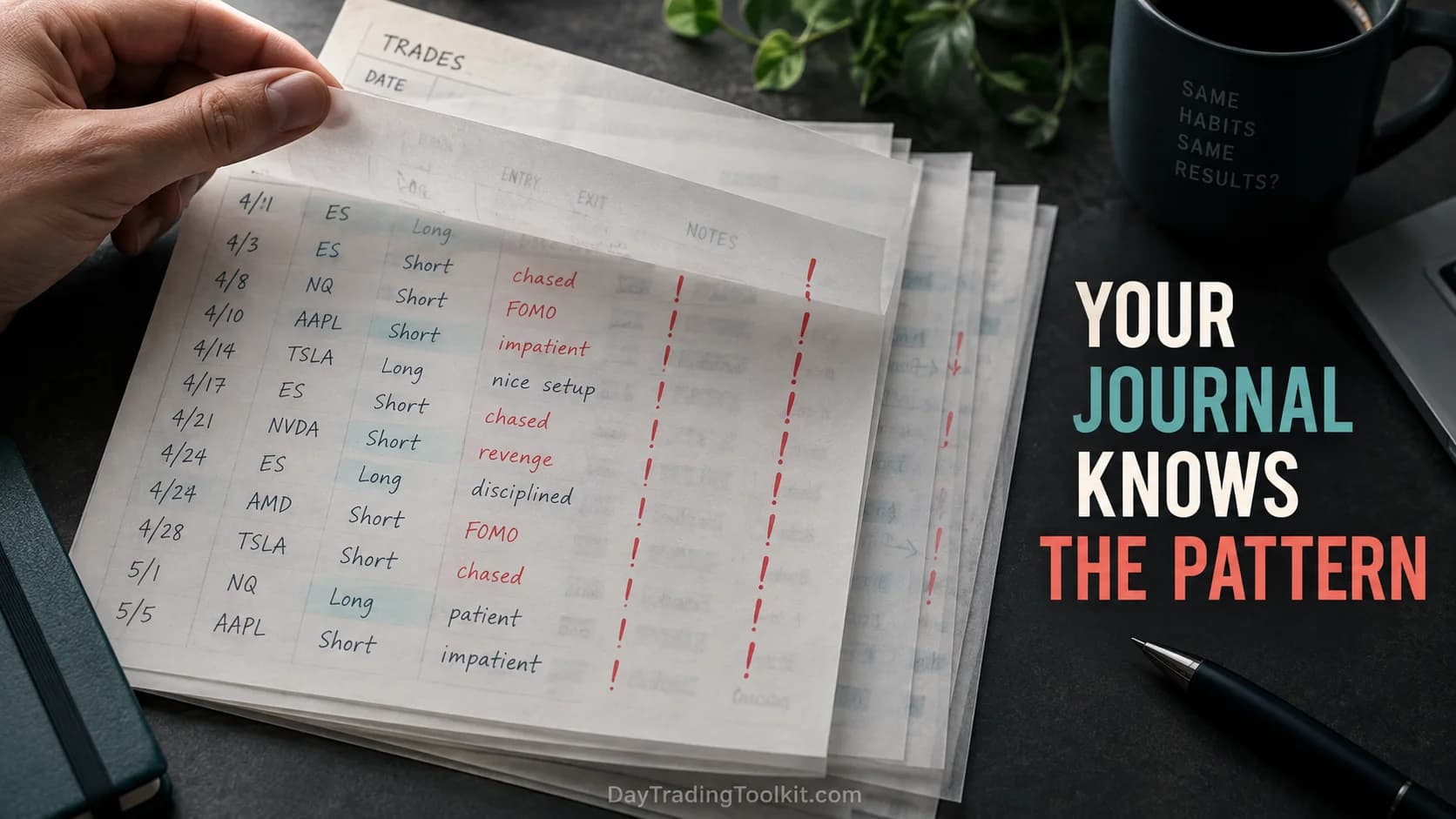
When you tag trades with emotional states ("planned," "impulsive," "revenge") and correlate those tags with P&L, you generate hard evidence of what revenge trading costs you. Many traders report that simply seeing the data — "my revenge trades have a -$3,200 P&L over six months" — provides stronger motivation to follow circuit breaker protocols than any amount of willpower or self-talk.
Key Takeaway: Your trading journal turns vague emotional awareness into measurable financial consequences — and what you can measure, you can change.
Is revenge trading related to gambling addiction?
Research on poker tilt found it was the strongest behavioral predictor of excessive gambling, suggesting that the loss-chase-escalate cycle can become a gateway to compulsive behavior if unchecked. If you find that revenge trading happens consistently despite structural controls, and especially if the behavior extends beyond trading into other risk-taking activities, consider speaking with a professional who specializes in behavioral addiction.
Key Takeaway: Occasional revenge trading is a common behavioral pattern with structural solutions. Persistent, uncontrollable loss-chasing despite consequences is a different category that may require professional support.
Should I take a day off after revenge trading?
The purpose isn't punishment — it's cortisol normalization. Research shows that ongoing stress and rumination about losses can keep cortisol elevated for days, impairing subsequent decision-making. A clean break allows both your hormonal system and your psychological state to reset.
Key Takeaway: Returning to trade while still emotionally processing a revenge episode dramatically increases the probability of a second spiral.
What's the single most effective revenge trading prevention tool?
Every other protocol depends on some degree of real-time self-awareness. The daily loss limit operates automatically, without requiring you to recognize that you're spiraling. It's the only defense that works even when your prefrontal cortex is completely offline.
Key Takeaway: If you implement nothing else from this article, implement a hard daily loss limit that you cannot override — it's the foundation of every other circuit breaker.
Disclaimer
This article discusses trading psychology and emotional management for educational purposes only and does not constitute financial advice or mental health counseling. Revenge trading is a common behavioral pattern, but persistent inability to control loss-chasing behavior may indicate a more serious condition that requires professional evaluation. Day trading involves substantial risk, and emotional decision-making can accelerate losses dramatically. No behavioral protocol eliminates the risk of loss.
For our complete disclaimer, please visit: https://daytradingtoolkit.com/disclaimer
Article Sources
- Cortisol Shifts Financial Risk Preferences — Kandasamy, Hardy, Page et al. (2014) — Cambridge research demonstrating that chronically elevated cortisol shifts risk preferences, published in Proceedings of the National Academy of Sciences.
- Endogenous Steroids and Financial Risk Taking on a London Trading Floor — Coates & Herbert (2008) — Landmark study of London traders documenting cortisol's relationship to market volatility and trading variance, published in PNAS.
- Tilt in Online Poker: Loss of Control and Gambling Disorder — Moreau, Delieuvin, Chabrol & Chauchard (2020) — Research establishing tilt frequency as the strongest behavioral predictor of excessive gambling, highlighting parallels between loss-chasing in poker and financial trading.
- Trading Psychology: Recovering From Big Losses — Charles Schwab — Practical guidance on cortisol management and post-loss recovery from one of the largest U.S. brokerages.
- Trading Psychology: Complete Guide to Mastering Emotions — TradesViz (2026) — Comprehensive overview referencing Odean's 1998 disposition effect research and Barber & Odean's overconfidence findings, with practical journaling applications.
- Prospect Theory: An Analysis of Decision Under Risk — Kahneman & Tversky (1979) — The foundational behavioral economics paper establishing loss aversion (losses hurt ~2x as much as equivalent gains), which underpins the neurological mechanism driving revenge trading.
Was this helpful?
Be the first to weigh in

Written by
Kazi Mezanur RahmanFounder, independent researcher, and editor of DayTradingToolkit. A one-person publication focused on risk-first trading education and documented tool research. He trades his own capital as a retail trader and combines personal market experience with systematic primary-source research.
Keep Reading
Psychology & Risk
Trading Journal Psychology: Your Personal Trading Therapist
Your trading journal is a psychological intervention tool, not a spreadsheet. CBT-based frameworks, the 7 fields that diagnose your biases, and how to read your own behavioral data.
Psychology & Risk
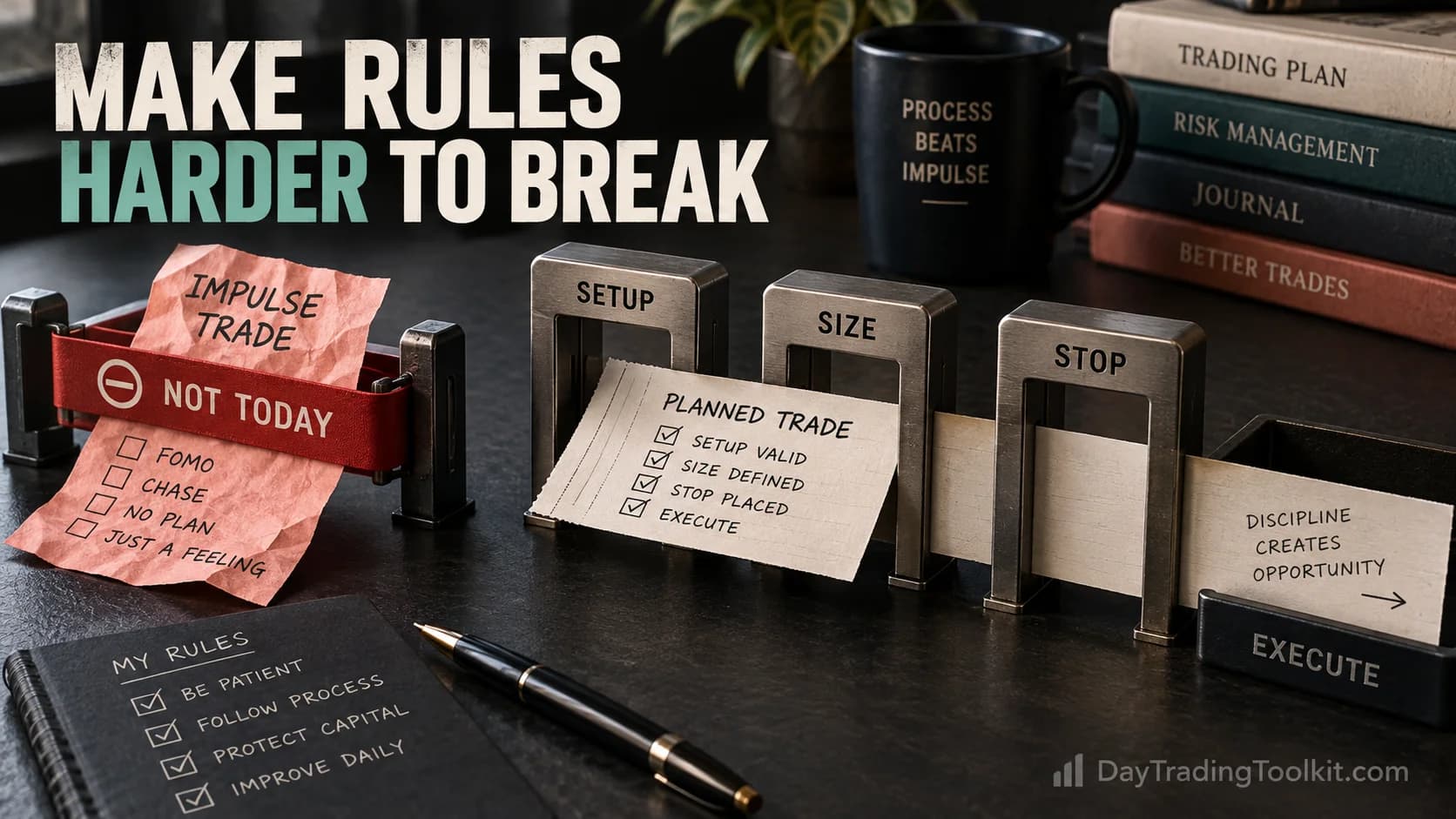
Trading Discipline: The Real Difference Between Winning and Losing Traders
Why 97% of day traders fail — and it's not strategy. Ego depletion research, the discipline architecture framework, and the systems that replace willpower with structure.
Psychology & Risk
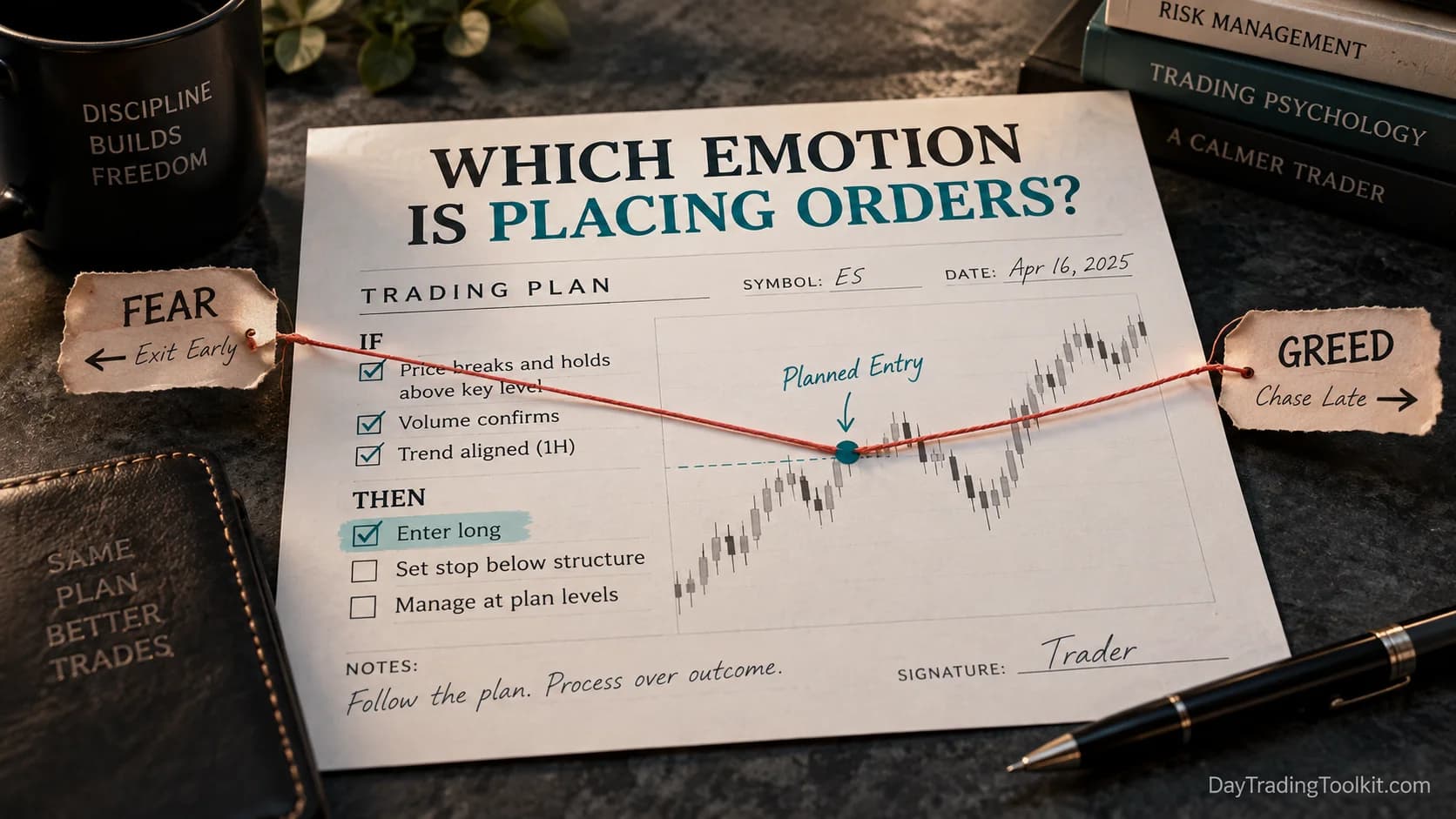
How to Manage Fear and Greed in Trading: A Psychology-Backed Framework
Master fear and greed in trading with our psychology-backed 5-layer framework. Neuroscience research, hormone data, and actionable techniques used by pro traders.
Psychology & Risk
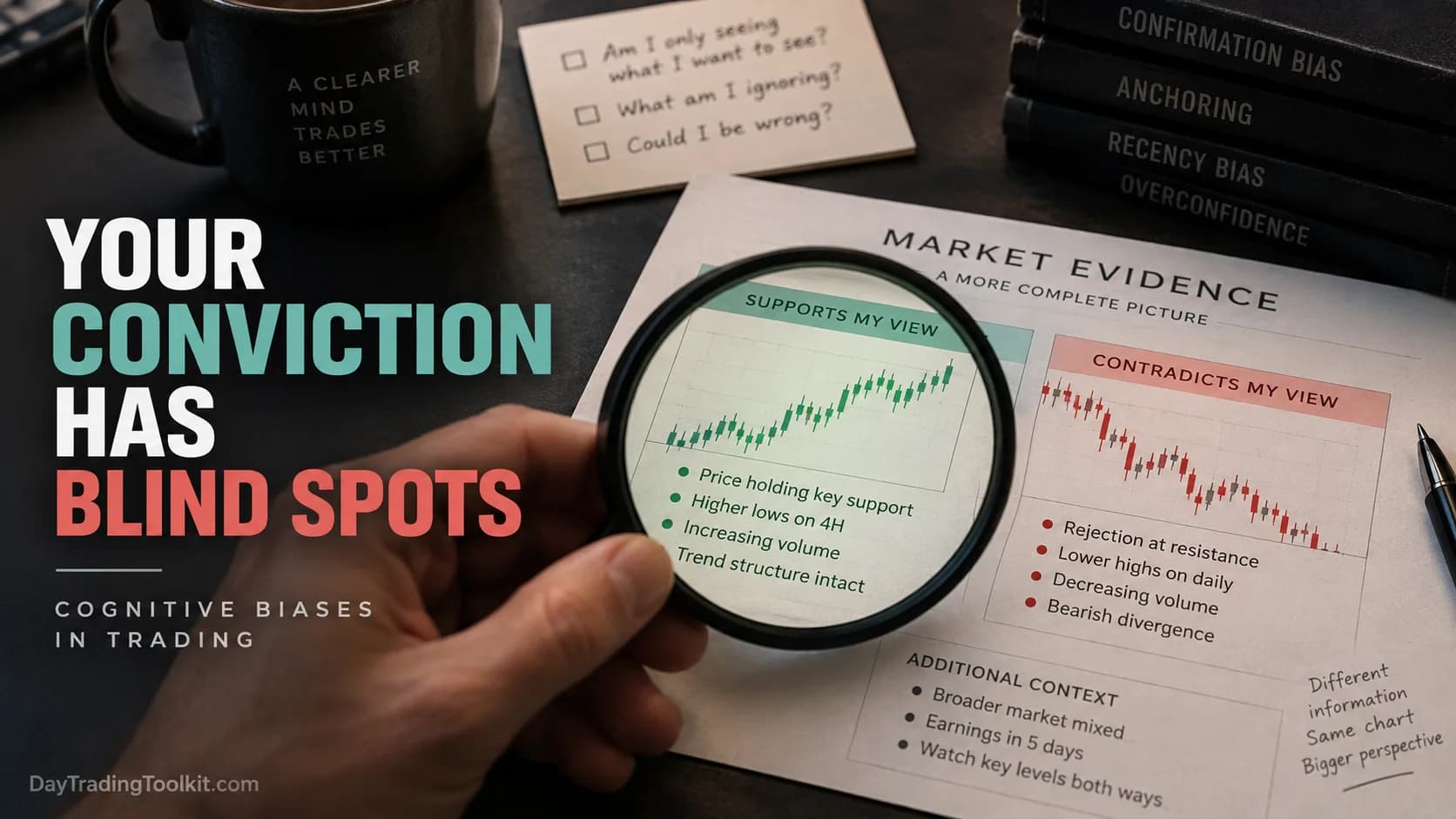
Trading Cognitive Biases: The Hidden Psychology That's Destroying Your Account
Discover the cognitive biases destroying your trading account. Deep research on overconfidence (3 types), confirmation, anchoring, and a bias defense system that works.
Comments
No comments yet. Be the first to share your thoughts.